


Live updates: Follow the latest news on Israel-Gaza
Almost three weeks after Hamas stormed southern Israel, killing about 1,400 people and taking more than 200 hostages, a much-expected retaliatory ground offensive has yet to be launched.
Israel vowed to "crush" Hamas but thus far it has tried to do so through aerial bombardment, incursions into Gaza and a siege, under which humanitarian corridors were shut until last week, with only small amounts of aid trickling through since Saturday.
There have been inevitable questions over what has caused the delay and whether Israel is rethinking the scope of any planned invasion.
As Israel completes it mobilisation on the border with Gaza, a decision to send in ground troops for the first time since 2014 is one that international actors will be watching closely, not least due to its implications on hostage release and regional stability.
Washington says any decision to invade is up to Israel but the Biden administration is reportedly seeking to delay any invasion to allow more room for hostage negotiations and for humanitarian aid to arrive.
The Pentagon has sent ships and air defence systems to the region but not all are in place, so the US also needs more time for the security umbrella to be fully operational to respond to an expected increase in attacks by anti-Israeli groups in the event of an invasion.
Experts question what can be achieved by a land assault and some believe pressure from allies and public opinion in Israel may be partly behind the delay.
“There is no easy way out for the Israelis," James Moran, a former EU official and ex-ambassador to Egypt, told The National this week. "The most likely outcome is that there will be so-called surgical raids. If there were a full-scale invasion, the Israelis could get stuck in the mud very quickly in Gaza, as they have before.”
Israel has been publicly lowering expectations of a full-on invasion. “We’ve never announced that there was going to be a ground operation,” army spokesman Peter Lerner told the BBC Newshour programme on Monday.
French President Emmanuel Macron on Tuesday told Israeli Prime Minister Benjamin Netanyahu to prioritise hostage release, as he advised "targeted operations" in the Gaza Strip, rather than a full ground invasion.

While Israel has received unwavering support for its “right” to defend itself from the US, UK and EU, the bombing of targets in Gaza has raised concerns about the plight of civilians. Air strikes have killed more than 5,000 Palestinians, including 2,000 children, says Gaza’s Health Ministry, which is run by Hamas.
Ground troops are likely to increase the risk to civilians, as well as the number of casualties among Israeli soldiers. Britain’s Foreign Secretary James Cleverly asked Israel’s military to show “professionalism and restraint”, which he said was “an important part of preventing this becoming a regional conflict”.
Arab states, meanwhile, fear a ground invasion could spill over into a regional conflict. The risk of a second front mounting on the Lebanese border is still present, as Hezbollah and Israel have engaged in skirmishes since the Hamas attack on October 7.
While these concerns may delay an invasion, some experts say it is no longer a matter of “if, but when”.
“It’s just a last-minute collection of further intelligence,” said Bilal Saab, director of the defence and security programme at the Middle East Institute.
But he fears Israel lacks a strategy over what to do next. “What happens the day after [the Israeli military] destroys Hamas? Israel will not occupy Gaza,” he said. “Hamas 2.0 remains a possibility as long as Iran is willing to supply weapons to Palestinians who are willing to take arms and do battle with the Israelis."
The Israeli government’s pronouncements that they would “wipe out” Hamas was “not doing any favours” to the country’s military, he added. The military’s “most realistic” objective was to degrade the group’s military capabilities to compel it to disarm.
The protection of hostages added a “layer of complexity” to the operation. The Israeli military faced a choice between a “full-force” invasion, which put hostages' lives at risk, or a more “surgical one”, which gave Hamas “the opportunity to fight back”.
Mr Saab stressed there was “no military solution” to the conflict, with another group likely to emerge from the war should Hamas be destroyed.
-
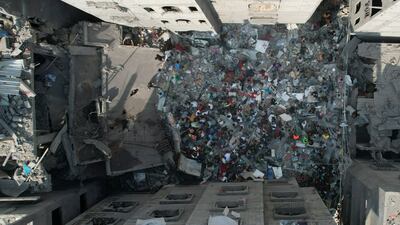
Palestinians look for survivors of Israeli bombardment of the Gaza Strip at Nusseirat refugee camp. AP -
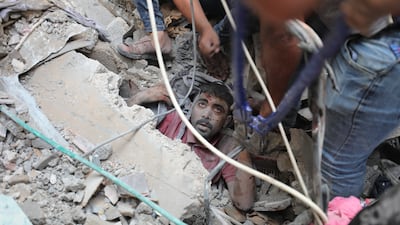
A survivor is found in the rubble in Nusseirat. AP -
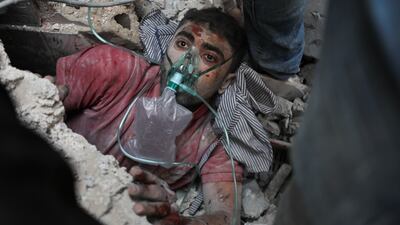
A man is given oxygen and pulled from the rubble in Nusseirat. AP -
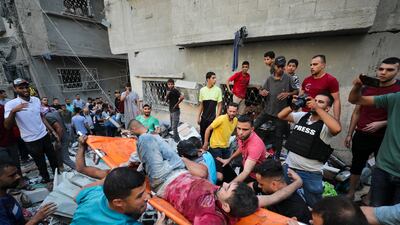
This desperate search for survivors is being replicated across the Gaza Strip. AP -

Yocheved Lifshitz speaks to the media outside a Tel Aviv hospital after being released by Hamas. EPA -
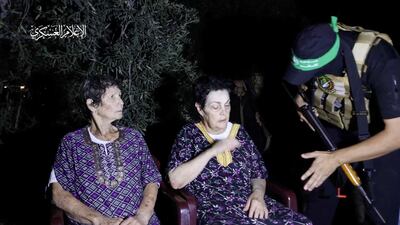
Israeli women who were held hostage by Palestinian Hamas militants, Yocheved Lifshitz and Nurit Cooper (also known as Nurit Yitzhak), are released by the militants. Reuters -
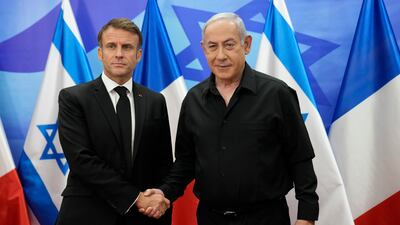
Israeli Prime Minister Benjamin Netanyahu, right, welcomes French President Emmanuel Macron before their talks in Jerusalem. AP -

Palestinians search for casualties at the site of an Israeli air strike on a house in Khan Younis, in the southern Gaza Strip. Reuters -

Palestinians inspect the damage of a destroyed house that was hit by an Israeli air strike in Khan Younis. AP -
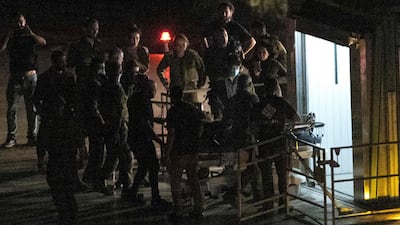
Ms Cooper and Ms Lifshitz arrive at the Tel Aviv Sourasky Medical Centre after being released by Hamas on Monday. AFP -
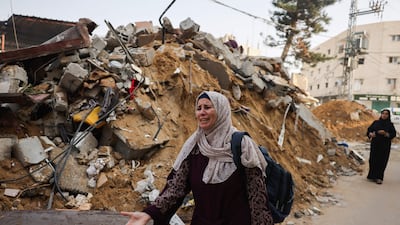
A woman cries next to the rubble of a building after Israeli strikes on Rafah in the south of the Gaza Strip. AFP -
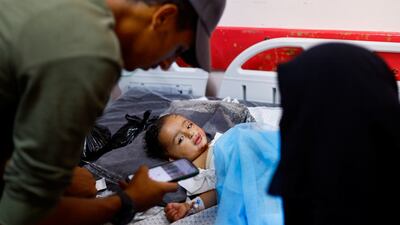
Wateen, a 14-month-old Palestinian baby, who was wounded in an Israeli strike that killed her mother and injured her twin brother Ahmed, recovers at Nasser hospital, in Khan Younis, Gaza Strip. Reuters -
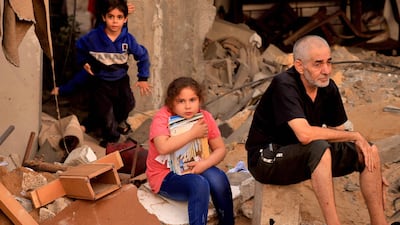
A Palestinian girl clutches salvaged books as people look for survivors in the rubble of a destroyed building hit in an Israeli strike in Khan Younis. AFP -
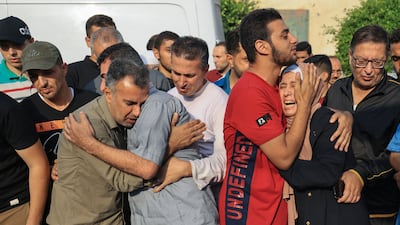
People mourn during the funeral of members of the Abu Morad family who died following Israeli strikes, in Khan Younis. AFP -
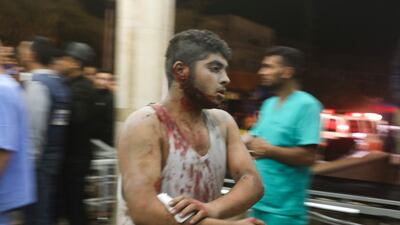
A wounded Palestinian man arrives at Nasser Medical Complex, following Israeli air strikes on the town of Khan Younis in the southern Gaza Strip. AP -
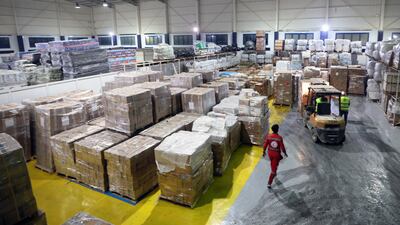
Red Crescent Society employees sort humanitarian aid bound for Palestinians in Gaza, at a warehouse in Arish, Egypt. EPA -
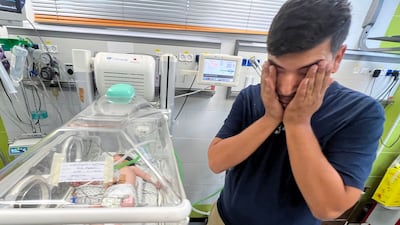
Ayman Abou Chamalah stands next to his daughter Mecca as she receives care inside an incubator at a hospital in Rafah. AFP -
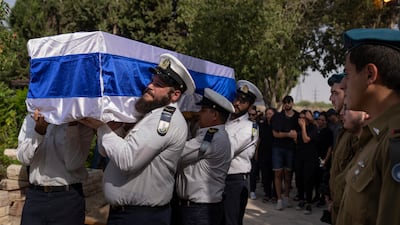
Israeli soldiers carry the coffin of Erik Kraunik, chief of security in the kibbutz of Be'eri, during his funeral at a cemetery in Yehud, Israel. AP -
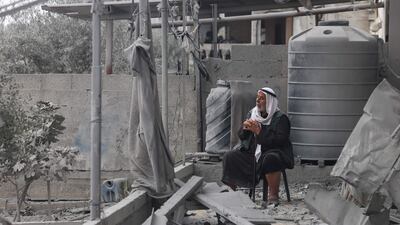
A man sits among the rubble of a building destroyed in Israel's bombardment of Rafah, in the southern Gaza Strip. AFP -
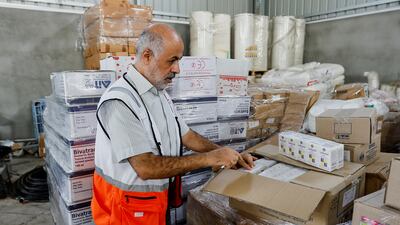
A Red Crescent worker sorts aid for Palestinians in Khan Younis, in the southern part of the blockaded enclave. Reuters -
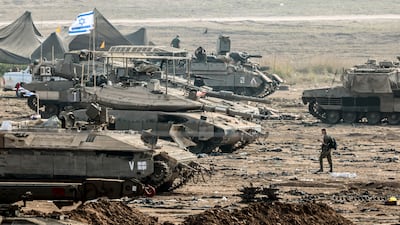
Israeli soldiers take part in a drill near the border with Gaza ahead of an expected ground invasion. EPA -
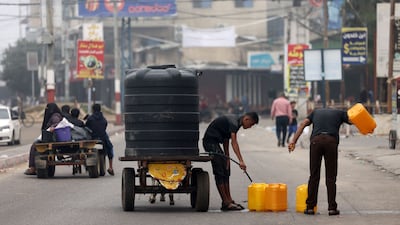
Men fill fuel containers with drinking water in Rafah. AFP -

Smoke billows over Gaza after an air strike, as seen from southern Israel. AP -
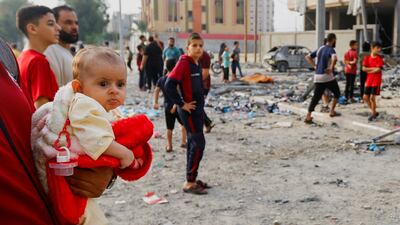
A person holds a child as Palestinians gather in Khan Younis at the site of a house destroyed during an Israeli bombardment. Reuters -
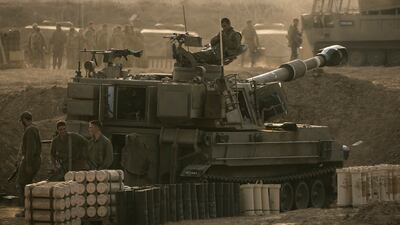
Israeli soldiers sit on top of a tank near the border with Gaza. Getty Images -
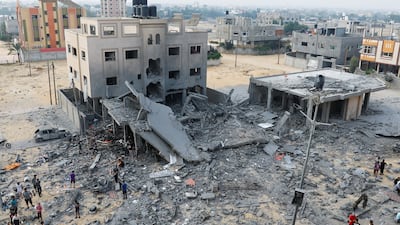
Buildings destroyed by Israeli air strikes in Khan Younis. Reuters -
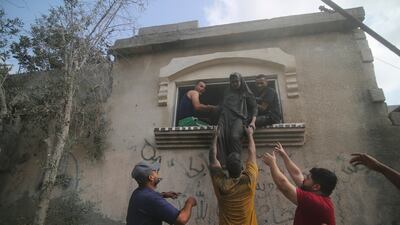
Palestinians are evacuated from a building in Rafah that was hit during Israel's bombardment. AP -
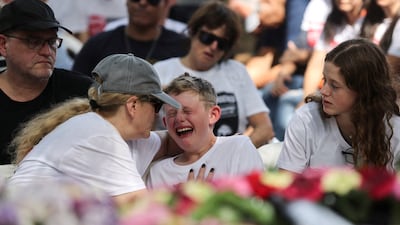
Shahar Idan, 9, mourns during the funeral of his brother Maayan, 18, who was killed by Hamas gunmen in the kibbutz of Nahal Oz. His father Tzahi is being held hostage in Gaza. Reuters -

Palestinian doctors treat a premature baby at Al Aqsa Hospital in Deir Al Balah, Gaza. AP -
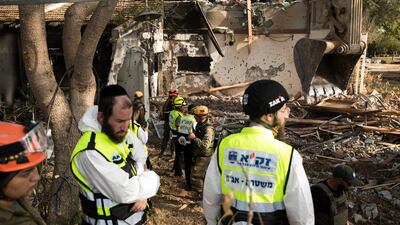
Rescue crews search for bodies after Hamas militants attacked the kibbutz of Be'eri in Israel. Getty Images -
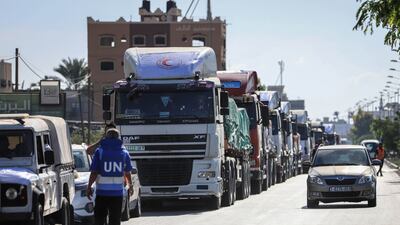
Lorries carrying humanitarian aid head to Deir Al Balah after crossing from Egypt through Rafah. Bloomberg -
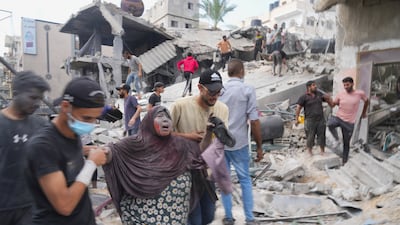
Palestinians evacuate survivors in Deir Al Balah after an Israeli bombardment. AP -
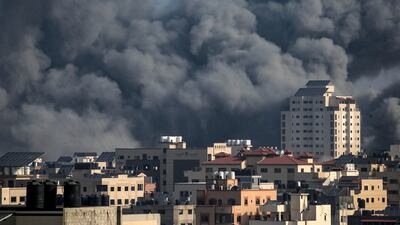
Smoke rises after Israeli air strikes on Gaza. EPA -
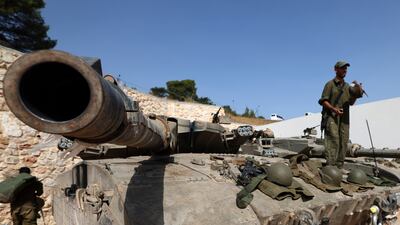
Israeli soldiers at a position along the border with Lebanon. EPA -

A woman leans against the window of an ambulance outside Kuwait Hospital after an Israeli strike in Rafah. AFP -
A Palestinian cries as the body of his daughter is recovered from beneath the rubble of a building destroyed during an Israeli air strike on Rafah. AFP -
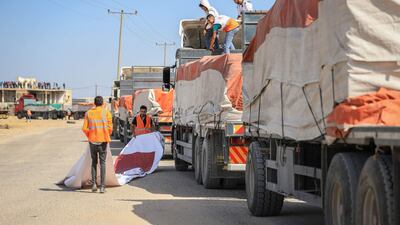
A convoy carrying humanitarian aid arrives in Rafah after crossing into the Gaza Strip from Egypt. Bloomberg -
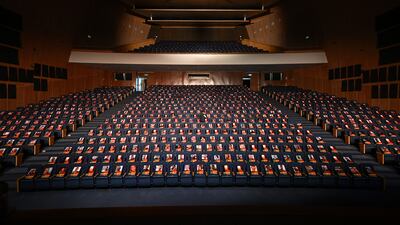
The pictures of more than 1,000 people abducted or killed during the attack by Hamas militants are displayed on empty seats at Tel Aviv University. Getty -
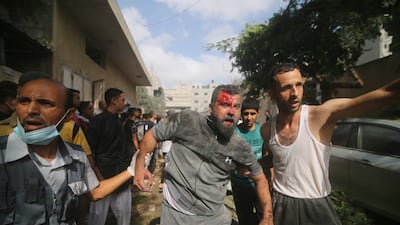
Palestinians are evacuated from buildings in Rafah after the bombardment of the Gaza Strip. AP -
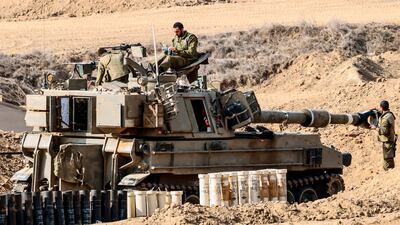
Israeli soldiers gather at an undisclosed location near the border with Gaza. EPA -
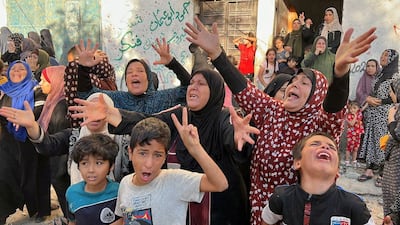
Palestinians mourn outside a house in Gaza struck by Israel. Reuters -
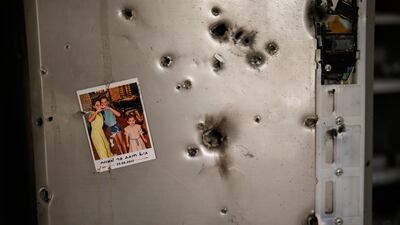
A bullet-riddled fridge in a house in the kibbutz of Kissufim in southern Israel, where 14 people were killed and four were abducted by Hamas militants on October 7. AP -
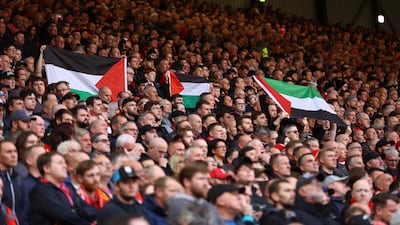
Football fans inside Anfield stadium hold up Palestine flags during the Liverpool-Everton derby on Saturday. Reuters -
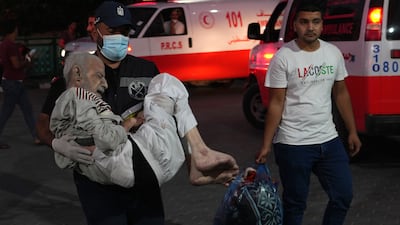
Palestinians wounded in the bombardment of Gaza are taken to Al Asa Hospital in Deir Al Balah. AP -
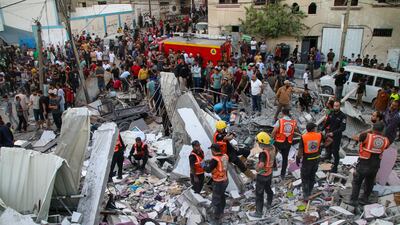
Rescuers search for victims and survivors in buildings destroyed by air strikes in Khan Younis, Gaza. Getty -
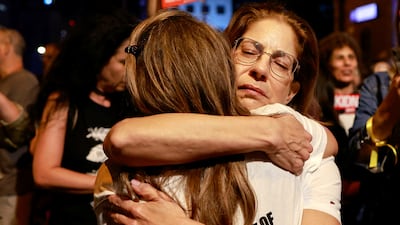
Residents of Tel Aviv show support for the families of hostages being held in Gaza by Hamas. Reuters


Pressure is also mounting from Israelis themselves, as the families of hostages ask for the return of their loved ones to be made a priority. Outside the Israeli military’s headquarters in Tel Aviv, some relatives of those being held captive have organised sit-ins, begging their army to negotiate.
With the hostages in mind, there are two opposing opinions on what a ground invasion would achieve. Some say that the assault could put the hostages’ lives at risk but others believe the threat will lead to hostages being released. There are fears that the hostages could be used as “human shields” as Hamas seeks to protect itself.
At a press briefing at the Israeli embassy in London, the families of hostages highlighted this “moral dilemma”.
British-Israeli Ayelet Svatitzky, whose mother and brother are being held hostage by Hamas, said Israel had a dual remit – to protect the hostages but also to ensure her family could continue to live safely in southern Israel.
“Israel has a responsibility for hostages and for their release,” she said. “But they also have a responsibility for life to exist on the border of Gaza.”
Some Israeli politicians have suggested neutralising Hamas should take priority over the hostages. "We have to be cruel now and not to think too much about the hostages [in Gaza]," Finance Minister Bezalel Smotrich was reported to have said.
"It's time for action."
The Israeli government will also be considering the regional implications of a ground invasion, said Prof Yossi Mekelberg, associate fellow at Chatham House’s Mena programme.
“What will it do to relations with countries that have already signed a peace agreement with Israel? A ground invasion risks destabilising the region and creating a potential refugee crisis in the region and in Europe,” he told The National.
Israel is in danger of compromising its existing diplomatic relations with the Arab world – which underwent a new wave of normalisation agreements through the Abraham Accords in 2020. An influx of Palestinian refugees into the Egypt – which Cairo views as a red line to its 40-year peace agreement with Israel – is only one of the factors that could jeopardise these relations.
But at the core of it is an existential question about the lasting “image of Israel” itself, both at home and abroad.
Israel neutralising Hamas through the complete destruction of the Gaza Strip and at the expense of Palestinian lives may have repercussions for the long term. “As Israel has been warned by President Biden and others, democracies fight differently from terrorists and Israel’s reputation as a democracy would be tarnished if the death toll among Palestinians continues to rise,” said Prof Mekelberg.

