


When the Taliban swept back to power in Afghanistan two years ago, Malika’s hopes of attending university were shattered.
She moved to Kabul five years previously to attend a school for the blind – having been born with the condition in the central city of Bamyan – and was able to edge closer to her dream.
“We were told that we would have to leave school, that we could be killed or passed over to them, that they were really, really bad people. I was very afraid,” she said of the Taliban from Kabul.
Millions of women had their rights taken away overnight when the Taliban returned to power in August 2021, prompting thousands to flood Kabul Airport in desperation to flee the country.
The UN on Tuesday called the extremist group's rule “the most comprehensive, systemic and unparalleled assault on the rights of women and girls”.
Women have been banned from working in NGOs, while beauty salons have been shut down as the Taliban snuffs out the last pockets of public space still open to females.
Malika, 21, was taught how to sew at the Kabul school, run by a foreign NGO. She relied on her three brothers and sister to help her navigate daily life and sell the products she made at a local market.
Malika said she fell into a deep depression when the Taliban seized power, as she could no longer attend the school.
"I had many hopes, despite my health and the situation, and I thought of going to university or opening my own business here or abroad to support myself and my family in Bamyan,” she said.
“I was embarrassed that I couldn’t go to school or do anything myself for my family. I’m blind, I can’t read or see anything. What should I do?"
Women banned from university education in Afghanistan - in pictures
-
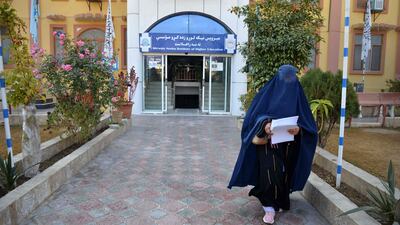
Afghanistan's Taliban rulers have banned university education for women nationwide. AFP -
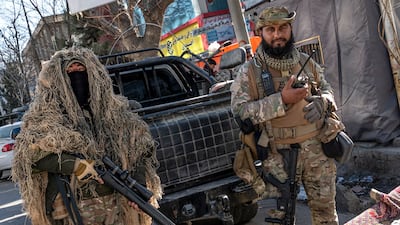
Women were stopped by armed guards from entering Afghan university campuses, a day after the nation's Taliban rulers banned them from higher education. AFP -
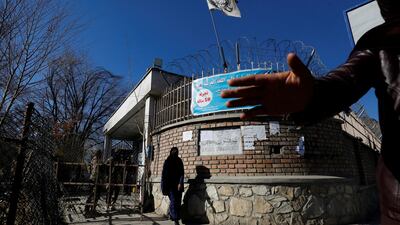
The move has provoked condemnation from the United States and the United Nations over another assault on human rights in the country. Reuters -
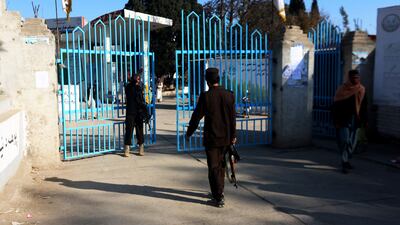
Taliban security personnel stand guard at the entrance gate of a university in Jalalabad. AFP -
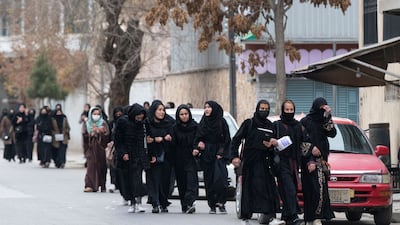
Schoolgirls return home after sitting their high school graduation exams in Kabul. AFP -
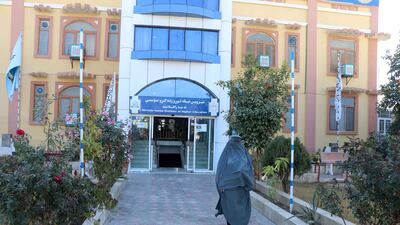
An Afghan female student leaves the Mirwais Neeka Institute of Higher Education in Kandahar. EPA -
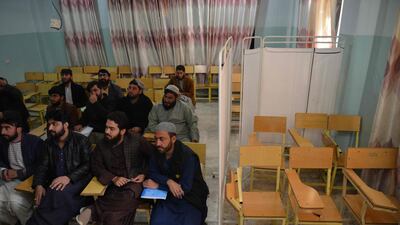
A curtain separates males and females at a university lecture in Kandahar Province. AFP


Samira, 22, works with a start-up called Aseel that helps women across Afghanistan to work despite the Taliban forbidding them from doing so in most sectors.
“Many of these women had lost their husbands, fathers, brothers. They were the only economic support for their families and then they were banned from going to work and leaving their homes,” she told The National from Kabul.
Malika is one of 3,000 women who have been able to earn a living through the site, which exports locally made products to the US and Europe and delivers aid to needy households.
With the Taliban closing off even more routes, it is also helping women to learn about technology and to work remotely from home.
“We're trying our best to create opportunities for women who are banned from university and from leaving their homes,” said Samira.
Malika began selling her products on the platform a year ago, relying on techniques she learnt at the school for the blind in Kabul.
“I earn about $50 a month but it’s enough for me in this crisis, for a blind lady that can’t see or work. Still, I’m keeping some hope alive,” she said.
“Life was already really difficult for me. I can’t do anything or see anyone but I can help other blind women to work.”
The black day
Despite her disability, Malika has leaned on her talents to help other women into work.
Shuttered in her home, she spends her days sewing and speaking to some of more than 120 women on Zoom, many of whom are also blind.
“I run seminars about peacebuilding, management, psychology, about how to be hopeful for the future,” she said.
“I teach them how to be resilient and how they can start their own business and support their families.”
She has helped dozens of other women join her in selling their products online and leaves her home only to collect their items.
She brushed away concerns for her safety, saying women under Taliban rule are “never safe”.
“It’s never secure but I go out at a special time to collect all the handicrafts and deliver it to people who can sell it online,” said Malika.
“I don’t think I’m very intelligent but I’m doing something helpful at least. I hope I can help others, especially women in my situation.”
Based in the capital, NGO worker Rokhan is also working to defy the Taliban, helping dozens of girls across the country to access learning resources after being shut out from school.
In his inbox are dozens of messages asking for help on leaving the country and applying for scholarships.
There also many threats from the Taliban.
"August 15 is the black day of Afghanistan," he told The National. "It's the day of failure for Afghanistan, the failure of human rights."
Working with foreign NGOs, now out of the question for his female colleagues, he said many families were now led by women, their husbands and fathers killed in conflict. Those families are now in dire poverty.
"Sometimes I lose hope for life but my life is not important because right now our generation of Afghan girls need their rights," he said.

