


Yassin, a 27-year-old ice cream vendor in the French city of Annecy, did not make any sales on Friday. Instead, he decided to stay home for a few days with his family in Cluses, about 60km east of Annecy.
For the past four years, he has worked close to a playground in a park where four toddlers and two elderly men were stabbed by a Syrian refugee on Thursday.
He now fears a racist backlash, after calls for violence circulated on social media following the gruesome incident that has shocked France.
Screenshots of the purported messages, viewed by The National, called for “spilling blood”. No incidents of violence have been reported so far.
Right-wing politicians have also tried to seize the moment to spark a fresh debate on immigration in a country that is sharply divided over the matter.
“Even walking in the street, I’m going to keep my eyes down,” said Yassin, a French citizen of Tunisian heritage. “I’m French, but I have a beard and I look Arab.”
He declined to give his surname out of fears for his safety.
Compounding Yassin’s concern is a recent night-time torch-light march organised last month.
In a video posted on Twitter, a dozen men and women wearing black and chanting nationalist slogans appear to be walking through Annecy.
“Blue, white, red, France for the French!” they chanted, in reference to the colours of the French flag.
The organiser of the protest was summoned to appear in court in September. French media described its participants as members of an “ultra-right” group.
Yet Yassin’s fears shocked his colleague Jacky, who, dressed in a pink and blue outfit, also sells ice cream by Annecy’s Lake on an electric bicycle.
“I’m surprised – I never thought he’d be afraid like this,” he said. “I told him to come to work and that nothing would happen to him, but he would not listen.”
Disbelief and sorrow
The police was heavy in Annecy following the attack on Thursday and the situation remained calm a day later as locals gathered to lay flowers, candles and toys at the playground where the incident occurred.
The most commonly expressed feelings were stunned disbelief and sorrow for the children’s suffering. The wounded toddlers are aged between 22 months and three years old.
Most people The National spoke to said they believed that the attacker must be mentally unwell. None connected the attack to immigration.
“I don’t know if the incident should be politicised,” said Alain Demare, a 54-year-old fruit vendor. “Maybe he’s just a madman who lost his mind. It depends on how you see it.”
Photos circulated earlier online of a cardboard placard held by a woman dressed in white standing in the playground that read “opening borders means closing coffins”.
The placard was nowhere to be seen when The National visited.
The suspect, Abdelmasih Hanoun, is a 31-year-old Syrian from the north-eastern town of Al Hasakeh. He obtained asylum in Sweden 10 years ago.
Swedish media reported that he had been convicted for illegally claiming benefits in the country.
Late last year, Mr Hanoun entered France legally. He was reportedly estranged from his wife and child and was sleeping rough.
He told police after his arrest that he is Christian. A video of the attack shows him wielding a knife and shouting “in the name of Jesus Christ”.
The attack came three days after his third request for Swedish citizenship was denied, according to local broadcaster BFM TV.
His wife, who is also Syrian, obtained Swedish citizenship in June 2021.
Police have reportedly struggled to interrogate Mr Hanoun as he does not speak French and refuses to answer questions or allow them access to his phone.
Policemen tried to take him out of his cell on Thursday to bring him to the scene of the crime but he refused and rolled around on the ground, according to BFM TV.
They called a psychiatrist, who stated that he was depressed and anxious.
So far, the French judiciary does not consider the incident to be a terrorist attack.
'They put us in danger'
Yet far-right politicians quickly tried to drum up fears.
Far-right National Rally figurehead Marine Le Pen told French radio that France should “regain sovereignty” on immigration.
Eric Zemmour, a far-right politician who scored 7 per cent in the latest presidential election in France, tweeted that people had the right to be angry.
“They will try to hold your anger against you,” he wrote, in apparent reference to the government. “They put us in danger.”
The government has tried to quell the swelling debate, with Prime Minister Elisabeth Borne warning during a visit to Annecy to not “get all worked up” about immigration issues and wait for the investigation to move forward.
French President Emmanuel Macron on Friday visited four victims in two separate hospitals.
A 70-year-old man who was accidentally shot by a policeman after he was stabbed is currently in hospital in Annecy.
A second man aged 78 sustained a light knife wound and was not admitted to hospital.
Three of the children, including two French cousins, are being cared for in the nearby city of Grenoble.
The President said that they were “heading in the right direction”.
One of the victims, a three-year-old British girl named Ettie, was awake and watching television, according to Mr Macron.
The fourth child, a Dutch citizen, is in a Swiss hospital over the border in Geneva. She is “out of danger,” according to the Dutch government.
Mr Macron and his wife Brigitte also met Henri, a 24-year-old pilgrim who has been hailed as a hero for chasing the attacker with his backpack.
“I have one request: to attend the inauguration of Notre-Dame,” asked Henri, referring to Paris’s famed cathedral that is under reconstruction after a devastating fire in 2019.
“I’ll look after that myself,” answered Mr Macron.
Syrians living in France have strongly condemned the attack and rejected attempts by politicians to blame asylum seekers.
“What happened was horrible. I don’t know what kind of monster can do that to kids,” said Maria, a 26-year-old student of Syrian heritage who moved to Grenoble in 2015.
-
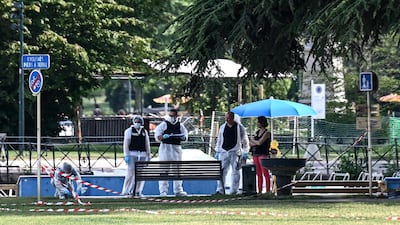
Forensic police officers at the scene of the stabbing attack in Annecy. AFP -
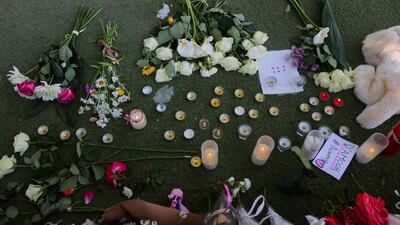
Flowers and candles left at Le Paquier park, where several children and adults were injured in the knife attack. Reuters -

The children's playground at Le Paquier park near the lake in Annecy. Reuters -
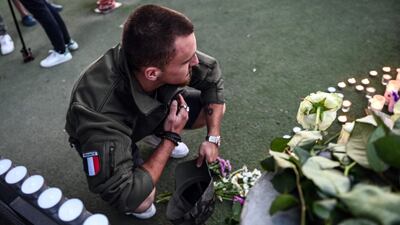
A man by a makeshift memorial at the playground. AFP -
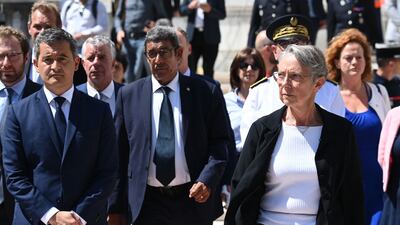
French Prime Minister Elisabeth Borne, right, and Interior and Overseas Minister Gerald Darmanin, left, leave the Haute Savoie prefecture after a stabbing attack in Annecy. AFP -
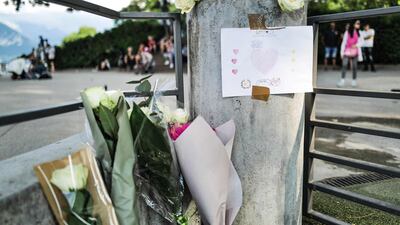
Flowers and messages of support. AFP -
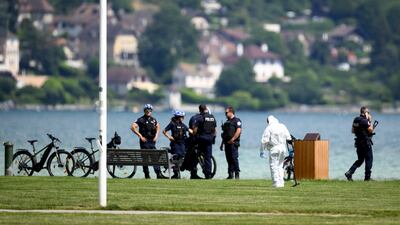
French police gather on the shore of Annecy Lake. EPA -
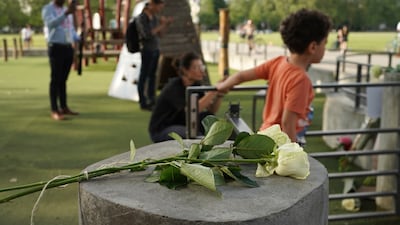
Flowers left at the playground after the knife attack. AP -
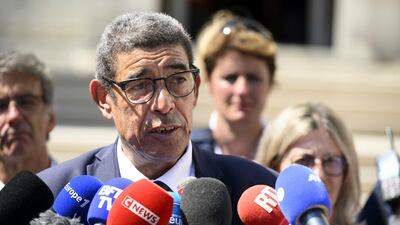
Annecy Mayor Francois Astorg addresses the media following the attack. AP -
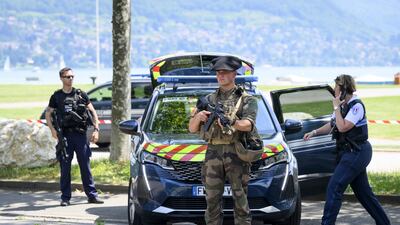
Security forces gather at the scene of the knife attack. AP -
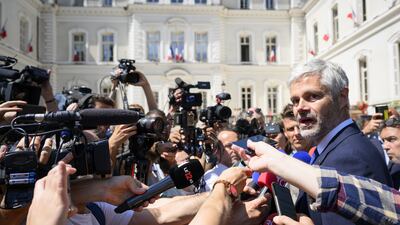
Laurent Wauquiez, right, president of the Regional Council of Auvergne-Rhone-Alpes, speaks to the press following the attack. EPA -
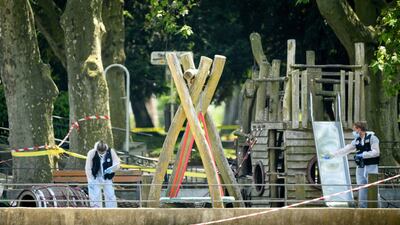
Police officers work inside a cordoned-off area at the site of the attack. EPA -
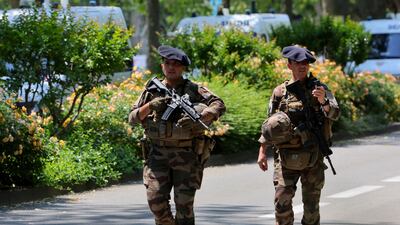
French soldiers secure the area after the attack. Reuters -
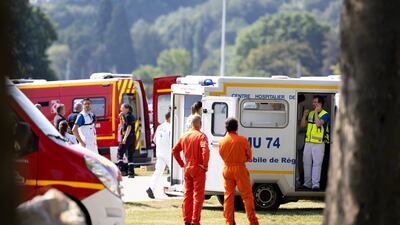
Emergency services gather at the scene. EPA -
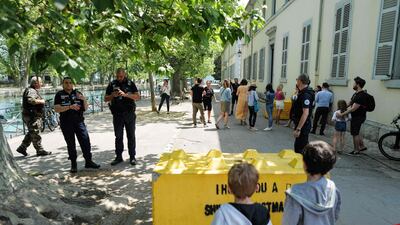
French police set up a cordon in Annecy. AFP -
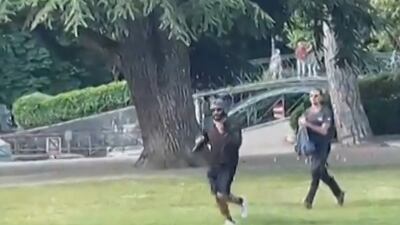
The man accused of the stabbing is seen running away, holding a knife. AFP -
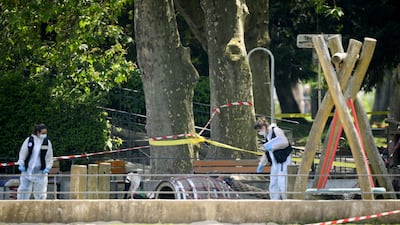
Police officers inside a cordoned-off area in Annecy. EPA -
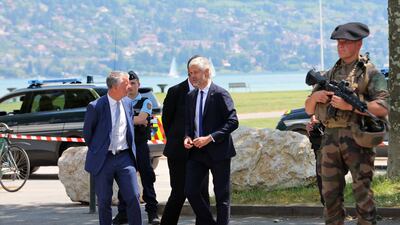
Mr Wauquiez, the regional council president, arrives at the scene. Reuters -

A medical helicopter landing in Annecy. AP -

Emergency services at the scene of the knife attack. EPA -

Police seal off the area. Reuters -
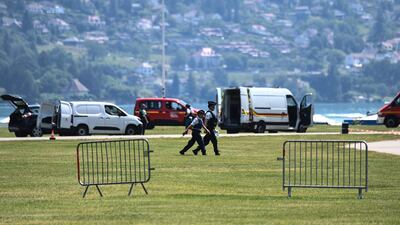
A man reportedly attacked a group with a knife as children were playing in a park near the lake in the town. AFP -
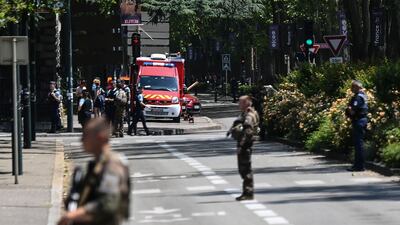
The suspect is a Syrian in his 30s with legal refugee status in France, a police official said. AFP -
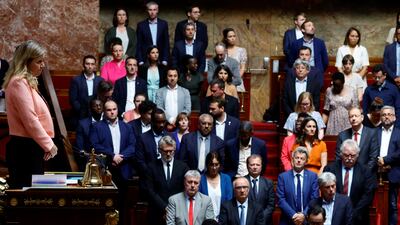
Yael Braun-Pivet, President of the National Assembly, and members of parliament take part in a minute of silence after the knife attack, in Paris. Reuters


She said she had appreciated shows of support for the Syrian community in France when it was hit by racist killings in the past. She added that it was important for Syrians to reciprocate.
“I hope it makes people feel better. I’m with them as a Syrian,” she said.
Only 36,000 Syrians have obtained asylum in France since the start of a civil war in their country in 2011, said Michel Morziere, who heads an NGO that supports Syrian refugees.
“We are not surprised by the reaction of certain right-wing and far-right-wing politicians,” he said. The NGO issued a statement on Thursday afternoon warning against stigmatising refugees in France following the attack.
Mr Morziere said that he believed that political reactions “would have been worse if the attacker had entered France illegally”.
Back in Annecy, a city famed for its stunning natural surroundings and historic quarter, tourists continued flocking to the scenic park where the attack took place.
An Emirati visitor, Ibrahim Al Darmaki, 29, was taking a stroll with his wife and two young children by Annecy Lake, situated at the foot of the French Alps.
He told The National that he felt safe due to the high number of police in the city.
But he also felt that some people were “staring” at him and his family. This might be possibly linked to fears caused by Thursday's attack, according to him.
“They see Arabs and mix everyone together, and that’s not right,” he said.
Yet he said he was unbothered.
“I'm here as a tourist and leaving soon, so it's not really important,” he said. “Hopefully, everything will be fine.”
Mr Hamoud's actions do not reflect Arabs as a whole, stressed Mr Al Darmaki.
“Whatever his motivations are, he only represents himself.”


