A woman covers her head with a cloth during a heatwave in Chennai, India, this month. EPA

A fifth of humans could be exposed to dangerous heat by end of century


  • English
  • Arabic

Current climate policies will expose more than a fifth of humans to dangerously hot temperatures by 2100, a study says.

Despite the Paris Agreement pledge to keep global warming at 1.5°C above pre-industrial levels, projections are that current policies will result in 2.7°C warming by the end of the century.

Scientists from the Global Systems Institute of the University of Exeter, associated with the Earth Commission and Nanjing University, say that about 60 million people are already exposed to an average temperature of 29°C or higher, which is classed as dangerous heat.

Two billion – 22 per cent of the projected end-of-century population – would be exposed to this at 2.7°C of global warming.

“The costs of global warming are often expressed in financial terms, but our study highlights the phenomenal human cost of failing to tackle the climate emergency,” said Prof Tim Lenton, director of the Global Systems Institute at the University of Exeter.

Malaysia and other Southeast Asian countries are grappling with record temperatures. Selangor, Malaysia, May 20, 2023. Bloomberg

The paper, 'Quantifying the Human Cost of Global Warming', highlights the “huge potential” for decisive climate policy to limit the human cost of climate change. It says rapid action to cut greenhouse gas emissions can prevent most of the damage.

“Limiting global warming to 1.5°C rather than 2.7°C would mean five times fewer people in 2100 being exposed to dangerous heat,” said Prof Lenton.

The research, was published in the journal Nature Sustainability, defines the concept of a human “niche”.

It says that human population density peaks in places with an average temperature of about 13°C, with a secondary peak at about 27°C, especially in South Asia.

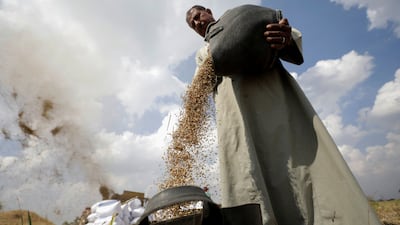
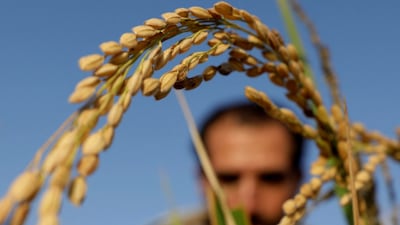
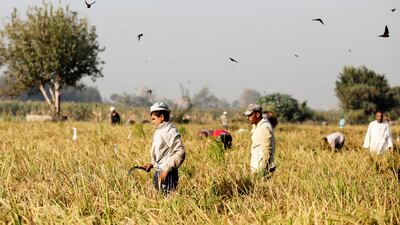
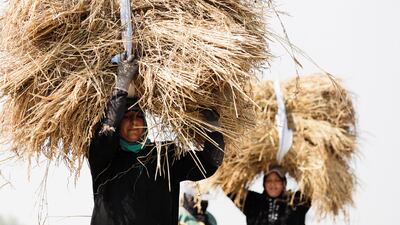
  • Farmer Ezzat Mostafa, 62, winnows rice in a field in Qaha, north of Cairo, Egypt. All photos: Reuters
    Farmer Ezzat Mostafa, 62, winnows rice in a field in Qaha, north of Cairo, Egypt. All photos: Reuters
  • Mr Mostafa says this season has been difficult because of water shortages and severe heat.
    Mr Mostafa says this season has been difficult because of water shortages and severe heat.
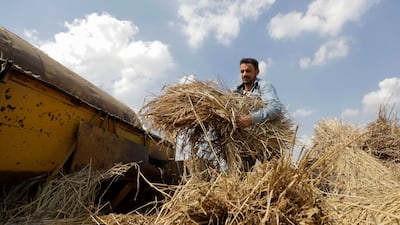
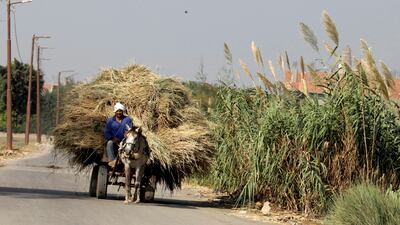
  • Qaha is located in the rich farmland of the southern part of the Nile Delta.
    Qaha is located in the rich farmland of the southern part of the Nile Delta.
  • As Egypt hosts the UN's Cop27 climate talks, the country’s leaders have said the changing conditions the Delta, known for millennia for its fertile soil, are a major concern.
    As Egypt hosts the UN's Cop27 climate talks, the country’s leaders have said the changing conditions the Delta, known for millennia for its fertile soil, are a major concern.
  • Saltwater intrusion, caused by rising seas, is the most challenging threat to the Delta, experts say.
    Saltwater intrusion, caused by rising seas, is the most challenging threat to the Delta, experts say.
  • The Nile Delta is home to about 40 per cent of Egypt’s 104 million people and accounts for half of the country’s economy, according to the UN food agency.
    The Nile Delta is home to about 40 per cent of Egypt’s 104 million people and accounts for half of the country’s economy, according to the UN food agency.
  • The government is introducing measures, including barriers and run-off systems, to protect the Delta's people from the effects of climate change.
    The government is introducing measures, including barriers and run-off systems, to protect the Delta's people from the effects of climate change.

Although less than 1 per cent of humans currently live in places of dangerous heat exposure, the study shows that climate change has already put 9 per cent of the global population – more than 600 million people- outside the niche.

“Most of these people lived near the cooler 13°C peak of the niche and are now in the ‘middle ground’ between the two peaks. While not dangerously hot, these conditions tend to be much drier and have not historically supported dense human populations,” said Prof Chi Xu, of Nanjing University.

While some cooler places may become more habitable due to climate change, population growth is projected to be highest in places at risk of dangerous heat, especially India and Nigeria, the study found.

Assuming a future population of 9.5 billion people, India would have the greatest population exposed at 2.7°C global warming – more than 600 million.

At 1.5°C, this figure would be far lower, at about 90 million.

Prof Marten Scheffer, of Wageningen University, said the economic costs of carbon emissions “hardly reflects the impact on human well-being”.

“Our calculations now help bridge this gap and should stimulate asking new, unorthodox questions about justice,” he said.

The study found that some countries such as Burkina Faso and Mali would become almost completely dangerously hot with a 2.7°C temperature increase.

Brazil would have the largest land area exposed to dangerous heat.

Classification of skills

A worker is categorised as skilled by the MOHRE based on nine levels given in the International Standard Classification of Occupations (ISCO) issued by the International Labour Organisation. 

A skilled worker would be someone at a professional level (levels 1 – 5) which includes managers, professionals, technicians and associate professionals, clerical support workers, and service and sales workers.

The worker must also have an attested educational certificate higher than secondary or an equivalent certification, and earn a monthly salary of at least Dh4,000. 

Uefa Nations League: How it works

The Uefa Nations League, introduced last year, has reached its final stage, to be played over five days in northern Portugal. The format of its closing tournament is compact, spread over two semi-finals, with the first, Portugal versus Switzerland in Porto on Wednesday evening, and the second, England against the Netherlands, in Guimaraes, on Thursday.

The winners of each semi will then meet at Porto’s Dragao stadium on Sunday, with the losing semi-finalists contesting a third-place play-off in Guimaraes earlier that day.

Qualifying for the final stage was via League A of the inaugural Nations League, in which the top 12 European countries according to Uefa's co-efficient seeding system were divided into four groups, the teams playing each other twice between September and November. Portugal, who finished above Italy and Poland, successfully bid to host the finals.

Biog

Age: 50

Known as the UAE’s strongest man

Favourite dish: “Everything and sea food”

Hobbies: Drawing, basketball and poetry

Favourite car: Any classic car

Favourite superhero: The Hulk original

The specs
Engine: 77.4kW all-wheel-drive dual motor
Power: 320bhp
Torque: 605Nm
Transmission: Single-speed automatic
Price: From Dh219,000
On sale: Now
'The Batman'

Stars:Robert Pattinson

Director:Matt Reeves

Rating: 5/5

Mercer, the investment consulting arm of US services company Marsh & McLennan, expects its wealth division to at least double its assets under management (AUM) in the Middle East as wealth in the region continues to grow despite economic headwinds, a company official said.

Mercer Wealth, which globally has $160 billion in AUM, plans to boost its AUM in the region to $2-$3bn in the next 2-3 years from the present $1bn, said Yasir AbuShaban, a Dubai-based principal with Mercer Wealth.

Within the next two to three years, we are looking at reaching $2 to $3 billion as a conservative estimate and we do see an opportunity to do so,” said Mr AbuShaban.

Mercer does not directly make investments, but allocates clients’ money they have discretion to, to professional asset managers. They also provide advice to clients.

“We have buying power. We can negotiate on their (client’s) behalf with asset managers to provide them lower fees than they otherwise would have to get on their own,” he added.

Mercer Wealth’s clients include sovereign wealth funds, family offices, and insurance companies among others.

From its office in Dubai, Mercer also looks after Africa, India and Turkey, where they also see opportunity for growth.

Wealth creation in Middle East and Africa (MEA) grew 8.5 per cent to $8.1 trillion last year from $7.5tn in 2015, higher than last year’s global average of 6 per cent and the second-highest growth in a region after Asia-Pacific which grew 9.9 per cent, according to consultancy Boston Consulting Group (BCG). In the region, where wealth grew just 1.9 per cent in 2015 compared with 2014, a pickup in oil prices has helped in wealth generation.

BCG is forecasting MEA wealth will rise to $12tn by 2021, growing at an annual average of 8 per cent.

Drivers of wealth generation in the region will be split evenly between new wealth creation and growth of performance of existing assets, according to BCG.

Another general trend in the region is clients’ looking for a comprehensive approach to investing, according to Mr AbuShaban.

“Institutional investors or some of the families are seeing a slowdown in the available capital they have to invest and in that sense they are looking at optimizing the way they manage their portfolios and making sure they are not investing haphazardly and different parts of their investment are working together,” said Mr AbuShaban.

Some clients also have a higher appetite for risk, given the low interest-rate environment that does not provide enough yield for some institutional investors. These clients are keen to invest in illiquid assets, such as private equity and infrastructure.

“What we have seen is a desire for higher returns in what has been a low-return environment specifically in various fixed income or bonds,” he said.

“In this environment, we have seen a de facto increase in the risk that clients are taking in things like illiquid investments, private equity investments, infrastructure and private debt, those kind of investments were higher illiquidity results in incrementally higher returns.”

The Abu Dhabi Investment Authority, one of the largest sovereign wealth funds, said in its 2016 report that has gradually increased its exposure in direct private equity and private credit transactions, mainly in Asian markets and especially in China and India. The authority’s private equity department focused on structured equities owing to “their defensive characteristics.”

Dubai Bling season three

Cast: Loujain Adada, Zeina Khoury, Farhana Bodi, Ebraheem Al Samadi, Mona Kattan, and couples Safa & Fahad Siddiqui and DJ Bliss & Danya Mohammed 

Rating: 1/5

Updated: May 22, 2023, 3:01 PM