

Britain's Home Secretary Suella Braverman has declined to say when flights to Rwanda could take off, as she appeared to play down suggestions that the stalled policy of deporting asylum seekers could begin this summer.
The Home Secretary also insisted that ministers were looking at “all sorts of land and sites and vessels” to house asylum seekers in the UK, but refused to say whether the UK government was close to signing a deal on procuring a barge.
Touring broadcast studios on Sunday, Ms Braverman faced questions about the government’s record on illegal migration.
UK Prime Minister Rishi Sunak and Ms Braverman have said that “stopping the boats” across the Channel is a crucial priority, but campaigners have condemned much of the government’s response, with the controversial Illegal Migration Bill described as an effective “asylum ban”.
Ministers sparked further controversy after unveiling plans to house asylum seekers in disused military bases to accommodate their “essential living needs and nothing more”, with ferries and barges also being explored as options.
Ms Braverman on Sunday could not say when flights to Rwanda would take off, telling Sky News: “We are making very steady progress.
“I am not going to give a deadline as to when flights will take off.”
The government’s plan to forcibly remove migrants to the African nation is currently grounded by the courts. It was deemed lawful by the High Court, but legal challenges continue.
Later on the BBC, Ms Braverman declined to confirm a Sun On Sunday report that ministers are close to signing a contract with Portland Port Authority over “floating accommodation for asylum seekers”.
She told the BBC's Sunday with Laura Kuenssberg programme that ministers were looking at “all sorts of land and sites and vessels” for migrant accommodation.
She said: “We’re talking to a lot of operators. A lot of owners of lots of different kinds of property around the country. We’ve announced sites earlier this week.
“Those are sites where we have a level of confidence we’re able to be public about those sites.
“We’re aiming to roll out these sites very quickly and start making them fit for accommodation purposes and relocate people on to those sites for asylum purposes.
“But we’re looking at all options. We’re looking at all sorts of land and sites and vessels and we’re in negotiations with a high number of operators around the country.”
The Home Secretary also insisted that Rwanda is a “safe” country to send asylums seekers, insisting that High Court judges had sided with the government over United Nations concerns about the safety of asylum seekers there.
-
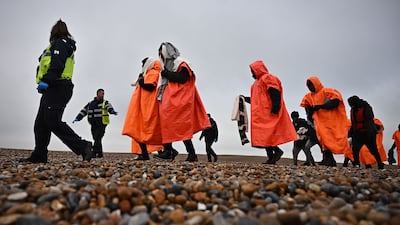
The UK's Home Secretary Suella Braverman has unveiled new legislation to address small boats carrying migrants across the English Channel. AFP -
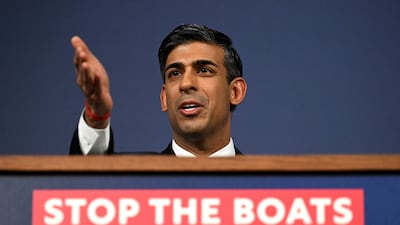
British Prime Minister Rishi Sunak unveiled the plans for new laws to curb crossings. PA -
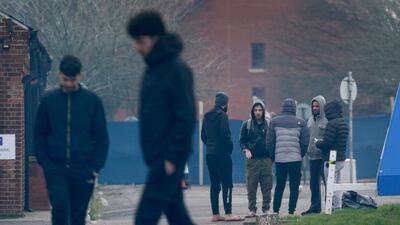
Migrants housed at Napier Barracks in Folkestone, Kent. Almost 3,000 migrants have made unauthorised crossings of the English Channel this year. PA -
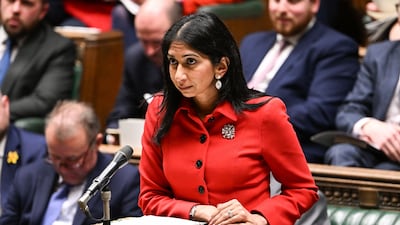
Ms Braverman said not responding to the problem would be to 'betray the will of the people we were elected to serve'. AFP -
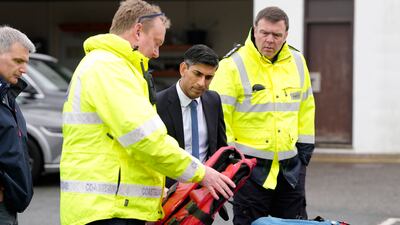
Mr Sunak met teams at the Home Office Joint Control Room in Dover, Kent. Getty Images -
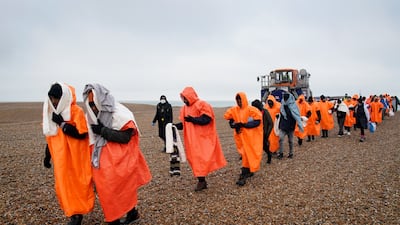
Critics have warned that the proposals are 'unworkable' and will leave thousands of migrants in limbo by banning them from claiming British citizenship. PA -
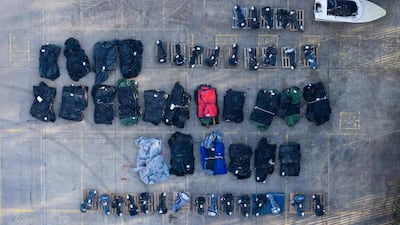
Inflatable dinghies and outboard engines, stored in a Port Authority yard in Dover. AFP -
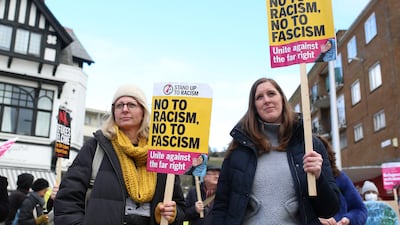
People gather in central Dover to attend a 'Refugees Welcome' rally. AFP -
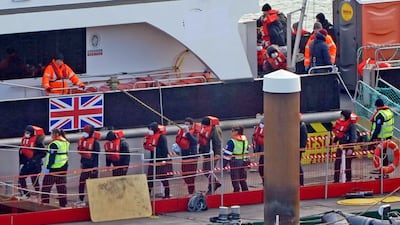
Ms Braverman said the UK's asylum system has been 'overwhelmed', with almost £7 million ($8.4 million) a day being spent on hotels to house people while their claims are processed. PA


“Rwanda is a safe country. It is appropriate for our purposes to work in partnership,” she said.
Ms Braverman also refused to repeat her previous hope that net migration could fall to tens of thousands.
“The clear answer I can give you is that I support our manifesto commitment to get overall migration numbers down, including legal migration,” she told the BBC.
But Labour said that the Rwanda plan was not even “real”, with shadow levelling up secretary Lisa Nandy suggesting that her party would have nothing to reverse if it wins the next general election.
On the same programme, she said: “I don’t think we’re ever going to be in the situation where we have to dismantle this because I don’t think it’s real, just like the barges that the Home Secretary promised this week that it turns out didn’t exist.
“This is just yet another way of distracting from the fact that they’re only processing 1 per cent of the asylum claims of people who arrived last year.”
The Liberal Democrats said that Ms Braverman’s comments showed that the Rwanda plan was “on hold”.
“Suella Braverman’s admission that her botched Rwanda scheme is on hold shows just how unworkable it is," home affairs spokesman Alistair Carmichael said.

