Afghans fight economic destruction with Bitcoin, video games and a new Chinatown


Sulaiman Hakemy
  • English
  • Arabic

Sulaiman bin Shah was at a wedding earlier this month when he got a tap on the shoulder.

It was the sixth time someone sent by the Taliban, the militant group that now rules Afghanistan, had asked the former deputy minister of commerce and industry to return to his old job.

“They’ve sent people to my home, my private office. They’ve sent family members and friends, but I’ve respectfully declined every time,” he told The National in Kabul on the eve of the anniversary of the Taliban takeover.

Mr bin Shah was only 30 when he was appointed deputy minister by then-president Ashraf Ghani, with whom he frequently clashed.

When the Taliban took control of Afghanistan last August, he was sidelined. Within a few weeks, he stopped showing up to work. Now, the Taliban want him back.

Afghanistan’s economy has shrunk by 20 per cent to 30 per cent since US troops withdrew. The Taliban have taken the country back to 2007 in an economic time machine, at a cost of about a million jobs, and leaving 70 per cent of the population unable to afford food and other necessities, the World Bank reported.

Afghans in Kabul mostly lay the blame for their dire economic prospects on international sanctions taken against the extremist group.

These take various forms, from the nearly $9 billion of Afghan Central Bank reserves confiscated by the US and European countries, to a ban on banks dealing in dollars to avoid the possibility of carrying out any transactions that might allow money to end up in Taliban hands.

The former prevents Afghanistan’s government departments from importing most food or medicine. The latter deters most foreign governments, charities and businesses from dealing with Afghanistan at all.

Sara, a 14-year-old, an Afghan girl, sits on a grave and reads a book as she sells water at a cemetery in Kabul, Afghanistan. AP

Although the US Treasury Department, which regulates the dollar-related sanctions, has said exceptions are allowed for humanitarian transactions, the details of these exceptions remain so vague that few want to take a chance.

“Afghan institutions are not technically under sanctions at all … Individual Taliban leaders are,” said Mr bin Shah.

“Unfortunately, the Taliban government has decided to put those individuals in charge of various institutions, which prevents foreign groups from dealing with them. This is something we need to blame the Taliban for.”

Decisions made by the Taliban during its stewardship of Afghan institutions have done little to ease the world’s discomfort.

In March, the government’s Ministry for the Propagation of Virtue and Prevention of Vice patrolled government offices and sent home any male employees who declined to grow a beard or wear traditional Afghan clothing. Last month, female employees at the Ministry of Finance were asked to quit their jobs and send a male relative to work in their place.

These actions have left the country without thousands of skilled workers, such as Mr bin Shah, to run departments. And it has led them to chase down those they forced out in the heady days following their return.

Logistics nightmare hinders Afghan entrepreneurs

The sanctions have left businesses seeking convoluted means of receiving payment from overseas buyers, including turning to Bitcoin. Meanwhile, the logistics sector has been decimated, with airlines refusing to ship goods and international firms such as DHL leaving entirely.

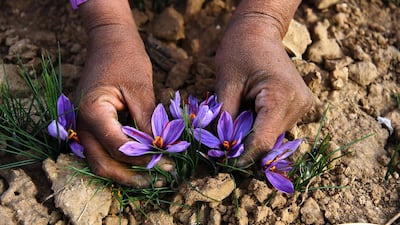
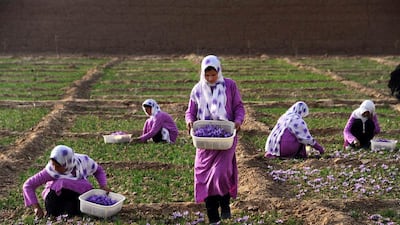
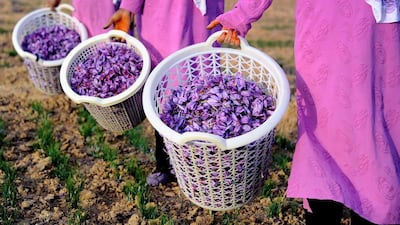
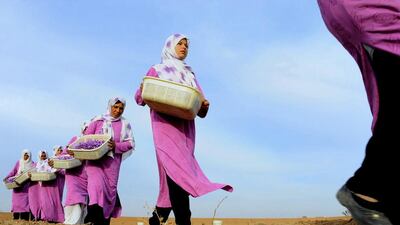
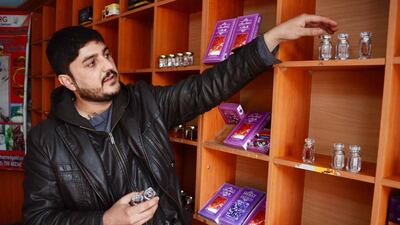
Noor Ahmad and Himayatulhaq Tahiri, both 24, from Kabul, met while studying together at a university in Peshawar, Pakistan, and invested their savings of $1,000 to start a saffron-exporting business in 2021, when the ministry Mr bin Shah worked at was slashing red tape for start-ups.

Sanctions on the Taliban have hit their business hard.

How they ship saffron to their 300 overseas customers changes week by week, depending which lorries are heading over the Afghan border. The crimson spice can travel to Peshawar, Dushanbe or even Tehran before being re-exported in unmarked jars to their intended customers, many of whom are in the West.

The second hurdle is getting paid: without bank transfers available, they’ve turned to Bitcoin.

But the cryptocurrency is extremely volatile, so received payments have to be cashed out quickly to prevent any major losses.

A common method is to use an online exchange to swap the Bitcoin for Tether, a so-called “stablecoin” pegged to the US dollar.

The Tether is then used to purchase UC, the in-game currency for the computer game Players Unknown Battlegrounds (PUBG), which is wildly popular among Afghan youths.

A handful of alternative exchange houses in Kabul deal in UC and buy the in-game tokens for hard cash.

In this new financial world of sanctions and convoluted exchanges, Mr Ahmad and Mr Tahiri have, like many other young Afghans, have become big believers in Bitcoin.

“It’s our future,” Mr Ahmad said.

But Mr bin Shah said there is only so much Bitcoin can do for Afghanistan. Rumours run rampant that the Taliban is exploring a ban on cryptocurrencies — it has already banned PUBG — after a few viral reports in recent months of Afghans losing their life’s savings when the price of Bitcoin plummeted.

“Cryptocurrencies do not have the scale and sustainability needed for Afghanistan’s economy, which really just needs certain foundational things — knowledge, expertise and resources,” Mr bin Shah said.

The flow of corruption briefly stemmed

The Taliban promised greater stability and fewer corrupt officials, but after a strong start, the practice is creeping back in. AP

While sanctions remain a big barrier to investment, so, too, does the spectre of corruption.

“Corruption has been the big monster that has always held up our progress,” said Mr bin Shah. “It became normal for everyone in government to take a cut and it ruined a lot of good deals — prospective investors would often be pressed for bribes, and then just pack up and leave.”

One of the silver linings of the Taliban’s strict rule, many Afghans say, was that corruption briefly diminished. Now, though, they say it is starting to return.

An Afghan businessman, who did not want to be identified, said that under the republic, bureaucrats would charge about 80 per cent in “fees” on the deal. Under the Taliban, that has been reduced to 10 per cent.

“The Taliban don’t know enough about all the procedures in various ministries yet, so these guys collect fees like they used to and tell their Taliban supervisors it is normal,” he said. “But they don’t squeeze so much out of you that you might go and complain to one of the mullahs.”

Mr bin Shah said that the Taliban’s return was an opportunity when it came to fighting corruption — one he thinks they are frittering away.

“We were given a clean slate last year [when the Taliban took over] … The superpowers were gone and for the first time in a long time the country had to deal with its affairs itself,” he said.

“For the first three months of the new government, I would receive regular reports from businesspeople that corruption was zero. But this is no longer the case, and it’s hard to say that no one from the Taliban is collaborating. For a time, you could say their ignorance was the problem, but until when? It has been a year.”

One evening in the first week of August, at a cafe in one of Kabul’s high-end hotels, The National overheard a western aid contractor suggesting to his managers back home that their organisation should consider paying off Taliban officials to get their job done easier.

They even suggested calling an old contact who used to enable similar payments in the republic days.

A pivot to new trade partners

A youth selling prayer beads and jewelllery looks for customers at a market in Kabul. AFP

While the US and others in the West are reluctant to do business with the Taliban, there are others less concerned.

China’s interest in Afghanistan’s much-vaunted but little-explored natural resources sector has excited many in the country.

Earlier this year, the Taliban government shook hands with Chinese businessmen to build the first “Chinatown” — a 10-storey shopping centre that hosts appliance shops and travel agencies.

Noor Rahman Ahmadi, 22, is one of 10 Afghans working there, alongside a few Chinese citizens.

He is fluent in Mandarin after spending four years at a Chinese university and he often works as an interpreter for Chinese businessmen.

Mr Ahmadi dreams of going back to China, but to do so, he would need to pay $1,400 to quarantine in a hotel for 10 days — an amount greater than his entire annual salary at Kabul’s Chinatown.

And this, critics of this new investment say, illustrates the problem experienced so far: many businesspeople have come to see Kabul, stores are being built and the mining sector appraised, but few are willing to invest in developing Afghan talent.

About 600,000 young Afghans enter the workforce every year, and the stagnant economy means few will find jobs.

And yet, in Kabul, cafes and shops are busy and it does not appear, at first glance, to be the capital of the world’s most impoverished nation.

But this, warns one aid worker, is an illusion.

“People are spending from their savings or remittances from family overseas, just so they can go out to eat like they used to,” he said. “Most people are not earning new dollars.”


EA Sports FC 26

Publisher: EA Sports

Consoles: PC, PlayStation 4/5, Xbox Series X/S

Rating: 3/5

How it works

Each player begins with one of the great empires of history, from Julius Caesar's Rome to Ramses of Egypt, spread over Europe and the Middle East.

Round by round, the player expands their empire. The more land they have, the more money they can take from their coffers for each go.

As unruled land and soldiers are acquired, players must feed them. When a player comes up against land held by another army, they can choose to battle for supremacy.

A dice-based battle system is used and players can get the edge on their enemy with by deploying a renowned hero on the battlefield.

Players that lose battles and land will find their coffers dwindle and troops go hungry. The end goal? Global domination of course.

'The Lost Daughter'

Director: Maggie Gyllenhaal

Starring: Olivia Colman, Jessie Buckley, Dakota Johnson

Rating: 4/5

Company%20Profile
%3Cp%3E%3Cstrong%3ECompany%20name%3A%3C%2Fstrong%3E%20Cargoz%3Cbr%3E%3Cstrong%3EDate%20started%3A%3C%2Fstrong%3E%20January%202022%3Cbr%3E%3Cstrong%3EFounders%3A%3C%2Fstrong%3E%20Premlal%20Pullisserry%20and%20Lijo%20Antony%3Cbr%3E%3Cstrong%3EBased%3A%3C%2Fstrong%3E%20Dubai%3Cbr%3E%3Cstrong%3ENumber%20of%20staff%3A%3C%2Fstrong%3E%2030%3Cbr%3E%3Cstrong%3EInvestment%20stage%3A%3C%2Fstrong%3E%20Seed%3C%2Fp%3E%0A
Tu%20Jhoothi%20Main%20Makkaar%20
%3Cp%3E%3Cstrong%3EDirector%3A%20%3C%2Fstrong%3ELuv%20Ranjan%26nbsp%3B%3C%2Fp%3E%0A%3Cp%3E%3Cstrong%3EStars%3A%20%3C%2Fstrong%3ERanbir%20Kapoor%2C%20Shraddha%20Kapoor%2C%20Anubhav%20Singh%20Bassi%20and%20Dimple%20Kapadia%3C%2Fp%3E%0A%3Cp%3E%3Cstrong%3ERating%3A%3C%2Fstrong%3E%203%2F5%3C%2Fp%3E%0A
UAE currency: the story behind the money in your pockets
The specs

Engine: Four electric motors, one at each wheel

Power: 579hp

Torque: 859Nm

Transmission: Single-speed automatic

Price: From Dh825,900

On sale: Now

TWISTERS

Director: Lee Isaac Chung

Starring: Glen Powell, Daisy Edgar-Jones, Anthony Ramos

Rating: 2.5/5

Ms Yang's top tips for parents new to the UAE
  1. Join parent networks
  2. Look beyond school fees
  3. Keep an open mind
GIANT REVIEW

Starring: Amir El-Masry, Pierce Brosnan

Director: Athale

Rating: 4/5

Nayanthara: Beyond The Fairy Tale

Starring: Nayanthara, Vignesh Shivan, Radhika Sarathkumar, Nagarjuna Akkineni

Director: Amith Krishnan

Rating: 3.5/5

The biog

Fatima Al Darmaki is an Emirati widow with three children

She has received 46 certificates of appreciation and excellence throughout her career

She won the 'ideal mother' category at the Minister of Interior Awards for Excellence

Her favourite food is Harees, a slow-cooked porridge-like dish made from boiled wheat berries mixed with chicken

Cry Macho

Director: Clint Eastwood

Stars: Clint Eastwood, Dwight Yoakam

Rating:**

What is Reform?

Reform is a right-wing, populist party led by Nigel Farage, a former MEP who won a seat in the House of Commons last year at his eighth attempt and a prominent figure in the campaign for the UK to leave the European Union.

It was founded in 2018 and originally called the Brexit Party.

Many of its members previously belonged to UKIP or the mainstream Conservatives.

After Brexit took place, the party focused on the reformation of British democracy.

Former Tory deputy chairman Lee Anderson became its first MP after defecting in March 2024.

The party gained support from Elon Musk, and had hoped the tech billionaire would make a £100m donation. However, Mr Musk changed his mind and called for Mr Farage to step down as leader in a row involving the US tycoon's support for far-right figurehead Tommy Robinson who is in prison for contempt of court.

Mercer, the investment consulting arm of US services company Marsh & McLennan, expects its wealth division to at least double its assets under management (AUM) in the Middle East as wealth in the region continues to grow despite economic headwinds, a company official said.

Mercer Wealth, which globally has $160 billion in AUM, plans to boost its AUM in the region to $2-$3bn in the next 2-3 years from the present $1bn, said Yasir AbuShaban, a Dubai-based principal with Mercer Wealth.

Within the next two to three years, we are looking at reaching $2 to $3 billion as a conservative estimate and we do see an opportunity to do so,” said Mr AbuShaban.

Mercer does not directly make investments, but allocates clients’ money they have discretion to, to professional asset managers. They also provide advice to clients.

“We have buying power. We can negotiate on their (client’s) behalf with asset managers to provide them lower fees than they otherwise would have to get on their own,” he added.

Mercer Wealth’s clients include sovereign wealth funds, family offices, and insurance companies among others.

From its office in Dubai, Mercer also looks after Africa, India and Turkey, where they also see opportunity for growth.

Wealth creation in Middle East and Africa (MEA) grew 8.5 per cent to $8.1 trillion last year from $7.5tn in 2015, higher than last year’s global average of 6 per cent and the second-highest growth in a region after Asia-Pacific which grew 9.9 per cent, according to consultancy Boston Consulting Group (BCG). In the region, where wealth grew just 1.9 per cent in 2015 compared with 2014, a pickup in oil prices has helped in wealth generation.

BCG is forecasting MEA wealth will rise to $12tn by 2021, growing at an annual average of 8 per cent.

Drivers of wealth generation in the region will be split evenly between new wealth creation and growth of performance of existing assets, according to BCG.

Another general trend in the region is clients’ looking for a comprehensive approach to investing, according to Mr AbuShaban.

“Institutional investors or some of the families are seeing a slowdown in the available capital they have to invest and in that sense they are looking at optimizing the way they manage their portfolios and making sure they are not investing haphazardly and different parts of their investment are working together,” said Mr AbuShaban.

Some clients also have a higher appetite for risk, given the low interest-rate environment that does not provide enough yield for some institutional investors. These clients are keen to invest in illiquid assets, such as private equity and infrastructure.

“What we have seen is a desire for higher returns in what has been a low-return environment specifically in various fixed income or bonds,” he said.

“In this environment, we have seen a de facto increase in the risk that clients are taking in things like illiquid investments, private equity investments, infrastructure and private debt, those kind of investments were higher illiquidity results in incrementally higher returns.”

The Abu Dhabi Investment Authority, one of the largest sovereign wealth funds, said in its 2016 report that has gradually increased its exposure in direct private equity and private credit transactions, mainly in Asian markets and especially in China and India. The authority’s private equity department focused on structured equities owing to “their defensive characteristics.”

COMPANY PROFILE
Name: Kumulus Water
 
Started: 2021
 
Founders: Iheb Triki and Mohamed Ali Abid
 
Based: Tunisia 
 
Sector: Water technology 
 
Number of staff: 22 
 
Investment raised: $4 million 
Timeline

2012-2015

The company offers payments/bribes to win key contracts in the Middle East

May 2017

The UK SFO officially opens investigation into Petrofac’s use of agents, corruption, and potential bribery to secure contracts

September 2021

Petrofac pleads guilty to seven counts of failing to prevent bribery under the UK Bribery Act

October 2021

Court fines Petrofac £77 million for bribery. Former executive receives a two-year suspended sentence 

December 2024

Petrofac enters into comprehensive restructuring to strengthen the financial position of the group

May 2025

The High Court of England and Wales approves the company’s restructuring plan

July 2025

The Court of Appeal issues a judgment challenging parts of the restructuring plan

August 2025

Petrofac issues a business update to execute the restructuring and confirms it will appeal the Court of Appeal decision

October 2025

Petrofac loses a major TenneT offshore wind contract worth €13 billion. Holding company files for administration in the UK. Petrofac delisted from the London Stock Exchange

November 2025

180 Petrofac employees laid off in the UAE

Where to donate in the UAE

The Emirates Charity Portal

You can donate to several registered charities through a “donation catalogue”. The use of the donation is quite specific, such as buying a fan for a poor family in Niger for Dh130.

The General Authority of Islamic Affairs & Endowments

The site has an e-donation service accepting debit card, credit card or e-Dirham, an electronic payment tool developed by the Ministry of Finance and First Abu Dhabi Bank.

Al Noor Special Needs Centre

You can donate online or order Smiles n’ Stuff products handcrafted by Al Noor students. The centre publishes a wish list of extras needed, starting at Dh500.

Beit Al Khair Society

Beit Al Khair Society has the motto “From – and to – the UAE,” with donations going towards the neediest in the country. Its website has a list of physical donation sites, but people can also contribute money by SMS, bank transfer and through the hotline 800-22554.

Dar Al Ber Society

Dar Al Ber Society, which has charity projects in 39 countries, accept cash payments, money transfers or SMS donations. Its donation hotline is 800-79.

Dubai Cares

Dubai Cares provides several options for individuals and companies to donate, including online, through banks, at retail outlets, via phone and by purchasing Dubai Cares branded merchandise. It is currently running a campaign called Bookings 2030, which allows people to help change the future of six underprivileged children and young people.

Emirates Airline Foundation

Those who travel on Emirates have undoubtedly seen the little donation envelopes in the seat pockets. But the foundation also accepts donations online and in the form of Skywards Miles. Donated miles are used to sponsor travel for doctors, surgeons, engineers and other professionals volunteering on humanitarian missions around the world.

Emirates Red Crescent

On the Emirates Red Crescent website you can choose between 35 different purposes for your donation, such as providing food for fasters, supporting debtors and contributing to a refugee women fund. It also has a list of bank accounts for each donation type.

Gulf for Good

Gulf for Good raises funds for partner charity projects through challenges, like climbing Kilimanjaro and cycling through Thailand. This year’s projects are in partnership with Street Child Nepal, Larchfield Kids, the Foundation for African Empowerment and SOS Children's Villages. Since 2001, the organisation has raised more than $3.5 million (Dh12.8m) in support of over 50 children’s charities.

Noor Dubai Foundation

Sheikh Mohammed bin Rashid Al Maktoum launched the Noor Dubai Foundation a decade ago with the aim of eliminating all forms of preventable blindness globally. You can donate Dh50 to support mobile eye camps by texting the word “Noor” to 4565 (Etisalat) or 4849 (du).

INVESTMENT PLEDGES

Cartlow: $13.4m

Rabbitmart: $14m

Smileneo: $5.8m

Soum: $4m

imVentures: $100m

Plug and Play: $25m

Who has lived at The Bishops Avenue?
  • George Sainsbury of the supermarket dynasty, sugar magnate William Park Lyle and actress Dame Gracie Fields were residents in the 1930s when the street was only known as ‘Millionaires’ Row’.
  • Then came the international super rich, including the last king of Greece, Constantine II, the Sultan of Brunei and Indian steel magnate Lakshmi Mittal who was at one point ranked the third richest person in the world.
  • Turkish tycoon Halis Torprak sold his mansion for £50m in 2008 after spending just two days there. The House of Saud sold 10 properties on the road in 2013 for almost £80m.
  • Other residents have included Iraqi businessman Nemir Kirdar, singer Ariana Grande, holiday camp impresario Sir Billy Butlin, businessman Asil Nadir, Paul McCartney’s former wife Heather Mills. 
Hunting park to luxury living
  • Land was originally the Bishop of London's hunting park, hence the name
  • The road was laid out in the mid 19th Century, meandering through woodland and farmland
  • Its earliest houses at the turn of the 20th Century were substantial detached properties with extensive grounds


RESULTS

6.30pm: Maiden Dh 165,000 1,600m
Winner: Superior, Connor Beasley (jockey), Ahmad bin Harmash (trainer)

7.05pm: Handicap Dh 185,000 2,000m
Winner: Tried And True, Pat Dobbs, Doug Watson

7.40pm: Maiden Dh 165,000 1,600m
Winner: Roy Orbison, Fernando Jara, Ali Rashid Al Raihe
8.15pm

Handicap Dh 190,000 1,400m
Winner: Taamol, Dane O’Neill, Ali Rashid Al Raihe
8.50pm

Handicap Dh 175,000 1,600m
Winner: Welford, Richard Mullen, Satish Seemar

9.25pm: Handicap Dh 175,000 1,200m
Winner: Lavaspin, Richard Mullen, Satish Seemar

10pm: Handicap Dh 165,000 1,600m
Winner: Untold Secret, Xavier Ziani, Sandeep Jadhav

UAE currency: the story behind the money in your pockets
The biog

Name: Maitha Qambar

Age: 24

Emirate: Abu Dhabi

Education: Master’s Degree

Favourite hobby: Reading

She says: “Everyone has a purpose in life and everyone learns from their experiences”

Avatar%20(2009)
%3Cp%3E%3Cstrong%3EDirector%3A%20%3C%2Fstrong%3EJames%20Cameron%3C%2Fp%3E%0A%3Cp%3E%3Cstrong%3EStars%3A%20%3C%2Fstrong%3ESam%20Worthington%2C%20Zoe%20Saldana%2C%20Sigourney%20Weaver%3C%2Fp%3E%0A%3Cp%3E%3Cstrong%3ERating%3A%20%3C%2Fstrong%3E3%2F5%3C%2Fp%3E%0A
THE DETAILS

Director: Milan Jhaveri
Producer: Emmay Entertainment and T-Series
Cast: John Abraham, Manoj Bajpayee
Rating: 2/5

SPEC%20SHEET%3A%20SAMSUNG%20GALAXY%20Z%20FOLD%204
%3Cp%3E%3Cstrong%3EMain%20display%3A%3C%2Fstrong%3E%207.6%22%20QXGA%2B%20Dynamic%20Amoled%202X%2C%202176%20x%201812%2C%2021.6%3A18%2C%20374ppi%2C%20HDR10%2B%2C%20up%20to%20120Hz%3C%2Fp%3E%0A%3Cp%3E%3Cstrong%3ECover%20display%3A%3C%2Fstrong%3E%206.2%22%20HD%2B%20Dynamic%20Amoled%202X%2C%202316%20x%20904%2C%2023.1%3A9%2C%20402ppi%2C%20up%20to%20120Hz%3C%2Fp%3E%0A%3Cp%3E%3Cstrong%3EProcessor%3A%3C%2Fstrong%3E%20Qualcomm%20Snapdragon%208%2B%20Gen%201%2C%204nm%2C%20octa-core%3B%20Adreno%20730%20GPU%3C%2Fp%3E%0A%3Cp%3E%3Cstrong%3EMemory%3A%3C%2Fstrong%3E%2012GB%3C%2Fp%3E%0A%3Cp%3E%3Cstrong%3ECapacity%3A%3C%2Fstrong%3E%C2%A0256%2F512GB%20%2F%201TB%3C%2Fp%3E%0A%3Cp%3E%3Cstrong%3EPlatform%3A%3C%2Fstrong%3E%20Android%2012%2C%20One%20UI%204.1.1%3C%2Fp%3E%0A%3Cp%3E%3Cstrong%3EMain%20camera%3A%3C%2Fstrong%3E%20Triple%2012MP%20ultra-wide%20(f%2F2.2)%20%2B%2050MP%20wide%20(f%2F1.8)%20%2B%2010MP%20telephoto%20(f%2F2.4)%2C%20dual%20OIS%2C%203x%20optical%20zoom%2C%2030x%20Space%20Zoom%2C%20portrait%2C%20super%20slo-mo%3C%2Fp%3E%0A%3Cp%3E%3Cstrong%3EVideo%3A%3C%2Fstrong%3E%208K%4024fps%2C%204K%4030%2F60fps%2C%20full-HD%4030%2F60fps%2C%20HD%4030fps%3B%20slo-mo%4060%2F240%2F960fps%3B%20HDR10%2B%3C%2Fp%3E%0A%3Cp%3E%3Cstrong%3ECover%20camera%3A%3C%2Fstrong%3E%2010MP%20(f%2F2.2)%3C%2Fp%3E%0A%3Cp%3E%3Cstrong%3EInner%20front%20camera%3A%3C%2Fstrong%3E%20Under-display%204MP%20(f%2F1.8)%3C%2Fp%3E%0A%3Cp%3E%3Cstrong%3EBattery%3A%3C%2Fstrong%3E%204400mAh%2C%2025W%20fast%20charging%2C%2015W%20wireless%20charging%2C%20reverse%20wireless%20charging%2C%20'all-day'%20life%3C%2Fp%3E%0A%3Cp%3E%3Cstrong%3EConnectivity%3A%3C%2Fstrong%3E%205G%3B%20Wi-Fi%2C%20Bluetooth%205.2%2C%20NFC%20(Samsung%20Pay)%3C%2Fp%3E%0A%3Cp%3E%3Cstrong%3EI%2FO%3A%3C%2Fstrong%3E%20USB-C%3C%2Fp%3E%0A%3Cp%3E%3Cstrong%3ECards%3A%3C%2Fstrong%3E%20Nano-SIM%20%2B%20eSIM%3B%202%20nano-SIMs%20%2B%20eSIM%3B%202%20nano-SIMs%3C%2Fp%3E%0A%3Cp%3E%3Cstrong%3EColours%3A%3C%2Fstrong%3E%20Graygreen%2C%20phantom%20black%2C%20beige%2C%20burgundy%20(online%20exclusive)%3C%2Fp%3E%0A%3Cp%3E%3Cstrong%3EIn%20the%20box%3A%3C%2Fstrong%3E%20Fold%204%2C%20USB-C-to-USB-C%20cable%3C%2Fp%3E%0A%3Cp%3E%3Cstrong%3EPrice%3A%3C%2Fstrong%3E%20Dh6%2C799%20%2F%20Dh7%2C249%20%2F%20Dh8%2C149%3C%2Fp%3E%0A
The Year Earth Changed

Directed by:Tom Beard

Narrated by: Sir David Attenborough

Stars: 4

Tips from the expert

Dobromir Radichkov, chief data officer at dubizzle and Bayut, offers a few tips for UAE residents looking to earn some cash from pre-loved items.

  1. Sellers should focus on providing high-quality used goods at attractive prices to buyers.
  2. It’s important to use clear and appealing photos, with catchy titles and detailed descriptions to capture the attention of prospective buyers.
  3. Try to advertise a realistic price to attract buyers looking for good deals, especially in the current environment where consumers are significantly more price-sensitive.
  4. Be creative and look around your home for valuable items that you no longer need but might be useful to others.
Updated: August 14, 2022, 9:12 AM