


Fifty billion tonnes of sand and gravel are used each year, enough to build a wall 27 metres wide and 27 metres high around planet Earth. Sand is the second most used natural resource worldwide after water.
A new report by the UN Environment Programme has found that given the world’s dependency on it, sand must be recognised as a strategic resource and its extraction and use should be rethought.
The report, Sand and Sustainability: 10 strategic recommendations to avert a crisis, provides guidance gathered from world experts to switch to improved practices for the extraction and management of sand.
Extracting sand in areas in which it plays an active role, such as rivers, and coastal or marine ecosystems, can lead to erosion, salination of aquifers, loss of protection against storm surges and harm to biodiversity, which pose a threat to water supply, food production, fisheries and tourism industry.
The report’s authors wrote that sand must be recognised as a strategic resource, not only as a material for construction, but also for its many roles in the environment.
They stressed that governments, industries and consumers should price sand in a way that recognises its true social and environmental value.
For example, keeping sand on coasts may be the most cost-effective strategy for adapting to climate change based on its protective effect against storm surges and the impact sea level rise. They said such benefits should be factored into its value.
-

Kyle Wagner, head of operations at Masdar Farms, shows the inside of the smart farming retrofitted shipping container in Abu Dhabi that grows four tonnes of leafy greens per year. Antonie Robertson / The National -
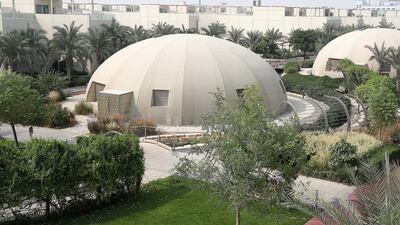
A view of the domes used for urban farming in the Sustainable City in Dubai. Pawan Singh / The National -
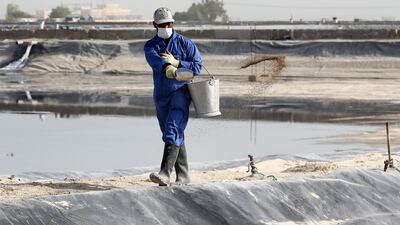
A member of staff tosses feed in the shrimp pond at an aquaculture farm in Abu Dhabi. Pawan Singh / The National -

Jubail Mangrove Park in Abu Dhabi. Mangroves are abundant along the coastline of the emirate and can sequester and store carbon for thousands of years. Victor Besa / The National -
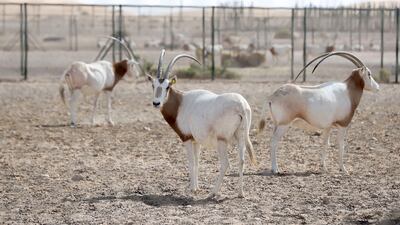
Scimitar-horned oryx, part of the antelope family, at the Deleika Wildlife Management Centre in Abu Dhabi. Khushnum Bhandari / The National -

About 30 turtles are released into the sea on World Sea Turtle Day at Jumeirah Al Naseem beach in Dubai. Pawan Singh / The National -

Cyclists get up early to exercise at Al Qudra Bike Track, Dubai. Chris Whiteoak / The National -
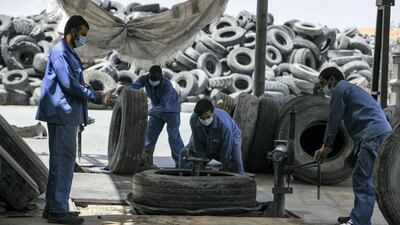
Workers prepare tyres before the recycling process at the Gulf Rubber factory in Al Ain. Khushnum Bhandari / The National -
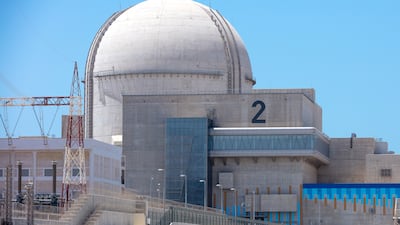
A view of Barakah's Unit 2. Photo: Wam -
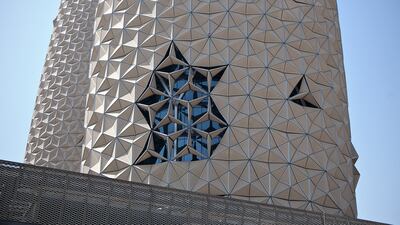
Al Bahar Towers in Abu Dhabi use a solar shading system that features a computer-controlled facade made up of thousands of translucent units. Silvia Razgova / The National -
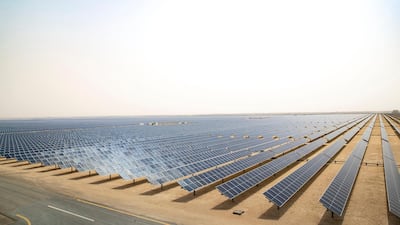
Sheikh Mohammed bin Rashid Al Maktoum Solar Park is the largest single-site solar park in the world and central to Dubai's plans to obtain 75 per cent of its energy from renewable sources by 2050. Photo: Wam -
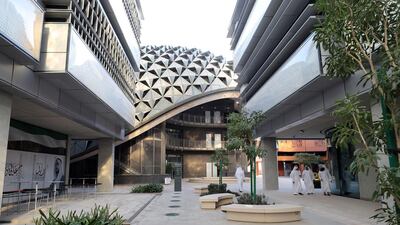
Masdar City in Abu Dhabi is the first attempt in the Middle East to build a sustainable city. Chris Whiteoak / The National


An international standard on how sand is extracted from the marine environment should also be developed, the report proposes.
Meanwhile, the report recommends that the extraction of sand from beaches be banned because of its importance for coastal resilience, the environment and the economy.
“To achieve sustainable development, we need to drastically change the way we produce, build and consume products, infrastructures and services. Our sand resources are not infinite, and we need to use them wisely,” said Pascal Peduzzi, director of Grid-Geneva at UNEP and overall programme co-ordinator for the report.
“If we can get a grip on how to manage the most extracted solid material in the world, we can avert a crisis and move toward a circular economy.”
The report says that sand is critical to economic development, and is needed to produce concrete and build vital infrastructure ranging from homes and roads to hospitals.
By providing habitats and breeding grounds for diverse flora and fauna, sand also plays a vital function in supporting biodiversity, including marine plants that filter water or act as carbon sinks.
The resource will be crucial to achieving the sustainable development goals and tackling the triple planetary crisis of climate change, pollution and biodiversity loss.
However, it is being used faster than it can be naturally replenished, so its responsible management is crucial.
The report’s authors note that solutions exist for moving towards a circular economy for sand, including banning the landfilling of mineral waste and encouraging sand to be reused in public procurement contracts should be considered as new policies.
Crushed rock or recycled construction and demolition material, as well as “ore-sand” from mine tailings are among the viable alternatives to sand that should also be incentivised, the report suggests.
The authors add that new institutional and legal structures are needed for sand to be more effectively governed and best practice shared and implemented.
Sand resources must furthermore be mapped, monitored and reported on, the report recommends.
The paper recommends that all stakeholders must be involved in decisions related to the management of sand to allow for place-based approaches and avoid one-size-fits-all solutions.

