

UAE diplomat Mohamed Abushahab on Tuesday said Yemen’s Houthi rebels may renege on a recently struck deal with the UN to salvage a leaky oil platform that threatens to spill its load into the sea.
Mr Abushahab, the UAE’s deputy UN ambassador, told the UN Security Council that the agreement the Houthis struck to unload the FSO Safer, which lies about eight kilometres off Yemen’s rebel-held west coast, could be an “insincere promise” or a “negotiation tactic”.
The Houthis have exhibited a “pattern of behaviour” in which the group cuts deals with the UN to repair the tanker — which has been stranded off Ras Issa port since 2015 — only to walk them back later, he said.
“As we have seen over the past four years, the Houthis have made insincere promises as a negotiation tactic, all the while ignoring the warnings of an imminent environmental disaster if urgent maintenance work is not completed,” Mr Abushahab added.
-
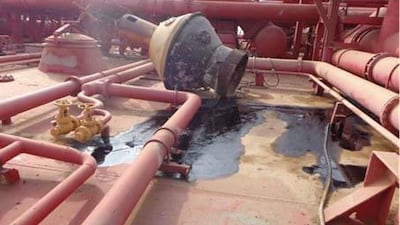
The deck of Yemen's 'FSO Safer', which has not been maintained for years. Photos: IR Consilium -
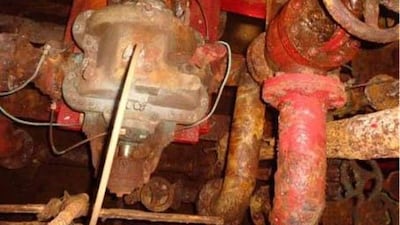
Corrosion in the boiler system. The severity of the ship's physical deterioration remains unclear. -
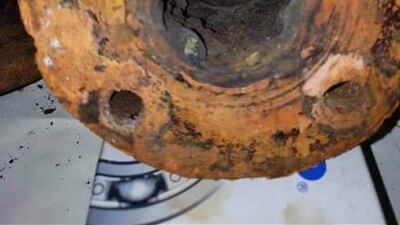
The vessel has been called a 'ticking time-bomb' as gases are building up in its chambers. -
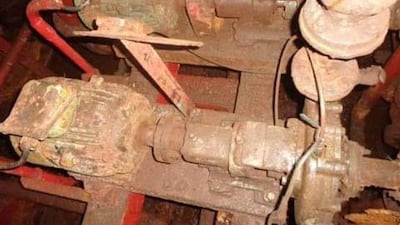
The ship's corroded auxiliary utility system. -
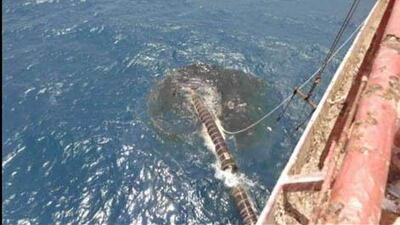
The external piping system broke down on April 22, 2019, leading to an oil spill. -
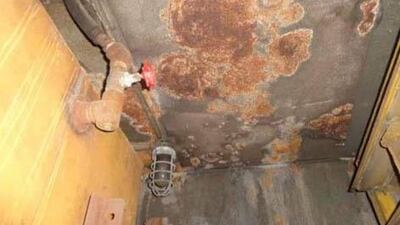
The vessel lacks a functioning cathodic system to protect it from corrosion. -
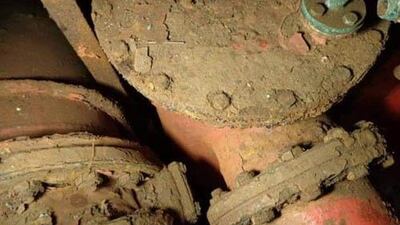
The leaky vessel still contains 1.1 million barrels of oil. -
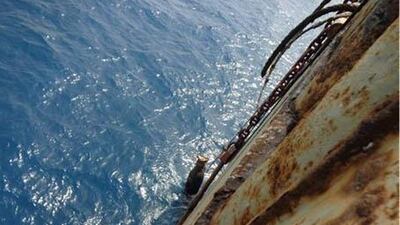
The hull of the 'FSO Safer', which could be sold for scrap.


Maritime experts say the leaky tanker could rupture and spill 1.1 million barrels of oil at any moment. On March 5, after years of crawling negotiations, the UN signed a deal with the Houthis to unload the vessel and provide a replacement.
“We hope that this agreement will prevent a disaster of this magnitude from occurring,” Mr Abushahab said.
The text of the UN-Houthi deal, a copy of which was obtained by The National, says the UN is “committed to providing and supplying a replacement equivalent to the FSO Safer suitable for export” to the rebels within 18 months.
The Houthis are to provide access to the vessel but “bear no financial obligations”.
The UN is currently trying to raise hundreds of thousands of dollars to cover the costs of the complicated and delicate maritime operation.
A Houthi spokesman did not immediately answer The National’s request for comment.
The UN’s top humanitarian Martin Griffiths acknowledged the “difficulties” in bargaining with the Houthis, but said the deal, which is supported by the Dutch government, “brings the world just one step closer towards solving a very dangerous problem”.
“Let’s hope this works,” he told diplomats.
Environmentalists and the UN have warned for years about the threat posed by the decrepit FSO Safer, which could rupture or explode in a disaster four times worse than the 1989 Exxon Valdez spill near Alaska.
It would hurt tourism, fishing and desalination plants across Yemen, Saudi Arabia, Israel, Jordan, Egypt, Sudan, Eritrea and Djibouti, and impede a shipping lane that carries about 10 per cent of global trade.
Yemen has been mired in civil war since 2014, when the Houthis took control of the capital and much of the north, forcing the government to flee to the south, then to Saudi Arabia. A Saudi Arabia-led coalition entered the war in March 2015 to restore the government.

