


Live updates: follow the latest news on Russia-Ukraine
Russia’s forces have stalled on several fronts in Ukraine after almost three weeks of fighting, surprising analysts who had expected Moscow's vast military to overwhelm defenders, despite making strategic errors.
The Russian military boasts world-class tanks, the second-largest air force in the world and fearsome attack helicopters. While its military doctrine stresses overwhelming the enemy with terrifying barrages of rocket artillery, it also has large stockpiles of ballistic and cruise missiles.
Ukraine, despite the support of Western allies, lacks most of these arms.
Western military simulations conducted in 2016 indicated Russia could take over the Baltics, overrunning local and Nato defenders, in a matter of days. A US general recently said the assessment for Ukraine holding out following the February 24 offensive was 72 hours.
Russia’s setbacks have refocused analysts on the human aspects of war rather than the material — the motivation and morale of soldiers, often described as the “will to fight”.
“Napoleon said it best," says retired US Lt Gen Michael Barbero. He said: ‘The moral is to the physical as three is to one.’ And he was a brilliant strategist, he was definitely on to something."
Lt Gen Barbero, who commanded US forces in Iraq for 46 months over three tours between 2003 and 2011, said that while Russian forces could still use brute force to break the will of Ukrainians it's the defenders' fighting spirit that is trumping the strength of arms.
He told The National: “Russia's armed forces are experiencing tremendous supply shortages and problems, to the basic level. Are their troops getting fed?
“And they're experiencing unexpected casualties and resistance. The troops have been told one thing and are experiencing something totally different, you know, in training exercises, ‘this will be a cakewalk,’ etc. So, all of that has a tremendous impact on morale.”
Many commentators have pointed to the huge logistical challenges the Russians have faced.
“It's more than just logistics,” Lt Gen Barbero said. “It's a question of morale, and leadership. Quantity has a quality all of its own. But leadership and morale are often throughout history decisive.”
-
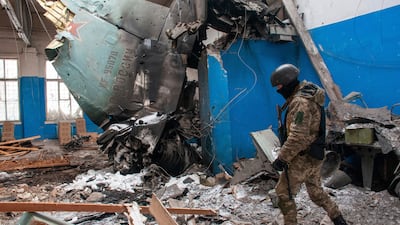
A Ukrainian serviceman walks past the vertical tail fin of a Russian Su-34 bomber lying in a damaged building in Kharkiv, Ukraine. AP Photo -
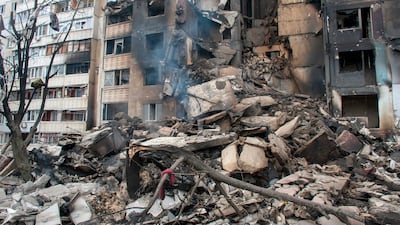
An apartment building damaged after shelling in Kharkiv, Ukraine. AP Photo -
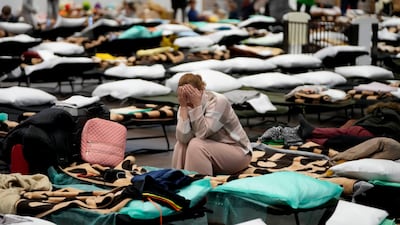
A woman puts her head in her hands as she sits on a cot in a shelter, set up for displaced persons fleeing Ukraine, inside a school gymnasium in Przemysl, Poland. AP Photo -
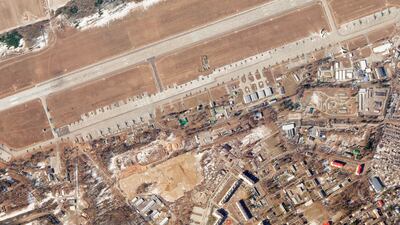
Belarussian and suspected Russian helicopters on the flight line at Machulishchy Air Base outside Minsk, Belarus. AP Photo -

Children look on as people fleeing Russia's invasion of Ukraine shelter in a school, in Drohobych, Ukraine. Reuters -
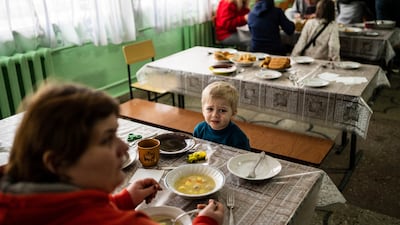
Families eat in the shelter. Reuters -
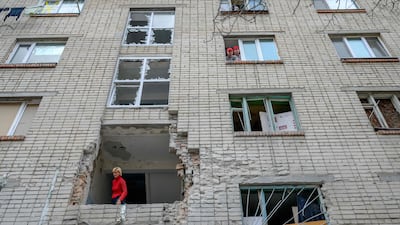
A woman looks out from a building damaged by Russian shelling in Mykolaiv, 100 kilometres away from Odesa, western Ukraine. AFP -

A wounded Ukrainian man waits in the corridor of the central hospital of Mykolaiv. AFP -
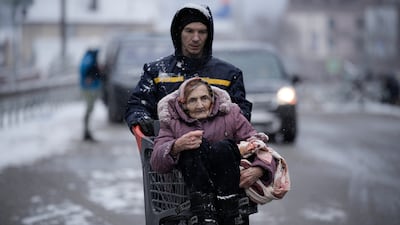
An elderly woman is carried in a shopping cart after being rescued from Irpin, on the outskirts of Kyiv, Ukraine. AP -
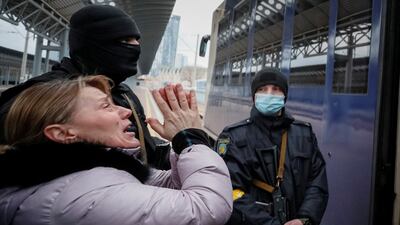
A woman reacts as a train carrying children from Kyiv's Central Children's Hospital leaves the Ukrainian capital on its way to Lviv. Reuters -
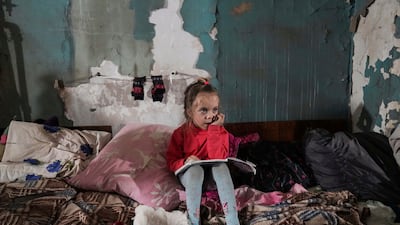
A girl sits in an improvised bomb shelter in Mariupol, Ukraine. AP -
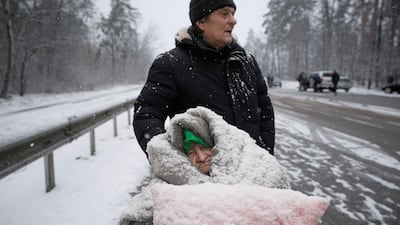
An elderly woman is coated in snow as she sits in a wheelchair after being rescued from Irpin. AP -
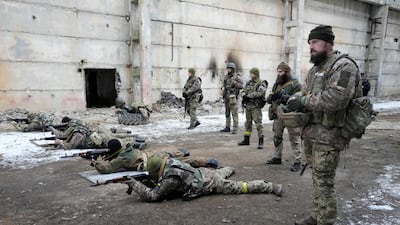
Belarusian volunteers take part in military exercises at the Belarusian Company base in Kyiv. AP -
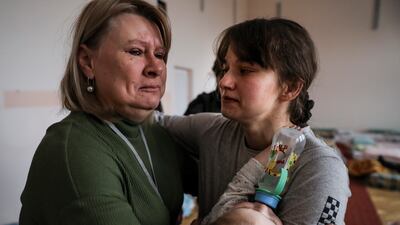
Lessa, left, director of a nursery school turned into a refugee shelter, cries as she hugs Olega, who arrived from Kyiv with her baby, near Lviv. EPA -
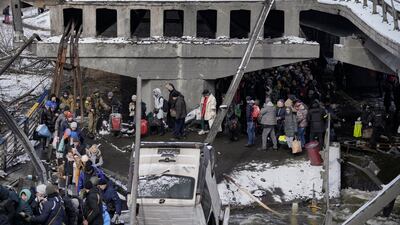
Ukrainians pass a damaged bridge as they flee from Irpin. AP -
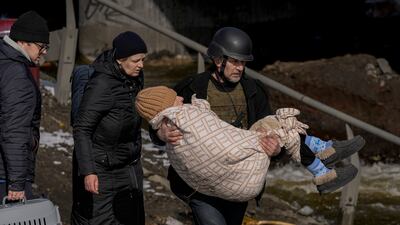
A man carries an elderly woman as people continue to leave Irpin. AP -
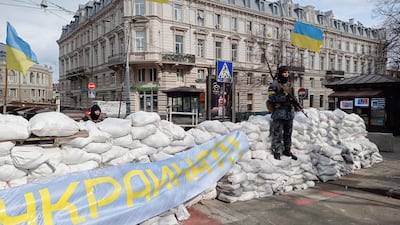
A soldier stands on a barricade made of sandbags in central Odesa, Ukraine. Reuters -
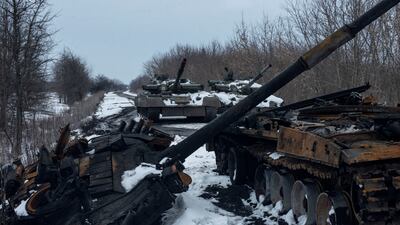
A charred Russian tank and captured tanks in the Sumy region. Reuters -
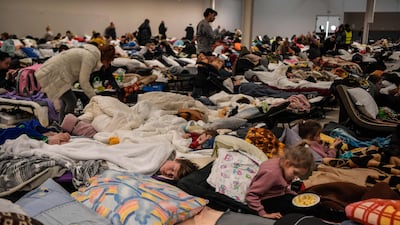
People rest at a temporary shelter for Ukrainian refugees in Przemysl, Poland. AFP -

Ukraine's ambassador to the Netherlands, Maksym Kononenko, third right, and his wife Tetiana Doroshenko, fourth left, attend a meeting of members of the Ukrainian community with Dutch King Willem-Alexander, third left, and Queen Maxima, second left, to discuss the situation in Ukraine, in The Hague. EPA -
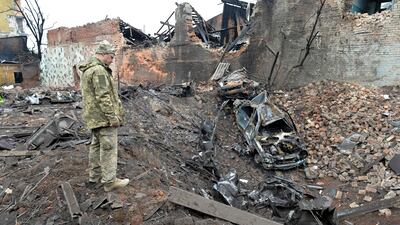
A Ukrainian soldier looks at the destruction after shelling in Ukraine's second-largest city of Kharkiv. AFP -
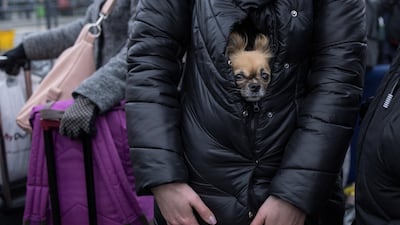
A refugee holds her dog as they wait for trains to Poland in Lviv, Ukraine. Reuters -
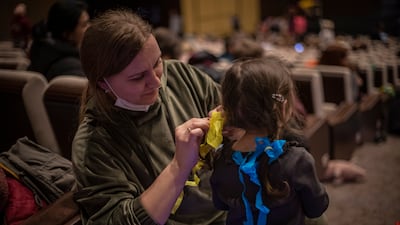
A woman ties ribbons in Ukrainian national flag colours in a girl's hair as people wait at a refugee assistance centre in Prague, Czech Republic. EPA -
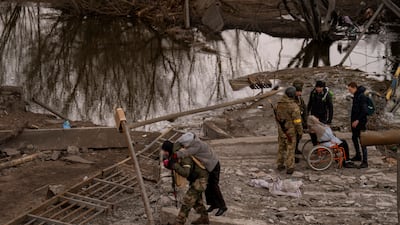
A Ukrainian soldier carries an elderly woman crossing the Irpin river on the outskirts of Kyiv. AP -
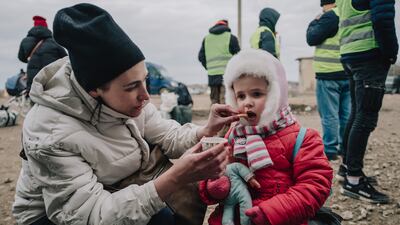
Lena, who had never left Ukraine before fleeing into Moldova, feeds Dasha, 3, soon after crossing the border. Erin Clare Brown for The National -
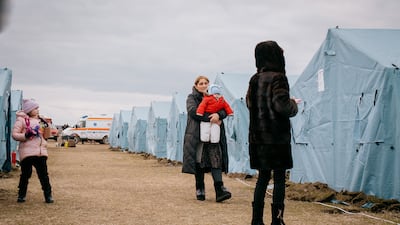
Refugees without immediate plans to move further inland can stay the night in tents set up on Moldova's side of the border. Erin Clare Brown for The National -
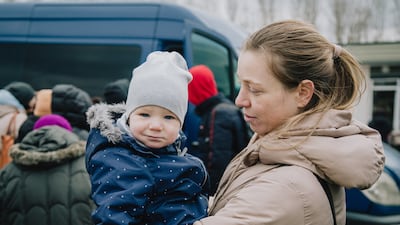
Tatiana and her son wait for a van that will carry them from the Moldovan border to Chisinau. Erin Clare Brown for The National -
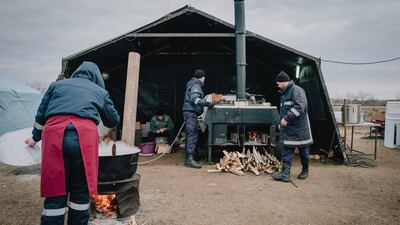
Each night, the Palanca refugee camp in Moldova feeds up to 300 people who arrive with no onward plans. Erin Clare Brown for The National -
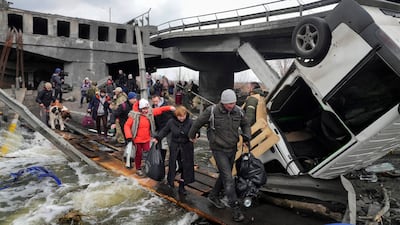
People pass a damaged bridge while fleeing the town of Irpin, close to the Ukrainian capital of Kyiv. AP -
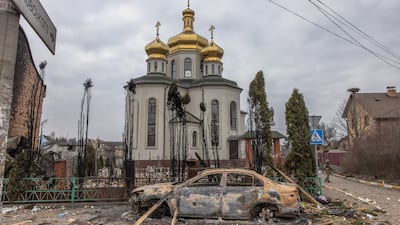
A Ukrainian soldier stands guard next to a church in Irpin. EPA -
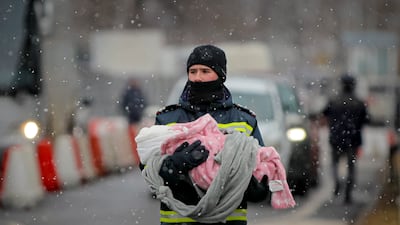
A firefighter holds the baby of a Ukrainian refugee at the border in Romania. AP -
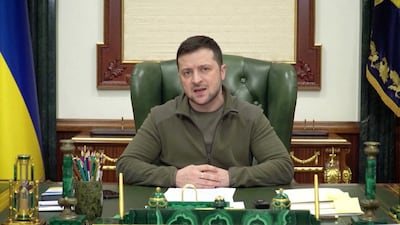
Ukrainian President Volodymyr Zelenskyy speaks in Kyiv. Reuters -
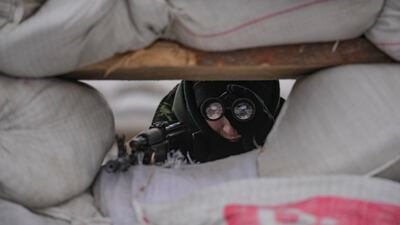
A Ukrainian soldier at a checkpoint in Kyiv. AP -
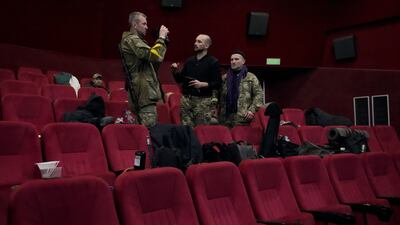
Ukrainian activist Ihor Mazur, left, a veteran of the war in the country's east, looks at a night-vision device in Kyiv. AP -
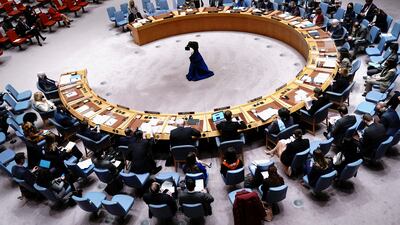
Ambassadors attend a UN Security Council meeting on threats to international security after Russia's invasion of Ukraine, in New York. Reuters -
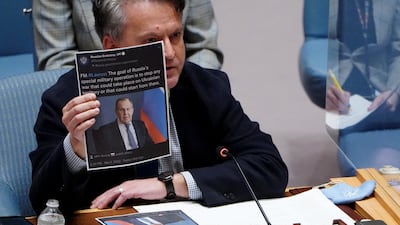
Ukraine's UN ambassador Sergey Kyslytsya holds a paper with an image of Russia's Foreign Minister Sergey Lavrov as he addresses the Security Council in New York. Reuters -
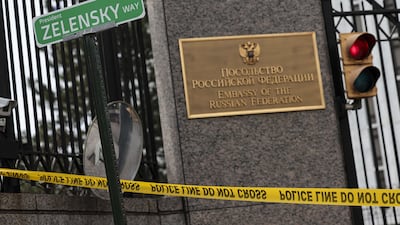
A road sign put up in support of Mr Zelenskyy outside Russia's embassy in Washington. AFP -
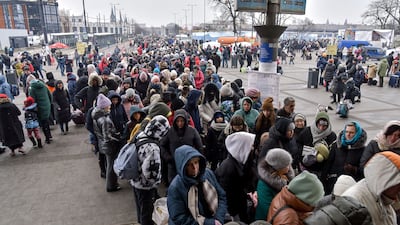
Ukrainian refugees at the train station in Lviv, western Ukraine. EPA -
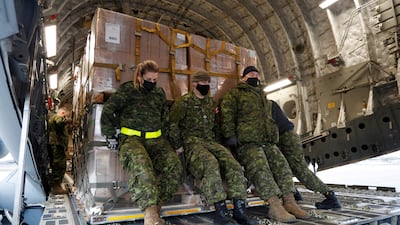
Lethal and non-lethal Ukrainian aid is loaded on to a plane bound for Poland by Canadian soldiers in Trenton, Ontario. Reuters -
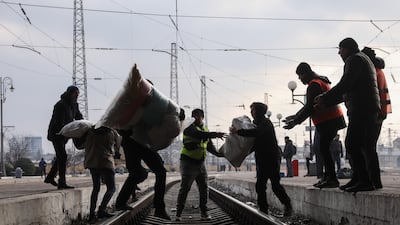
Volunteers carry medical aid and necessities at a train station in Lviv. EPA -
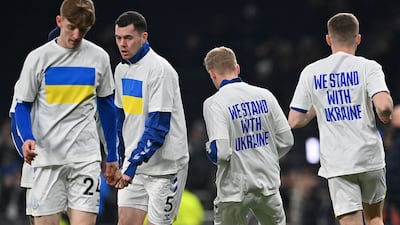
Everton players wear T-shirts in support of Ukraine as they warm up for an English Premier League football match against Tottenham Hotspur. AP -
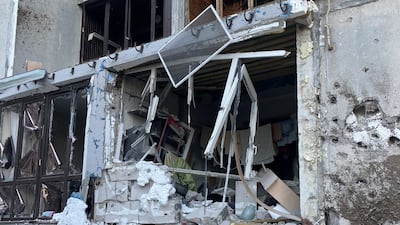
A residential building damaged by Russian shelling in Chernihiv, Ukraine. Reuters -
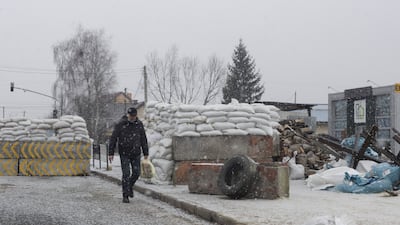
A man walks past a checkpoint in heavy snow in Lviv. Getty -
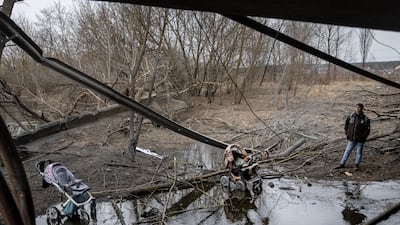
A man fleeing fighting in Irpin waits to cross a river after Russian forces entered the city. Getty -
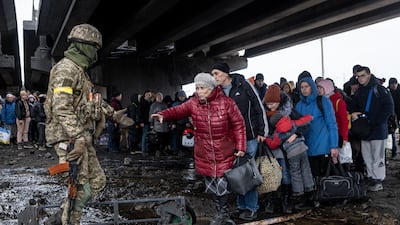
Soldiers assist Irpin residents underneath a damaged bridge as they flee. Getty -
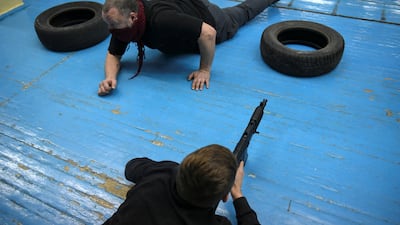
Ukrainian civilians who volunteered to join the Territorial Defence Forces take part in a training exercise in Odesa after Russia's invasion. Reuters -
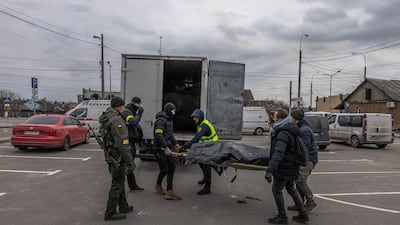
Men carry a body to a lorry as people flee from the frontline town of Irpin. EPA -
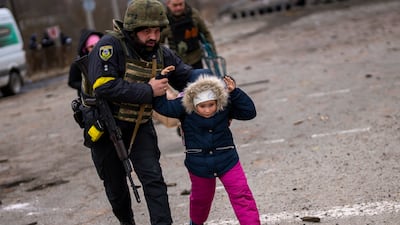
A Ukrainian police officer runs with a child as the sound of shelling echoes nearby in Irpin. AP -
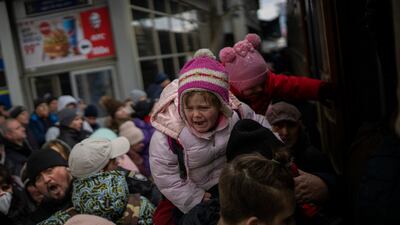
Parents and children struggle to board a train in Lviv. AP


The US Army’s doctrine manuals stress this dimension of fighting.
“War is a human endeavour — a fundamentally human clash of wills often fought among populations,” the US army operations doctrine manual reads. “It is not a mechanical process that can be controlled precisely, or even mostly, by machines.”
"The Russians have an absolute advantage in terms of material that hasn’t translated yet into strategic, operational, or tactical advantage," Dr James L Regens, founding director and Regents Professor of the Centre for Intelligence and National Security at the University of Oklahoma, told The National.
“Russia’s large military doesn’t, however, exhibit a qualitative advantage over the smaller Ukrainian defence forces,” Dr Regens said.
“Russia has a large number of conscripts of dubious quality, experience, or morale coupled with its leadership displaying poor ability to plan and conduct combined arms operations.”
Measuring quality
Statistics on weapons systems and their capabilities have occupied the minds of analysts for decades. During the Cold War, British tank designers fretted that Russia’s T-64 could defeat Britain’s Chieftain tank, based on estimates of the T-64’s main gun velocity and the Chieftain’s armour.
In Ukraine, defenders possess upgraded versions of the T-64 and the Russians have tanks that are more advanced than the Chieftain. But once again, the will to fight could be more important than statistics on speed, arms and armour.
The same applies to calculations on sheer numbers of men and equipment.
“Quantity is more than adding up things like the number of troops, armoured vehicles, artillery, aircraft, or logistical support. Having a lot of something doesn’t automatically mean it’s good,” Dr Regens said.
“Quality captures whether a military force is good at its job – simply put, it’s worth something on the battlefield,” he said. “A number of important factors like leadership, morale, experience, training and will go into assessing a military’s quality.”
Lt Gen Barbero said there are “countless examples where military equipment has not been the decisive factor”.
Better tanks don't ensure victory
The Battle of Arracourt in the Second World War is an example.
In September 1944, Germany's 5th Panzer Army greatly outnumbered the lead elements of US General George Patton’s Fourth Armoured Division — a rare advantage for the Germans in that stage of the war.
The Germans were equipped with 118 new Panther Ausf G tanks, a manoeuvrable, heavily armoured vehicle with a powerful and highly accurate main gun.

British and US reports on the Panther described a vehicle that could survive multiple hits while returning fire at very long ranges, destroying American Shermans with single shots.
Despite suffering logistical problems, including low fuel supplies and a lack of spare parts, the Germans believed they were materially well-positioned to stop the Americans. Meanwhile, newer versions of the Panther had been upgraded to overcome early technical problems.
But poorly trained Panther units soon made basic tactical mistakes, failing to scout US positions and attacking in fog, which cancelled out their advantage of long range guns.
-
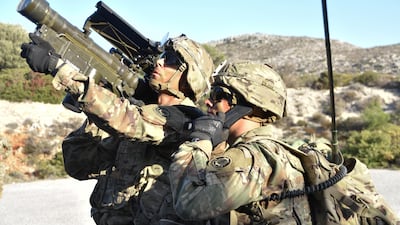
US soldiers practise firing FIM-92 Stinger missiles. Photo: US Army -
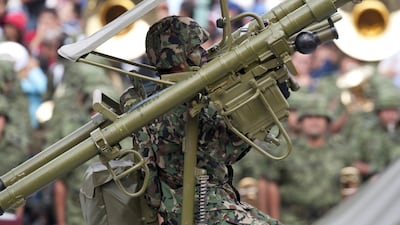
A Mexican soldier with a Russian-made SA-18 anti-aircraft missile launcher in 2011. AFP -
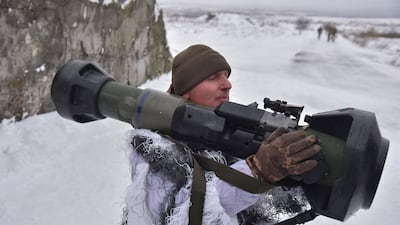
A Ukrainian soldier takes part in an exercise using NLAW anti-aircraft missiles close to the city of Lviv. The UK has delivered 2,000 NLAWs to Ukraine. AP -
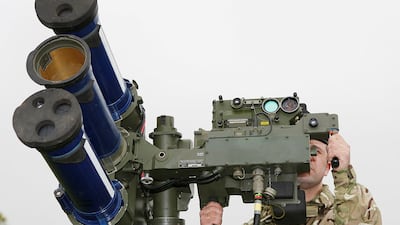
Undated handout photo issued by the Ministry of Defence (MOD) of a Starstreak HVM (High Velocity Missile) surface-to-air missile system on display. -
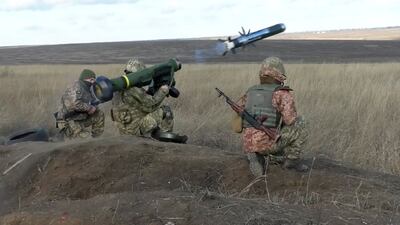
Soldiers in Ukraine launch US Javelin missiles during a military exercise. AP -
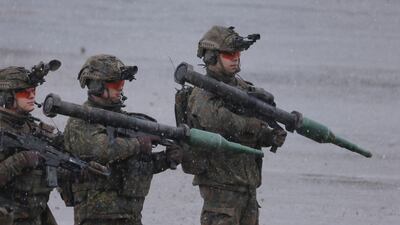
German troops hold Panzerfaust 3 anti-tank weapons in a demonstration in Munster. Getty Images -
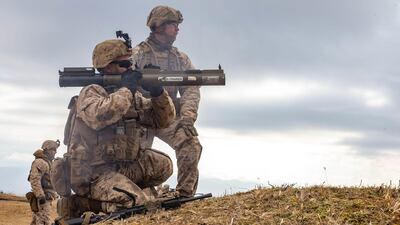
A US Marine fires a M72 light anti-armour weapon during an exercise in Camp Fuji, Japan. Alamy -
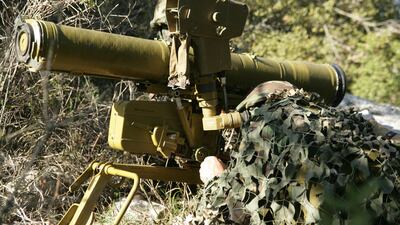
A Hezbollah militant aiming a Kornet anti-tank guided missile in southern Lebanon. AFP -
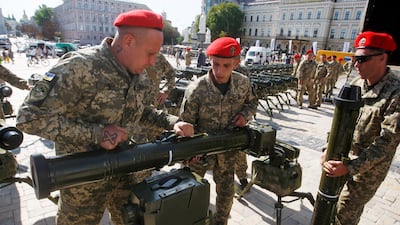
Ukrainian soldiers with Stugna-P anti-tank weapons during a military exhibition in 2018. Getty Images


The crews, rushed into battle on two weeks' training, were supposed to attack with the Panther's impenetrable frontal armour facing the enemy, but most were knocked out from side penetrations after being outmanoeuvred.
American tank crews showed high resilience taking on a tank many knew was superior, without retreating from the battlefield. Experienced forces came up against a poorly trained enemy that had better equipment, and won.
History has many examples of this — from the victory of a small force of Vietcong guerrillas against a much bigger force of South Vietnamese troops with tanks, helicopters and air power at Ap Bac in 1963, to the failed Soviet attempts to take the Panjshir Valley from lightly armed Afghan mujahideen in the early 1980s.
Lt Gen Barbero said there are two types of victory in war, annihilation — where an opponent is materially crushed — and exhaustion. Of the latter, he gives the example of the US in Afghanistan where a much better resourced alliance lost the will to fight a long, grinding war.
Whether a similar situation might occur in Ukraine remains to be seen.
“The next phase of the war is going to be critical,” Dr Regens said.
“Ukraine is a really big country. Its forces are dispersed across multiple fronts – Kyiv, Kharkiv, Mariupol, Odessa, and the Luhansk and Donetsk regions.
“Russia is trying to isolate each front and cut off the Ukrainians from resupply, meanwhile brutally and indiscriminately targeting civilians and infrastructure,” he said.
This could ultimately break the will of the Ukrainians to continue fighting.
“Putin is betting that quantity trumps quality if the Ukrainian resistance runs out of military supplies and food,” Dr Regens said.

