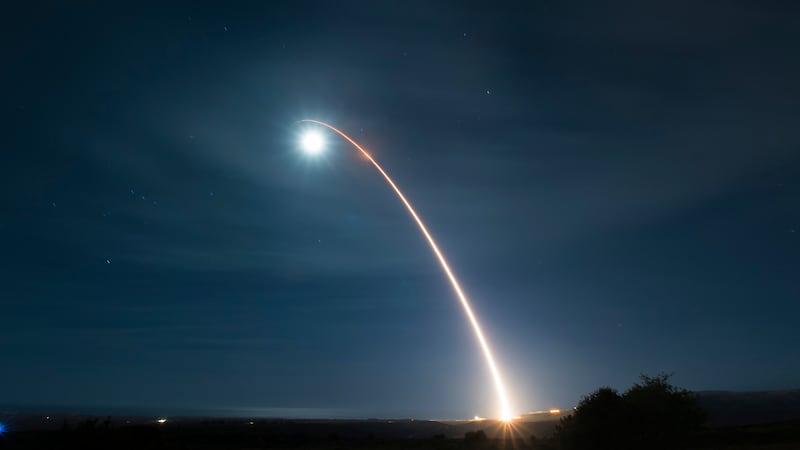

At 3am on 3 June, 1980, the world came within minutes of nuclear war.
US national security adviser Zbigniew Brzezinski was woken by the news that more than 2,000 Soviet nuclear missiles had been launched at the US. Estimates said it would kill 70 per cent of the American population.
Washington had six minutes to decide whether to launch a retaliatory nuclear strike.
Thankfully for humankind, there were no missiles and no mistaken retaliation.
Computer software at the Norad, the North American Aerospace Defence Command, had malfunctioned and sent a false missile launch warning. A recently installed early warning radar system, combined with new US satellites, confirmed that no Russian missiles were inbound.
This was only one of several close calls during the Cold War, the terrifying superpower standoff which is back in the news following US President Joe Biden's November summit with Chinese President Xi Jinping, during which the American leader said he hoped that “both sides could avoid veering into conflict".
The following day, Russia revived the Cold War tactic — never used in anger — of shooting down satellites by carrying out a test, drawing international condemnation.
As China-US competition heats up, both sides — along with France, Russia, North Korea and India — are modernising their nuclear arsenals.
The US accuses China of building up its nuclear stocks, aiming for 1,000 warheads by 2030, something China denies.
Meanwhile, the US is also upgrading some weapons in its arsenal of 3,750 nuclear warheads, working on new fuses that maximise explosive power.
On November 2, France's Maj Gen Frederic Parisot said that Paris is working on a nuclear-armed cruise missile that could fly at Mach 6, or six times the speed of sound.
Anything above Mach 5 is classed as hypersonic.
That follows India’s work on the potentially nuclear capable BrahMos II – hypersonic missile and China’s reported test of a nuclear missile on October 16.
Are we in a new Cold War?
Arms control
Renewed nuclear weapon development follows the collapse of the 1987 Intermediate-Range Nuclear Forces (INF) treaty in 2019, after the US and Nato accused Russia of several breaches.
INF — which mainly focused on controlling the range of nuclear weapons — was credited with the first big reduction in nuclear arms, paving the w–ay for more treaties including New Start, which limits US and Russian active warheads at 1,550 each from a combined Cold War peak of 70,000.
Moscow and Washington are already working on a successor agreement to New Start, which is due to expire in 2026. But more tension lies ahead: on November 23, Russian Defence Minister Sergey Shoigu said that US aircraft had been practicing a nuclear attack on Russia.
And the race to build better nuclear weapons continues.
In December 2019, Russia announced that its Avangard nuclear missile was operational, capable of flying on an unpredictable path after re-entering the Earth's atmosphere and detaching from a rocket at Mach 20.
The weapon “would be counted under New Start automatically”, said Michael Klare, senior visiting fellow and board secretary at the Arms Control Association.
“China and Russia appear to be seeking a relatively small number of long-range, nuclear-armed hypersonic weapons that can be used to evade US anti-missile defences,” Mr Klare told The National.
Unlike traditional ballistic missiles which travel on a fixed arc through the upper atmosphere, hypersonic weapons travel closer to the contours of the Earth, below the point where early warning radars could easily detect them.
That cuts the time available to identify and respond to a launch, potentially putting not only world powers, but also smaller nuclear-armed countries, such as Pakistan and India, on higher alert.
Satellites could detect the launch of a hypersonic missile — but Russia, China and the US are believed to be reworking Cold War technology to shoot satellites down.
Cold war redux
But not everyone is worried that technology is making things more dangerous.
“I think that there is a lot of hyperbole about new nuclear delivery vehicles that is complicating the narrative on Russian and Chinese military modernisation,” said Aaron Bateman, a former US Air Force intelligence officer who has worked with John Hopkins Applied Physics Laboratory. “In short, I don't see hypersonic weapons as a fundamental game-changer.”
“They offer certain operational advantages that could also make a conflict situation more dangerous. But I don't think there is enough information in the public sphere at present to come to firm conclusions about China's alleged test of a FOBS-like system,” he says, referring to the a Fractional Orbital Bombardment System (FOBS), a Soviet-era concept the US claims China has worked on.
A FOBS nuclear weapon was designed by the Soviets to go into orbit, “brake” and then re-enter the atmosphere, attacking the US from the Southern Hemisphere, where radar coverage was thin.
“US missile defence is already ineffective for a large-scale nuclear attack, so FOBS is largely unnecessary,” Mr Bateman added.
“Are we in a more dangerous strategic arms situation now than before? In short, I would say that the fundamental difference today is the fact that we have two capable military competitors and our understanding of their intentions is, at the very least, as limited as our understanding of Soviet intent during the Cold War,” he said, referring to China and Russia.
That limited understanding of intentions not only applies to nuclear weapons but also to conventional military operations, including recent naval exercises in contested parts of the Pacific by Russia, China, the US, Japan, Australia and the UK.
Exercise or nuclear attack?
The dangerous line between training and war was illustrated by 1983’s exercise Able Archer, which followed a large-scale military manoeuvre called Autumn Forge, which Nato described as “a nuclear release command post-exercise".
Nato set November 11, 1983, as the date for a fictional apocalypse.
Eighty US Pershing – missiles were “launched” at Europe at the time and were able to reach targets in Russia in only six minutes — four minutes shorter than the flying time it would take about 350 Russian SS-20 nuclear missiles to hit Western Europe.
With Russia and the US able to attack with submarine-launched missiles and ground-based missiles firing over the Arctic, the theoretical nuclear exchange could have killed an estimated 288 million people in Russia and the US in the initial blasts, with millions more dying in Europe.
Two billion more were expected to die as harvests failed around the world, the so-called nuclear winter.
On paper, Able Archer was completed without incident.
Unknown to Nato — and revealed by a KGB defector in 1985 — Russia wasn't sure Nato was simply on a training scenario and so was on maximum alert, expecting a nuclear first strike around November 8.
Seventy SS-20 missile launchers, each with three nuclear warheads, were on standby, as were nuclear-armed Russian bombers.
Mr Klare worries that in the current atmosphere of high tension in the Pacific, the risk of conflict could be elevated by new hypersonic weapons that could be fitted with either conventional or nuclear warheads, raising the risk that a sudden clash could escalate due to fears of a nuclear launch, something called “warhead ambiguity".
“Yes, we have to worry about a hypersonic arms race, as the major powers — the US, China, and Russia — are all racing to add new hypersonic weapons to their arsenals and justifying advances by the others to secure funds for such endeavours.”
As tension rises, Japan and the US are looking into building a constellation of 1,000 small satellites to monitor possible hypersonic missile launches.
“There are no arms control negotiations under way between the US and China or any three-way talks: China claims its nuclear arsenal is much smaller than those of the US and Russia, and so it will not participate in arms limitation talks until both those countries reduce their arsenals substantially,” he said.
“One possibility for progress in this area is the ‘strategic stability dialogue’ now under way between the US and Russia.”
“These talks will consider issues to be addressed in a successor to New Start, including the impact of new military technologies, such as hypersonics, that bear on the nuclear balance between the two countries.”
Any talks including China cannot come soon enough.
The Natural Resources Defence Council has calculated that a US attack on China with 789 nuclear warheads would kill 320 million people in the initial blasts, or about one quarter of China’s population, in 368 population centres.
A similar attack on the US with 124 warheads would also kill about one quarter of America’s 330 million citizens.
“Many arms control advocates have called for talks between the US and China, but so far this has not occurred,” Mr Klare says.

DSC Eagles 23 Dubai Hurricanes 36
Eagles
Tries: Bright, O’Driscoll
Cons: Carey 2
Pens: Carey 3
Hurricanes
Tries: Knight 2, Lewis, Finck, Powell, Perry
Cons: Powell 3
Mercer, the investment consulting arm of US services company Marsh & McLennan, expects its wealth division to at least double its assets under management (AUM) in the Middle East as wealth in the region continues to grow despite economic headwinds, a company official said.
Mercer Wealth, which globally has $160 billion in AUM, plans to boost its AUM in the region to $2-$3bn in the next 2-3 years from the present $1bn, said Yasir AbuShaban, a Dubai-based principal with Mercer Wealth.
“Within the next two to three years, we are looking at reaching $2 to $3 billion as a conservative estimate and we do see an opportunity to do so,” said Mr AbuShaban.
Mercer does not directly make investments, but allocates clients’ money they have discretion to, to professional asset managers. They also provide advice to clients.
“We have buying power. We can negotiate on their (client’s) behalf with asset managers to provide them lower fees than they otherwise would have to get on their own,” he added.
Mercer Wealth’s clients include sovereign wealth funds, family offices, and insurance companies among others.
From its office in Dubai, Mercer also looks after Africa, India and Turkey, where they also see opportunity for growth.
Wealth creation in Middle East and Africa (MEA) grew 8.5 per cent to $8.1 trillion last year from $7.5tn in 2015, higher than last year’s global average of 6 per cent and the second-highest growth in a region after Asia-Pacific which grew 9.9 per cent, according to consultancy Boston Consulting Group (BCG). In the region, where wealth grew just 1.9 per cent in 2015 compared with 2014, a pickup in oil prices has helped in wealth generation.
BCG is forecasting MEA wealth will rise to $12tn by 2021, growing at an annual average of 8 per cent.
Drivers of wealth generation in the region will be split evenly between new wealth creation and growth of performance of existing assets, according to BCG.
Another general trend in the region is clients’ looking for a comprehensive approach to investing, according to Mr AbuShaban.
“Institutional investors or some of the families are seeing a slowdown in the available capital they have to invest and in that sense they are looking at optimizing the way they manage their portfolios and making sure they are not investing haphazardly and different parts of their investment are working together,” said Mr AbuShaban.
Some clients also have a higher appetite for risk, given the low interest-rate environment that does not provide enough yield for some institutional investors. These clients are keen to invest in illiquid assets, such as private equity and infrastructure.
“What we have seen is a desire for higher returns in what has been a low-return environment specifically in various fixed income or bonds,” he said.
“In this environment, we have seen a de facto increase in the risk that clients are taking in things like illiquid investments, private equity investments, infrastructure and private debt, those kind of investments were higher illiquidity results in incrementally higher returns.”
The Abu Dhabi Investment Authority, one of the largest sovereign wealth funds, said in its 2016 report that has gradually increased its exposure in direct private equity and private credit transactions, mainly in Asian markets and especially in China and India. The authority’s private equity department focused on structured equities owing to “their defensive characteristics.”
More from Rashmee Roshan Lall
UAE currency: the story behind the money in your pockets
What vitamins do we know are beneficial for living in the UAE
Vitamin D: Highly relevant in the UAE due to limited sun exposure; supports bone health, immunity and mood.
Vitamin B12: Important for nerve health and energy production, especially for vegetarians, vegans and individuals with absorption issues.
Iron: Useful only when deficiency or anaemia is confirmed; helps reduce fatigue and support immunity.
Omega-3 (EPA/DHA): Supports heart health and reduces inflammation, especially for those who consume little fish.
HIJRA
Starring: Lamar Faden, Khairiah Nathmy, Nawaf Al-Dhufairy
Director: Shahad Ameen
Rating: 3/5
57%20Seconds
%3Cp%3E%3Cstrong%3EDirector%3A%3C%2Fstrong%3E%20Rusty%20Cundieff%0D%3Cbr%3E%3Cstrong%3EStars%3A%20%3C%2Fstrong%3EJosh%20Hutcherson%2C%20Morgan%20Freeman%2C%20Greg%20Germann%2C%20Lovie%20Simone%0D%3Cbr%3E%3Cstrong%3ERating%3A%20%3C%2Fstrong%3E2%2F5%0D%3Cbr%3E%0D%3Cbr%3E%3C%2Fp%3E%0A
Brief scoreline:
Manchester United 0
Manchester City 2
Bernardo Silva 54', Sane 66'
The lowdown
Badla
Rating: 2.5/5
Produced by: Red Chillies, Azure Entertainment
Director: Sujoy Ghosh
Cast: Amitabh Bachchan, Taapsee Pannu, Amrita Singh, Tony Luke
If you go
Flights
Emirates flies from Dubai to Phnom Penh with a stop in Yangon from Dh3,075, and Etihad flies from Abu Dhabi to Phnom Penh with its partner Bangkok Airlines from Dh2,763. These trips take about nine hours each and both include taxes. From there, a road transfer takes at least four hours; airlines including KC Airlines (www.kcairlines.com) offer quick connecting flights from Phnom Penh to Sihanoukville from about $100 (Dh367) return including taxes. Air Asia, Malindo Air and Malaysian Airlines fly direct from Kuala Lumpur to Sihanoukville from $54 each way. Next year, direct flights are due to launch between Bangkok and Sihanoukville, which will cut the journey time by a third.
The stay
Rooms at Alila Villas Koh Russey (www.alilahotels.com/ kohrussey) cost from $385 per night including taxes.
Ain Dubai in numbers
126: The length in metres of the legs supporting the structure
1 football pitch: The length of each permanent spoke is longer than a professional soccer pitch
16 A380 Airbuses: The equivalent weight of the wheel rim.
9,000 tonnes: The amount of steel used to construct the project.
5 tonnes: The weight of each permanent spoke that is holding the wheel rim in place
192: The amount of cable wires used to create the wheel. They measure a distance of 2,4000km in total, the equivalent of the distance between Dubai and Cairo.
All%20We%20Imagine%20as%20Light
%3Cp%3E%3Cstrong%3EDirector%3A%20%3C%2Fstrong%3EPayal%20Kapadia%3C%2Fp%3E%0A%3Cp%3E%3Cstrong%3EStarring%3A%3C%2Fstrong%3E%20Kani%20Kusruti%2C%20Divya%20Prabha%2C%20Chhaya%20Kadam%3C%2Fp%3E%0A%3Cp%3E%3Cstrong%3ERating%3A%3C%2Fstrong%3E%204%2F5%3C%2Fp%3E%0A
25-MAN SQUAD
Goalkeepers: Francis Uzoho, Ikechukwu Ezenwa, Daniel Akpeyi
Defenders: Olaoluwa Aina, Abdullahi Shehu, Chidozie Awaziem, William Ekong, Leon Balogun, Kenneth Omeruo, Jamilu Collins, Semi Ajayi
Midfielders: John Obi Mikel, Wilfred Ndidi, Oghenekaro Etebo, John Ogu
Forwards: Ahmed Musa, Victor Osimhen, Moses Simon, Henry Onyekuru, Odion Ighalo, Alexander Iwobi, Samuel Kalu, Paul Onuachu, Kelechi Iheanacho, Samuel Chukwueze
On Standby: Theophilus Afelokhai, Bryan Idowu, Ikouwem Utin, Mikel Agu, Junior Ajayi, Valentine Ozornwafor
%3Cp%3E%3Cstrong%3EDirector%3A%3C%2Fstrong%3E%20Nag%20Ashwin%3C%2Fp%3E%0A%3Cp%3E%3Cstrong%3EStarring%3A%20%3C%2Fstrong%3EPrabhas%2C%20Saswata%20Chatterjee%2C%20Deepika%20Padukone%2C%20Amitabh%20Bachchan%2C%20Shobhana%3C%2Fp%3E%0A%3Cp%3E%3Cstrong%3ERating%3A%20%3C%2Fstrong%3E%E2%98%85%E2%98%85%E2%98%85%E2%98%85%3C%2Fp%3E%0A
Bridgerton%20season%20three%20-%20part%20one
%3Cp%3E%3Cstrong%3EDirectors%3A%20%3C%2Fstrong%3EVarious%3C%2Fp%3E%0A%3Cp%3E%3Cstrong%3EStarring%3A%3C%2Fstrong%3E%20Nicola%20Coughlan%2C%20Luke%20Newton%2C%20Jonathan%20Bailey%3C%2Fp%3E%0A%3Cp%3E%3Cstrong%3ERating%3A%20%3C%2Fstrong%3E3%2F5%3C%2Fp%3E%0A
Company profile
Company: Eighty6
Date started: October 2021
Founders: Abdul Kader Saadi and Anwar Nusseibeh
Based: Dubai, UAE
Sector: Hospitality
Size: 25 employees
Funding stage: Pre-series A
Investment: $1 million
Investors: Seed funding, angel investors
HUNGARIAN GRAND PRIX RESULT
1. Sebastian Vettel, Ferrari 1:39:46.713
2. Kimi Raikkonen, Ferrari 00:00.908
3. Valtteri Bottas, Mercedes-GP 00:12.462
4. Lewis Hamilton, Mercedes-GP 00:12.885
5. Max Verstappen, Red Bull Racing 00:13.276
6. Fernando Alonso, McLaren 01:11.223
7. Carlos Sainz Jr, Toro Rosso 1 lap
8. Sergio Perez, Force India 1 lap
9. Esteban Ocon, Force India 1 lap
10. Stoffel Vandoorne, McLaren 1 lap
11. Daniil Kvyat, Toro Rosso 1 lap
12. Jolyon Palmer, Renault 1 lap
13. Kevin Magnussen, Haas 1 lap
14. Lance Stroll, Williams 1 lap
15. Pascal Wehrlein, Sauber 2 laps
16. Marcus Ericsson, Sauber 2 laps
17r. Nico Huelkenberg, Renault 3 laps
r. Paul Di Resta, Williams 10 laps
r. Romain Grosjean, Haas 50 laps
r. Daniel Ricciardo, Red Bull Racing 70 laps
Company%20profile
%3Cp%3E%3Cstrong%3ECompany%20name%3A%3C%2Fstrong%3E%20Fasset%0D%3Cbr%3E%3Cstrong%3EStarted%3A%20%3C%2Fstrong%3E2019%0D%3Cbr%3E%3Cstrong%3EFounders%3A%3C%2Fstrong%3E%20Mohammad%20Raafi%20Hossain%2C%20Daniel%20Ahmed%0D%3Cbr%3E%3Cstrong%3EBased%3A%3C%2Fstrong%3E%20Dubai%0D%3Cbr%3E%3Cstrong%3ESector%3A%20%3C%2Fstrong%3EFinTech%0D%3Cbr%3E%3Cstrong%3EInitial%20investment%3A%3C%2Fstrong%3E%20%242.45%20million%0D%3Cbr%3E%3Cstrong%3ECurrent%20number%20of%20staff%3A%3C%2Fstrong%3E%2086%0D%3Cbr%3E%3Cstrong%3EInvestment%20stage%3A%3C%2Fstrong%3E%20Pre-series%20B%0D%3Cbr%3E%3Cstrong%3EInvestors%3A%3C%2Fstrong%3E%20Investcorp%2C%20Liberty%20City%20Ventures%2C%20Fatima%20Gobi%20Ventures%2C%20Primal%20Capital%2C%20Wealthwell%20Ventures%2C%20FHS%20Capital%2C%20VN2%20Capital%2C%20local%20family%20offices%3C%2Fp%3E%0A
MATCH INFO
First Test at Barbados
West Indies won by 381 runs
Second Test at Antigua
West Indies won by 10 wickets
Third Test at St Lucia
February 9-13
Kandahar%20
%3Cp%3E%3Cstrong%3EDirector%3A%3C%2Fstrong%3E%20Ric%20Roman%20Waugh%3C%2Fp%3E%0A%3Cp%3E%3Cstrong%3EStars%3A%C2%A0%3C%2Fstrong%3EGerard%20Butler%2C%20Navid%20Negahban%2C%20Ali%20Fazal%3C%2Fp%3E%0A%3Cp%3E%3Cstrong%3ERating%3A%3C%2Fstrong%3E%202.5%2F5%3C%2Fp%3E%0A
Tour de France
When: July 7-29
UAE Team Emirates:
Dan Martin, Alexander Kristoff, Darwin Atapuma, Marco Marcato, Kristijan Durasek, Oliviero Troia, Roberto Ferrari and Rory Sutherland
Brief scoreline:
Manchester United 1
Mata 11'
Chelsea 1
Alonso 43'
