


The 13th-century Islamic scholar and poet Rumi once wrote: "Where there is ruin, there is hope for treasure.”
In his play, The Two Gentlemen of Verona, written some time between 1589 and 1593, William Shakespeare wrote, “Hope is a lover's staff; walk hence with that and manage it against despairing thoughts.”
Emily Dickinson, the reclusive American poet, penned these famous words in 1861: “Hope is the thing with feathers that perches in the soul – and sings the tunes without the words – and never stops at all.”
This week’s Arabic Word of the Week is amal, which means hope. Throughout time, amal has been a significant concept across cultures, and despite intersecting many facets of life – particularly the emotional and spiritual – the meaning of amal is rather straightforward.
Derived from the three Arabic letters – alif, meem and lam – amal is a verb that means hope in at least three ways. The first is to be hopeful for something, the second is to desire or wish for something and the third is to expect or manifest for something to happen.
In Arabic the meaning of amal can change depending on the word used after it and the context of the subject. For example, amal khayraho means to hope for good, while moukhayyib al amal, which literally translates to the disappointment of hope, means a letdown.
There are other words derived from amal that further embellish its meaning.
Ammala means to inspire someone to be hopeful about a dire situation. The verb amla in the broad sense means the act of passing information. But it can also mean the act of giving instructions to someone or to dictate what is being told to them.
Ta'ammala is a verb referring to someone who thinks and analyses an issue or topic in extreme depth. Mouamal means something that is expected to come. Mouta'ammil refers to someone who is hopeful while ta'ammoul is the verb of being hopeful.
Amal is also a feminine Arabic name. It also means hope, but a pleading type of hope. While pleading in English has negative connotations associated with desperation, this is not the case in Arabic. Amal as a name refers to a greater, more intense sense of hope.
Thanks to Amal Clooney, the Lebanese-British barrister who in 2014 married actor George Clooney, the name Amal became much more recognisable and commonplace in the West.
Within a religious context the concept of amal is strongly linked to hope, expectation, and having faith and trust in God. In Islam it is also closely linked to the concept of tawakkul, which refers to absolute and utter reliance on God and his plan.
Legendary Egyptian singer Umm Kulthum’s song Amal Hayaty (Hope of my Life), which was first released in the late 1960s, is considered one of her most famous and powerful songs.
Written by the Egyptian poet Ahmad Shafiq Kamel and composed by Mohamed Abdel Wahab, the lyrics of the song narrate a deep love and devotion to a lover who is the source of all hope and happiness in the singer’s life.
-

Hob is the Arabic word for love, but can be used in many contexts -

The Arabic word helu translates, in English, to sweet -

Nashef is the Arabic word for dry, but has many connotations, depending on the context in which you use it -

The Arabic word hurriyeh translates to freedom in English -
The Arabic word tayeb can mean delicious or good, depending on the context -
The Arabic word mustaqbal is best expressed as future in English -

Waqaa, the Arabic word for fall, can signify a loss of power, stature, health or grace -
Hudood means borders in English -
The Arabic word rooh translates to spirit or soul in English -

The Arabic word ain means eye in English -
Waraq, the Arabic word of the week means paper in English -
Bahr, the Arabic for sea, has a poetic lilt -

Kareem means generous in English -

Bab means door in English -
Eid means holiday or festival -

Najm means star for the night sky and cosmos, but also has plenty of other meanings, including ambition or fame -
Alwan, the Arabic word for colours, has many shades of meaning -

Akel can refer to home-cooked meals, embezzlement, fire and rust -

Jamal is the Arabic word for beauty, be it literal or figurative -

Herfe translates to profession or craft -

Tabiaa translates to nature and can frame landscapes and portraits -

Sehha is the Arabic word for health -

Ijaza is Arabic for holiday and shines in summer but is not stress-free -

Aamal is the Arabic word for work -
Al dahr translates to time -

Qalb is a word for heart, with poetic roots -

Lugha in Arabic translates to language in English -
Insaan means human being -
Na'eeman is an idiomatic expression used when someone has had a shower or bath, a haircut or had their beard trimmed -

The Arabic word for life touches on eternity, death and accomplishment -

Qamar is the Arabic for moon -

The Arabic word for strength or power is quwwa -

Burj is Arabic for tower -

The Arabic word for sun is shams -
Sabr in English can translate to patience -
Hayba is the Arabic word for prestige -
The Arabic term al shay'e translates as 'the thing' in English -

The Arabic word for road is tareeq -
The Arabic word for read has mystical and scholarly connotations -

Istikan is the Arabic word for a type of tea cup -

The Arabic word hanan means affection in English -
The Arabic word atlal means ruins in English -

Kura is the Arabic word for ball, in all its forms -
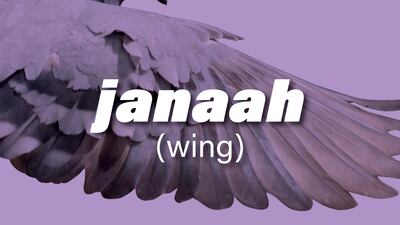
Janaah in Arabic means wing in English -

The Arabic word sana translates to year in English -
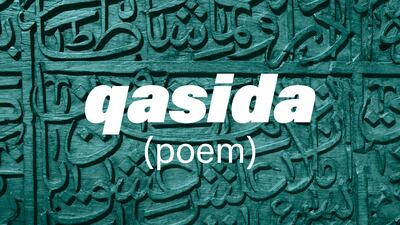
Qasida is the Arabic for poem, not poetry -

Ameer, the Arabic word for prince, which influenced another English title -

Nakhla translates to palm tree in English -
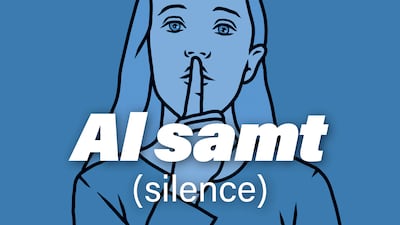
Al samt is the Arabic for silence -

Kalimaat translates to words in English -

Markaz is Arabic for centre -
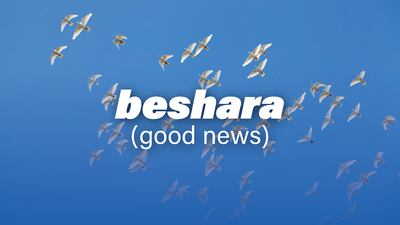
Beshara is the Arabic word for good news -

Bayt is the Arabic for house or home -

Fann is the Arabic word for art, and can be either a verb or an adjective -
Isim, which means name, is made up of three letters, alif, seen and meem -

Dunya is the Arabic word for world -
Nazaafah translates to cleanliness in English -
Many traditions revolve around drinking coffee, including weddings, funerals and business meetings -
Fajr is the Arabic word for dawn -
Maghrib is the Arabic word for sunset -

The Arabic language is filled with idioms, quotes and colloquial quips involving the mirror -
Raei is the Arabic word for opinion -

Wa'ed is a multifaceted word for 'promise', as well as a female name -
Qussa is the Arabic word for story -
Sadaaka is the Arabic word for friendship -

Akhbaar is the Arabic word for news -
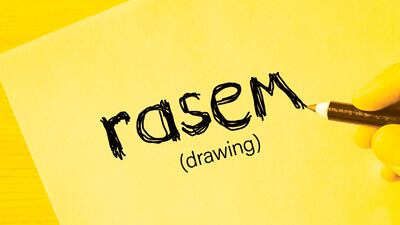
Rasem is made up of the three Arabic letters Rah, Seen and Meem. While it can simply mean a drawing or a sketch it’s also a malleable word whose definition can change depending on context and dialect – particularly between colloquial and classical Arabic. -

As well as finishing a task, khatem denotes a deeper sense of finality -
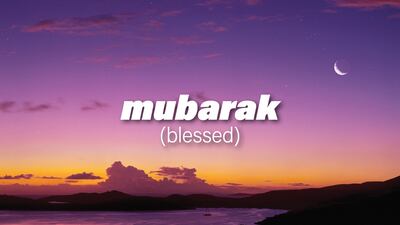
Commonly translated to blessed, mubarak is used as a popular greeting on auspicious days -

The Arabic word for lighthouse is also a term that has become closely associated with Islam -

Siyaam, the Arabic word for fasting is also connected to silence -

Tawbah, the Arabic word for repentance, is also connected to Ramadan -

Safar, the Arabic Word for travel can also refer to sunny days, a brighter-blazing fire or exile. The National



