

On a sweltering day last July, US President Joe Biden, on his first presidential visit to Israel, made sure to seek out his old friend Benjamin Netanyahu in the crowd of Israeli delegates welcoming him to the Holy Land.
At the time, Mr Netanyahu’s political fortunes were diminished. After more than a decade in power, he was now opposition leader, having been replaced by a fragile alliance of younger leaders.
Mr Biden’s overture on the tarmac of Ben Gurion Airport appeared to be simply a recognition of their decades-long friendship.
But fast-forward six months, and perhaps it was more than that, maybe a shoring up of a key relationship.
Mr Netanyahu returned to power in November, in his record-setting sixth term as Prime Minister.
But to form a majority, he courted Israel’s extreme right and orthodox wings, forming Israel’s most far-right government to date.

“This is the most extreme right-wing and religious government in Israel's history,” said Edward Djerejian, a former US ambassador to Israel who served under Bill Clinton.
Mr Netanyahu’s allies in government include religious and political extremists who have openly expressed their desires to annex the West Bank, which would effectively end any hopes of a two-state solution between Israel and the Palestinians.
He has given Bezalel Smotrich, who leads the Religious Zionist Party, the task of overseeing Israel’s policies in the West Bank, raising alarm bells in Washington.
Mr Smotrich, a self-declared homophobe, has long proposed annexing the West Bank, land he regards as “Judea” and “Samaria”, which he believes should belong to Israel.
Under the new government, he, will be in charge of approving building permits and settlement activities.
“They will go for de facto annexation and it's going to be settlements gone wild,” said Martin Indyk, who twice served as US ambassador to Israel in the late 1990s and early 2000s.
More than 600,000 Israelis live in about 200 settlements in the West Bank, territory that is supposed to make up a future Palestinian state, according to B'Tselem, an Israeli monitoring group.
-
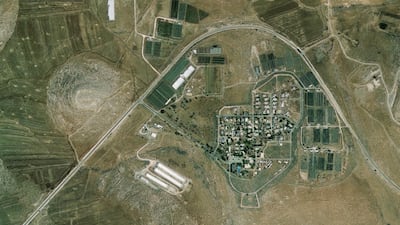
A handout photo made available by the Peace Now organization showing an aerial view of the Israeli settlement of Gitit in the West Bank. EPA -
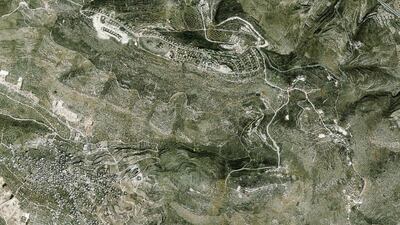
A handout photo made available by the Peace Now organization showing an aerial view of the Israeli settlement of Yizhar in the West Bank. EPA -
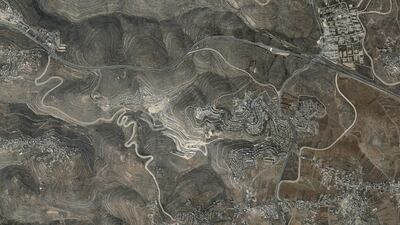
A handout photo made available by the Peace Now organization showing an aerial view of the Israeli settlement of Givat Zeev in the West Bank. EPA -
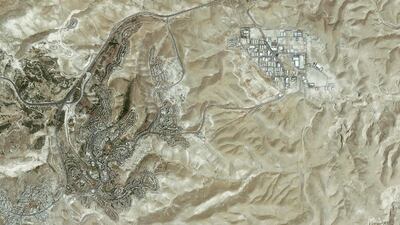
A handout photo made available by the Peace Now organization showing an aerial view of the Israeli settlement of Maale Adumim in the West Bank. EPA -
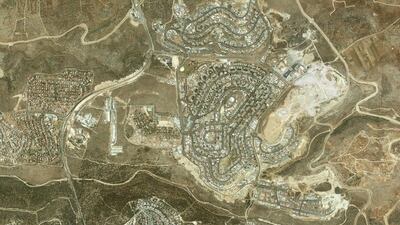
A handout photo made available by the Peace Now organization showing an aerial view of the Israeli settlement of Modiin Ellit in the West Bank. EPA -

A handout photo made available by the Peace Now organization showing an aerial view of the Israeli settlement of Ariel in the West Bank. EPA -
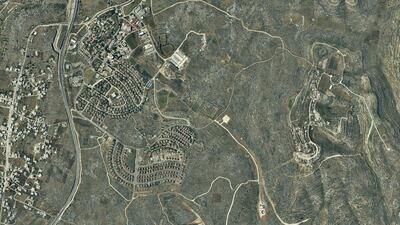
A handout photo made available by the Peace Now organization showing an aerial view of the Israeli settlement of Ofra in the West Bank. EPA -
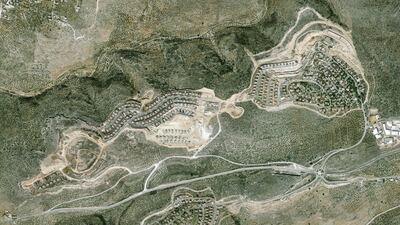
A handout photo made available by the Peace Now organization showing an aerial view of the Israeli settlement of Leshem-Alei Zahavm in the West Bank. EPA -

A handout photo made available by the Peace Now organization showing an aerial view of the Israeli settlement of Har Homa in the West Bank. EPA -
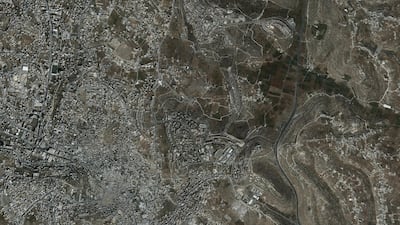
A handout photo made available by the Peace Now organization showing an aerial view of the Israeli settlement of Kiryat Arba in the West Bank. EPA -
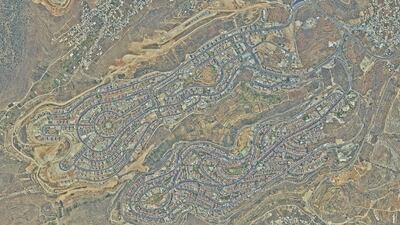
A handout photo made available by the Peace Now organization showing an aerial view of the Israeli settlement of Beitar Illit. -

A handout photo made available by the Peace Now organization showing an aerial view of the Israeli settlement of Eli in the West Bank. -
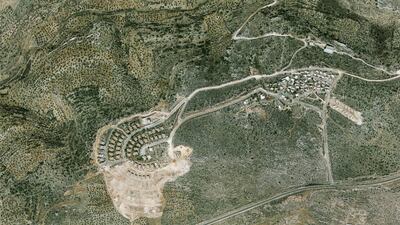
A handout photo made available by the Peace Now organization showing an aerial view of the Israeli settlement of Bruchin in the West Bank. EPA


The UN regards all settlement activity to be illegal and it has long been a thorn in the side of US-Israeli relations.
White House National Security Adviser Jake Sullivan travelled to Israel this week to “emphasise” the US commitment to a two-state solution.
Any increased settlement activity jeopardises that, and Mr Indyk believes the new government may force Mr Biden to make a tough choice.
“He's going to have to decide, does he care about a two-state solution, or does he care about the relationship with Israel, with this Israeli government,” Mr Indyk told The National.
He said “settlement activity” is the “glue” that is keeping this new Israeli government together, and he believes “there is bound to be a confrontation” over the subject with the Biden administration.
To make matters even more complicated, early indications suggest the Netanyahu government will be antagonistic towards Palestinians, not just through settlement activity.
Shortly after being named Minister of National Security this month, Itamar Ben-Gvir toured Al Aqsa Mosque compound, one of Islam's holiest sites.
Mr Ben-Gvir, who in 2007 was convicted of inciting racism over his support of a right-wing extremist movement, drew widespread condemnation from Palestinians and the international community.
-
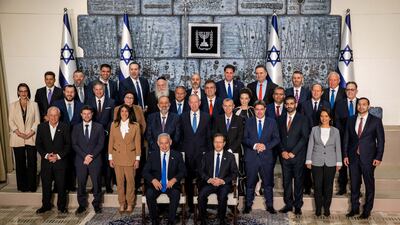
President Isaac Herzog and Prime Minister Benjamin Netanyahu with members of the new Israeli government. Reuters -
Prime Minister Benjamin Netanyahu and his wife Sara attend a toast for the new speaker of Israel's parliament. Reuters -

Benjamin Netanyahu after the traditional group photo with Israel's new government. EPA -
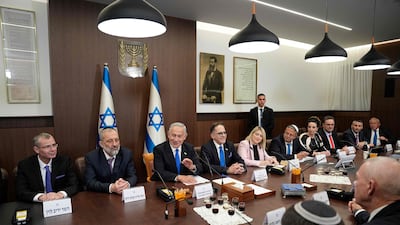
Benjamin Netanyahu during the first cabinet meeting of his new government in Jerusalem. AFP -
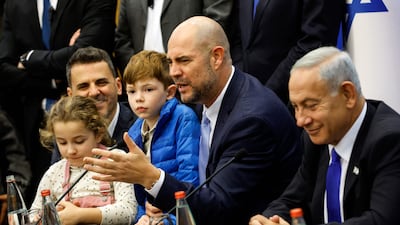
New Knesset speaker Amir Ohana, centre, with his partner Alon, left, their children, and Benjamin Netanyahu at the Knesset in Jerusalem. AFP -
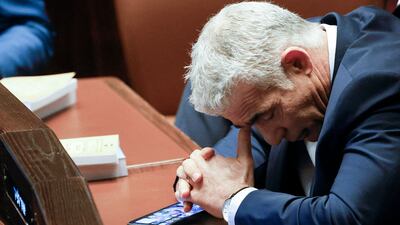
Outgoing Prime Minister Yair Lapid attends a special session of Israel's parliament, the Knesset, to swear in a new government. AFP -
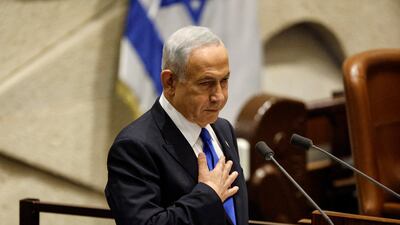
Israeli Prime Minister-designate Benjamin Netanyahu speaks at the special session. EPA -
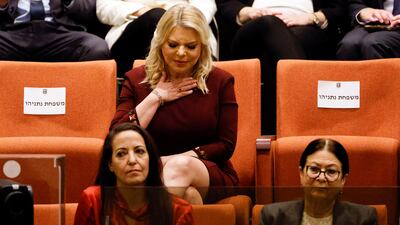
Sara Netanyahu, centre top, Benjamin Netanyahu's wife, Lihi Lapid, centre left, Yair Lapid's wife, and Esther Hayut, President of the Supreme Court of Israel. Reuters -
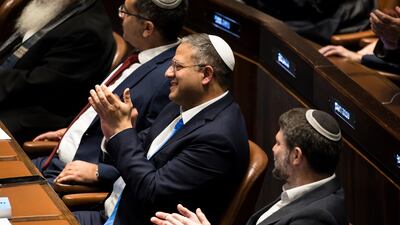
Designated Minister of National Security Itamar Ben Gvir, left, and designated Israeli Minister of Finance Bezalel Smotrich, right, at the session in parliament. Getty Images -
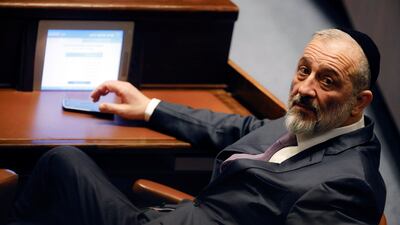
Member of Knesset Aryeh Deri attends a special session of the Knesset, Israel's parliament, to approve and swear in a new right-wing government, in Jerusalem. AP -
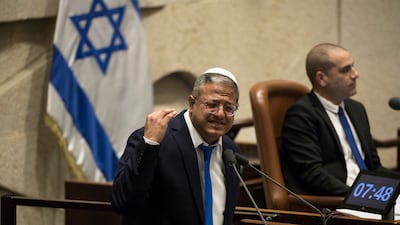
Designated Minister of National Security Itamar Ben Gvir speaks at the swearing-in session. Getty Images -

Protesters against the new Netanyahu government outside the Knesset, Israel's parliament, as it is sworn in. EPA -

Israelis protest against the new government. EPA


Many consider such actions to be merely the beginning of an increasingly far-right and hostile government that could lead to a third intifada, or Palestinian uprising.
“The situation on the ground is, I believe, very heated and dangerous and confrontational,” said Mr Djerejian, whose diplomatic career spanned eight administrations and who is a senior fellow at Harvard Kennedy School’s Middle East Initiative.
“Therefore, any major spark can ignite an intifada or violence in many different forms, be it from the Palestinian side, be it from the Israeli extremists' side.”
Tension has been brewing in the West Bank for months.
In 2022, at least 150 Palestinians were killed by Israeli troops, including 33 children, making it the deadliest year in the Occupied West Bank since the UN started tracking deaths there in 2005.
Mr Indyk fears another intifada is inevitable.
“It has already been ignited,” he said. “I just think it will be different this time and it's a slow burn. But you've got all the ingredients already manifesting themselves.”
The First Intifada started in 1987 after Israeli forces killed four Palestinians in the Jabalia refugee camp in Gaza.
Palestinians protested and carried out acts of civil disobedience for more than five years.
The First Intifada, which helped to galvanise Palestinians in their pursuit of statehood, ended with the signing of the Oslo Accords in 1993, which created a path for a future two-state solution.
The Second Intifada began after Israel's then-prime minister Ariel Sharon visited Al Aqsa Mosque compound in September 2000.
Palestinians massed in the streets to protest against the illegal occupation.
The Second Intifada included clashes and violence that left thousands dead.
Israeli forces killed more than 3,000 Palestinians during the four years ending in 2005. More than 200 Israeli citizens were killed in Palestinian attacks, according to B’Tselem.
Mr Indyk said the coming weeks and months will be a Litmus test for how the Biden administration handles the new government.

“It's going to be all about trying to impress upon [Netanyahu] not to take provocative actions, and to prevent his far-right extremist partners from doing so,” he said.
Mr Biden and Mr Netanyhau have known each other for more than 40 years, and the US President may have to lean heavily on that long relationship to try to keep Israel in check.

Mr Sullivan’s trip is the first of what experts believe will be many attempts by the Biden administration to keep any hopes of a two-state solution alive.
“The US preference under this president is to try to resolve things quietly behind closed doors, wherever possible,” said David Makovsky, a senior fellow at the Washington Institute.
Mr Biden may have enough influence over Mr Netanyahu to keep the new government in line, Mr Indyk said, especially as the Israeli Prime Minister hopes to create formal relations with Saudi Arabia.
“He needs Biden's co-operation on Iran and on Saudi Arabia, and so that gives Biden some leverage, which he wouldn't have otherwise,” said Mr Indyk.
Perhaps Mr Biden's public recognition of his old friend on that hot summer day was more calculating than it at first seemed.
But while he may have enough capital to keep Mr Netanyahu from annexing the West Bank, it is unclear how much control Israel's new leader has over his Cabinet.

