• Qasr Al Hosn is the oldest stone building in Abu Dhabi and one of its most important landmarks.
    Qasr Al Hosn is the oldest stone building in Abu Dhabi and one of its most important landmarks.
  • Sheikh Zayed bin Khalifa, grandfather of the UAE's Founding Father, the late Sheikh Zayed bin Sultan Al Nahyan, at his majlis in front of Qasr Al Hosn.
    Sheikh Zayed bin Khalifa, grandfather of the UAE's Founding Father, the late Sheikh Zayed bin Sultan Al Nahyan, at his majlis in front of Qasr Al Hosn.
  • Undated image of Qasr Al Hosn from Al Ittihad Archive. Photo: Al Ittihad
    Undated image of Qasr Al Hosn from Al Ittihad Archive. Photo: Al Ittihad
  • Undated image of Qasr Al Hosn from Al Ittihad Archive. Photo: Al Ittihad
    Undated image of Qasr Al Hosn from Al Ittihad Archive. Photo: Al Ittihad
  • Sheikh Shakhbut bin Sultan Al Nahyan and Sheikh Tahnoon bin Saeed Al Nahyan inspect troops at Qasr Al Hosn. Photo: The Ruling Family
    Sheikh Shakhbut bin Sultan Al Nahyan and Sheikh Tahnoon bin Saeed Al Nahyan inspect troops at Qasr Al Hosn. Photo: The Ruling Family
  • From left, unidentified sheikh of the Naim tribe, Sheikh Hazaa bin Sultan Al Nahyan, Wilfred Thesiger, Sheikh Shakhbut bin Sultan Al Nahyan, and Sheikh Khalid bin Sultan Al Nahyan. Photo: Wilfred Patrick Thesiger / Pitt Rivers Museum, University of Oxford
    From left, unidentified sheikh of the Naim tribe, Sheikh Hazaa bin Sultan Al Nahyan, Wilfred Thesiger, Sheikh Shakhbut bin Sultan Al Nahyan, and Sheikh Khalid bin Sultan Al Nahyan. Photo: Wilfred Patrick Thesiger / Pitt Rivers Museum, University of Oxford
  • Sheikh Shakhbut bin Sultan with British anthropologist Peter Lienhardt outside Qasr Al Hosn (possibly in 1961).
    Sheikh Shakhbut bin Sultan with British anthropologist Peter Lienhardt outside Qasr Al Hosn (possibly in 1961).
  • Men drive their donkeys past Qasr Al Hosn. Photo: John Vale
    Men drive their donkeys past Qasr Al Hosn. Photo: John Vale
  • Qasr Al Hosn was initially as a single watchtower built in the second half of the 18th century. Victor Besa / The National
    Qasr Al Hosn was initially as a single watchtower built in the second half of the 18th century. Victor Besa / The National
  • Sheikh Mohamed bin Rashid, Vice President and Ruler of Dubai with Sheikh Mansour bin Zayed, Deputy Prime Minister and Minister of the Presidential Court touring Qasr Al Hosn in 2015. Photo: Crown Prince Court Abu Dhabi
    Sheikh Mohamed bin Rashid, Vice President and Ruler of Dubai with Sheikh Mansour bin Zayed, Deputy Prime Minister and Minister of the Presidential Court touring Qasr Al Hosn in 2015. Photo: Crown Prince Court Abu Dhabi
  • Qasr Al Hosn is the ancestral home of the Al Nahyan family in Abu Dhabi. Reem Mohammed / The National
    Qasr Al Hosn is the ancestral home of the Al Nahyan family in Abu Dhabi. Reem Mohammed / The National
  • The shimmering white walls and parapets we see today are the result of a major expansion in the 1940s. Khushnum Bhandari / The National
    The shimmering white walls and parapets we see today are the result of a major expansion in the 1940s. Khushnum Bhandari / The National
  • Al Hosn Festival has grown significantly in the past decade. Khushnum Bhandari / The National
    Al Hosn Festival has grown significantly in the past decade. Khushnum Bhandari / The National
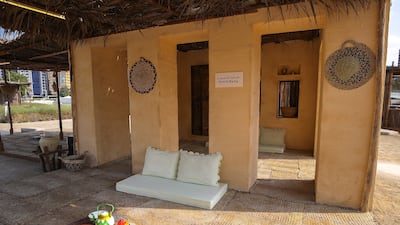
  • The festival features Al Freej, a re-created Emirati village with its own market, blacksmith, palm weaving stations and goat pen. Khushnum Bhandari / The National
    The festival features Al Freej, a re-created Emirati village with its own market, blacksmith, palm weaving stations and goat pen. Khushnum Bhandari / The National
  • Al-Ayyala dancers move in unison to a drummed rhythm at Al Hosn Festival. Khushnum Bhandari / The National
    Al-Ayyala dancers move in unison to a drummed rhythm at Al Hosn Festival. Khushnum Bhandari / The National
  • The government of Abu Dhabi restored the historical building and in 2018 reopened it to the public as museum.
    The government of Abu Dhabi restored the historical building and in 2018 reopened it to the public as museum.

Timeframe: Qasr Al Hosn and 260 years of Abu Dhabi history


Razmig Bedirian
  • English
  • Arabic

Abu Dhabi’s annual Al Hosn Festival is returning to the open-air area in front of Qasr Al Hosn this Friday.

Organised by the Department of Culture and Tourism — Abu Dhabi, the family-friendly festival will feature an expansive programme, providing an insight into what life was like in Abu Dhabi before the discovery of oil. The festival, which will run until January 22, was established in 2013 and is a staple in the cultural calendar of Al Hosn District.

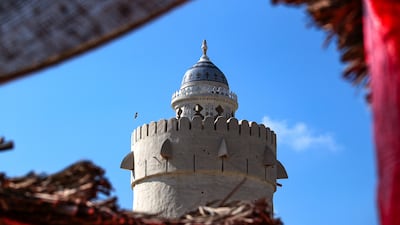
For an event that celebrates UAE history and tradition, there could not be a more apt venue than beside the capital’s oldest stone building and one of its most important landmarks — a fort that dates back to 1761.

Qasr Al Hosn in the early days of Abu Dhabi. Hermann Burchardt / Berlin Museum of Ethnography

Qasr Al Hosn was initially built as a single watchtower. It was intended to defend the sole freshwater well in Abu Dhabi. The watchtower was then expanded into a small fort in 1793 by Shakhbut bin Dhiyab Al Nahyan in his first year as Ruler of the Emirate of Abu Dhabi, a title he would retain until 1816. The fort served as the home of the ruling sheikh.

The Ruler’s Palace that we see today, with its shimmering white walls and parapets, is the result of a major expansion in the 1940s. By the 1950s, Qasr Al Hosn was no longer a defensive structure, but the seat of government, a role it retained until 1966. After a spell as the home of the National Archives, it underwent major renovation in the past decade.

The Abu Dhabi government restored the fort and in 2018 it was reopened to the public as a museum.

Qasr Al Hosn as it was during the 1950s and 1960s. Photo: BP

The Al Hosn Festival was largely conceived as a way to celebrate the fort and its embodiment of Abu Dhabi history. In its inaugural year in 2013, Faisal Al Sheikh, the festival’s director, told The National that the fort, standing for more than two and a half centuries, was the “symbolic birthplace of Abu Dhabi”.

“This festival is an opportunity for the entire community to come together and celebrate Emirati history, culture and tradition.

“The fort was once a ‘gate of glory’. Celebrating the UAE’s history through this great festival will take us back to our roots and remind us of our artistic and intellectual legacy.”

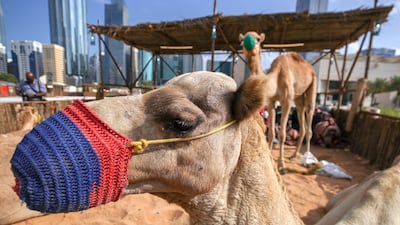
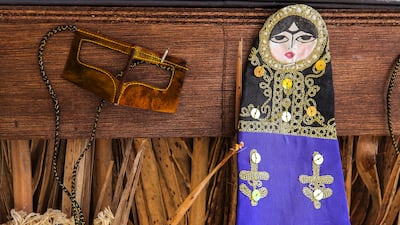
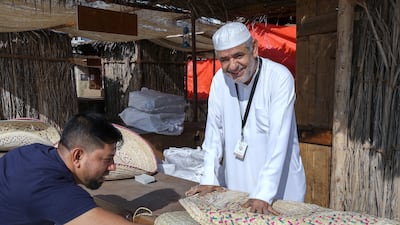
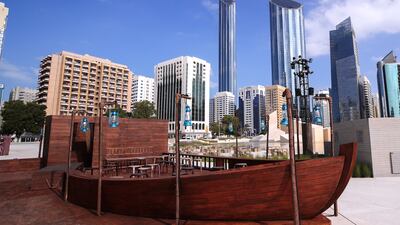
The festival has grown considerably in the past decade, with arts and crafts workshops, gahwa championships, Emirati cuisine as well as a chance to walk through Al Freej, a recreation of an Emirati village that comes with its own market, blacksmith, palm-weaving stations and goat pen.

This year, the festival will include a live re-creation of an Emirati wedding, an expanded food area dedicated to local cuisine as well as a retail district.

In addition to the activities and performances surrounding the palace fort, the interior of Qasr Al Hosn will house two exhibitions.

In Memories of the Palace, visitors can learn about the history of everyday life spent in the regal venue, from the cultural festivities to colourful anecdotes recorded by early generations.

Meanwhile, the Music and Crafts exhibition captures the atmosphere of the palace through historic field recordings and vintage photographs.

Scroll through photos from our guide to this year's Al Hosn Festival below

  • Al Hosn Festival returns this year with another dynamic programme. All photos: Victor Besa / The National
    Al Hosn Festival returns this year with another dynamic programme. All photos: Victor Besa / The National
  • Emirati arts and culture are at the heart of the festival
    Emirati arts and culture are at the heart of the festival
  • Pottery stall at Al Hosn Festival
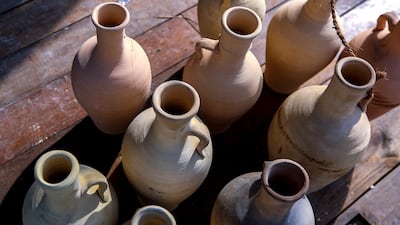
    Pottery stall at Al Hosn Festival
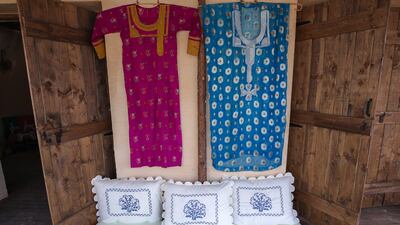
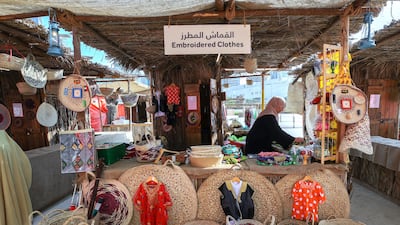
  • Embroidered clothes will be sold at stalls
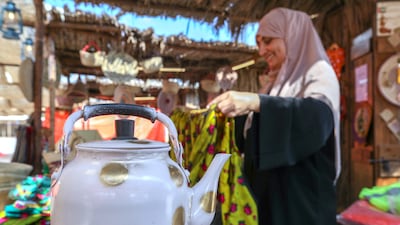
    Embroidered clothes will be sold at stalls
  • Al Hosn Festival celebrates Abu Dhabi's rich cultural traditions
    Al Hosn Festival celebrates Abu Dhabi's rich cultural traditions
  • Stalls will feature everything from local food to fashion
    Stalls will feature everything from local food to fashion
  • An Emirati village will be recreated as part of the festival
    An Emirati village will be recreated as part of the festival
  • Local artisans will showcase their wares at Al Hosn Festival
    Local artisans will showcase their wares at Al Hosn Festival
  • A textile-dyeing hut at Al Hosn Festival
    A textile-dyeing hut at Al Hosn Festival
  • Al Hosn Festival is an annual celebration of UAE culture and traditions
    Al Hosn Festival is an annual celebration of UAE culture and traditions
FIGHT%20CARD
%3Cp%3E%3Cstrong%3EFeatherweight%204%20rounds%3A%3C%2Fstrong%3E%3Cbr%3EYousuf%20Ali%20(2-0-0)%20(win-loss-draw)%20v%20Alex%20Semugenyi%20(0-1-0)%3Cbr%3E%3Cstrong%3EWelterweight%206%20rounds%3A%3C%2Fstrong%3E%3Cbr%3EBenyamin%20Moradzadeh%20(0-0-0)%20v%20Rohit%20Chaudhary%20(4-0-2)%3Cbr%3E%3Cstrong%3EHeavyweight%204%20rounds%3A%3C%2Fstrong%3E%3Cbr%3EYoussef%20Karrar%20(1-0-0)%20v%20Muhammad%20Muzeei%20(0-0-0)%3Cbr%3E%3Cstrong%3EWelterweight%206%20rounds%3A%3C%2Fstrong%3E%3Cbr%3EMarwan%20Mohamad%20Madboly%20(2-0-0)%20v%20Sheldon%20Schultz%20(4-4-0)%3Cbr%3E%3Cstrong%3ESuper%20featherweight%208%20rounds%3A%3C%2Fstrong%3E%3Cbr%3EBishara%20Sabbar%20(6-0-0)%20v%20Mohammed%20Azahar%20(8-5-1)%3Cbr%3E%3Cstrong%3ECruiseweight%208%20rounds%3A%3C%2Fstrong%3E%3Cbr%3EMohammed%20Bekdash%20(25-0-0)%20v%20Musa%20N%E2%80%99tege%20(8-4-0)%3Cbr%3E%3Cstrong%3ESuper%20flyweight%2010%20rounds%3A%3C%2Fstrong%3E%3Cbr%3ESultan%20Al%20Nuaimi%20(9-0-0)%20v%20Jemsi%20Kibazange%20(18-6-2)%3Cbr%3E%3Cstrong%3ELightweight%2010%20rounds%3A%3C%2Fstrong%3E%3Cbr%3EBader%20Samreen%20(8-0-0)%20v%20Jose%20Paez%20Gonzales%20(16-2-2-)%3C%2Fp%3E%0A
Updated: January 13, 2023, 6:01 PM