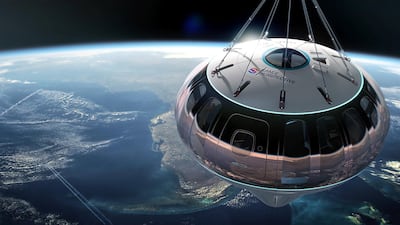
• A US company is hoping to launch passengers to Earth’s stratosphere on an enormous helium balloon that would expand larger than a football field to lift off the ground. All photos: World View
    A US company is hoping to launch passengers to Earth’s stratosphere on an enormous helium balloon that would expand larger than a football field to lift off the ground. All photos: World View
  • It would soar 30,480 metres above the ground, carrying a large passenger capsule to offer striking views of the planet’s curvature and delicate atmosphere.
    It would soar 30,480 metres above the ground, carrying a large passenger capsule to offer striking views of the planet’s curvature and delicate atmosphere.
  • Being developed by Arizona-based company World View, a ticket costs $50,000 – half the price of what Space Perspective, also a stratospheric balloon company, is selling each seat for – and monthly payment plans are also accepted.
    Being developed by Arizona-based company World View, a ticket costs $50,000 – half the price of what Space Perspective, also a stratospheric balloon company, is selling each seat for – and monthly payment plans are also accepted.
  • The World View flights are expected to begin 2024 and will launch from the world’s most stunning sites, including the Grand Canyon in Arizona and Australia’s Great Barrier Reef.
    The World View flights are expected to begin 2024 and will launch from the world’s most stunning sites, including the Grand Canyon in Arizona and Australia’s Great Barrier Reef.
  • Dale Hipsh, president of tourism and exploration at the company, said the experience is meant to provide passengers with the overview effect, often described by astronauts as a powerful shift in how a person views the planet and life.
    Dale Hipsh, president of tourism and exploration at the company, said the experience is meant to provide passengers with the overview effect, often described by astronauts as a powerful shift in how a person views the planet and life.
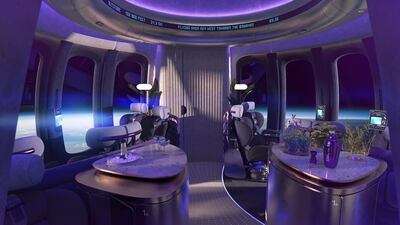
  • The capsule is a pressurised and climate controlled. It is large enough for passengers to get up from their seats and move around. Meals and drinks will be served and there is also a toilet on board. There are reclining seats, oversized windows for 360 views, high-speed data connectivity and a telescope.
    The capsule is a pressurised and climate controlled. It is large enough for passengers to get up from their seats and move around. Meals and drinks will be served and there is also a toilet on board. There are reclining seats, oversized windows for 360 views, high-speed data connectivity and a telescope.
  • The flight time would last from six to eight hours, but the ticket includes a five-day trip that would involve staying in boutique hotels, exploring nature sites near the spaceport, dining at local restaurants, spa, yoga and other fitness experiences.
    The flight time would last from six to eight hours, but the ticket includes a five-day trip that would involve staying in boutique hotels, exploring nature sites near the spaceport, dining at local restaurants, spa, yoga and other fitness experiences.
  • Mr Hipsh said tickets for a launch from the Grand Canyon spaceport is now sold out for all of 2024. There are other launch sites being constructed and planned, including the Serengeti in Kenya, Norway to see the Northern Lights, Amazonia in Brazil, near the Great Wall of China in Mongolia and near the Giza Pyramids in Egypt.
    Mr Hipsh said tickets for a launch from the Grand Canyon spaceport is now sold out for all of 2024. There are other launch sites being constructed and planned, including the Serengeti in Kenya, Norway to see the Northern Lights, Amazonia in Brazil, near the Great Wall of China in Mongolia and near the Giza Pyramids in Egypt.
  • On launch day, passengers will board the capsule, which can accommodate eight customers and two crew members, several hours before sunrise.
    On launch day, passengers will board the capsule, which can accommodate eight customers and two crew members, several hours before sunrise.
  • Fifteen minutes after lift-off, the curvature of the Earth will become visible. It will be about a two hour climb to the edge of space, then the balloon will float at its maximum altitude so passengers can enjoy views from above, before beginning its two-hour descent to the ground. Because this is a controlled ascent and descent, passengers will not experience weightlessness at any point during the flight.
    Fifteen minutes after lift-off, the curvature of the Earth will become visible. It will be about a two hour climb to the edge of space, then the balloon will float at its maximum altitude so passengers can enjoy views from above, before beginning its two-hour descent to the ground. Because this is a controlled ascent and descent, passengers will not experience weightlessness at any point during the flight.
  • The balloon is not actually going into space, but the technology is still considered a spacecraft by the US Federal Aviation Administration because of the high altitude it reaches.
    The balloon is not actually going into space, but the technology is still considered a spacecraft by the US Federal Aviation Administration because of the high altitude it reaches.

Fly to Earth’s stratosphere by helium balloon for $50,000 a seat


Sarwat Nasir
  • English
  • Arabic

A US company is hoping to launch passengers into Earth’s stratosphere in an enormous helium-filled balloon that expands to a size larger than a football pitch.

The balloon will soar to about 30,480 metres, carrying a large passenger capsule to offer people striking views of the planet’s curvature and delicate atmosphere.

Currently being developed by World View, a company in Arizona, a ticket costs $50,000 — more than half the price stratospheric balloon company Space Perspective is charging for a seat — and monthly payment plans are accepted.

The World View flights are expected to begin in 2024 and will take off from the sites close to some of the wonders of the world, including the Grand Canyon in Arizona, Australia’s Great Barrier Reef and the Giza Pyramids in Egypt.

Dale Hipsh, president of tourism and exploration at the company, said the experience was meant to provide passengers with the overview effect, often described by astronauts as a powerful shift in how a person views the planet and life.

“What we’re doing with our stratospheric balloon flights is that we are taking our explorers 100,000 feet [30,480m] into the stratosphere where they see the curvature of the Earth and the thin blue line of our atmosphere against the darkness of space,” he told The National.

What the experience involves

World View is trying to set itself apart from rival space tourism companies by promising customers a “luxury experience”.

On launch day, people will board the capsule, which can accommodate eight customers and two crew members, several hours before sunrise.

The flights are due to last from six to eight hours but the ticket includes a five-day experience that involves staying in boutique hotels, exploring nature sites near the spaceport, dining at local restaurants, spa, yoga and other fitness activities.

Mr Hipsh said tickets from the Grand Canyon spaceport are now sold out for all of 2024.

Other launch sites are being constructed and planned, including at the Serengeti in Kenya, in Norway where the Northern Lights can be seen, Amazonia in Brazil, a location close to the Great Wall of China in Mongolia and near the Giza Pyramids in Egypt.

Fifteen minutes after lift-off, the curvature of the Earth will become visible. Photo; World View Enterprises

“Our intention is to offer a range of activities that allow for the experience of the particular destinations that we are in,” Mr Hipsh said.

“And again, we want to be mindful of what's going to happen the next day — on the day that we send you into near-space. We want you to be at the apogee for sunrise, so that means you're going to have to get up early in the morning.”

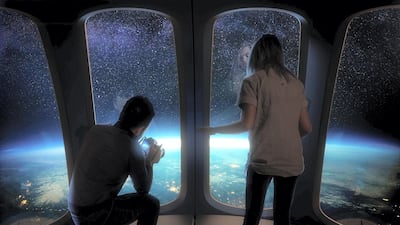
Fifteen minutes after lift-off, the curvature of the Earth will become visible.

It will be about a two-hour climb to the edge of space, after which the balloon will float at its maximum altitude so passengers can enjoy the views before descent.

Passengers will not experience weightlessness at any point during the controlled flight.

Even though the balloon is not entering space, the US Federal Aviation Administration is still classifying it as a spacecraft because of the high altitude it will reach.

The capsule is pressurised, climate-controlled and large enough for passengers to rise from their seats and move around.

Food and drink will be served and a toilet is on board. There are reclining seats, vast windows for 360-degree views, high-speed data connectivity and a telescope.

A deposit of $500 is needed to reserve a seat.

Has the technology been tested?

The company has more than seven years of experience with stratospheric flights.

It operates another group called Stratollites, a robotic balloon craft that carries payloads for long journeys.

“From the design of the spaceflight capsule to the helium-filled, zero-pressure balloon flight system and the patented parafoil landing system, safety at every step is our primary objective,” World View said.

“We have also designed several redundant safety measures if any of the primary safety measures malfunction during flight.

“For instance, if the parafoil system fails during landing, we also have a back-up parachute system that would be deployed to gently slow and land the capsule.”

What do other space tourism companies offer?

Space Perspective is another stratospheric balloon company offering a similar flight experience for $125,000 per seat.

Their flights take off from Florida’s Kennedy Space Centre and also reach an apogee of 30,480m, with operations expected to begin in 2024. Flights are fully booked until 2025.

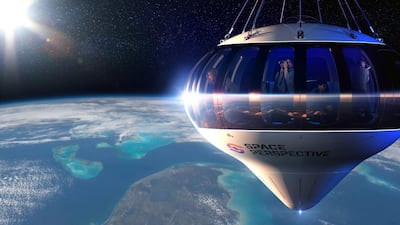
  • Tourists will soar to 100,000 feet (30,500 metres) in the space lounges and be rewarded with 360-degree views of Earth below
    Tourists will soar to 100,000 feet (30,500 metres) in the space lounges and be rewarded with 360-degree views of Earth below
  • Space Perspective will launch explorer flights in 2025. All photos: Space Perspective
    Space Perspective will launch explorer flights in 2025. All photos: Space Perspective
  • An upcycled bar is located in each of the 'Spaceship Neptune' cabins
    An upcycled bar is located in each of the 'Spaceship Neptune' cabins
  • Seats on the world's first luxury space flight cost $495,000 per person, for a six-hour journey, with more than 1,000 tickets already sold
    Seats on the world's first luxury space flight cost $495,000 per person, for a six-hour journey, with more than 1,000 tickets already sold
  • 'Spaceship Neptune' capsules will accommodate up to eight passengers and will feature reclining chairs, panoramic windows and anti-glare technology to allow for picture-taking opportunities
    'Spaceship Neptune' capsules will accommodate up to eight passengers and will feature reclining chairs, panoramic windows and anti-glare technology to allow for picture-taking opportunities
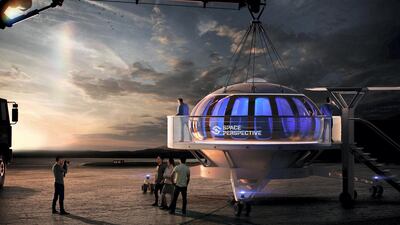
  • Lifted into the air via a balloon larger than a football field, 'Spaceship Neptune' will be able to launch from ocean-based spaceports
    Lifted into the air via a balloon larger than a football field, 'Spaceship Neptune' will be able to launch from ocean-based spaceports
  • Space adventurers can secure their place now for a deposit of $1,000
    Space adventurers can secure their place now for a deposit of $1,000

Space Perspective also has reclining seats, large windows, Wi-Fi connectivity and a toilet on board.

Blue Origin launches suborbital flights, where passengers can experience weightlessness for about four minutes.

The New Shepard rocket launches from a New Mexico desert, carrying a passenger capsule 100 kilometres above the ground.

It is not known how much the company charges per seat but its competitor Virgin Galactic is asking for $450,000.


Updated: July 24, 2022, 12:24 PM