Mohammed Alnaas on Sunday became the first Libyan and youngest author to win the International Prize for Arabic Fiction when his novel, Bread on Uncle Milad's Table, beat five other shortlisted works for the $50,000 prize.
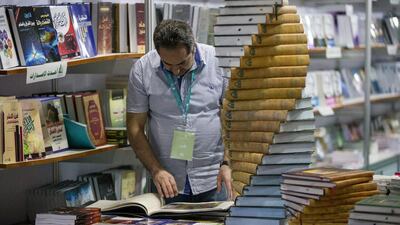
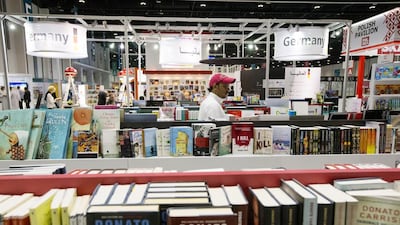
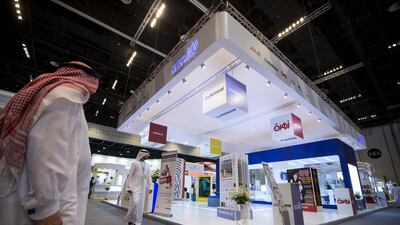
Speaking from the sidelines of the Abu Dhabi International Book Fair, days after winning the coveted award, Alnaas says he is still buzzing with excitement, and needs time to reflect on how the accolade will affect his life.
“It’s overwhelming, and I still haven’t had the chance to wrap my head around it,” he says. “It seems like everything in my life has changed in one moment.”
As well as the monetary award, the International Prize for Arabic Fiction guarantees an English translation for winning works. Alnaas says he is eager to see Bread on Uncle Milad's Table, as well as the issues it explores, being given a wider audience.
“The international reader needs to know what contemporary Arabic fiction has to offer,” he says. “I think the novel has some new questions to add in the discussion about equality and masculinity, I would love to see the book translated, not just into English, but to all written languages of the world.”
'Bread on Uncle Milad's Table'
Alnaas had two years of false starts when trying to write Bread on Uncle Milad's Table.
He first conceived the novel in 2018, and although he had tried to flesh out its character and plot at his writing desk, for a while all he had of the book was its title, which was inspired by an old Libyan proverb, and the protagonist it names.
In the end, to know how to write a novel around a baker, he had to learn how to make bread.
Breadmaking had become a popular pastime in the pandemic era as many across the world turned to flour as a way of coping with social restrictions. Living in Tripoli, however, Alnaas also had to deal with chronic power cuts and the sounds of not-so-distant gunfire and bombardments. The author would go through a kilogram of flour every day, trying to knead away the encroaching death and war while figuring out how to write Bread on Uncle Milad's Table.
As his breadmaking skills improved, he felt confident he had found a way forward. In April 2020, he wrote the first line of his novel. He wrote feverishly for the next six months, until the story found form.
Milad was different from his community, they didn’t allow him to live freely as he wanted, they forced him to be like them, and I think that’s what destroys societies
Mohammed Alnaas,
author
“I wasn’t ready to let go of the idea that the character of Milad should be a baker,” Alnaas says. “Because I was ignorant of baking techniques, I began to research and learn all the types mentioned in the novel, even croissants, which are one of the most difficult baked goods to make. When I did, the novel opened up for me.”
The novel begins with Milad striving, yet failing, to embody the ideal of masculinity as his society views it. After becoming engaged to his sweetheart, Zeinab, he decides to be himself. He performs tasks his society reserves for women, such as breadmaking, while Zeinab works to support the family, but soon finds out he's being mocked in the village.
Bread on Uncle Milad's Table is an exploration and dismantling of preconceptions of masculinity, especially in a society ruptured by conflict. Alnaas says he intended the novel to prod “Arab societies in general to open their hearts and minds to what’s different from the stereotypical”.
Scroll through the gallery below to see photos from the Abu Dhabi International Book Fair 2022
The novel was released in June 2021 by the publishing house Rashm.
“Milad was different from his community, they didn’t allow him to live freely as he wanted, they forced him to be like them, and I think that’s what destroys societies, that communal and systematic force and urge for everything to be just the same, I lived my childhood, where everything looked the same, we looked the same, and we looked like our 'Big Brother', it wasn’t good,” he says.
“After the novel was published, I received a comment on Goodreads, in which one reader says how much he saw himself in the character Milad. This is what makes me write, for the reader to interact with the novel, whether with love or hate; this means that I have fulfilled their trust.”
Celebration among Libyans
Alnaas’s win has stirred a festive storm among Libyans online. The achievement is being celebrated as a turning point in the country’s literary scene after “decades of dictatorship, war and harsh changes in the social fabric”.
“The literary scene at home really needed a winner in the Ipaf,” he says. “That’s why when the winner this year was announced, they celebrated and are still celebrating. It’s the first time that a literary event becomes viral in the Libyan social media scene, which is a big thing.”
The young author also says it feels “weird” to be the “first '90s kid to win”, but that he hopes the achievement inspires a new generation of Arab writers.
“I hope that what I’ve done here can unleash the creative talents of my generation and the generations to come in the Arab world,” he says. “I believe we will hear new strong voices, who will offer to the world a new look into Arab literature, it will blow your minds — not physically, don’t worry. [But] trust that.”
A 'bold voice' yet to come
Despite, or perhaps because of, his success, Alnaas is not ready to leave the world of Bread on Uncle Milad's Table. The author has recently finished a manuscript based on Lutfi Al-Malawi, a character from the novel, a work that's sponsored by the Arete Foundation for Culture and Arts in Libya.
“The novel's arrival at this stage of the Ipaf award means a space of financial stability, in addition to marketing the rest of what I will write in the future. As for the book itself, prizes are not the only value from which one can determine the value of a particular book. The book’s endurance over time is what makes it valuable. That is why we still read many great novels that did not win prizes.”
On how he sees the landscape of Libyan literature, Alnaas says he is witnessing a marked rise of young writers defying the status quo, something he welcomes.
“Literature in Libya on one hand suffered decades of marginalisation and censorship during the rule of Muammar Qaddafi. It underestimated the writers and poets of that era. The regime stereotyped them and made them in some way employees of the state, waiting for its giving and granting,” he says. “Meanwhile, it also fought private businesses and publishing houses. They made publishing affiliated with the state, in addition to the severe censorship that the regime was exercising at the time.”
Now, he says, there is a tendency towards liberalism among young writers, but this is offset by the remnants of the older system and the rise of a militant wave that fights literature and freedom of speech.
“Young Libyan writers are now looking to spread their literature across the world. I think that, in the next 10 years, Libyan literature will have a voice that no one has ever known before, a voice full of wounds across a hundred years — since the Italian occupation — but a bold voice.”

FIGHT%20CARD
%3Cp%3EAnthony%20Joshua%20v%20Otto%20Wallin%2C%2012%20rounds%2C%20heavyweight%3C%2Fp%3E%0A%3Cp%3EDeontay%20Wilder%20v%20Joseph%20Parker%2C%2012%20rounds%2C%20heavyweight%3C%2Fp%3E%0A%3Cp%3EDmitry%20Bivol%20v%20Lyndon%20Arthur%2C%2012%20rounds%2C%20light%20heavyweight%3C%2Fp%3E%0A%3Cp%3EDaniel%20Dubois%20v%20Jarrell%20Miller%2C%2012%20rounds%2C%20heavyweight%3C%2Fp%3E%0A%3Cp%3EFilip%20Hrgovic%20v%20Mark%20de%20Mori%2C%2012%20rounds%2C%20heavyweight%C2%A0%3C%2Fp%3E%0A%3Cp%3EArslanbek%20Makhmudov%20v%20Agit%20Kabayel%2C%2012%20rounds%2C%20heavyweight%C2%A0%3C%2Fp%3E%0A%3Cp%3EFrank%20Sanchez%20v%20Junior%20Fa%2C%2012%20rounds%2C%20heavyweight%C2%A0%3C%2Fp%3E%0A%3Cp%3EJai%20Opetaia%20v%20Ellis%20Zorro%2C%2012%20rounds%2C%20cruiserweight%3C%2Fp%3E%0A
The five pillars of Islam
Avatar: Fire and Ash
Director: James Cameron
Starring: Sam Worthington, Sigourney Weaver, Zoe Saldana
Rating: 4.5/5
GIANT REVIEW
Starring: Amir El-Masry, Pierce Brosnan
Director: Athale
Rating: 4/5
TUESDAY'S ORDER OF PLAY
Centre Court
Starting at 2pm:
Elina Svitolina (UKR) [3] v Jennifer Brady (USA)
Anastasia Pavlyuchenkova (RUS) v Belinda Bencic (SUI [4]
Not before 7pm:
Sofia Kenin (USA) [5] v Elena Rybakina (KAZ)
Maria Sakkari (GRE) v Aryna Sabalenka (BLR) [7]
Court One
Starting at midday:
Karolina Muchova (CZE) v Katerina Siniakova (CZE)
Kristina Mladenovic (FRA) v Aliaksandra Sasnovich (BLR)
Veronika Kudermetova (RUS) v Dayana Yastermska (UKR)
Petra Martic (CRO) [8] v Su-Wei Hsieh (TPE)
Sorana Cirstea (ROU) v Anett Kontaveit (EST)
What is graphene?
Graphene is extracted from graphite and is made up of pure carbon.
It is 200 times more resistant than steel and five times lighter than aluminum.
It conducts electricity better than any other material at room temperature.
It is thought that graphene could boost the useful life of batteries by 10 per cent.
Graphene can also detect cancer cells in the early stages of the disease.
The material was first discovered when Andre Geim and Konstantin Novoselov were 'playing' with graphite at the University of Manchester in 2004.
Dubai Bling season three
Cast: Loujain Adada, Zeina Khoury, Farhana Bodi, Ebraheem Al Samadi, Mona Kattan, and couples Safa & Fahad Siddiqui and DJ Bliss & Danya Mohammed
Rating: 1/5
Who's who in Yemen conflict
Houthis: Iran-backed rebels who occupy Sanaa and run unrecognised government
Yemeni government: Exiled government in Aden led by eight-member Presidential Leadership Council
Southern Transitional Council: Faction in Yemeni government that seeks autonomy for the south
Habrish 'rebels': Tribal-backed forces feuding with STC over control of oil in government territory
Mercer, the investment consulting arm of US services company Marsh & McLennan, expects its wealth division to at least double its assets under management (AUM) in the Middle East as wealth in the region continues to grow despite economic headwinds, a company official said.
Mercer Wealth, which globally has $160 billion in AUM, plans to boost its AUM in the region to $2-$3bn in the next 2-3 years from the present $1bn, said Yasir AbuShaban, a Dubai-based principal with Mercer Wealth.
“Within the next two to three years, we are looking at reaching $2 to $3 billion as a conservative estimate and we do see an opportunity to do so,” said Mr AbuShaban.
Mercer does not directly make investments, but allocates clients’ money they have discretion to, to professional asset managers. They also provide advice to clients.
“We have buying power. We can negotiate on their (client’s) behalf with asset managers to provide them lower fees than they otherwise would have to get on their own,” he added.
Mercer Wealth’s clients include sovereign wealth funds, family offices, and insurance companies among others.
From its office in Dubai, Mercer also looks after Africa, India and Turkey, where they also see opportunity for growth.
Wealth creation in Middle East and Africa (MEA) grew 8.5 per cent to $8.1 trillion last year from $7.5tn in 2015, higher than last year’s global average of 6 per cent and the second-highest growth in a region after Asia-Pacific which grew 9.9 per cent, according to consultancy Boston Consulting Group (BCG). In the region, where wealth grew just 1.9 per cent in 2015 compared with 2014, a pickup in oil prices has helped in wealth generation.
BCG is forecasting MEA wealth will rise to $12tn by 2021, growing at an annual average of 8 per cent.
Drivers of wealth generation in the region will be split evenly between new wealth creation and growth of performance of existing assets, according to BCG.
Another general trend in the region is clients’ looking for a comprehensive approach to investing, according to Mr AbuShaban.
“Institutional investors or some of the families are seeing a slowdown in the available capital they have to invest and in that sense they are looking at optimizing the way they manage their portfolios and making sure they are not investing haphazardly and different parts of their investment are working together,” said Mr AbuShaban.
Some clients also have a higher appetite for risk, given the low interest-rate environment that does not provide enough yield for some institutional investors. These clients are keen to invest in illiquid assets, such as private equity and infrastructure.
“What we have seen is a desire for higher returns in what has been a low-return environment specifically in various fixed income or bonds,” he said.
“In this environment, we have seen a de facto increase in the risk that clients are taking in things like illiquid investments, private equity investments, infrastructure and private debt, those kind of investments were higher illiquidity results in incrementally higher returns.”
The Abu Dhabi Investment Authority, one of the largest sovereign wealth funds, said in its 2016 report that has gradually increased its exposure in direct private equity and private credit transactions, mainly in Asian markets and especially in China and India. The authority’s private equity department focused on structured equities owing to “their defensive characteristics.”
Kill%20Bill%20Volume%201
%3Cp%3E%3Cstrong%3EDirector%3C%2Fstrong%3E%3A%20Quentin%20Tarantino%3Cbr%3E%3Cstrong%3EStars%3C%2Fstrong%3E%3A%20Uma%20Thurman%2C%20David%20Carradine%20and%20Michael%20Madsen%3Cbr%3E%3Cstrong%3ERating%3C%2Fstrong%3E%3A%204.5%2F5%3C%2Fp%3E%0A
List of UAE medal winners
Gold
Faisal Al Ketbi (Open weight and 94kg)
Talib Al Kirbi (69kg)
Omar Al Fadhli (56kg)
Silver
Zayed Al Kaabi (94kg)
Khalfan Belhol (85kg)
Zayed Al Mansoori (62kg)
Mouza Al Shamsi (49kg women)
Bronze
Yahia Mansour Al Hammadi (Open and 94kg)
Saood Al Hammadi (77kg)
Said Al Mazroui (62kg)
Obaid Al Nuaimi (56kg)
Bashayer Al Matrooshi (62kg women)
Reem Abdulkareem (45kg women)
Test squad: Azhar Ali (captain), Abid Ali, Asad Shafiq, Babar Azam, Haris Sohail, Imam-ul-Haq, Imran Khan, Iftikhar Ahmed, Kashif Bhatti, Mohammad Abbas, Mohammad Rizwan(wicketkeeper), Musa Khan, Naseem Shah, Shaheen Afridi, Shan Masood, Yasir Shah
Twenty20 squad: Babar Azam (captain), Asif Ali, Fakhar Zaman, Haris Sohail, Iftikhar Ahmed, Imad Wasim, Imam-ul-Haq, Khushdil Shah, Mohammad Amir, Mohammad Hasnain, Mohammad Irfan, Mohammad Rizwan (wicketkeeper), Musa Khan, Shadab Khan, Usman Qadir, Wahab Riaz
Scores:
Day 4
England 290 & 346
Sri Lanka 336 & 226-7 (target 301)
Sri Lanka require another 75 runs with three wickets remaining
A State of Passion
Directors: Carol Mansour and Muna Khalidi
Stars: Dr Ghassan Abu-Sittah
Rating: 4/5
SPECS%3A%20Polestar%203
%3Cp%3E%3Cstrong%3EEngine%3A%20%3C%2Fstrong%3ELong-range%20dual%20motor%20with%20400V%20battery%3Cbr%3E%3Cstrong%3EPower%3A%20%3C%2Fstrong%3E360kW%20%2F%20483bhp%3Cbr%3E%3Cstrong%3ETorque%3A%20%3C%2Fstrong%3E840Nm%3Cbr%3E%3Cstrong%3ETransmission%3A%20%3C%2Fstrong%3ESingle-speed%20automatic%3Cbr%3E%3Cstrong%3EMax%20touring%20range%3A%3C%2Fstrong%3E%20628km%3Cbr%3E%3Cstrong%3E0-100km%2Fh%3A%3C%2Fstrong%3E%204.7sec%3Cbr%3E%3Cstrong%3ETop%20speed%3A%3C%2Fstrong%3E%20210kph%20%3Cbr%3E%3Cstrong%3EPrice%3A%20%3C%2Fstrong%3EFrom%20Dh360%2C000%3Cbr%3E%3Cstrong%3EOn%20sale%3A%20%3C%2Fstrong%3ESeptember%3Cbr%3E%3C%2Fp%3E%0A
Zakat definitions
Zakat: an Arabic word meaning ‘to cleanse’ or ‘purification’.
Nisab: the minimum amount that a Muslim must have before being obliged to pay zakat. Traditionally, the nisab threshold was 87.48 grams of gold, or 612.36 grams of silver. The monetary value of the nisab therefore varies by current prices and currencies.
Zakat Al Mal: the ‘cleansing’ of wealth, as one of the five pillars of Islam; a spiritual duty for all Muslims meeting the ‘nisab’ wealth criteria in a lunar year, to pay 2.5 per cent of their wealth in alms to the deserving and needy.
Zakat Al Fitr: a donation to charity given during Ramadan, before Eid Al Fitr, in the form of food. Every adult Muslim who possesses food in excess of the needs of themselves and their family must pay two qadahs (an old measure just over 2 kilograms) of flour, wheat, barley or rice from each person in a household, as a minimum.
CRICKET%20WORLD%20CUP%20QUALIFIER%2C%20ZIMBABWE%20
%3Cp%3E%3Cstrong%3EUAE%20fixtures%20%20%3C%2Fstrong%3E%3C%2Fp%3E%0A%3Cp%3E%3Cstrong%3EMonday%2C%20June%2019%20%3C%2Fstrong%3E%3C%2Fp%3E%0A%3Cp%3ESri%20Lanka%20v%20UAE%2C%20Queen%E2%80%99s%20Sports%20Club%26nbsp%3B%3C%2Fp%3E%0A%3Cp%3E%3Cstrong%3EWednesday%2C%20June%2021%20%3C%2Fstrong%3E%3C%2Fp%3E%0A%3Cp%3EOman%20v%20UAE%2C%20Bulawayo%20Athletic%20Club%26nbsp%3B%3C%2Fp%3E%0A%3Cp%3E%3Cstrong%3EFriday%2C%20June%2023%3C%2Fstrong%3E%3C%2Fp%3E%0A%3Cp%3EScotland%20v%20UAE%2C%20Bulawayo%20Athletic%20Club%26nbsp%3B%3C%2Fp%3E%0A%3Cp%3E%3Cstrong%3ETuesday%2C%20June%2027%20%3C%2Fstrong%3E%3C%2Fp%3E%0A%3Cp%3EIreland%20v%20UAE%2C%20Bulawayo%20Athletic%20Club%3C%2Fp%3E%0A
Dhadak
Director: Shashank Khaitan
Starring: Janhvi Kapoor, Ishaan Khattar, Ashutosh Rana
Stars: 3
Boulder shooting victims
• Denny Strong, 20
• Neven Stanisic, 23
• Rikki Olds, 25
• Tralona Bartkowiak, 49
• Suzanne Fountain, 59
• Teri Leiker, 51
• Eric Talley, 51
• Kevin Mahoney, 61
• Lynn Murray, 62
• Jody Waters, 65
Specs%20
%3Cp%3E%3Cstrong%3EPower%20train%3A%20%3C%2Fstrong%3E4.0-litre%20twin-turbo%20V8%20and%20synchronous%20electric%20motor%3Cbr%3E%3Cstrong%3EMax%20power%3A%20%3C%2Fstrong%3E800hp%3Cbr%3E%3Cstrong%3EMax%20torque%3A%20%3C%2Fstrong%3E950Nm%3Cbr%3E%3Cstrong%3ETransmission%3A%20%3C%2Fstrong%3EEight-speed%20auto%3Cbr%3E%3Cstrong%3EBattery%3A%20%3C%2Fstrong%3E25.7kWh%20lithium-ion%3Cbr%3E0-100km%2Fh%3A%203.4sec%3Cbr%3E0-200km%2Fh%3A%2011.4sec%3Cbr%3E%3Cstrong%3ETop%20speed%3A%20%3C%2Fstrong%3E312km%2Fh%3Cbr%3E%3Cstrong%3EMax%20electric-only%20range%3A%3C%2Fstrong%3E%2060km%20(claimed)%3Cbr%3E%3Cstrong%3EOn%20sale%3A%3C%2Fstrong%3E%20Q3%3Cbr%3E%3Cstrong%3EPrice%3A%20%3C%2Fstrong%3EFrom%20Dh1.2m%20(estimate)%3Cbr%3E%3Cbr%3E%3C%2Fp%3E%0A
Paatal Lok season two
Directors: Avinash Arun, Prosit Roy
Stars: Jaideep Ahlawat, Ishwak Singh, Lc Sekhose, Merenla Imsong
Rating: 4.5/5
The%20Sandman
%3Cp%3ECreators%3A%20Neil%20Gaiman%2C%20David%20Goyer%2C%20Allan%20Heinberg%3C%2Fp%3E%0A%3Cp%3EStars%3A%20Tom%20Sturridge%2C%20Boyd%20Holbrook%2C%20Jenna%20Coleman%20and%20Gwendoline%20Christie%3C%2Fp%3E%0A%3Cp%3ERating%3A%204%2F5%3C%2Fp%3E%0A
Banthology: Stories from Unwanted Nations
Edited by Sarah Cleave, Comma Press
Copa del Rey
Semi-final, first leg
Barcelona 1 (Malcom 57')
Real Madrid (Vazquez 6')
Second leg, February 27