
I never make New Year’s resolutions, but for 2021 I pledged to rein in the spending and get more savvy when it comes to saving.
Step one of that mission was to use public transport more. It’s cheap, kind of convenient and a great place to people-watch.
On Monday, after a six-year hiatus, I jumped on Dubai Metro for the first time to test out the new track along Route 2020.
Within only 10 minutes, I managed to scale four different neighbourhoods. I spent only Dh4 and didn't honk my car horn in a rage amid the rush-hour traffic. Dubai Metro, I could get used to you!
-

Sheikh Mohammed bin Rashid, Vice President and Ruler of Dubai, opens Route 2020, the completed metro extension that will transport passengers to the Expo 2020 site. Pictured with Sheikh Maktoum bin Mohammed, Deputy Ruler of Dubai. Courtesy: Sheikh Mohammed bin Rashid Twitter -
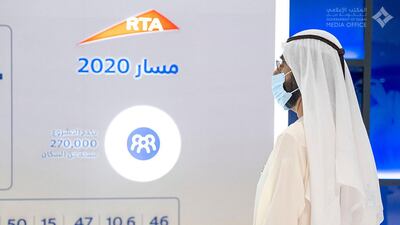
Sheikh Mohammed bin Rashid, Vice President and Ruler of Dubai, launches the Red line metro extension on Wednesday. It will open to the public in September. Courtesy: Sheikh Mohammed bin Rashid Twitter -
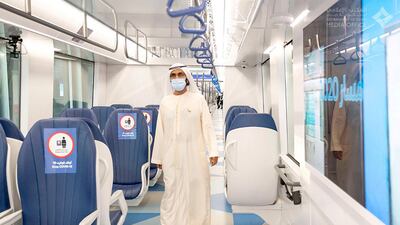
Sheikh Mohammed bin Rashid, Vice President and Ruler of Dubai, opens the 15km extension of the Red line. The project cost Dh11bn and construction lasted 4 years. Courtesy: Sheikh Mohammed bin Rashid Twitter -

Sheikh Mohammed bin Rashid, Vice President and Ruler of Dubai, inaugurates one of the seven new metro stations that are part of Route 2020. Courtesy: Sheikh Mohammed bin Rashid Twitter -
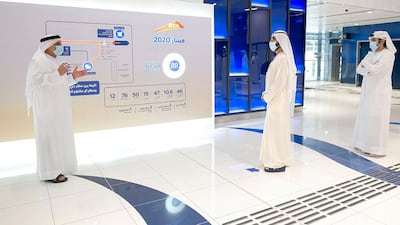
Sheikh Mohammed bin Rashid, Vice President and Ruler of Dubai, is shown a presentation about Route 2020. He inaugurated the Dubai Metro link with his son, Sheikh Maktoum, Deputy Ruler of Dubai, on Wednesday. Courtesy: Sheikh Mohammed bin Rashid Twitter -
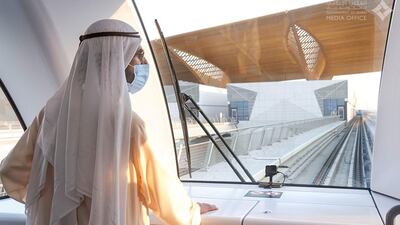
Sheikh Mohammed bin Rashid, Vice President and Ruler of Dubai, rides the metro on Route 2020. Courtesy: Sheikh Mohammed bin Rashid Twitter -
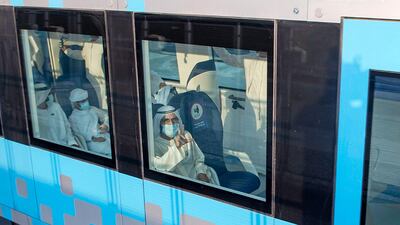
Sheikh Mohammed bin Rashid, Vice President and Ruler of Dubai, inaugurates Route 2020, a 15km extension of Dubai Metro's Red line that connects to the Expo site. Courtesy: Sheikh Mohammed bin Rashid Twitter -
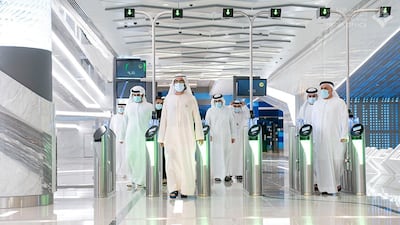
Sheikh Mohammed bin Rashid, Vice President and Ruler of Dubai, launches the Red line metro extension on Wednesday. It will open to the public in September. Courtesy: Sheikh Mohammed bin Rashid Twitter -

Sheikh Mohammed bin Rashid, Vice President and Ruler of Dubai, opens the 15km extension of the Red line. The project cost Dh11bn and construction lasted 4 years. Pictured with Sheikh Maktoum bin Mohammed, Deputy Ruler of Dubai. Courtesy: Sheikh Mohammed bin Rashid Twitter -
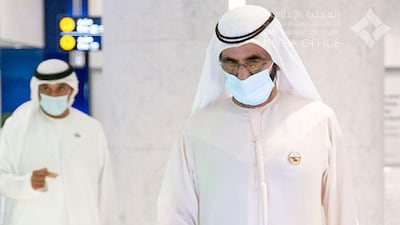
Sheikh Mohammed bin Rashid, Vice President and Ruler of Dubai, inaugurates Route 2020, a 15km extension of Dubai Metro's Red line that connects to the Expo site. Courtesy: Sheikh Mohammed bin Rashid Twitter -

Sheikh Mohammed bin Rashid, Vice President and Ruler of Dubai, inaugurates the Red line metro extension that links to the Expo site. Route 2020 opens to the public in September. Courtesy: Sheikh Mohammed bin Rashid Twitter -
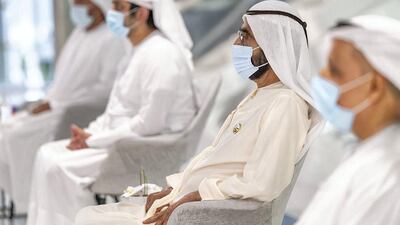
Sheikh Mohammed bin Rashid, Vice President and Ruler of Dubai, is shown a presentation about Route 2020. He inaugurated the Dubai Metro link with his son, Sheikh Maktoum, Deputy Ruler of Dubai, on Wednesday. Courtesy: Sheikh Mohammed bin Rashid Twitter -
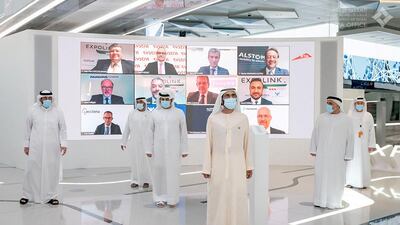
Sheikh Mohammed bin Rashid, Vice President and Ruler of Dubai, inaugurates Route 2020, a 15km extension of Dubai Metro's Red line that connects to the Expo site. Courtesy: Sheikh Mohammed bin Rashid Twitter


The new 15-kilometre stretch of track opened to passengers at 10am on January 1, hours after the city's night sky lit up in a gamut of colour from the New Year's Eve fireworks.
Route 2020 now includes four stations: Jebel Ali, The Gardens, Discovery Gardens and Al Furjan – though the final three will open later this year.
I started my journey at Al Furjan and headed west towards Jebel Ali, passing through Discovery Gardens and The Gardens.
As expected, with a new metro opening, the stations were clean and sparkling with lots of helpful workers on hand to direct a lost looking passenger like me in the right direction.
The lack of crowds made getting about a lot easier and I had my pick of the seats on the quiet carriages.
In terms of views on route, don't expect a feast for the eyes.
I was mainly staring at residential blocks either side of the track, and while not the prettiest of sites, there is no doubt these new stations are conveniently located within a short walk of shops, villas and apartments.
Nearby residents told me they were elated with the new network link. Previously, they had relied only on buses and taxis to commute to the nearest metro station.
At a cost of about Dh11 billion ($3bn), the extension to the Red Line is set to be a boon for the area and will eventually connect thousands of passengers to and from the Expo 2020 site.

