
Special teams of transport police training at Dubai’s new Hamdan Smart Station provided an inside look at how metro stations will be kept safe in the run-up to Expo 2020.
Lessons learnt from terrorist attacks around the world have shaped rigorous training exercises under way at the high-tech operational centre at Dubai Police headquarters in Deira.
Decked out in black body armour, with pistol thigh rigs and blast shields, the Swat teams undergoing tactical response training are a formidable sight.
That training is just one side of Transport Security Department operations, as several units work together to secure Dubai’s 52 metro stations and 15 kilometres of new Expo 2020 line.
“We have 1,500 personnel covering various sectors across Dubai’s transport network working alongside CID and other transport police officers,” said Lt Ahmad AlSuwaidi, a training specialist at the department.
“The Dubai Metro is a key tenet of infrastructure in the public transport network, so ensuring it is secure and safe to use is very important.
“If we make mistakes in the smart station, it reduces the chance of us making those mistakes with the public or in a live situation.
“We want to give a sense of safety to anyone who wishes to use the metro.”
The training centre was opened by Sheikh Hamdan bin Mohammed, Crown Prince of Dubai, last month, with a display of how elite teams would respond to a hostage scenario unfolding in a busy metro station.
-
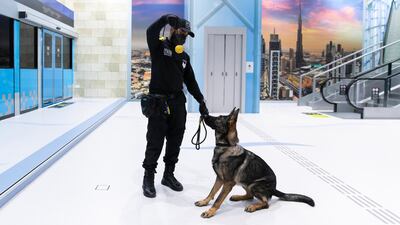
A Transport Security Department officer with Ayra, a German Shepherd police dog, at Hamdan Smart Station for Simulation and Training. Reem Mohammed / The National -
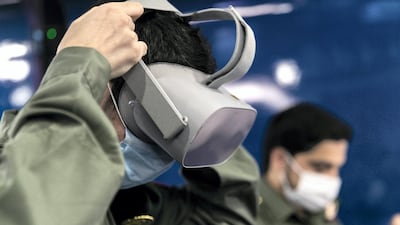
Cadets take a class at the Virtual Reality training room at Hamdan Smart Station for Simulation and Training. The station uses virtual reality and simulation technologies to provide comprehensive scenario-based emergency training. Reem Mohammed / The National -
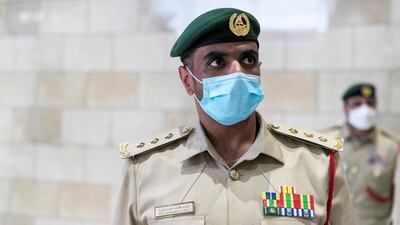
Capt Wahid Faraj at the Hamdan Smart Station for Simulation and Training. The facility is part of the Transport Security Department in Dubai, which aims to increase security efforts and the readiness of law enforcement personnel. Reem Mohammed / The National -

The VR training room at Hamdan Smart Station for Simulation and Training is used to replicate emergency scenarios for transport police and cadets. Reem Mohammed / The National -

A Swat team officer prepares for action at Hamdan Smart Station for Simulation and Training. Reem Mohammed / The National -

A K9 unit officer prepares Baby 2, a Belgian Malinois dog, for an emergency reconstruction at Hamdan Smart Station for Simulation and Training. Reem Mohammed / The National -
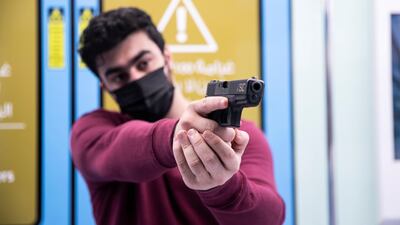
An armed terrorist scenario at Hamdan Smart Station for Simulation and Training. The training facility aims to enhance security efforts in the city. Reem Mohammed / The National -
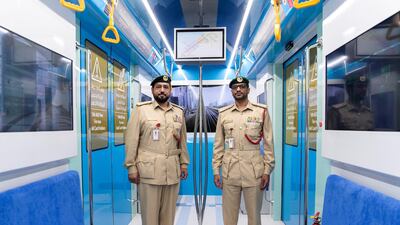
Capt Yaqoub Saleh, left, and Capt Wahid Faraj at Hamdan Smart Station for Simulation and Training. Equipped with the latest tools, the station uses virtual reality and simulation technologies to provide comprehensive scenario-based emergency training. Reem Mohammed / The National -
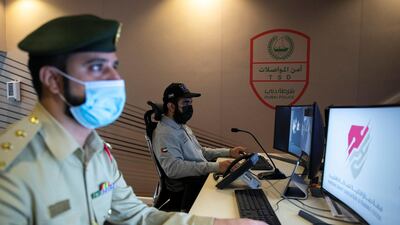
The control centre at Hamdan Smart Station for Simulation and Training has access to more than 8,700 security cameras across Dubai's transport network. Reem Mohammed / The National -
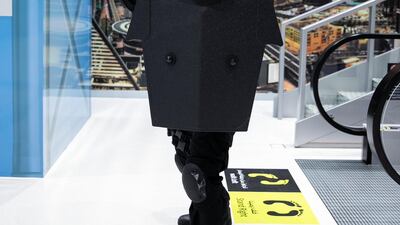
A bomb shield protects a Swat officer at Hamdan Smart Station for Simulation and Training as they prepare for an emergency training drill. Reem Mohammed / The National


Similar training is completed daily so the teams are prepared to resolve potential bomb threats, civil unrest and other crimes that can be committed at busy stations, such as credit card fraud.
About 8,700 cameras spread across Dubai’s transport network ensure highly trained officers can respond to any emergency, at any time.
Training new recruits to the high standards required can be a lengthy process, officers said. Police recruits typically undergo six months of learning before joining tactical response squads.
There are four main support teams in the Transport Security Department: an explosives detection team; K9 dog unit; Swat response; and close protection security officers.
Each unit is trained to dovetail with each other, providing a seamless response to any emergency situation.
“This training area focuses on metro stations because we know about 55 per cent of visitors to Dubai will use the transport line during their visit,” said the department's Capt Wahid Faraj.
“This is particularly important as we approach the Expo.
“We are upgrading our security systems on the metro because it is one of the most important public transport links.”
A huge expansion of the metro line is nearing completion, with seven new stations due to open, giving new access to Dubai South via the existing Red Line.
Stretching 226 metres, the Jumeirah Golf Estates station will be the network’s largest.
The expansion poses new potential security threats with visitor numbers expected to increase in 2021, as a vaccine for Covid-19 becomes more available, reopening international travel routes.
Security officials say they will be ready.
The control centre and metro mockup station uses virtual reality and the latest simulation technology to provide realistic emergency training.
An operation room connects CCTV systems, installed in Dubai Metro stations across the city, to Artificial Intelligence surveillance cameras and the smart biometric attendance system installed at the new Expo stop-offs.
“We have looked at other terrorist attacks in recent years to learn about what has happened in the past to shape our own training simulations,” Capt Faraj said.
“We looked at where the weaknesses were and how attacks were dealt with so we could learn.
“An attack could happen anywhere, but we have to be ready.
“The latest technology and training is helping us to be prepared as best we can.”

