• Emirates cabin crew in the airline's brown, white and red uniforms. Getty
    Emirates cabin crew in the airline's brown, white and red uniforms. Getty
  • Emirates was rated the world’s safest airline in January 2022 for the second year in a row. Reuters
    Emirates was rated the world’s safest airline in January 2022 for the second year in a row. Reuters
  • An Emirates Boeing 777-200LR aircraft mid-flight. Photo: Emirates
    An Emirates Boeing 777-200LR aircraft mid-flight. Photo: Emirates
  • Emirates airline's Boeing 777-300ER jets at Dubai International Airport. Reuters
    Emirates airline's Boeing 777-300ER jets at Dubai International Airport. Reuters
  • Travellers at Dubai International Airport's Terminal 3. Chris Whiteoak / The National
    Travellers at Dubai International Airport's Terminal 3. Chris Whiteoak / The National
  • Emirates has first and business class lounges around the world. Photos: Emirates
    Emirates has first and business class lounges around the world. Photos: Emirates
  • A fast-track gate that uses face and iris-recognition technology at Dubai International Airport. The biometric system is being used at 122 smart gates at the airport's arrival and departure terminals. AFP
    A fast-track gate that uses face and iris-recognition technology at Dubai International Airport. The biometric system is being used at 122 smart gates at the airport's arrival and departure terminals. AFP
  • An Emirates cabin crew staff member demonstrates new health and safety measures introduced after the onset of the Covid-19 pandemic. Photo: Emirates
    An Emirates cabin crew staff member demonstrates new health and safety measures introduced after the onset of the Covid-19 pandemic. Photo: Emirates
  • Emirates has fully enclosed private suites in first class. Photo: Emirates
    Emirates has fully enclosed private suites in first class. Photo: Emirates
  • An Emirates Airbus A380 aircraft on the tarmac at the 2021 Dubai Airshow. AFP
    An Emirates Airbus A380 aircraft on the tarmac at the 2021 Dubai Airshow. AFP
  • Emirates, Etihad, flydubai and Air Arabia aircraft perform a flypast over the UAE. Emirates
    Emirates, Etihad, flydubai and Air Arabia aircraft perform a flypast over the UAE. Emirates

Emirates chief says US authorities 'irresponsible’ for 5G roll out notification failure


  • English
  • Arabic

Emirates airline president Sir Tim Clark said he was unaware of the potential danger posed by the introduction of 5G networks in the US until Tuesday morning.

Several international airlines, including Emirates, temporarily halted flights to some US destinations amid concerns that new C-band 5G wireless networks might interfere with sensitive safety equipment on planes.

Emirates announced on Wednesday that operations to Chicago, Dallas Fort Worth, Miami, Newark, Orlando and Seattle were suspended.

The Dubai airline said its flights to New York JFK, Los Angeles and Washington DC would continue to operate as scheduled, while only certain services would operate to Boston, Houston and San Francisco.

A day later, Emirates announced it will be resuming flights to all nine destinations that were temporarily suspended this week. The airline amended the travel notice on its website, which previously advised passengers that flights would not be taking off amid concerns surrounding the rollout of 5G mobile network near airports.

The updated notice states that flights are no longer suspended.

Flights to Chicago, Orlando, Miami, Dallas Fort Worth, Seattle and Newark will resume on Friday. Flights to Houston, San Fransisco and Boston will resume on Saturday.

Etihad Airways said its services to the US are not currently affected by the issue.

The national airline of the UAE will continue to operate flights to New York, Washington DC and Chicago as scheduled, the airline said on Wednesday.

'Utterly irresponsible'

Speaking on CNN, Mr Clark described the situation as "one of the most delinquent, utterly irresponsible" in his aviation career.

"We were not aware of this until Tuesday morning, to the extent it was going to compromise the safety of operation of our aircraft and just about every other 777 operator to and from the United States and within the United States," Mr Clark told CNN's Richard Quest.

While he was aware of a 5G issue, he said Emirates was not aware that the power of the antennae in the United States has been "doubled compared to what's going on elsewhere".

"So on that basis, we took that decision late last night to suspend all our services until we had clarity," he said.

World's best airlines in 2021

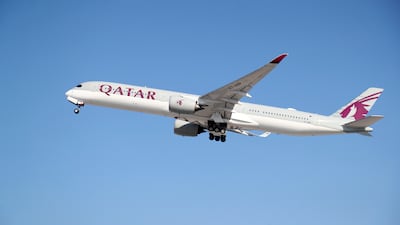
  • Ranked No 1 in Skytrax rankings is Qatar Airways. Reuters
    Ranked No 1 in Skytrax rankings is Qatar Airways. Reuters
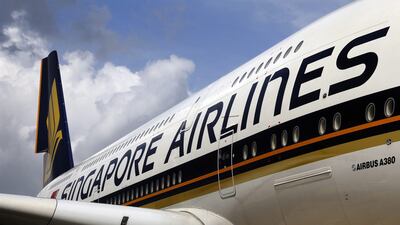
  • 2. Singapore Airlines. Bloomberg
    2. Singapore Airlines. Bloomberg
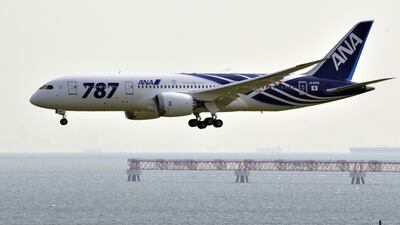
  • 3. ANA All Nippon Airways, Japan. AFP
    3. ANA All Nippon Airways, Japan. AFP
  • 4. Emirates Airlines, UAE. Photo: Emirates
    4. Emirates Airlines, UAE. Photo: Emirates
  • 5. Japan Airlines. Reuters
    5. Japan Airlines. Reuters
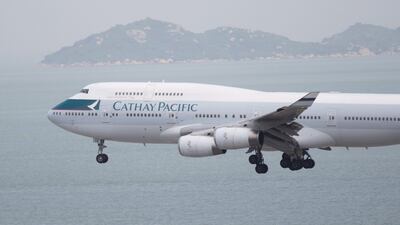
  • 6. Cathay Pacific Airways, Hong Kong. Bloomberg
    6. Cathay Pacific Airways, Hong Kong. Bloomberg
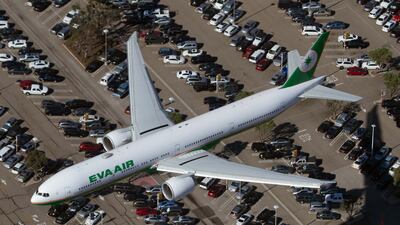
  • 7. EVA Air, Taiwan. Getty Images
    7. EVA Air, Taiwan. Getty Images
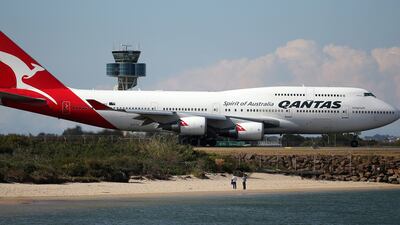
  • 8. Qantas Airways, Australia. AP
    8. Qantas Airways, Australia. AP
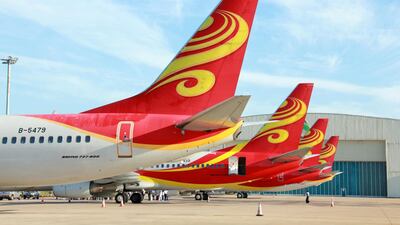
  • 9. Hainan Airlines, China. Photo: Imaginechina
    9. Hainan Airlines, China. Photo: Imaginechina
  • 10. Air France. Photo: Air France
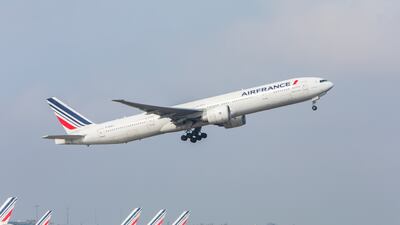
    10. Air France. Photo: Air France

Giving his opinion on the situation, Mr Clark said: "I need to be as candid as I normally am and say this is one of the most delinquent, utterly irresponsible issues [or] subjects, call it what you like, I've seen in my aviation career.

"Somebody should have told them at the time that it would compromise the safety of operation of aircraft in metropolitan areas with catastrophic consequences if this was allowed to continue."

He said its full US services will be restored if the launch of 5G is suspended and the question of interference of their aircraft systems on approach and landing is resolved.

On Tuesday, AT&T and Verizon said they would temporarily delay turning on some wireless towers near key US airport runways to avert a looming aviation crisis after discussions with President Joe Biden's administration on Tuesday.

How does 5G affect aviation?

Telecom giants spent tens of billions of dollars to obtain 5G licences, but, as the launch date approached, aviation industry groups raised concerns about possible interference with aircraft radio altimeters – which can operate at the same frequencies – particularly in bad weather.

Radio altimeters give precise readings of the height above the ground on approach and help with automated landings, as well as verifying that the plane has landed before allowing reverse thrust.

Altimeters operate in the 4.2-4.4 GHz range and the concern is that the auctioned frequencies are too close to this range.


Specs
%3Cp%3E%3Cstrong%3EEngine%3A%3C%2Fstrong%3E%201.5-litre%20turbo%204-cylinder%20%2F%202.0%20turbo%204-cylinder%20(S3)%0D%3Cbr%3E%3Cstrong%3EPower%3A%3C%2Fstrong%3E%20148bhp%20%2F%20328bhp%20(S3)%0D%3Cbr%3E%3Cstrong%3ETorque%3A%3C%2Fstrong%3E%20250Nm%20%2F%20420Nm%20(S3)%0D%3Cbr%3E%3Cstrong%3EOn%20sale%3A%3C%2Fstrong%3E%20December%0D%3Cbr%3E%3Cstrong%3EPrice%3A%3C%2Fstrong%3E%20TBA%0D%3C%2Fp%3E%0A
UAE currency: the story behind the money in your pockets

Mercer, the investment consulting arm of US services company Marsh & McLennan, expects its wealth division to at least double its assets under management (AUM) in the Middle East as wealth in the region continues to grow despite economic headwinds, a company official said.

Mercer Wealth, which globally has $160 billion in AUM, plans to boost its AUM in the region to $2-$3bn in the next 2-3 years from the present $1bn, said Yasir AbuShaban, a Dubai-based principal with Mercer Wealth.

Within the next two to three years, we are looking at reaching $2 to $3 billion as a conservative estimate and we do see an opportunity to do so,” said Mr AbuShaban.

Mercer does not directly make investments, but allocates clients’ money they have discretion to, to professional asset managers. They also provide advice to clients.

“We have buying power. We can negotiate on their (client’s) behalf with asset managers to provide them lower fees than they otherwise would have to get on their own,” he added.

Mercer Wealth’s clients include sovereign wealth funds, family offices, and insurance companies among others.

From its office in Dubai, Mercer also looks after Africa, India and Turkey, where they also see opportunity for growth.

Wealth creation in Middle East and Africa (MEA) grew 8.5 per cent to $8.1 trillion last year from $7.5tn in 2015, higher than last year’s global average of 6 per cent and the second-highest growth in a region after Asia-Pacific which grew 9.9 per cent, according to consultancy Boston Consulting Group (BCG). In the region, where wealth grew just 1.9 per cent in 2015 compared with 2014, a pickup in oil prices has helped in wealth generation.

BCG is forecasting MEA wealth will rise to $12tn by 2021, growing at an annual average of 8 per cent.

Drivers of wealth generation in the region will be split evenly between new wealth creation and growth of performance of existing assets, according to BCG.

Another general trend in the region is clients’ looking for a comprehensive approach to investing, according to Mr AbuShaban.

“Institutional investors or some of the families are seeing a slowdown in the available capital they have to invest and in that sense they are looking at optimizing the way they manage their portfolios and making sure they are not investing haphazardly and different parts of their investment are working together,” said Mr AbuShaban.

Some clients also have a higher appetite for risk, given the low interest-rate environment that does not provide enough yield for some institutional investors. These clients are keen to invest in illiquid assets, such as private equity and infrastructure.

“What we have seen is a desire for higher returns in what has been a low-return environment specifically in various fixed income or bonds,” he said.

“In this environment, we have seen a de facto increase in the risk that clients are taking in things like illiquid investments, private equity investments, infrastructure and private debt, those kind of investments were higher illiquidity results in incrementally higher returns.”

The Abu Dhabi Investment Authority, one of the largest sovereign wealth funds, said in its 2016 report that has gradually increased its exposure in direct private equity and private credit transactions, mainly in Asian markets and especially in China and India. The authority’s private equity department focused on structured equities owing to “their defensive characteristics.”

Updated: January 20, 2022, 9:31 AM