

Related: Mushrooms on Mars - UAE prepares for colony with MBR Space Settlement Challenge
The UAE’s efforts towards food security on Earth could prove fruitful in future long-haul space missions, a senior Nasa official said.
Dr Craig Kundrot, director of Space Life and Physical Sciences Research and Applications at Nasa, said his team is keen to collaborate with the UAE on research methods to grow fresh food in space.
"The emphasis on fresh food parallels very closely with the developments we need on Earth for indoor agriculture," Dr Kundrot told The National.
“We are talking to the US Department of Agriculture about global collaborations and we know food security is important to the UAE.
“There is a lot of common ground where we could be working together on space applications for growing farm-fresh food in space via new technologies,” he said.
On long space missions, such as the Mars mission, more nutritional variety will be key to maintaining the health and well-being of space voyagers.
As such, scientists and researchers are trying to divert the reliance on rehydrated food towards more self-sufficient means.
With the UAE’s huge emphasis on smart technologies, Dr Kundrot said such a collaboration could lead to many exciting developments.
“The UAE has a huge emphasis on robotics… the use of robotics can help with the plant growth and harvesting, but also plant selection.”
In September, during Hazza Al Mansoori’s historic journey to the International Space Station, the former fighter pilot, who is now noted as the first Emirati to travel to space, performed a number of daily experiments. One included the impact of microgravity on seed germination rates.
While the present method of growing food in space uses seed bags, limited water holding capacity makes it difficult to grow certain types of crops beyond lettuce varieties.
-
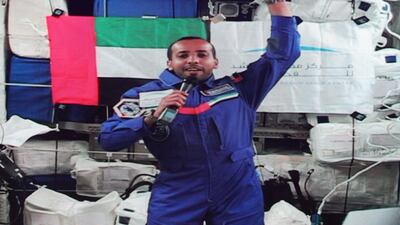
The UAE's first astronaut, Maj Hazza Al Mansouri, takes part in a Q&A session from the International Space Station with an audience at the Mohammed bin Rashid Space Centre, Dubai, in 2019. Chris Whiteoak / The National -
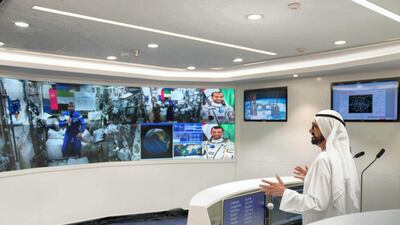
Sheikh Mohammed bin Rashid, Vice President and Ruler of Dubai, talks with Emirati astronaut Maj Hazza Al Mansouri, during a live satellite feed from the International Space Station. Courtesy: Dubai Media Office -
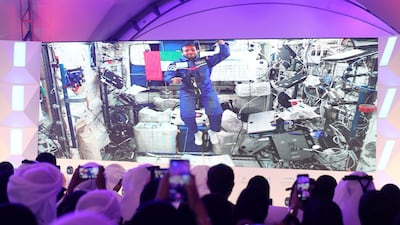
The Emirati astronaut takes questions from the audience gathered at the Mohammed bin Rashid Space Centre. Chris Whiteoak / The National -
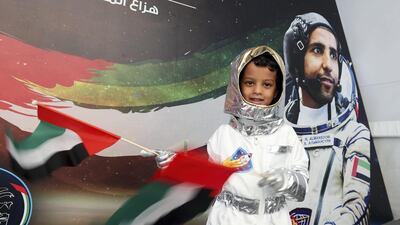
An aspiring young astronaut poses in front of a picture of the first Emirati in space, Maj Hazza Al Mansouri. Chris Whiteoak / The National -
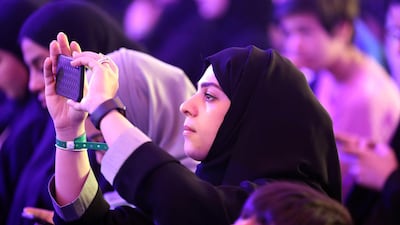
A woman films the Q&A session with Maj Hazza Al Mansouri from the International Space Station. Chris Whiteoak / The National -
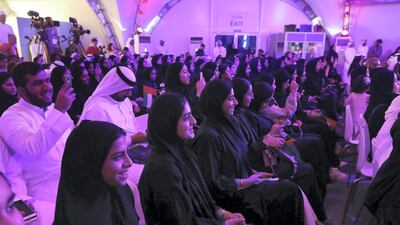
The audience at the Mohammed bin Rashid Space Centre are delighted to hear from Maj Hazza Al Mansouri. Chris Whiteoak / The National -
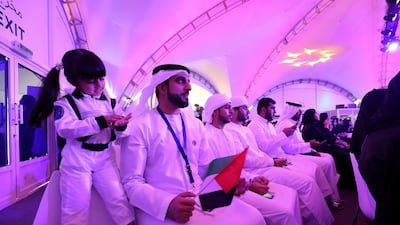
An aspiring young astronaut and her family at the Mohammed bin Rashid Space Centre event. Chris Whiteoak / The National -
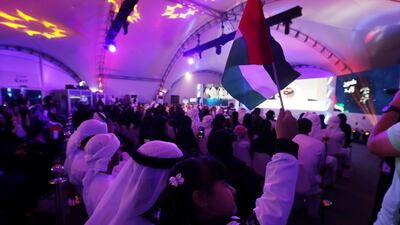
A young audience member celebrates the first Emirati in space. Chris Whiteoak / The National -
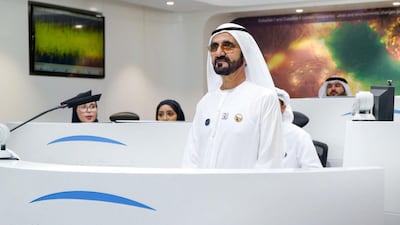
Sheikh Mohammed bin Rashid talks to Maj Hazza Al Mansouri. Courtesy Dubai Media Office -
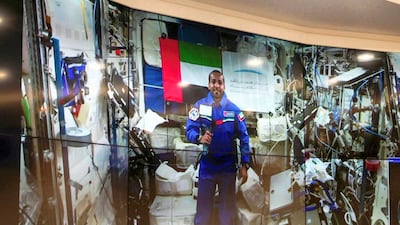
Emirati astronaut Hazza Al Mansouri, during a live satellite feed from the International Space Station. Courtesy Dubai Media Office -
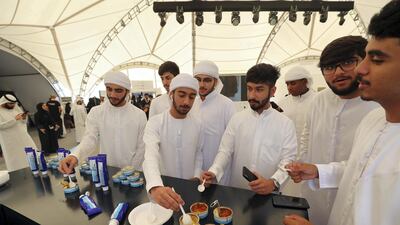
Audience members at the Mohammed bin Rashid Space Centre event sample space food. Chris Whiteoak / The National -
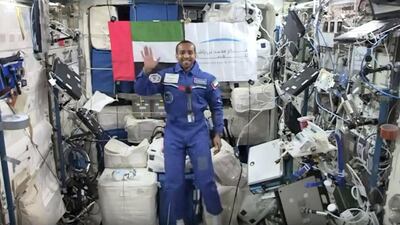
Emirati astronaut Maj Hazza Al Mansouri gives his audience on Earth a tour of the International Space Station. Screengrab via Youtube Live -
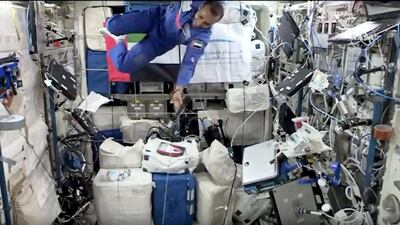
Maj Hazza Al Mansouri demonstrates the effects of weightlessness. Screengrab via Youtube Live -
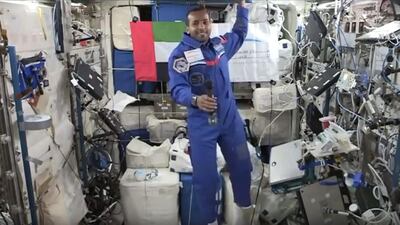
Hazza Al Mansouri takes a live Q&A from space. He spent eight days on the International Space Station, in a mission from September 25 to October 3, 2019. Screengrab via Youtube Live -
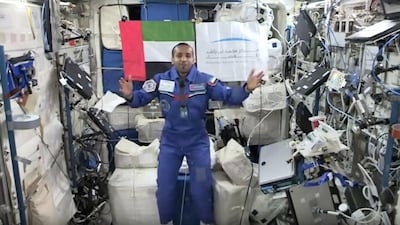
Emirati astronaut, Hazza Al Mansouri, takes live Q&A from space and gives a station tour. Screengrab via Youtube Live


But this has to change as space agencies move forward to Mars.
“The Mars mission could see astronauts spending three years in space…fresh food will be vital to that mission.
“We share very similar science goals with the UAE in that we are willing to share our data for widespread benefits…that needs to be utilised,” Dr Kundrot said.
The UAE’s Mission to Mars next year will mark the UAE’s first planetary exploration undertaking. The craft – called Hope – is set to blast off in July next year and reach the surface of Mars by 2021.
It aims to deliver critical scientific understandings that will contribute to humanity’s vision of life on the Red Planet.
Dr Kundrot was in the UAE as part of a delegation from the US space agency, hosted by the US Embassy in the UAE.
The team reflected on the UAE’s impressive space feats so far.
“I was incredibly impressed at the rapidity with which the UAE gained knowledge and capabilities in the space sector,” Jennifer Fogarty, chief scientist at NASA’s human research programme said.
“The launch of the UAE-built KhalifaSat satellite last year and the success in sending the first Emirati to space showcased an elegant and professional approach for such a young organisation.”
Earlier this week, Salem Al Marri, director of the Space Systems Development Department at the Mohammed bin Rashid Space Centre said there was no reason the next Emirati in space could not be a woman.
And Ms Fogharty said the statement was encouraging for young women in the country.
“Until you annunciate those things it’s a very amorphous objective,” she said.
“But once you says those words and meet that goal, you really allow your nation to embrace that as a real objective… and I see it happening in the UAE."

