
In an environment where anything not tied down will float away, eating can be a difficult task.
Food must be carefully prepared and packaged to ensure it does not spoil and can still be eaten with relative ease.
On Monday, the Mohammed bin Rashid Space Centre posted a video of the UAE’s first astronaut demonstrating how astronauts eat in a microgravity environment.
During his eight-day mission to the International Space Station, Hazza Al Mansouri ate at least 24 meals — each carefully chosen ahead of his journey to help make the ISS feel like home.
In the video, Maj Al Mansouri explained how he had breakfast. He showed how he could release bite-sized pieces of food so they would float up towards his mouth.
“Everything floats here,” he said before he picked up a packet of beige cubes that he revealed to be bread.
“Bread in space looks like this. They are small cubes that I have to eat in one bite.”
Laid out in a row in front of him were a range of cutlery affixed to the table to stop them from floating away.
Salt and pepper in their dried form are not allowed in space — lest they float away and clog the air vents — but popular condiments including Sriracha were on hand at the ISS during Maj Al Mansouri’s stay.
“We have to seal everything to make sure food doesn’t float out,” he said.
-
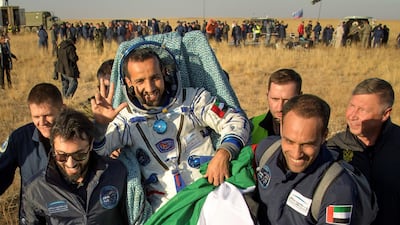
UAE astronaut Hazza al-Mansouri is carried from the landing site. AFP / NASA -
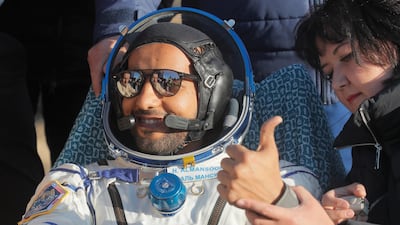
Hazza Al Mansouri gestures to spectators. AP Photo -
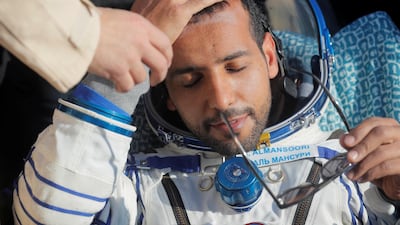
Hazza Al Mansouri reacts shortly after landing. Reuters -
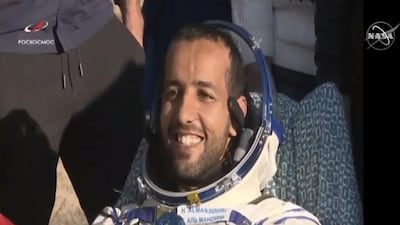
Hazza Al Mansouri is all smiles on landing. Nasa / YouTube screengrab -

Hazza Al Mansouri is tended to by ground crews. Nasa / Youtube screengrab -
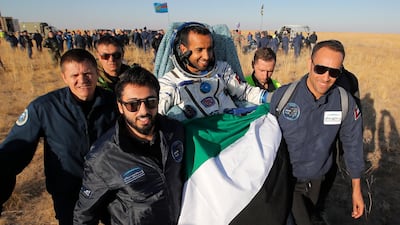
Russian space agency rescue team members and United Arab Emirates specialists carry Maj Al Mansouri. AP Photo -
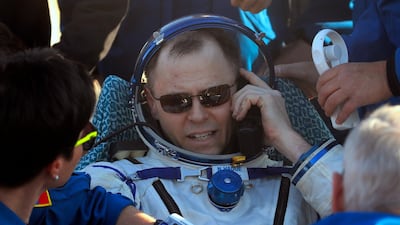
US astronaut Nick Hague calls his relatives. AP Photo -
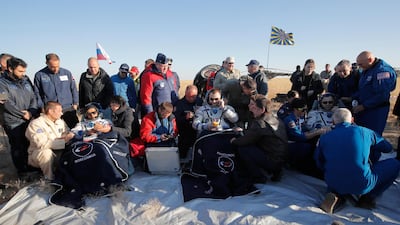
US astronaut Nick Hague, Russian cosmonaut Alexey Ovchinin, and UAE astronaut Hazzaa Ali Almansoori, sit in chairs shortly after landing. AP Photo -
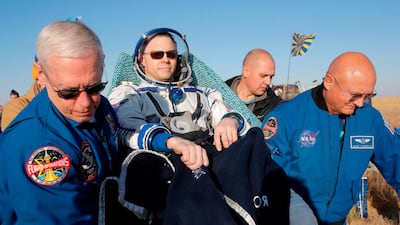
NASA specialists carry US astronaut Nick Hague. AP Photo -
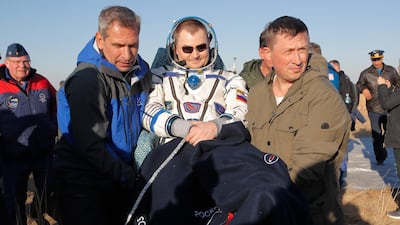
Russian space agency rescue team members and United Arab Emirates specialists carry Maj Al Mansouri. AP Photo -
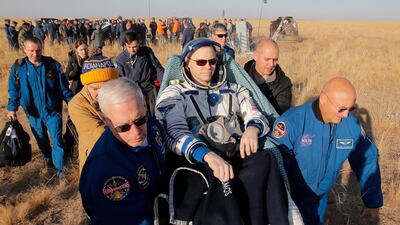
NASA specialists carry US astronaut Nick Hague. AP Photo -
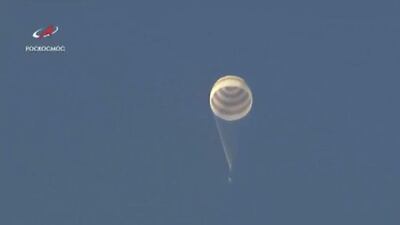
The first sighting of the MS-12 upon re-entry into the Earth's atmosphere. Screengrab Nasa / YouTube -
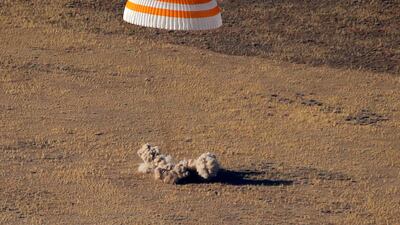
The Russian Soyuz MS-12 space capsule lands about 150km south-east of the Kazakh town of Zhezkazgan. AP Photo -
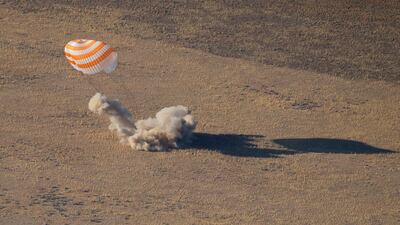
The Russian Soyuz MS-12 space capsule lands about 150km south-east of the Kazakh town of Zhezkazgan. AP Photo -
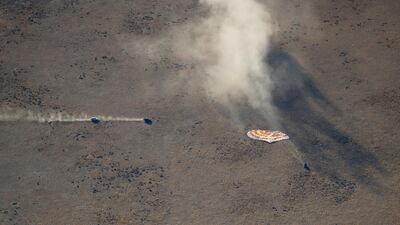
Rescue vehicles approach the capsule. AP Photo -
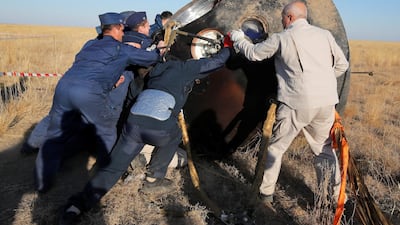
Specialists turn a Russian Soyuz MS-12 space capsule after the landing near the town of Zhezkazgan, Kazakhstan. Reuters -
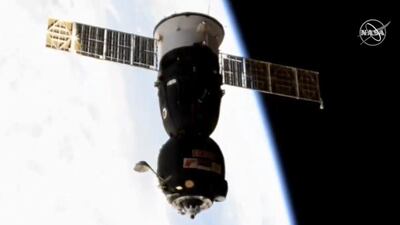
The Soyuz MS-12 free of the International Space Station. Screengrab via Nasa / YouTube -
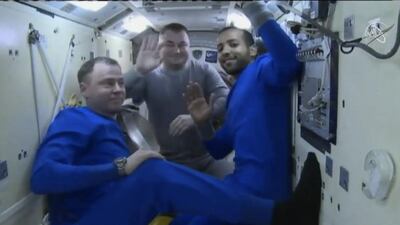
Hazza Al Mansouri before entering the hatch. Screegrab via Nasa / YouTube


Much of the food sent to the ISS must be rehydrated with water and turned into a paste before consumed. Maj Al Mansouri pointed to a tap where potable water is stored and used for meals.
Next, he demonstrated how astronauts remain hydrated. Squeezing out a drop of juice, he showed how the drops float in a blob mid-air.
“It is really difficult to control, which is why you must use the straw.”

