UAE then and now: Images of Jumeirah Mosque show a Dubai on the cusp of change


James Langton
  • English
  • Arabic

Today, life in the Emirates moves in the fast lane. In a new regular series to mark the 50th anniversary of the UAE we take a little trip back in time and see just how much the country has changed.

With a prime location on fashionable Beach Road, the Jumeirah Mosque is a familiar site to generations of Dubai residents, and also to many thousands of visitors to the city.

A gift from the former Ruler of Dubai, Sheikh Rashid bin Saeed, the mosque, and the accompanying Sheikh Mohammed Centre for Cultural Understanding, are a gateway to those seeking deeper knowledge of Islam and life in the UAE.

As with Abu Dhabi's Sheikh Zayed Grand Mosque, the Jumeirah Mosque is open to visitors from other faiths, operating regular organised tours.

In the first photograph, the mosque is seen under construction in 1977, complete with an American “gas guzzler” car heading towards the centre of town.

In those days, Jumeirah, already becoming a desirable residential area, was transforming from a fishing village to a suburb of Dubai. Travelling in the other direction would eventually take you to Chicago Beach, a gated community for the emirate's offshore oil workers and later a popular resort hotel.

Today it is the site of the Jumeirah Beach Hotel, although the name has survived as an Emarat petrol station.

The mosque was completed in 1979. Architecturally, it draws from the Fatimid Caliphate of Syria and Egypt, with a large central dome, twin minarets and elaborate stonework, whose intricacies are best viewed in the nighttime illuminations.

It can accommodate up to 1,500 worshippers but its mission is much greater than that, as expressed with the philosophy "open doors, open minds".

Since the late 1990s, the mosque has operated guided tours six days a week – Fridays are reserved for worship – along with a cup of gahwa Arabic coffee and traditional Emirati light refreshments.

It works in tandem with the Sheikh Mohammed Centre for Cultural Understanding, founded in 1998 by Sheikh Mohammed bin Rashid, the current Ruler. The centre is a non-profit organisation which offers everything from guided walking tours to talks and exhibitions.

The good news is that despite Covid-19, guided tours have resumed at the mosque.

Jumeirah: Dubai's best-known beachside suburb

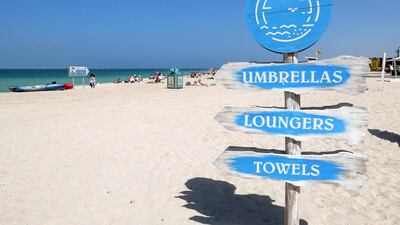
  • Kite Beach in Umm Suqeim is one of the most popular recreational areas of Dubai, with numerous restaurants, cafes, shops and water sports kiosks. Pawan Singh / The National
    Kite Beach in Umm Suqeim is one of the most popular recreational areas of Dubai, with numerous restaurants, cafes, shops and water sports kiosks. Pawan Singh / The National
  • The beach is a key attraction for Dubai residents looking to live in Umm Suqeim and Jumeirah. Pawan Singh / The National
    The beach is a key attraction for Dubai residents looking to live in Umm Suqeim and Jumeirah. Pawan Singh / The National
  • Market and restaurant area at Kite Beach in the Umm Suqeim area in Dubai. Pawan Singh / The National
    Market and restaurant area at Kite Beach in the Umm Suqeim area in Dubai. Pawan Singh / The National
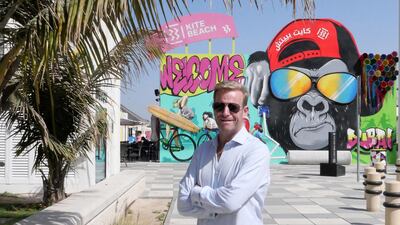
  • Estate agent, Harry Tregoning is the founder of Tregoning Property. Pictured at Kite Beach in the Umm Suqeim area of Dubai. Pawan Singh / The National
    Estate agent, Harry Tregoning is the founder of Tregoning Property. Pictured at Kite Beach in the Umm Suqeim area of Dubai. Pawan Singh / The National
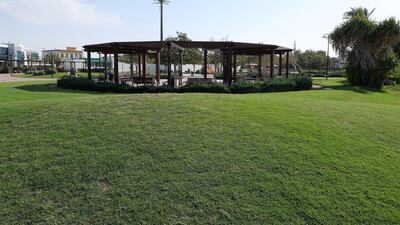
  • Umm Suqeim Park is a popular location for picnics and children's playtime. It is right next to Sunset Beach in the Umm Suqeim area of Dubai, with views of the Burj Al Arab and the sea. Pawan Singh / The National
    Umm Suqeim Park is a popular location for picnics and children's playtime. It is right next to Sunset Beach in the Umm Suqeim area of Dubai, with views of the Burj Al Arab and the sea. Pawan Singh / The National
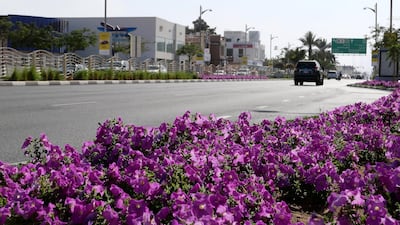
  • View of the Jumeirah Beach Boad in the Umm Suqeim area of Dubai. This is the arterial road that runs from Umm Suqeim, all the way up into Jumeirah near the Water Canal. Pawan Singh / The National
    View of the Jumeirah Beach Boad in the Umm Suqeim area of Dubai. This is the arterial road that runs from Umm Suqeim, all the way up into Jumeirah near the Water Canal. Pawan Singh / The National
  • Tourists and residents can hire boats and jet skis in one of the many 'fishing villages' along in the coast of Umm Suqeim and Jumeirah. This is the market, water sports and restaurant area of the P&O Marina in Umm Suqeim. Pawan Singh / The National
    Tourists and residents can hire boats and jet skis in one of the many 'fishing villages' along in the coast of Umm Suqeim and Jumeirah. This is the market, water sports and restaurant area of the P&O Marina in Umm Suqeim. Pawan Singh / The National
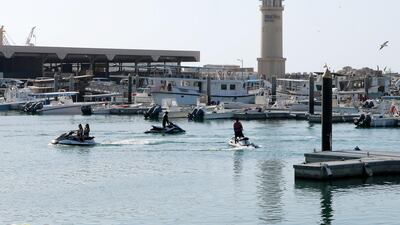
  • Jet skis setting off for a tour of the Dubai coastline, from the water sports and restaurant area at the P&O Marina in Umm Suqeim, Dubai. Pawan Singh / The National
    Jet skis setting off for a tour of the Dubai coastline, from the water sports and restaurant area at the P&O Marina in Umm Suqeim, Dubai. Pawan Singh / The National
  • Most of the big supermarket chains are well represented in Umm Suqeim and Jumeirah. This is the Spinneys Centre on the corner of Al Wasl and Um Al Sheif Road in Umm Suqeim. Pawan Singh / The National
    Most of the big supermarket chains are well represented in Umm Suqeim and Jumeirah. This is the Spinneys Centre on the corner of Al Wasl and Um Al Sheif Road in Umm Suqeim. Pawan Singh / The National
  • Most residences in Jumeirah and Umm Suqeim are low-rise villas. Many have private pools and gardens. There are also compound communities with town houses and shared facilities. Pawan Singh / The National
    Most residences in Jumeirah and Umm Suqeim are low-rise villas. Many have private pools and gardens. There are also compound communities with town houses and shared facilities. Pawan Singh / The National
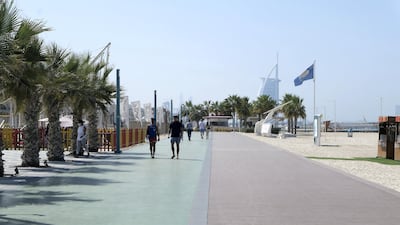
  • The popular jogging track runs along the beach from Umm Suqeim Park, all the way up past the Water Canal, into Jumeirah. Pawan Singh / The National
    The popular jogging track runs along the beach from Umm Suqeim Park, all the way up past the Water Canal, into Jumeirah. Pawan Singh / The National
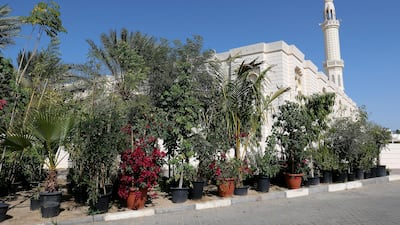
  • Glimpses of old Dubai - a view of the flower shop near Safa Park 2 in the Umm Suqeim area in Dubai. The area is a mix of expats and local Emiratis. Pawan Singh / The National
    Glimpses of old Dubai - a view of the flower shop near Safa Park 2 in the Umm Suqeim area in Dubai. The area is a mix of expats and local Emiratis. Pawan Singh / The National
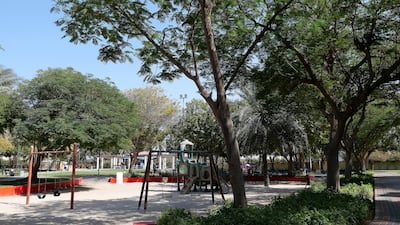
  • Safa Park 2 in Umm Suqeim is a huge draw for families with children, as it contains several climbing frames. Pawan Singh / The National
    Safa Park 2 in Umm Suqeim is a huge draw for families with children, as it contains several climbing frames. Pawan Singh / The National
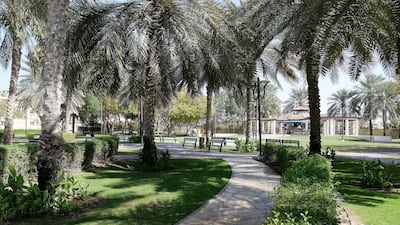
  • Umm Suqeim and Jumeirah are established areas of Dubai, with mature gardens and parks. Pawan Singh / The National
    Umm Suqeim and Jumeirah are established areas of Dubai, with mature gardens and parks. Pawan Singh / The National
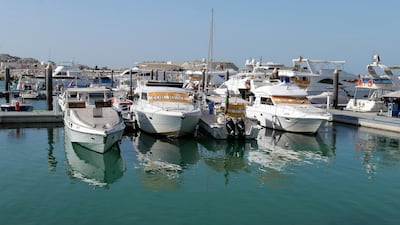
  • A view of the harbour from one of the fishing villages along the coast of Umm Suqeim. Pawan Singh / The National
    A view of the harbour from one of the fishing villages along the coast of Umm Suqeim. Pawan Singh / The National

Mercer, the investment consulting arm of US services company Marsh & McLennan, expects its wealth division to at least double its assets under management (AUM) in the Middle East as wealth in the region continues to grow despite economic headwinds, a company official said.

Mercer Wealth, which globally has $160 billion in AUM, plans to boost its AUM in the region to $2-$3bn in the next 2-3 years from the present $1bn, said Yasir AbuShaban, a Dubai-based principal with Mercer Wealth.

Within the next two to three years, we are looking at reaching $2 to $3 billion as a conservative estimate and we do see an opportunity to do so,” said Mr AbuShaban.

Mercer does not directly make investments, but allocates clients’ money they have discretion to, to professional asset managers. They also provide advice to clients.

“We have buying power. We can negotiate on their (client’s) behalf with asset managers to provide them lower fees than they otherwise would have to get on their own,” he added.

Mercer Wealth’s clients include sovereign wealth funds, family offices, and insurance companies among others.

From its office in Dubai, Mercer also looks after Africa, India and Turkey, where they also see opportunity for growth.

Wealth creation in Middle East and Africa (MEA) grew 8.5 per cent to $8.1 trillion last year from $7.5tn in 2015, higher than last year’s global average of 6 per cent and the second-highest growth in a region after Asia-Pacific which grew 9.9 per cent, according to consultancy Boston Consulting Group (BCG). In the region, where wealth grew just 1.9 per cent in 2015 compared with 2014, a pickup in oil prices has helped in wealth generation.

BCG is forecasting MEA wealth will rise to $12tn by 2021, growing at an annual average of 8 per cent.

Drivers of wealth generation in the region will be split evenly between new wealth creation and growth of performance of existing assets, according to BCG.

Another general trend in the region is clients’ looking for a comprehensive approach to investing, according to Mr AbuShaban.

“Institutional investors or some of the families are seeing a slowdown in the available capital they have to invest and in that sense they are looking at optimizing the way they manage their portfolios and making sure they are not investing haphazardly and different parts of their investment are working together,” said Mr AbuShaban.

Some clients also have a higher appetite for risk, given the low interest-rate environment that does not provide enough yield for some institutional investors. These clients are keen to invest in illiquid assets, such as private equity and infrastructure.

“What we have seen is a desire for higher returns in what has been a low-return environment specifically in various fixed income or bonds,” he said.

“In this environment, we have seen a de facto increase in the risk that clients are taking in things like illiquid investments, private equity investments, infrastructure and private debt, those kind of investments were higher illiquidity results in incrementally higher returns.”

The Abu Dhabi Investment Authority, one of the largest sovereign wealth funds, said in its 2016 report that has gradually increased its exposure in direct private equity and private credit transactions, mainly in Asian markets and especially in China and India. The authority’s private equity department focused on structured equities owing to “their defensive characteristics.”