• Victor Sitali, an artist from Zambia, works on a painting. Photo: Victor Sitali
    Victor Sitali, an artist from Zambia, works on a painting. Photo: Victor Sitali
  • Artist Victor Sitali, who enjoys painting portraits, has been awarded a golden visa. Photo: Victor Sitali
    Artist Victor Sitali, who enjoys painting portraits, has been awarded a golden visa. Photo: Victor Sitali
  • A painting by Sharan Budhrani, an Indian artist with muscular dystrophy, which weakens his muscles and limits movement, was also granted a golden visa. Photo: Sharan Budhrani
    A painting by Sharan Budhrani, an Indian artist with muscular dystrophy, which weakens his muscles and limits movement, was also granted a golden visa. Photo: Sharan Budhrani
  • Artist Sharan Budhrani creates art using a remote control car. Chris Whiteoak / The National
    Artist Sharan Budhrani creates art using a remote control car. Chris Whiteoak / The National
  • Artist Sharan Budhrani creates art using remote control cars that help him create despite the muscular dystrophy that limits his movements. Chris Whiteoak / The National
    Artist Sharan Budhrani creates art using remote control cars that help him create despite the muscular dystrophy that limits his movements. Chris Whiteoak / The National
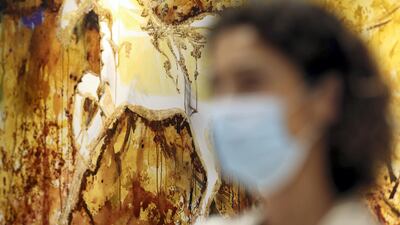
  • 'Mustang', a painting by Sharan Budhrani. Chris Whiteoak / The National
    'Mustang', a painting by Sharan Budhrani. Chris Whiteoak / The National
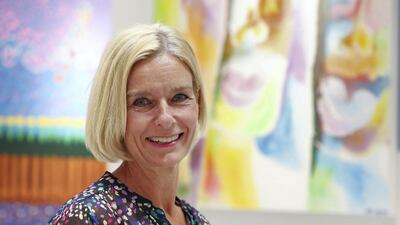
  • Art teacher Gulshan Kavarana works with artists with special needs and has received the golden visa. Chris Whiteoak / The National
    Art teacher Gulshan Kavarana works with artists with special needs and has received the golden visa. Chris Whiteoak / The National
  • Art teacher Gulshan Kavarana and artist Sharan Budhrani were awarded golden visas for their contribution to the creative field in the country. Photo: Gulshan Kavarana
    Art teacher Gulshan Kavarana and artist Sharan Budhrani were awarded golden visas for their contribution to the creative field in the country. Photo: Gulshan Kavarana
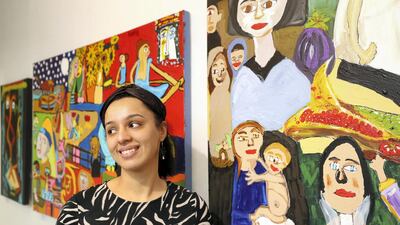
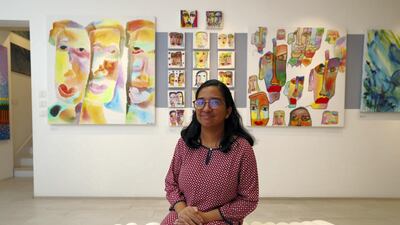
  • Artist Victor Sitali poses with his artworks. Photo: Victor Sitali
    Artist Victor Sitali poses with his artworks. Photo: Victor Sitali
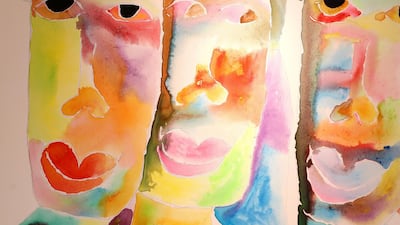
  • 'The Young Woman', a painting by Victor Sitali. Photo: Art Couture
    'The Young Woman', a painting by Victor Sitali. Photo: Art Couture
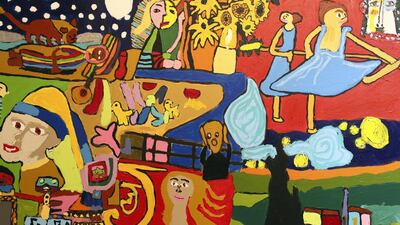
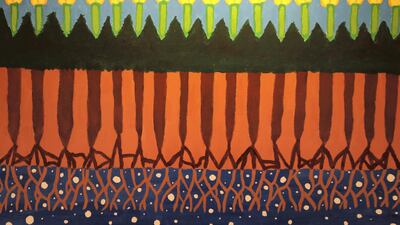
  • An untitled image from Victor Sitali's exhibition, Afro. Photo: Victor Sitali
    An untitled image from Victor Sitali's exhibition, Afro. Photo: Victor Sitali

Disabled artists in Dubai say golden visa will make them dream bigger


Ramola Talwar Badam
  • English
  • Arabic

Two artists with disabilities in Dubai have been awarded a golden visa that they say opens the door to greater independence.

Zambian painter Victor Sitali, Indian artist Sharan Budhrani and their art teacher Gulshan Kavarana received the 10-year residency for their cultural contribution.

The artistic community said the UAE visa was a tribute to their talent and spirit.

I now have independence. I can think only of working hard.”
Victor Sitali,
Zambian artist

“It gives me the opportunity to expand my ideas for my art. I can work harder and dream bigger,” Mr Sitali communicated in sign language.

“I am very happy. I now have independence. I can think only of working hard.”

Mr Sitali lost his hearing at the age of three and was introduced to art as a teenager by Ms Kavarana.

His distinctive oil and acrylic work on canvas earned him studio space in Tashkeel, an art gallery, in Dubai.

Victor Sitali, an artist from Zambia, works on a painting. Photo: Victor Sitali

The 31-year-old holds domestic and overseas exhibitions, as well as workshops for students, adults and children with disabilities.

The Sitali family has lived in the UAE for more than a decade. His mother Dorothy said the family was proud of his latest achievement.

“This has brought us unbelievable joy,” she said. “We thought this visa was for senior executives. It came as a total surprise, a good surprise.”

Ms Kavarana, 57, met the family when she worked as a volunteer with the Dubai Centre for Special Needs.

“I worked with Victor when he was only 16 and he didn’t know anything about painting. I soon realised how talented he was,” she said.

Ms Kavarana said it was “wonderful” to be recognised.

“I dedicated my life to working with people of determination, doing art with them and taking them to the next level. I thank the UAE government for giving us this opportunity.”

Mr Sitali and Mr Budhrani were part of a vibrant artist community at Mawaheb, a studio in Dubai that nurtured the creative skills of young adults with disabilities.

Mr Budhrani has muscular dystrophy that weakens his muscles and limits his mobility. Seated in a wheelchair, he uses remote-controlled cars, spoons and sticks to paint on large canvasses.

“This is very exciting news,” said the 30-year-old, who was born in the Emirates and has always known the country as home.

“I feel there is hope ahead in the future for me. I can still go on my creative journey to inspire and motivate more people with art.

Sharan Budhrani creates art using a remote-controlled car. Chris Whiteoak / The National

Currently recovering from a severe bout of pneumonia, he requires a tracheostomy tube and a ventilator to breathe at night.

He has not stopped painting despite the discomfort of being fitted with the tube to open up his air passage.

“I feel I must always keep going and never give up,” he said.

Ms Kavarana said the golden visa acknowledged the resilience of the artists.

“Sharan has a never-give-up attitude. He is on the ventilator but there is nothing stopping him from his passion of art,” she said.

Nasser Juma bin Sulaiman, manager of the Al Fahidi historical neighbourhood, nominated Mr Budhrani and Ms Kavarana to the Dubai Culture and Arts Authority.

“These are very special cases. Dubai Culture gave these artists an opportunity so they can make their own business here and also make Dubai their home,” he said.

Lisa Ball-Lechgar, Tashkeel's deputy director, nominated Mr Sitali and described his contribution as vital to the community.

She said he recently ventured into abstract art demonstrating his appetite for experimentation.

“He works with passion and energy as a full-time creative professional in Dubai and deserves to be acknowledged for his unwavering commitment and dedication,” she said.

The golden visa was launched in May 2019, to give exceptional workers and foreign investors the opportunity to establish deeper roots in the country.

The 10-year residency scheme was expanded to attract people in the fields of health, engineering science and art.

Art studio Mawaheb’s final exhibition - in pictures

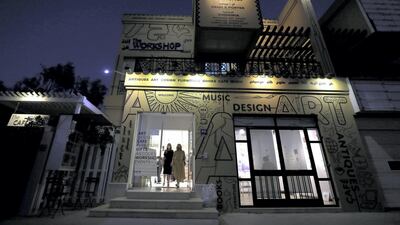
  • Mawaheb, an art studio for the disabled, hosted its final exhibition in December 2020 at Fann A Porter, The Workshop in Jumeirah, Dubai. Chris Whiteoak / The National
    Mawaheb, an art studio for the disabled, hosted its final exhibition in December 2020 at Fann A Porter, The Workshop in Jumeirah, Dubai. Chris Whiteoak / The National
  • Artworks by Namrata Pagarani at the final exhibition. Chris Whiteoak / The National
    Artworks by Namrata Pagarani at the final exhibition. Chris Whiteoak / The National
  • The art studio has closed due to the coronavirus pandemic. Chris Whiteoak / The National
    The art studio has closed due to the coronavirus pandemic. Chris Whiteoak / The National
  • 'Mother Earth' by Mariam Ismail. Chris Whiteoak / The National
    'Mother Earth' by Mariam Ismail. Chris Whiteoak / The National
  • All the pieces at the final exhibition will be for sale, with proceeds going to the artists. Chris Whiteoak / The National
    All the pieces at the final exhibition will be for sale, with proceeds going to the artists. Chris Whiteoak / The National
  • 'Mustang' by Sharan Anil, for Mawaheb's last exhibition. Chris Whiteoak / The National
    'Mustang' by Sharan Anil, for Mawaheb's last exhibition. Chris Whiteoak / The National
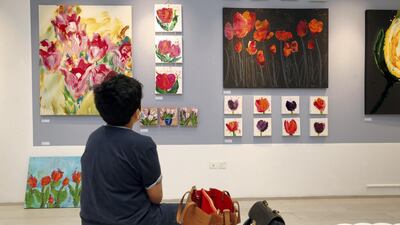
  • 'Tulip' collection by Anjali Kakkar, for Mawaheb. Chris Whiteoak / The National
    'Tulip' collection by Anjali Kakkar, for Mawaheb. Chris Whiteoak / The National
  • 'Twinning' by Anjana Krishna, for Mawaheb. Chris Whiteoak / The National
    'Twinning' by Anjana Krishna, for Mawaheb. Chris Whiteoak / The National
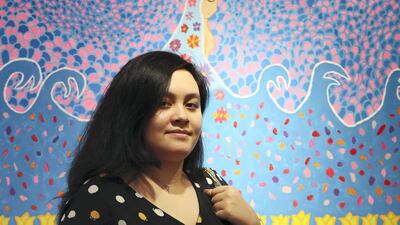
  • Artist Anjana Krishna at the exhibition. Chris Whiteoak / The National
    Artist Anjana Krishna at the exhibition. Chris Whiteoak / The National
  • Wemmy de Maaker, founder of Mawaheb. Chris Whiteoak / The National
    Wemmy de Maaker, founder of Mawaheb. Chris Whiteoak / The National
MATCH INFO

Juventus 1 (Dybala 45')

Lazio 3 (Alberto 16', Lulic 73', Cataldi 90 4')

Red card: Rodrigo Bentancur (Juventus)

Mercer, the investment consulting arm of US services company Marsh & McLennan, expects its wealth division to at least double its assets under management (AUM) in the Middle East as wealth in the region continues to grow despite economic headwinds, a company official said.

Mercer Wealth, which globally has $160 billion in AUM, plans to boost its AUM in the region to $2-$3bn in the next 2-3 years from the present $1bn, said Yasir AbuShaban, a Dubai-based principal with Mercer Wealth.

Within the next two to three years, we are looking at reaching $2 to $3 billion as a conservative estimate and we do see an opportunity to do so,” said Mr AbuShaban.

Mercer does not directly make investments, but allocates clients’ money they have discretion to, to professional asset managers. They also provide advice to clients.

“We have buying power. We can negotiate on their (client’s) behalf with asset managers to provide them lower fees than they otherwise would have to get on their own,” he added.

Mercer Wealth’s clients include sovereign wealth funds, family offices, and insurance companies among others.

From its office in Dubai, Mercer also looks after Africa, India and Turkey, where they also see opportunity for growth.

Wealth creation in Middle East and Africa (MEA) grew 8.5 per cent to $8.1 trillion last year from $7.5tn in 2015, higher than last year’s global average of 6 per cent and the second-highest growth in a region after Asia-Pacific which grew 9.9 per cent, according to consultancy Boston Consulting Group (BCG). In the region, where wealth grew just 1.9 per cent in 2015 compared with 2014, a pickup in oil prices has helped in wealth generation.

BCG is forecasting MEA wealth will rise to $12tn by 2021, growing at an annual average of 8 per cent.

Drivers of wealth generation in the region will be split evenly between new wealth creation and growth of performance of existing assets, according to BCG.

Another general trend in the region is clients’ looking for a comprehensive approach to investing, according to Mr AbuShaban.

“Institutional investors or some of the families are seeing a slowdown in the available capital they have to invest and in that sense they are looking at optimizing the way they manage their portfolios and making sure they are not investing haphazardly and different parts of their investment are working together,” said Mr AbuShaban.

Some clients also have a higher appetite for risk, given the low interest-rate environment that does not provide enough yield for some institutional investors. These clients are keen to invest in illiquid assets, such as private equity and infrastructure.

“What we have seen is a desire for higher returns in what has been a low-return environment specifically in various fixed income or bonds,” he said.

“In this environment, we have seen a de facto increase in the risk that clients are taking in things like illiquid investments, private equity investments, infrastructure and private debt, those kind of investments were higher illiquidity results in incrementally higher returns.”

The Abu Dhabi Investment Authority, one of the largest sovereign wealth funds, said in its 2016 report that has gradually increased its exposure in direct private equity and private credit transactions, mainly in Asian markets and especially in China and India. The authority’s private equity department focused on structured equities owing to “their defensive characteristics.”

Updated: October 01, 2021, 9:51 AM