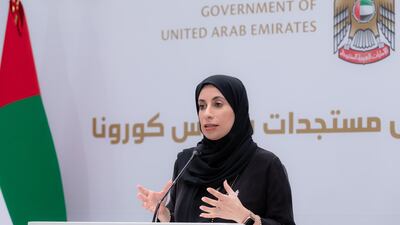

Senior Emirati and Israeli vaccine officials told of how their countries turned the tide against the Covid-19 pandemic.
Dr Farida Al Hosani from the UAE and Prof Nachman Ash from Israel on Tuesday described the race against time to start the world’s fastest mass vaccination programme from scratch.
They appeared on a joint panel with UK vaccine minister Nadhim Zahawi on the final day of the Hope Consortium conference that took place on March 29 and 30 in Abu Dhabi.
Related: Abu Dhabi could become global vaccine gateway in mammoth logistics operation
Israel and the UAE are first and second in the vaccination drive, with the Emirates having reached more than 50 per cent of its population two weeks before its end-of-March target.
Israel, home to the world's fastest vaccination drive, has administered doses to more than five million of the six million eligible in just three months.
The UK has also launched a hugely successful drive. Authorities there started to lift lockdown restrictions on Monday.
Describing how Israel has emerged from a brutal third wave of the virus that initially swept the country in January, Prof Ash said leadership and logistics were key.
“It was really a huge project during these last three months,” he said.
Prof Ash spoke about how teams split the vaccines, which arrive in large packets, into smaller parcels for delivery across the country daily.
“We have a central command,” he said. “And we have a central storage point, a deep freeze point and from there the vaccinations are sent every day to the hospitals.
“We wanted to go to every village, to every city, so we had to spread out our vaccinations.”
Israel's vaccine effort – in pictures
-
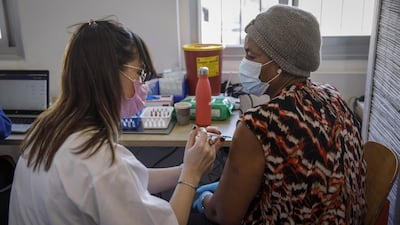
A foreign national receives a dose of the Pfizer-BioNTech Covid-19 vaccine at a vaccination centre in Tel Aviv. Bloomberg -
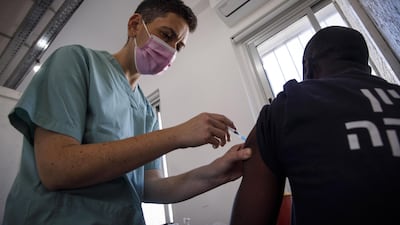
A nurse administers a dose of the Pfizer Inc.-BioNTech SE Covid-19 vaccine to a foreign national at a vaccination centre in Tel Aviv, Israel. Bloomberg -
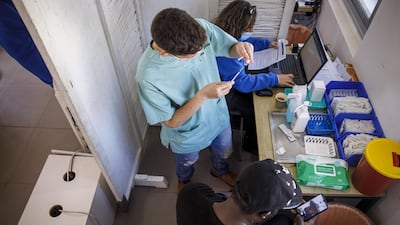
A nurse prepares a dose of the Pfizer-BioNTech Covid-19 vaccine for administration to a foreign national at a vaccination centre in Tel Aviv. Bloomberg -
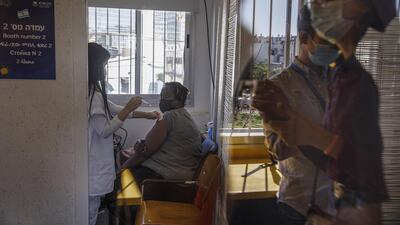
A foreign national receives a dose of the Pfizer-BioNTech Covid-19 vaccine at a vaccination centre in Tel Aviv. Bloomberg -
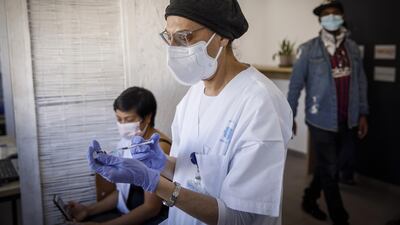
A nurse prepares a dose of the Pfizer-BioNTech Covid-19 vaccine for administration to a foreign national at a vaccination centre in Tel Aviv. Bloomberg -
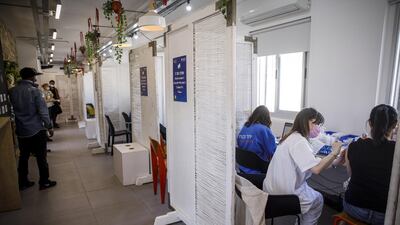
Foreign nationals receive the Pfizer-BioNTech Covid-19 vaccine at a vaccination centre in Tel Aviv. Bloomberg -
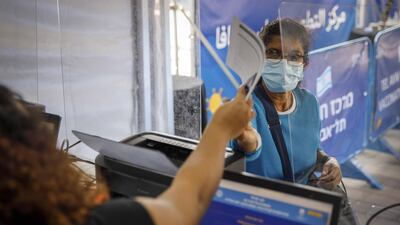
A foreign national hands over a document and passport at a registration desk at a vaccination centre in Tel Aviv. Bloomberg -
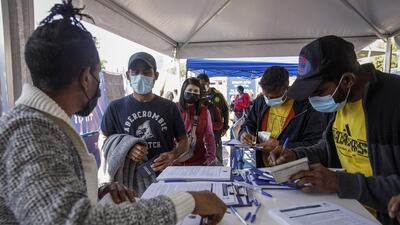
Foreign nationals and asylum seekers queue to register their details for the Pfizer-BioNTech Covid-19 vaccine at a vaccination centre in Tel Aviv. Bloomberg -

Foreign nationals and asylum seekers queue to register for the Pfizer-BioNTech Covid-19 vaccine at a vaccination centre in Tel Aviv. Bloomberg -
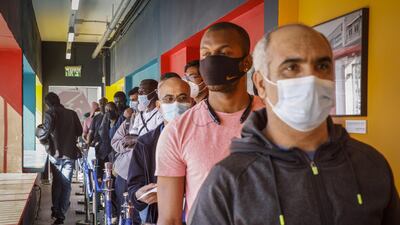
Foreign nationals queue to receive a dose of the Pfizer-BioNTech Covid-19 vaccine at a vaccination centre in Tel Aviv. Bloomberg


In the UAE, logistics also played a key role in ensuring the country’s large network of hospitals, clinics and other temporary vaccination centres received the right number of supplies.
“We tried to ensure good access for everyone, including different workers who might be busy," said Dr Al Hosani, the official spokeswoman for the UAE health sector. "So we had to send field teams to provide the vaccine," she said.
“We also introduced vaccination drive-through centres. Also, we were vaccinating in majlises. We converted them into vaccination clinics.”
She said the preparation for the mass vaccination campaign began “months” before it started. The government worked with the private sector to roll out the programme and innoculate “huge numbers” each day. Awareness among the public was important, she said.
“We were engaged with the community ahead of the campaign. They were part of the clinical trial in the UAE, so they are aware of the study and prepared for the vaccine coming,” she said.
In the UK, the NHS was supported by the army to roll out the mass vaccination campaign.
That began in December, just as the country was entering a strict lockdown to stem the spread of the more contagious Kent variant.
“Pretty much everything was shut down,” said Mr Zahawi. “We also knew we were getting very close to the approval of the vaccines.
“And we began deploying, as Israel and the UAE did, the Pfizer BioNtech vaccine. We built an infrastructure, deliberately much bigger in terms of its ability to vaccinate than the supply we were due to take in.” That enabled the country to ramp up the administration of vaccinations easily as supply increased.
About 30.44 million people in the UK have received their first dose, while 3.67m had their second – about half of the UK's population.
Life amid Covid-19 in the UAE – in pictures
-
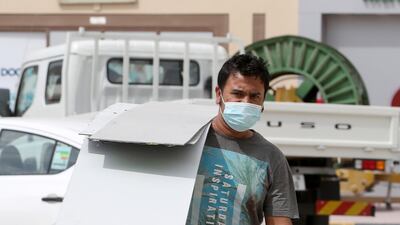
A man wears a face mask in Al Jadaf area in Dubai. Pawan Singh / The National -
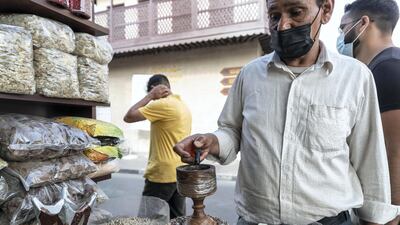
A shopkeeper lights coal to burn incense to attract customers to his shop in Dubai's Spice Souq. Antonie Robertson / The National -
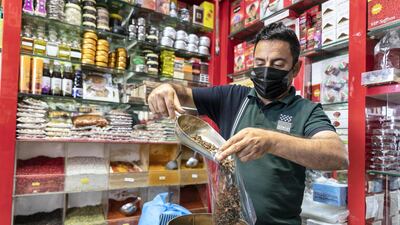
A shopkeeper in Deira Souq. He fills a bag with tea leaves that he hopes to sell to tourists. Antonie Robertson / The National -
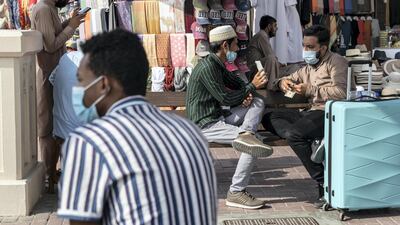
Men talk at the Abra station near the Spice Souq. Antonie Robertson / The National -
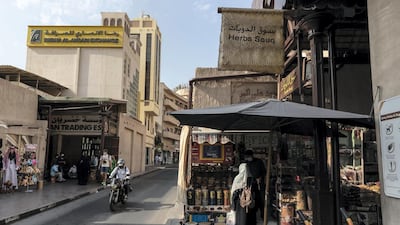
An almost empty street in Deira Souq. Antonie Robertson / The National -
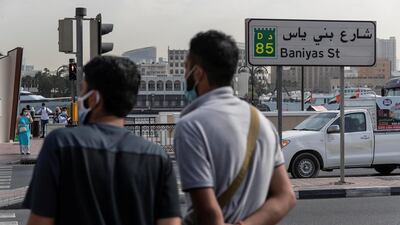
Pedestrians wait to cross Baniyas Street in Deira. Antonie Robertson / The National -
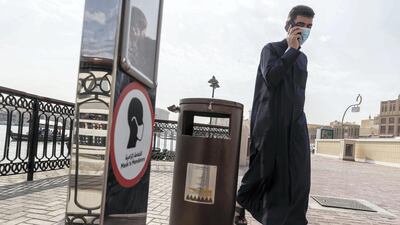
A sign at the Old Souq Abra Station in Deira reminds people to wear a mask. Antonie Robertson / The National -
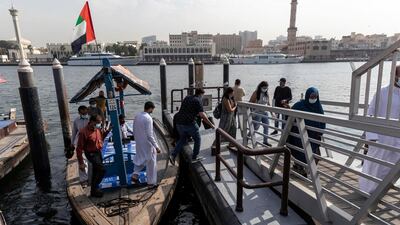
People step off an abra in Dubai. Antonie Robertson / The National



