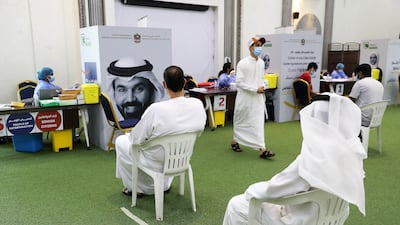
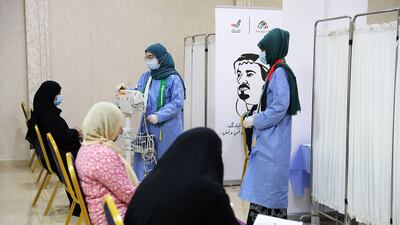
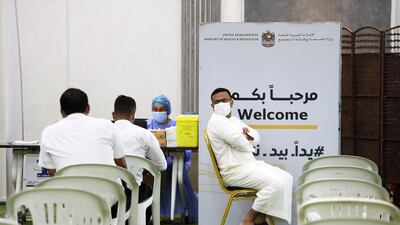
As one million cases of Covid-19 are confirmed in the UAE to date, many will wonder how the pandemic will probably play out in the country.
While the authorities were among the fastest in the world to introduce vaccinations, the coronavirus has not gone away, with thousands of positive test results each week.
But the number of deaths has fallen in recent months, with the last time there were more than 10 recorded in a single week being back in February.
Immunity within the population, from vaccination and prior infection, is expected to be part of the reason why infections are less severe.
In June, the UAE said “100 per cent of the target groups in the country” were now vaccinated.
Prior infection and vaccination offer protection
“All the conclusions we have reached about immunity which apply to the other countries will apply to the UAE,” said Prof John Oxford, a virologist and emeritus professor of virology at Queen Mary University of London.
So, prior infection will continue to provide at least some protection, even against new variants, strengthened by vaccination, he said.
Prof Paul Digard, a virologist at the University of Edinburgh, said a distinction should be made between sterilising immunity, which completely prevents infection, and partial immunity, which stops a person from falling seriously ill.
Vaccination and prior infection may often fail to provide the former, meaning that they may not be able to prevent a person from catching the coronavirus again, as repeated infections that some individuals have experienced have shown.
Limiting effects of virus
However, protection from vaccination and prior infection does provide partial immunity, meaning that it substantially reduces the likelihood of severe illness, even if it does not prevent infection entirely.
Some studies have credited this combination of vaccination and prior infection — also referred to as hybrid immunity — with reducing the rate of hospital admissions in later waves of coronavirus infections.
For example, a study from South Africa earlier this year found that during that country’s fourth wave of Covid-19 infections, about one in 100 cases resulted in a person needing to go to hospital, while during earlier waves the figure had been as high as one in 24. Reduced pathogenicity of the virus over time may also have played a role in lower hospitalisation rates.
More recent research from Qatar found that a previous infection with one of the older Covid-19 variants, such as Alpha, Beta or Delta, provided some protection from reinfection against even two recent iterations of the coronavirus, BA.4 and BA.5, both sub-variants of Omicron.
However, the researchers found that an infection with Omicron provided stronger protection against reinfection with BA.4 and BA.5, although part of the reason may have been that Omicron has been circulating more recently than the earlier variants, protection conferred by which may have faded.
Reason for cautious optimism
Looking ahead, Prof Digard said it was likely that Covid-19 would increasingly “fade into the background of seasonal respiratory diseases” familiar before the pandemic, although it remained to be seen how long this would take.
“I think the level of cross protection you get from having seen the virus repeatedly, that builds up, and then over years that infection will get milder and milder,” he said.
“If you look at the epidemiological curve for winter flu in the 20th century, there was a massive spike in the 1918 pandemic. Over the next 70 years or so, even with the odd spike, it was a generally declining curve.
“I think SARS-CoV-2 will behave like that, hopefully rather quicker than that general decline with flu.”
While he said a country such as the UAE - with a population of about 10 million - may experience spikes in cases again, these would probably be more modest than previously.
“Not one million cases of 10 million. It’s 100,000 of 10 million,” he said. “At that point you’re maybe talking of the background winter cold that everybody gets when schools reopen or go on holiday.
“We’ll pay less attention to it. The people who grew up with it will look at it like they’ve got a cold.”
While for most it will be a mild infection, Prof Digard said that some groups, notably the elderly, would remain more at risk.
Reformulations of the vaccines may be needed to cope with the continued changes in SARS-CoV-2, Prof Oxford said, with the virus having evolved faster than many researchers expected. It will be a case, he said, of “updating the vaccines and seeing how it goes”.
A concern on the horizon, he said, is the risk of another such pandemic. Bats act as a reservoir for many coronaviruses, one of which could jump the species barrier again and start to infect people.
“The question is really, with so many bats, when is the next one going to arrive?”, Prof Oxford said.

RESULTS
Bantamweight:
Zia Mashwani (PAK) bt Chris Corton (PHI)
Super lightweight:
Flavio Serafin (BRA) bt Mohammad Al Khatib (JOR)
Super lightweight:
Dwight Brooks (USA) bt Alex Nacfur (BRA)
Bantamweight:
Tariq Ismail (CAN) bt Jalal Al Daaja (JOR)
Featherweight:
Abdullatip Magomedov (RUS) bt Sulaiman Al Modhyan (KUW)
Middleweight:
Mohammad Fakhreddine (LEB) bt Christofer Silva (BRA)
Middleweight:
Rustam Chsiev (RUS) bt Tarek Suleiman (SYR)
Welterweight:
Khamzat Chimaev (SWE) bt Mzwandile Hlongwa (RSA)
Lightweight:
Alex Martinez (CAN) bt Anas Siraj Mounir (MAR)
Welterweight:
Jarrah Al Selawi (JOR) bt Abdoul Abdouraguimov (FRA)
In 2018, the ICRC received 27,756 trace requests in the Middle East alone. The global total was 45,507.
There are 139,018 global trace requests that have not been resolved yet, 55,672 of these are in the Middle East region.
More than 540,000 individuals approached the ICRC in the Middle East asking to be reunited with missing loved ones in 2018.
The total figure for the entire world was 654,000 in 2018.
Company%20profile
%3Cp%3E%3Cstrong%3EName%3A%3C%2Fstrong%3E%20WallyGPT%3Cbr%3E%3Cstrong%3EStarted%3A%20%3C%2Fstrong%3E2014%3Cbr%3E%3Cstrong%3EFounders%3A%20%3C%2Fstrong%3ESaeid%20and%20Sami%20Hejazi%3Cbr%3E%3Cstrong%3EBased%3A%3C%2Fstrong%3E%20Dubai%3Cbr%3E%3Cstrong%3ESector%3A%20%3C%2Fstrong%3EFinTech%3Cbr%3E%3Cstrong%3EInvestment%20raised%3A%20%3C%2Fstrong%3E%247.1%20million%3Cbr%3E%3Cstrong%3ENumber%20of%20staff%3A%3C%2Fstrong%3E%2020%3Cbr%3E%3Cstrong%3EInvestment%20stage%3A%20%3C%2Fstrong%3EPre-seed%20round%3C%2Fp%3E%0A
Infiniti QX80 specs
Engine: twin-turbocharged 3.5-liter V6
Power: 450hp
Torque: 700Nm
Price: From Dh450,000, Autograph model from Dh510,000
Available: Now
Kill%20
%3Cp%3E%3Cstrong%3EDirector%3A%3C%2Fstrong%3E%20Nikhil%20Nagesh%20Bhat%3C%2Fp%3E%0A%3Cp%3E%3Cstrong%3EStarring%3C%2Fstrong%3E%3A%20Lakshya%2C%20Tanya%20Maniktala%2C%20Ashish%20Vidyarthi%2C%20Harsh%20Chhaya%2C%20Raghav%20Juyal%3C%2Fp%3E%0A%3Cp%3E%3Cstrong%3ERating%3A%3C%2Fstrong%3E%204.5%2F5%3Cbr%3E%3C%2Fp%3E%0A
Bournemouth 0
Manchester United 2
Smalling (28'), Lukaku (70')
More on Turkey's Syria offence
Most F1 world titles
7 — Michael Schumacher (1994, ’95, 2000, ’01 ’02, ’03, ’04)
7 — Lewis Hamilton (2008, ’14,’15, ’17, ’18, ’19, ’20)
5 — Juan Manuel Fangio (1951, ’54, ’55, ’56, ’57)
4 — Alain Prost (1985, ’86, ’89, ’93)
4 — Sebastian Vettel (2010, ’11, ’12, ’13)
John%20Wick%3A%20Chapter%204
%3Cp%3E%3Cstrong%3EDirector%3A%3C%2Fstrong%3E%20Chad%20Stahelski%3C%2Fp%3E%0A%3Cp%3E%3Cstrong%3EStars%3A%3C%2Fstrong%3E%20Keanu%20Reeves%2C%20Laurence%20Fishburne%2C%20George%20Georgiou%3C%2Fp%3E%0A%3Cp%3E%3Cstrong%3ERating%3A%20%3C%2Fstrong%3E4%2F5%3C%2Fp%3E%0A
THE BIO:
Sabri Razouk, 74
Athlete and fitness trainer
Married, father of six
Favourite exercise: Bench press
Must-eat weekly meal: Steak with beans, carrots, broccoli, crust and corn
Power drink: A glass of yoghurt
Role model: Any good man
The five pillars of Islam
Third Test
Result: India won by 203 runs
Series: England lead five-match series 2-1
SPECS
%3Cp%3E%3Cstrong%3EEngine%3A%3C%2Fstrong%3E%201.5-litre%204-cylinder%3Cbr%3E%3Cstrong%3EPower%3A%3C%2Fstrong%3E%20101hp%3Cbr%3E%3Cstrong%3ETorque%3A%3C%2Fstrong%3E%20135Nm%3Cbr%3E%3Cstrong%3ETransmission%3C%2Fstrong%3E%3A%20Six-speed%20auto%3Cbr%3E%3Cstrong%3EPrice%3A%3C%2Fstrong%3E%20From%20Dh79%2C900%3Cbr%3E%3Cstrong%3EOn%20sale%3A%3C%2Fstrong%3E%20Now%3C%2Fp%3E%0A
Our legal columnist
Name: Yousef Al Bahar
Advocate at Al Bahar & Associate Advocates and Legal Consultants, established in 1994
Education: Mr Al Bahar was born in 1979 and graduated in 2008 from the Judicial Institute. He took after his father, who was one of the first Emirati lawyers
West Asia Premiership
Dubai Hurricanes 58-10 Dubai Knights Eagles
Dubai Tigers 5-39 Bahrain
Jebel Ali Dragons 16-56 Abu Dhabi Harlequins
hall of shame
SUNDERLAND 2002-03
No one has ended a Premier League season quite like Sunderland. They lost each of their final 15 games, taking no points after January. They ended up with 19 in total, sacking managers Peter Reid and Howard Wilkinson and losing 3-1 to Charlton when they scored three own goals in eight minutes.
SUNDERLAND 2005-06
Until Derby came along, Sunderland’s total of 15 points was the Premier League’s record low. They made it until May and their final home game before winning at the Stadium of Light while they lost a joint record 29 of their 38 league games.
HUDDERSFIELD 2018-19
Joined Derby as the only team to be relegated in March. No striker scored until January, while only two players got more assists than goalkeeper Jonas Lossl. The mid-season appointment Jan Siewert was to end his time as Huddersfield manager with a 5.3 per cent win rate.
ASTON VILLA 2015-16
Perhaps the most inexplicably bad season, considering they signed Idrissa Gueye and Adama Traore and still only got 17 points. Villa won their first league game, but none of the next 19. They ended an abominable campaign by taking one point from the last 39 available.
FULHAM 2018-19
Terrible in different ways. Fulham’s total of 26 points is not among the lowest ever but they contrived to get relegated after spending over £100 million (Dh457m) in the transfer market. Much of it went on defenders but they only kept two clean sheets in their first 33 games.
LA LIGA: Sporting Gijon, 13 points in 1997-98.
BUNDESLIGA: Tasmania Berlin, 10 points in 1965-66
Mohammed bin Zayed Majlis
Ten tax points to be aware of in 2026
1. Domestic VAT refund amendments: request your refund within five years
If a business does not apply for the refund on time, they lose their credit.
2. E-invoicing in the UAE
Businesses should continue preparing for the implementation of e-invoicing in the UAE, with 2026 a preparation and transition period ahead of phased mandatory adoption.
3. More tax audits
Tax authorities are increasingly using data already available across multiple filings to identify audit risks.
4. More beneficial VAT and excise tax penalty regime
Tax disputes are expected to become more frequent and more structured, with clearer administrative objection and appeal processes. The UAE has adopted a new penalty regime for VAT and excise disputes, which now mirrors the penalty regime for corporate tax.
5. Greater emphasis on statutory audit
There is a greater need for the accuracy of financial statements. The International Financial Reporting Standards standards need to be strictly adhered to and, as a result, the quality of the audits will need to increase.
6. Further transfer pricing enforcement
Transfer pricing enforcement, which refers to the practice of establishing prices for internal transactions between related entities, is expected to broaden in scope. The UAE will shortly open the possibility to negotiate advance pricing agreements, or essentially rulings for transfer pricing purposes.
7. Limited time periods for audits
Recent amendments also introduce a default five-year limitation period for tax audits and assessments, subject to specific statutory exceptions. While the standard audit and assessment period is five years, this may be extended to up to 15 years in cases involving fraud or tax evasion.
8. Pillar 2 implementation
Many multinational groups will begin to feel the practical effect of the Domestic Minimum Top-Up Tax (DMTT), the UAE's implementation of the OECD’s global minimum tax under Pillar 2. While the rules apply for financial years starting on or after January 1, 2025, it is 2026 that marks the transition to an operational phase.
9. Reduced compliance obligations for imported goods and services
Businesses that apply the reverse-charge mechanism for VAT purposes in the UAE may benefit from reduced compliance obligations.
10. Substance and CbC reporting focus
Tax authorities are expected to continue strengthening the enforcement of economic substance and Country-by-Country (CbC) reporting frameworks. In the UAE, these regimes are increasingly being used as risk-assessment tools, providing tax authorities with a comprehensive view of multinational groups’ global footprints and enabling them to assess whether profits are aligned with real economic activity.
Contributed by Thomas Vanhee and Hend Rashwan, Aurifer
Superliminal%20
%3Cp%3EDeveloper%3A%20Pillow%20Castle%20Games%0D%3Cbr%3EPublisher%3A%20Pillow%20Castle%20Games%0D%3Cbr%3EConsole%3A%20PlayStation%204%26amp%3B5%2C%20Xbox%20Series%20One%20%26amp%3B%20X%2FS%2C%20Nintendo%20Switch%2C%20PC%20and%20Mac%0D%3Cbr%3ERating%3A%204%2F5%3C%2Fp%3E%0A
Frankenstein in Baghdad
Ahmed Saadawi
Penguin Press
Tips for newlyweds to better manage finances
All couples are unique and have to create a financial blueprint that is most suitable for their relationship, says Vijay Valecha, chief investment officer at Century Financial. He offers his top five tips for couples to better manage their finances.
Discuss your assets and debts: When married, it’s important to understand each other’s personal financial situation. It’s necessary to know upfront what each party brings to the table, as debts and assets affect spending habits and joint loan qualifications. Discussing all aspects of their finances as a couple prevents anyone from being blindsided later.
Decide on the financial/saving goals: Spouses should independently list their top goals and share their lists with one another to shape a joint plan. Writing down clear goals will help them determine how much to save each month, how much to put aside for short-term goals, and how they will reach their long-term financial goals.
Set a budget: A budget can keep the couple be mindful of their income and expenses. With a monthly budget, couples will know exactly how much they can spend in a category each month, how much they have to work with and what spending areas need to be evaluated.
Decide who manages what: When it comes to handling finances, it’s a good idea to decide who manages what. For example, one person might take on the day-to-day bills, while the other tackles long-term investments and retirement plans.
Money date nights: Talking about money should be a healthy, ongoing conversation and couples should not wait for something to go wrong. They should set time aside every month to talk about future financial decisions and see the progress they’ve made together towards accomplishing their goals.
Day 1 results:
Open Men (bonus points in brackets)
New Zealand 125 (1) beat UAE 111 (3)
India 111 (4) beat Singapore 75 (0)
South Africa 66 (2) beat Sri Lanka 57 (2)
Australia 126 (4) beat Malaysia -16 (0)
Open Women
New Zealand 64 (2) beat South Africa 57 (2)
England 69 (3) beat UAE 63 (1)
Australia 124 (4) beat UAE 23 (0)
New Zealand 74 (2) beat England 55 (2)
MOTHER%20OF%20STRANGERS
%3Cp%3EAuthor%3A%20Suad%20Amiry%3Cbr%3EPublisher%3A%20Pantheon%3C%2Fp%3E%0A%3Cp%3EPages%3A%20304%3Cbr%3EAvailable%3A%20Now%3C%2Fp%3E%0A
How to donate
Send “thenational” to the following numbers or call the hotline on: 0502955999
2289 – Dh10
2252 – Dh 50
6025 – Dh20
6027 – Dh 100
6026 – Dh 200
THE%20SWIMMERS
%3Cp%3E%3Cstrong%3EDirector%3A%20%3C%2Fstrong%3ESally%20El-Hosaini%3C%2Fp%3E%0A%3Cp%3E%3Cstrong%3EStars%3A%20%3C%2Fstrong%3ENathalie%20Issa%2C%20Manal%20Issa%2C%20Ahmed%20Malek%20and%20Ali%20Suliman%C2%A0%3C%2Fp%3E%0A%3Cp%3E%3Cstrong%3ERating%3A%20%3C%2Fstrong%3E4%2F5%3C%2Fp%3E%0A