



Russia’s invasion of Ukraine has forced countries to speed up their plans to adopt renewable energy sources.
Roger Martella, chief sustainability officer of General Electric, made the observation during the opening day of the Atlantic Council Global Energy Forum in Abu Dhabi.
Delegates at the summit heard how nations were having to think creatively for answers to the energy crisis, which began early last year.
Russia-Ukraine conflict latest - in pictures
-
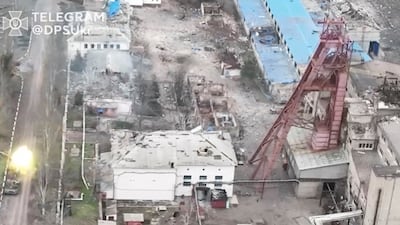
A tank, seen left, fires a round in Soledar, a town in the Donetsk region of eastern Ukraine. Reuters -
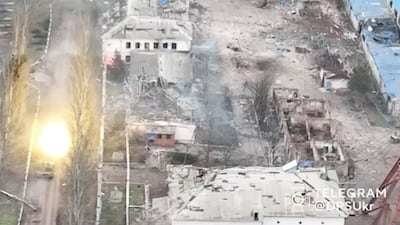
Tank fire in Soledar, Donetsk. Reuters -
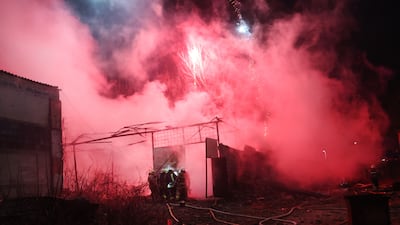
Firefighters work to put out a blaze at a Kharkiv fireworks storage site after it was struck by a Russian missile. Getty -
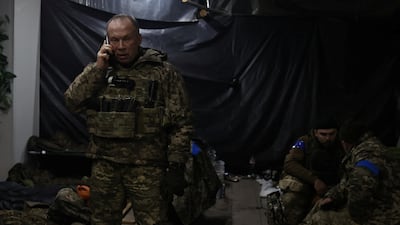
Col Gen Oleksandr Syrskyi, commander of Ukraine's ground forces, visits his troops on the frontline in Soledar, Donetsk. Reuters -
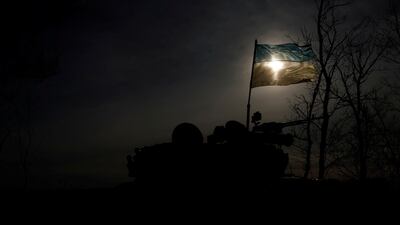
A Ukrainian flag attached to a tank flutters in the wind in Bakhmut. Reuters -
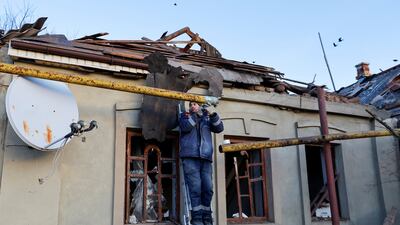
A specialist from an emergency crew works on a residential building in Donetsk that was damaged in recent shelling. Reuters -
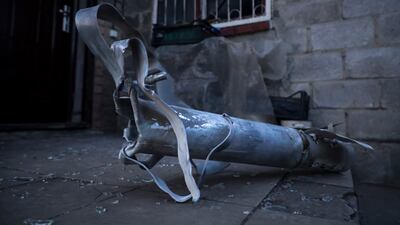
A missile fragment left by shelling in Russian-controlled Donetsk. AP -
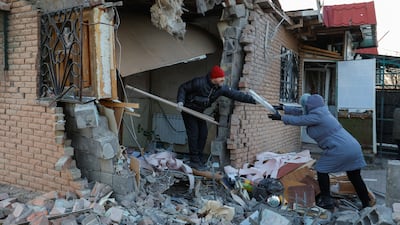
Residents remove debris and carry their belongings out of a building destroyed by recent shelling in Donetsk, Russian-controlled Ukraine. Reuters -
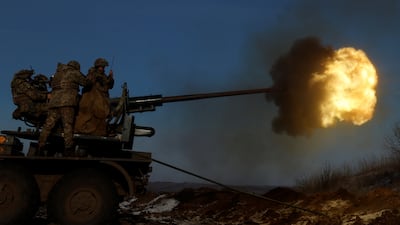
Ukrainian forces fire an anti-aircraft weapon as Russia's attack on the frontline city of Bakhmut continues. Reuters -
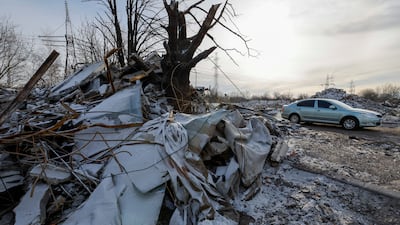
A car drives past a destroyed building purported to have been used as temporary accommodation for Russian soldiers, dozens of whom were killed in a Ukrainian missile strike in Makiivka, Russian-controlled Ukraine. Reuters -
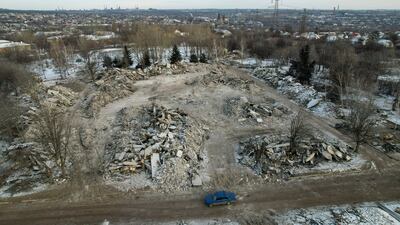
The site of a temporary barracks for Russian soldiers in Makiivka, which was destroyed in a Ukrainian missile attack. Reuters -
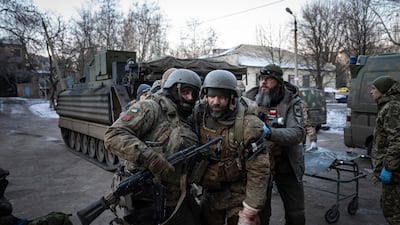
A Ukrainian serviceman carries his injured comrade from the battlefield to a hospital in the Donetsk region. AP -
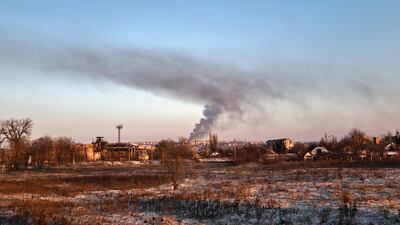
Smoke rises after shelling in Soledar, the site of heavy battles with Russian forces in the Donetsk region. AP


“We need to be growing access to affordable, reliable and sustainable energy,” said Mr Martella.
“The invasion of Ukraine by Russia has really brought that to the forefront. We just can't take for granted being able to turn the lights on.”
The conference, the curtain raiser for Abu Dhabi Sustainability Week, also heard how nations were having to respond quickly.
Hopeful forecast for year ahead
One upside was that 2023 was unlikely to be as severe as the previous year when it came to energy security, panelists said.
“You won’t see the bottlenecks you saw last year with vessels queuing up because they can’t get slots (at ports),” said Steven Kobos, president and chief executive of US firm Excelerate Energy.
“The speed of how people responded to the crisis was unprecedented and it will have a positive impact on our path forward.
“We are going to see a lot more energy being delivered in 2023, as there will be more security, particularly in Europe.”
Vessels queuing up to enter ports was not an uncommon sight in 2022 following Russia’s invasion of Ukraine in the early part of the year, which sent energy costs soaring.
European nations were particularly hard hit by the crisis after Russia, the largest gas supplier in the region, reduced exports in response to the EU’s sanctions following the invasion.
Another panellist believed 2023 could be when countries get to grips with the crisis, providing there was alignment between nations in implementing policies to tackle energy demand.
“It’s important we are all on the same page and there is synergy between governments and the private sector,” said Belinda Balluku, Albania's deputy prime minister and minister of infrastructure and energy.
“We need to build sustainable strategies that last. It costs a lot to keep shifting strategies.”
One by-product of the crisis is that it has encouraged nations to set aside their differences and work together, she added.
“The crisis has brought European countries together to find a solution in what is a challenging and difficult moment for all of us,” said Ms Balluku.
“It has created solidarity among governments working to protect their countries and create the possibility of energy security.”
She said that the diversification of supply was going to be more critical than ever for countries when it came to energy.
Ms Balluku pointed to the fact that 100 per cent of the energy her own country produces is renewable as an example for others to follow.

