



An Expo 2020 Dubai security guard is pinning his hopes on completing a unique world tour before the mega event concludes next month.
Instead of the usual stamps that visitors collect for their yellow souvenir passports, Davinder Singh has been collecting commemorative pin badges from every country pavilion he has visited.
The 32-year-old from India has amassed an impressive collection of 132 of the mementos and is working to secure the remaining 60.
“I started collecting them because I wanted to have something memorable from the Expo,” Mr Singh said, who works as a security guard for a company participating in the world’s fair.
“People usually collect stamps, but I wanted to collect something that wouldn’t get damaged easily and would last for a very long time.
“It’s been fun going to all of the different pavilions and exploring different cultures.”

Mr Singh, who moved to Dubai eight years ago, said he enjoys how each pin is unique and how colourful they appear together on his display board, which he plans to hang in his home as a decoration to remind him of the “good memories”.
He said some pavilions sell the badges while others are giving them away for free.
“It’s taken me two months to get the pins I have so far and I’m still collecting them,” he said.
“Some of the small countries I went to did not have pins, but I have managed to collect a good amount, so I’m not feeling disheartened over the ones I have missed.”
Mr Singh said some Expo visitors who visit frequently to collect memorabilia from every pavilion have started to recognise him.
There are people who travel to every Expo to collect mementos, especially stamps.
In December, The National reported on a Pakistani visitor who collected more than 200 stamps from every pavilion on his kandura.
Expo organisers revealed that they had sold more than 700,000 yellow passports as of November.
“Some of the visitors know that it’s me when they see the colourful board from far away,” Mr Singh said.
“It’s a great feeling to have this many stamps because it feels like I have travelled to all these countries.
“I hope that I can travel to future Expos that happen in other countries and continue my collection.”
Expo 2020 visitor collects stamps on kandura - in pictures
-
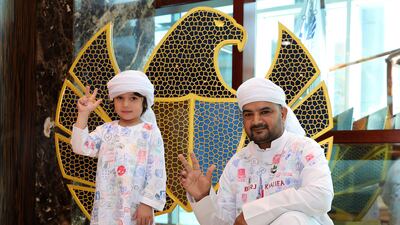
Three-year-old Khalifa Abdullatif Hajee Jaafar Mohamed and Muhammad Asim Muhammad Nasim Durrani, a Dubai Customs employee, model kandoras covered in Expo pavilion stamps. All Photos Pawan Singh / The National. -

Muhammad chose this novel way to collect the stamps, instead of using the Expo passport. -

Both kandoras are covered with stamps from all of the pavilions at Expo 2020 Dubai. -

Young Khalifa models the short kandora. -

Muhammad also had pavilion stamps inked on a scarf. -

History in the making, both kandoras will serve as a great reminder of the world's fair.



