

Philanthropist Bill Gates and US environment envoy John Kerry will join Emirati climate change champions to call for a greener global future at a high-level Abu Dhabi event on Thursday.
A panel of expert speakers featuring Sheikha Shamma bint Sultan, founder and chief executive of the Alliances for Global Sustainability, and Mohamed Jameel Al Ramahi, chief executive of Masdar, will deliver a key message on how the Emirates is embracing a sustainable future.
Sheikha Shamma, the granddaughter of the late President Sheikh Khalifa, was recently honoured in Washington for her work to combat climate change.
The Countdown to Cop27 event, being held at Jumeirah at Saadiyat Island Resort and hosted by First Abu Dhabi Bank, is part of a Sustainability Week staged by The Economist when hundreds of decision-makers also took part in an event in London on Tuesday.
Talks will be held virtually and in person and will centre on the UAE's bid to achieve net zero emissions by 2050.
Speakers will explore how the economy can benefit from the green drive, how success can be measured and what steps must still be taken by governments, businesses and individuals to deliver on long-term eco goals.
-

Sheikha Shamma bint Sultan, executive director of UAE Independent Climate Change Accelerators, receives the Young Leaders in the Field of Climate Change award from Trends Research & Advisory. Photos: Abu Dhabi Media Office -

Sheikha Shamma received the award while participating in the Trends Research & Advisory–Atlantic Council's second annual conference in Washington. -
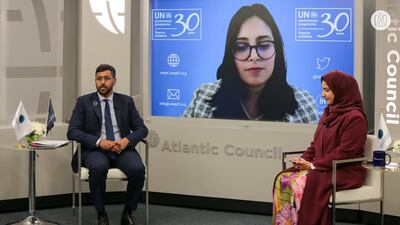
The conference was held under the theme of Sustainable Security of the Middle East: Climate Change Challenges and Prospects. -

The award marked the culmination of a successful visit to the US during which Sheikha Shamma met several senior figures to discuss climate change. -

Last month saw the launch of the UAE Independent Climate Change Accelerators during New York Climate Week. The initiative will be led by Sheikha Shamma. -

The UICCA will operate as a think tank and predominantly focus on providing advice and recommendations to stakeholders on positive climate action that facilitates the transition to a green economy.


Other speakers on Thursday will include Sherif Tawfik, chief sustainability officer for Microsoft in the Middle East, and Maryam Buti Al Suwaidi, chief executive of the Securities and Commodities Authority.
Mr Gates will be part of an online discussion on the UAE's drive to reach net zero by 2050 and the wider role the Middle East can play in promoting sustainability.
Mr Kerry, US special presidential envoy for climate, will tell of his country's fight to address the world's most pressing environmental challenges.
Middle East takes centre stage in climate-change fight
The UN Climate Change Conference 2022, known as Cop27, will be held in Sharm El Sheikh, Egypt, from November 6 to 18. The UAE will host the Cop28 summit in 2023 at Expo City Dubai.
Sheikh Abdullah bin Zayed, Minister of Foreign Affairs and International Co-operation, last month said the UAE will lead “an ambitious, inclusive and solutions-orientated approach” to its hosting of the conference next year.
“The UAE will apply its experience as a trusted global convener to ensure Cop28 UAE reflects the voices of all relevant stakeholders to achieve global consensus for practical climate progress, said Sheikh Abdullah, who is Chairman of the The Cop28 Higher Committee.
“The UAE will also leverage its track record as a clean tech innovator to deliver solutions for truly sustainable development that maximises social and economic benefits for all.”
Sheikh Abdullah said the UAE will co-operate closely with Egypt to support momentum towards greater climate progress.
The UAE delegation to Cop27 will study what is being discussed in Egypt to better understand the differentiated priorities of the international community.
Topics on the agenda in November include efforts to mitigate climate change, to adapt to climate impacts, the need for increased climate finance, and clarity on loss and damage caused by environmental factors.
UAE's net zero mission — in pictures
-
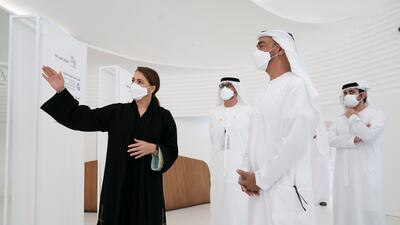
President Sheikh Mohamed, who was Crown Prince of Abu Dhabi and Deputy Supreme Commander of the Armed Forces at the time, at the launch of the UAE’s Net Zero 2050 Strategic Initiative at Expo 2020 Dubai. With him are Sheikh Maktoum bin Mohammed, Deputy Prime Minister and Minister of Finance, right, Mariam Al Mheiri, Minister for Climate Change and Environment, left, and Dr Sultan Al Jaber, Minister of Industry and Advanced Technology, chairman of Masdar and chief executive of Adnoc, second left. All photos: Ministry of Presidential Affairs -
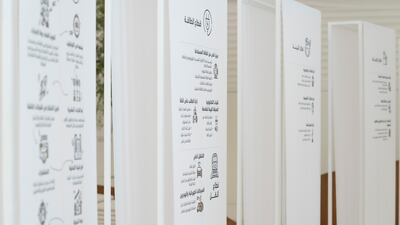
A display about the UAE’s Net Zero 2050 Strategic Initiative in the UAE pavilion at Expo 2020 Dubai. -
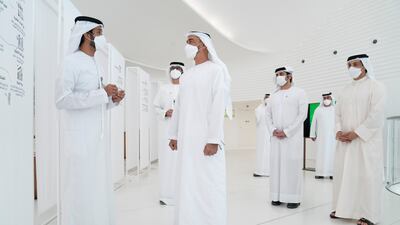
President Sheikh Mohamed, centre, in the UAE pavilion at Expo 2020 Dubai. With him are Sheikh Mansour bin Zayed, Deputy Prime Minister and Minister of Presidential Affairs, right, Sheikh Maktoum bin Mohammed, Deputy Prime Minister and Minister of Finance, second right, Dr Sultan Al Jaber, Minister of Industry and Advanced Technology, fourth right, and Abdullah Al Marri, Minister of Economy, left. -
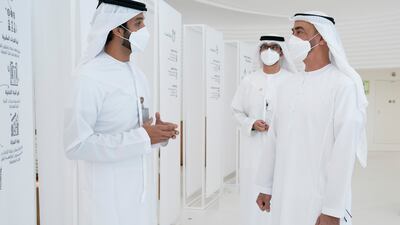
President Sheikh Mohamed, right, with Dr Sultan Al Jaber and Abdullah Al Marri, left. -
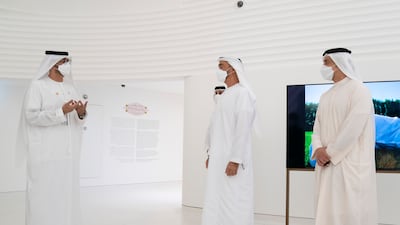
President Sheikh Mohamed, centre, at Expo 2020 Dubai with Sheikh Mansour bin Zayed, Deputy Prime Minister and Minister of Presidential Affairs, right, and Dr Sultan Al Jaber. -
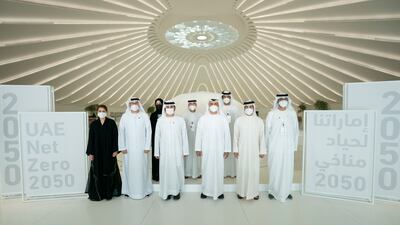
President Sheikh Mohamed, front row, third right, with: Sheikh Mansour bin Zayed, Deputy Prime Minister and Minister of Presidential Affairs, second right; Sheikh Maktoum bin Mohammed Al Maktoum, Deputy Prime Minister and Minister of Finance, fourth right; Dr Sultan Al Jaber, Minister of Industry and Advanced Technology, right; Mohamed Al Gergawi, Minister of Cabinet Affairs, fifth right; and Mariam Al Mheiri, Minister for Climate Change and Environment, left. Back row, from right to left: Abdullah Al Marri, Minister of Economy; Suhail bin Mohamed Al Mazrouei, Minister of Energy and Infrastructure; and Reem Al Hashimi, Minister of State for International Co-operation and Director General of Expo 2020 Dubai. -
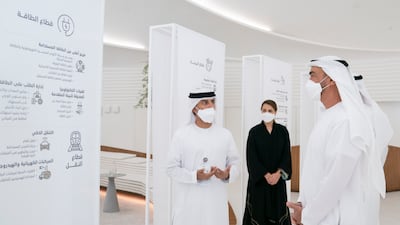
President Sheikh Mohamed with Mariam Al Mheiri and Suhail bin Mohamed Al Mazrouei.



