Iceland's Orca plant could help pave the way for a net-zero future. Photo: Climeworks AG via AP

Can carbon-capture plants achieve global net-zero emissions?


Daniel Bardsley
  • English
  • Arabic

In Iceland, a plant that takes carbon dioxide from the air and turns it into stone could offer a glimpse of what a net-zero world might look like.

A facility called Orca, near Reykjavik, has been described as the largest plant of its kind in the world, although its activities come at a high price.

Operational since last September, it can remove about 4,000 tonnes of carbon dioxide from the atmosphere and inject it underground, where it turns into rock in a process said to take less than two years.

This equates to the annual emissions of fewer than 1,000 cars a year, which may seem a modest number for a plant that cost more than $10 million and requires large amounts of energy, in this case, supplied by Iceland’s geothermal activity.

We haven’t been making as much progress with CCS as we need given its importance. Governments have been reluctant to invest in it on the scale it needs. Oil and gas companies have also not been investing on the scale.
Bob Ward of Grantham Research Institute on Climate Change and the Environment

Orca, created by Swiss-based Climeworks and Iceland’s Carbfix, illustrates the way that carbon capture and storage technology, in this case in its direct air capture (DAC) form, is costly, at least for the moment.

CCS can also capture CO2 emissions from bioenergy plants (such as those burning wood pellets) and from other industrial facilities and power plants, but costs remain high and introduction has yet to take place on a large scale globally.

A recent report by the Intergovernmental Panel on Climate Change (IPCC), Climate Change 2022: Mitigation of Climate Change, said it was “currently more expensive than most other forms of mitigation”.

But while describing DAC with carbon storage as one of several “more speculative technologies” being developed, the report said it had the potential to “draw down atmospheric CO2 much faster than the Earth’s natural carbon cycle” and reduce reliance on other approaches.

The Orca plant captures about 4,000 metric tons of carbon dioxide per year. Photo: Climeworks AG via AP

Also, the report stated that CCS would be “required to mitigate remaining CO2 emissions” from the industry if the world’s climate targets were to be met.

According to Bob Ward, policy and communications director at the Grantham Research Institute on Climate Change and the Environment, part of the London School of Economics and Political Science, temperature increases above pre-industrial levels are likely to exceed the 1.5°C target “within the next few decades”.

"We will have to bring the temperature back down to below 1.5°C,” Mr Ward said.

“The only way to do that is a huge investment in so-called negative emissions. [DAC] is something we’re going to have to do even though we don’t know how to do it at scale or how expensive it will be.”

It will also be important, he said, to look at CCS with bioenergy facilities and with natural gas plants “as a back-up to renewables”.

“We haven’t been making as much progress with CCS as we need given its importance,” he said.

“Governments have been reluctant to invest in it on the scale it needs. Oil and gas companies, which have a vested interest in trying to get the technology to work, have also not been investing on the scale.“

Governments need to provide more incentives and regulations to force these industries to invest much more heavily.

“The danger is, if we don’t invest, it will remain expensive, like nuclear. That’s what needs to happen – a massive step up in scale and investment.”

CCS typically involves fitting filters to the chimneys of industrial or power plants to capture the carbon emissions from flue gases.

DAC plants have been compared to giant vacuum cleaners that draw in air and remove carbon dioxide.

The CO2 be compressed and taken to a storage location, where they are injected underground, perhaps into an aquifer or an oil or gas reservoir that has been depleted, typically more than 1 kilometre down.

A variation, termed carbon capture, use and storage, sees the carbon turned into matter ranging from plastics to concrete.

Although the first industrial carbon capture is often said to have taken place as far back as 1972, at a Texas gas plant, the technology has yet to achieve widescale adoption, with a modest 26 plants in operation in 2020, a handful under construction and more than 30 under development.

In this September 2021 image provided by Climeworks AG, chief executives Jan Wurzbacher and Christoph Gebald appear in front of an air-scrubbing machine where fans suck air into big, black collection boxes where the carbon dioxide accumulates on a filter at Climeworks’ Orca plant near Reykjavik, Iceland. Photo: Climeworks AG via AP

Reports have indicated that, in total, active plants can capture about 40 million tonnes of CO2 each year, which is little more than 0.1 per cent of total emissions.

Some that are operational have faced difficulties. For example, a liquid natural gas plant in Western Australia, operated by America’s Chevron, has not collected the 80 per cent of its CO2 emissions as it was supposed to, reportedly because of technical hurdles linked to injecting the carbon underground.

On a more positive note, a pilot project linked to a scheme to install CCS at the Fortum Oslo Varme waste incinerator just outside Oslo in Norway achieved 90 to 95 per cent CO2 capture.

The scheme, which could cut Oslo’s emissions by 14 per cent, was rejected for EU funding in late 2021, but has reapplied this year.

Prof Niklas Hohne, the founding partner of the NewClimate Institute, a German think tank, said with most emissions scenarios, CCS is “unavoidable”, but using it was always worse than reducing emissions.

“You’re talking about cleaning up a mess. It’s always better not to make a mess,” Prof Hohne said.

“We have the technologies not to make a mess — to save energy, use renewables, which are now cheap.

"It’s a trade-off. Are we fast enough with deploying renewables, or are we so late that even if we go as fast as we can, we also need to apply CO2 removal?”

Environmental groups have had an indifferent relationship with the technology, concerned that it may be a smokescreen used to avoid investments in the emissions reductions they argue are necessary.

If CCS is factored in, it may deflect the need to impose the most stringent emissions cuts.

The Orca plant can remove about 4,000 tonnes of carbon dioxide from the atmosphere and inject it underground, where it turns into rock in a process said to take less than two years. This equates to the annual emissions of fewer 1,000 cars a year, but could be a key step forward in efforts to reduce emissions. Photo: AFP

There is a risk, said Asher Minns, executive director of the Tyndall Centre for Climate Change Research at the University of East Anglia in the UK, of “sweeping so much of the CO2 emissions under the CCS carpet”.

“We don’t know that it works, we don’t know that it works at scale, we don’t really know the cost,” he said.

“It’s really a black box used to explain away emissions that can’t be explained away.”

Another issue that has made environmentalists doubtful of CCS, said Dr Phillip Williamson of the UEA's School of Environmental Sciences and co-author of IPCC reports, is that oil and gas companies have looked to the technology to extract more fossil fuels from depleted wells.

Dr Williamson has looked into CCS in great detail, as from 2017 to 2021 he was science co-ordinator for the UK Greenhouse Gas Removal programme, a British government initiative to investigate issues such as cost and scalability in relation to negative emissions technologies.

He said progress on using CCS in power plants appears to have stalled in recent years, as it lacks the required “impetus and investment”.

“It can make some contribution but you have to feel now it might be somewhat niche,” he said.

“The alternatives of renewable energy are so much cheaper. Why build a conventional power plant and have CCS, which would add to the cost, rather than switching to renewables right from the start?”

But when it comes to extracting CO2 from the air, he said, “it’s not surprising it’s expensive at this stage” and he sees “good opportunities for costs to come down”.

“We do have to have a mechanism where there’s removal – taking it out of the atmosphere,” he said.

“The cost of doing it by this chemical means, that might be at present £1,000 per tonne. If that can be brought it down to £500 or £200 or £100 … this base rate can be made a lot cheaper.”

Over the coming decades, as the technology becomes more competitive, Dr Williamson envisages a system in which industries that continue to produce CO2 are made responsible for removing the same amount of carbon emissions – or even larger amounts.“

"That would have the incentive to drive down the cost, by having that linkage," he said.

"You cannot instantly jump to that system – the industry would be bankrupt.

"In 20 to 30 years’ time if you produce the CO2, not only do you have to remove what you produce, but two times or three times or five times the amount.”

Governments have yet to take serious action, he said, because they are “reluctant to face the reality of what will almost have to come about”.

“It’s taken time to come to terms with what net zero means. In order to keep to these temperature targets, we have to have a balance between the emissions and removals.”

Sheikh Mohamed bin Zayed at the launch of UAE Net Zero 2050 initiative - in pictures

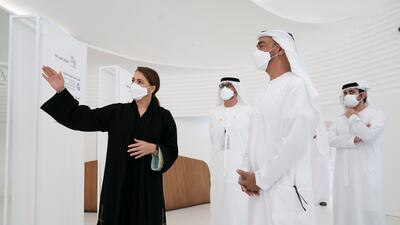
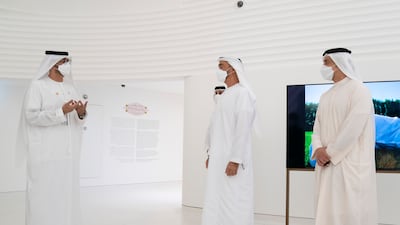
  • President Sheikh Mohamed, who was Crown Prince of Abu Dhabi and Deputy Supreme Commander of the Armed Forces at the time, at the launch of the UAE’s Net Zero 2050 Strategic Initiative at Expo 2020 Dubai. With him are Sheikh Maktoum bin Mohammed, Deputy Prime Minister and Minister of Finance, right, Mariam Al Mheiri, Minister for Climate Change and Environment, left, and Dr Sultan Al Jaber, Minister of Industry and Advanced Technology, chairman of Masdar and chief executive of Adnoc, second left. All photos: Ministry of Presidential Affairs
    President Sheikh Mohamed, who was Crown Prince of Abu Dhabi and Deputy Supreme Commander of the Armed Forces at the time, at the launch of the UAE’s Net Zero 2050 Strategic Initiative at Expo 2020 Dubai. With him are Sheikh Maktoum bin Mohammed, Deputy Prime Minister and Minister of Finance, right, Mariam Al Mheiri, Minister for Climate Change and Environment, left, and Dr Sultan Al Jaber, Minister of Industry and Advanced Technology, chairman of Masdar and chief executive of Adnoc, second left. All photos: Ministry of Presidential Affairs
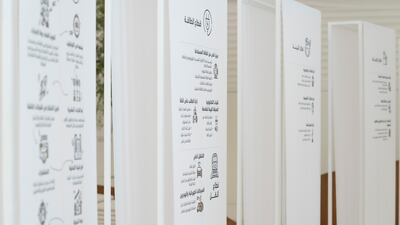
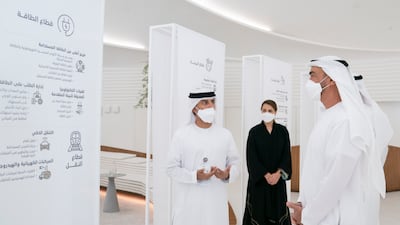
  • A display about the UAE’s Net Zero 2050 Strategic Initiative in the UAE pavilion at Expo 2020 Dubai.
    A display about the UAE’s Net Zero 2050 Strategic Initiative in the UAE pavilion at Expo 2020 Dubai.
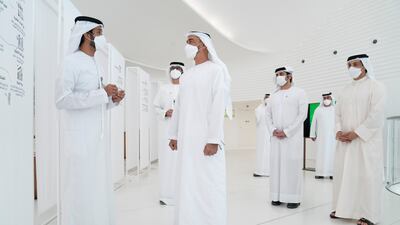
  • President Sheikh Mohamed, centre, in the UAE pavilion at Expo 2020 Dubai. With him are Sheikh Mansour bin Zayed, Deputy Prime Minister and Minister of Presidential Affairs, right, Sheikh Maktoum bin Mohammed, Deputy Prime Minister and Minister of Finance, second right, Dr Sultan Al Jaber, Minister of Industry and Advanced Technology, fourth right, and Abdullah Al Marri, Minister of Economy, left.
    President Sheikh Mohamed, centre, in the UAE pavilion at Expo 2020 Dubai. With him are Sheikh Mansour bin Zayed, Deputy Prime Minister and Minister of Presidential Affairs, right, Sheikh Maktoum bin Mohammed, Deputy Prime Minister and Minister of Finance, second right, Dr Sultan Al Jaber, Minister of Industry and Advanced Technology, fourth right, and Abdullah Al Marri, Minister of Economy, left.
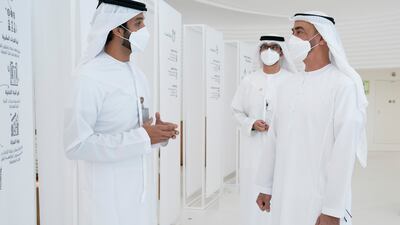
  • President Sheikh Mohamed, right, with Dr Sultan Al Jaber and Abdullah Al Marri, left.
    President Sheikh Mohamed, right, with Dr Sultan Al Jaber and Abdullah Al Marri, left.
  • President Sheikh Mohamed, centre, at Expo 2020 Dubai with Sheikh Mansour bin Zayed, Deputy Prime Minister and Minister of Presidential Affairs, right, and Dr Sultan Al Jaber.
    President Sheikh Mohamed, centre, at Expo 2020 Dubai with Sheikh Mansour bin Zayed, Deputy Prime Minister and Minister of Presidential Affairs, right, and Dr Sultan Al Jaber.
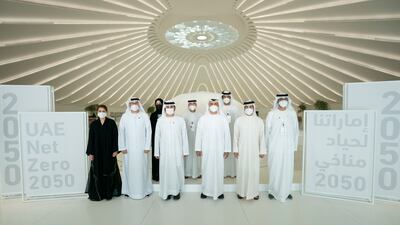
  • President Sheikh Mohamed, front row, third right, with: Sheikh Mansour bin Zayed, Deputy Prime Minister and Minister of Presidential Affairs, second right; Sheikh Maktoum bin Mohammed Al Maktoum, Deputy Prime Minister and Minister of Finance, fourth right; Dr Sultan Al Jaber, Minister of Industry and Advanced Technology, right; Mohamed Al Gergawi, Minister of Cabinet Affairs, fifth right; and Mariam Al Mheiri, Minister for Climate Change and Environment, left. Back row, from right to left: Abdullah Al Marri, Minister of Economy; Suhail bin Mohamed Al Mazrouei, Minister of Energy and Infrastructure; and Reem Al Hashimi, Minister of State for International Co-operation and Director General of Expo 2020 Dubai.
    President Sheikh Mohamed, front row, third right, with: Sheikh Mansour bin Zayed, Deputy Prime Minister and Minister of Presidential Affairs, second right; Sheikh Maktoum bin Mohammed Al Maktoum, Deputy Prime Minister and Minister of Finance, fourth right; Dr Sultan Al Jaber, Minister of Industry and Advanced Technology, right; Mohamed Al Gergawi, Minister of Cabinet Affairs, fifth right; and Mariam Al Mheiri, Minister for Climate Change and Environment, left. Back row, from right to left: Abdullah Al Marri, Minister of Economy; Suhail bin Mohamed Al Mazrouei, Minister of Energy and Infrastructure; and Reem Al Hashimi, Minister of State for International Co-operation and Director General of Expo 2020 Dubai.
  • President Sheikh Mohamed with Mariam Al Mheiri and Suhail bin Mohamed Al Mazrouei.
    President Sheikh Mohamed with Mariam Al Mheiri and Suhail bin Mohamed Al Mazrouei.
The more serious side of specialty coffee

While the taste of beans and freshness of roast is paramount to the specialty coffee scene, so is sustainability and workers’ rights.

The bulk of genuine specialty coffee companies aim to improve on these elements in every stage of production via direct relationships with farmers. For instance, Mokha 1450 on Al Wasl Road strives to work predominantly with women-owned and -operated coffee organisations, including female farmers in the Sabree mountains of Yemen.

Because, as the boutique’s owner, Garfield Kerr, points out: “women represent over 90 per cent of the coffee value chain, but are woefully underrepresented in less than 10 per cent of ownership and management throughout the global coffee industry.”

One of the UAE’s largest suppliers of green (meaning not-yet-roasted) beans, Raw Coffee, is a founding member of the Partnership of Gender Equity, which aims to empower female coffee farmers and harvesters.

Also, globally, many companies have found the perfect way to recycle old coffee grounds: they create the perfect fertile soil in which to grow mushrooms. 

Real estate tokenisation project

Dubai launched the pilot phase of its real estate tokenisation project last month.

The initiative focuses on converting real estate assets into digital tokens recorded on blockchain technology and helps in streamlining the process of buying, selling and investing, the Dubai Land Department said.

Dubai’s real estate tokenisation market is projected to reach Dh60 billion ($16.33 billion) by 2033, representing 7 per cent of the emirate’s total property transactions, according to the DLD.

How much sugar is in chocolate Easter eggs?
  • The 169g Crunchie egg has 15.9g of sugar per 25g serving, working out at around 107g of sugar per egg
  • The 190g Maltesers Teasers egg contains 58g of sugar per 100g for the egg and 19.6g of sugar in each of the two Teasers bars that come with it
  • The 188g Smarties egg has 113g of sugar per egg and 22.8g in the tube of Smarties it contains
  • The Milky Bar white chocolate Egg Hunt Pack contains eight eggs at 7.7g of sugar per egg
  • The Cadbury Creme Egg contains 26g of sugar per 40g egg
COMPANY%20PROFILE
%3Cp%3E%3Cstrong%3ECompany%20name%3A%3C%2Fstrong%3E%20Revibe%20%0D%3Cbr%3E%3Cstrong%3EStarted%3A%3C%2Fstrong%3E%202022%0D%3Cbr%3E%3Cstrong%3EFounders%3A%3C%2Fstrong%3E%20Hamza%20Iraqui%20and%20Abdessamad%20Ben%20Zakour%20%0D%3Cbr%3E%3Cstrong%3EBased%3A%3C%2Fstrong%3E%20UAE%20%0D%3Cbr%3E%3Cstrong%3EIndustry%3A%3C%2Fstrong%3E%20Refurbished%20electronics%20%0D%3Cbr%3E%3Cstrong%3EFunds%20raised%20so%20far%3A%3C%2Fstrong%3E%20%2410m%20%0D%3Cbr%3E%3Cstrong%3EInvestors%3A%20%3C%2Fstrong%3EFlat6Labs%2C%20Resonance%20and%20various%20others%0D%3C%2Fp%3E%0A

Mercer, the investment consulting arm of US services company Marsh & McLennan, expects its wealth division to at least double its assets under management (AUM) in the Middle East as wealth in the region continues to grow despite economic headwinds, a company official said.

Mercer Wealth, which globally has $160 billion in AUM, plans to boost its AUM in the region to $2-$3bn in the next 2-3 years from the present $1bn, said Yasir AbuShaban, a Dubai-based principal with Mercer Wealth.

Within the next two to three years, we are looking at reaching $2 to $3 billion as a conservative estimate and we do see an opportunity to do so,” said Mr AbuShaban.

Mercer does not directly make investments, but allocates clients’ money they have discretion to, to professional asset managers. They also provide advice to clients.

“We have buying power. We can negotiate on their (client’s) behalf with asset managers to provide them lower fees than they otherwise would have to get on their own,” he added.

Mercer Wealth’s clients include sovereign wealth funds, family offices, and insurance companies among others.

From its office in Dubai, Mercer also looks after Africa, India and Turkey, where they also see opportunity for growth.

Wealth creation in Middle East and Africa (MEA) grew 8.5 per cent to $8.1 trillion last year from $7.5tn in 2015, higher than last year’s global average of 6 per cent and the second-highest growth in a region after Asia-Pacific which grew 9.9 per cent, according to consultancy Boston Consulting Group (BCG). In the region, where wealth grew just 1.9 per cent in 2015 compared with 2014, a pickup in oil prices has helped in wealth generation.

BCG is forecasting MEA wealth will rise to $12tn by 2021, growing at an annual average of 8 per cent.

Drivers of wealth generation in the region will be split evenly between new wealth creation and growth of performance of existing assets, according to BCG.

Another general trend in the region is clients’ looking for a comprehensive approach to investing, according to Mr AbuShaban.

“Institutional investors or some of the families are seeing a slowdown in the available capital they have to invest and in that sense they are looking at optimizing the way they manage their portfolios and making sure they are not investing haphazardly and different parts of their investment are working together,” said Mr AbuShaban.

Some clients also have a higher appetite for risk, given the low interest-rate environment that does not provide enough yield for some institutional investors. These clients are keen to invest in illiquid assets, such as private equity and infrastructure.

“What we have seen is a desire for higher returns in what has been a low-return environment specifically in various fixed income or bonds,” he said.

“In this environment, we have seen a de facto increase in the risk that clients are taking in things like illiquid investments, private equity investments, infrastructure and private debt, those kind of investments were higher illiquidity results in incrementally higher returns.”

The Abu Dhabi Investment Authority, one of the largest sovereign wealth funds, said in its 2016 report that has gradually increased its exposure in direct private equity and private credit transactions, mainly in Asian markets and especially in China and India. The authority’s private equity department focused on structured equities owing to “their defensive characteristics.”

Tell Me Who I Am

Director: Ed Perkins

Stars: Alex and Marcus Lewis

Four stars

Stage results

1. Julian Alaphilippe (FRA) Deceuninck-QuickStep  4:39:05

2. Michael Matthews (AUS) Team BikeExchange 0:00:08

3. Primoz Roglic (SLV) Jumbo-Visma same time 

4. Jack Haig (AUS) Bahrain Victorious s.t  

5. Wilco Kelderman (NED) Bora-Hansgrohe s.t  

6. Tadej Pogacar (SLV) UAE Team Emirates s.t 

7. David Gaudu (FRA) Groupama-FDJ s.t

8. Sergio Higuita Garcia (COL) EF Education-Nippo s.t     

9. Bauke Mollema (NED) Trek-Segafredo  s.t

10. Geraint Thomas (GBR) Ineos Grenadiers s.t

Results
%3Cp%3E%0D%3Cstrong%3EElite%20men%3C%2Fstrong%3E%0D%3Cbr%3E1.%20Amare%20Hailemichael%20Samson%20(ERI)%202%3A07%3A10%0D%3Cbr%3E2.%20Leornard%20Barsoton%20(KEN)%202%3A09%3A37%0D%3Cbr%3E3.%20Ilham%20Ozbilan%20(TUR)%202%3A10%3A16%0D%3Cbr%3E4.%20Gideon%20Chepkonga%20(KEN)%202%3A11%3A17%0D%3Cbr%3E5.%20Isaac%20Timoi%20(KEN)%202%3A11%3A34%0D%3Cbr%3E%3Cstrong%3EElite%20women%3C%2Fstrong%3E%0D%3Cbr%3E1.%20Brigid%20Kosgei%20(KEN)%202%3A19%3A15%0D%3Cbr%3E2.%20Hawi%20Feysa%20Gejia%20(ETH)%202%3A24%3A03%0D%3Cbr%3E3.%20Sintayehu%20Dessi%20(ETH)%202%3A25%3A36%0D%3Cbr%3E4.%20Aurelia%20Kiptui%20(KEN)%202%3A28%3A59%0D%3Cbr%3E5.%20Emily%20Kipchumba%20(KEN)%202%3A29%3A52%3C%2Fp%3E%0A
The%20Iron%20Claw
%3Cp%3E%3Cstrong%3EDirector%3A%3C%2Fstrong%3E%20Sean%20Durkin%C2%A0%3C%2Fp%3E%0A%3Cp%3E%3Cstrong%3EStarring%3A%3C%2Fstrong%3E%20Zac%20Efron%2C%20Jeremy%20Allen%20White%2C%20Harris%20Dickinson%2C%20Maura%20Tierney%2C%20Holt%20McCallany%2C%20Lily%20James%3C%2Fp%3E%0A%3Cp%3E%3Cstrong%3ERating%3A%3C%2Fstrong%3E%204%2F5%3C%2Fp%3E%0A
Brief scoreline

Switzerland 0

England 0

Result: England win 6-5 on penalties

Man of the Match: Trent Alexander-Arnold (England)

What's in the deal?

Agreement aims to boost trade by £25.5bn a year in the long run, compared with a total of £42.6bn in 2024

India will slash levies on medical devices, machinery, cosmetics, soft drinks and lamb.

India will also cut automotive tariffs to 10% under a quota from over 100% currently.

Indian employees in the UK will receive three years exemption from social security payments

India expects 99% of exports to benefit from zero duty, raising opportunities for textiles, marine products, footwear and jewellery

Pari

Produced by: Clean Slate Films (Anushka Sharma, Karnesh Sharma) & KriArj Entertainment

Director: Prosit Roy

Starring: Anushka Sharma, Parambrata Chattopadhyay, Ritabhari Chakraborty, Rajat Kapoor, Mansi Multani

Three stars

Wicked: For Good

Director: Jon M Chu

Starring: Ariana Grande, Cynthia Erivo, Jonathan Bailey, Jeff Goldblum, Michelle Yeoh, Ethan Slater

Rating: 4/5

Veil (Object Lessons)
Rafia Zakaria
​​​​​​​Bloomsbury Academic

The details

Heard It in a Past Life

Maggie Rogers

(Capital Records)

3/5

ABU DHABI ORDER OF PLAY

Starting at 10am:

Daria Kasatkina v Qiang Wang

Veronika Kudermetova v Annet Kontaveit (10)

Maria Sakkari (9) v Anastasia Potapova

Anastasia Pavlyuchenkova v Ons Jabeur (15)

Donna Vekic (16) v Bernarda Pera 

Ekaterina Alexandrova v Zarina Diyas

Updated: April 13, 2022, 10:27 AM