
As it happened: Prince William's visit to the UAE
Abu Dhabi set out ambitious plans to establish the emirate as a global hub for research and innovation in support of the conservation of mangroves during Prince William's landmark visit to the UAE.
The key project was announced as Prince William met Sheikh Khaled bin Mohamed, member of the Abu Dhabi Executive Council and chairman of Abu Dhabi Executive Office, at Jubail Mangrove Park on Thursday.
The Duke of Cambridge's first trip to the UAE is now under way, with efforts to promote an international green agenda high on the list.
The Abu Dhabi Mangrove Initiative will be implemented by the Environment Agency Abu Dhabi and has already secured its first partnership with the Zoological Society of London, a charity of which Queen Elizabeth II is a patron.
While at the park, Prince William and Sheikh Khaled planted mangrove saplings with green-fingered school pupils and discussed the importance of young people leading the charge for sustainable development for years to come.
Pupils from an Abu Dhabi school with strong links to Britain were excited about meeting the prince.
“He’s doing a lot of good trying to help the younger generation protect the environment as much as we can,” said Amaan Haider, 13, from The British School Al Khubairat, Abu Dhabi.
Fellow pupil Lily-Rose Mayall, 12, said: “He’s really inspirational and I’m really excited to meet him.
“He knows so much about the environment and he also helps a lot, which is really amazing.”
Headmaster Mark Leppard said Prince William's visit would be something the pupils would never forget.
“The school is linked to the British embassy and we’ve had many royal visitors,” he said.
“For the students to be involved with the prince is going to be fantastic and it is something that will stay with them for life.”
-
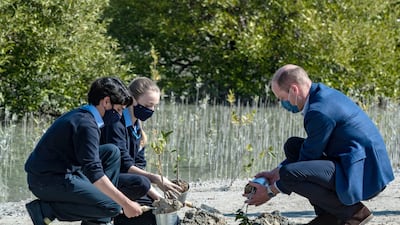
Prince William plants mangrove seedlings with pupils. Victor Besa / The National -
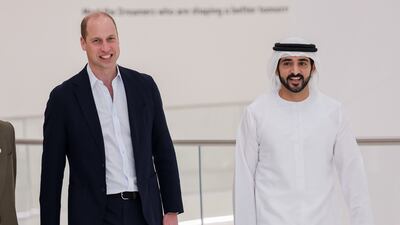
Sheikh Hamdan bin Mohammed, Crown Prince of Dubai, and Prince William, Duke of Cambridge, visit the UAE pavilion at Expo 2020 Dubai. After the tour, they were due to hold a private bilateral meeting. Getty -
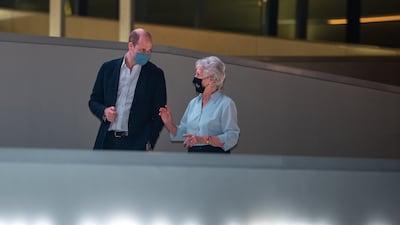
Prince William visits the UK Pavilion at Expo 2020 Dubai. Victor Besa / The National -
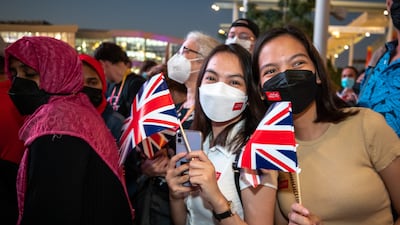
Visitors outside the UK Pavilion at Expo 2020 Dubai. Victor Besa / The National -
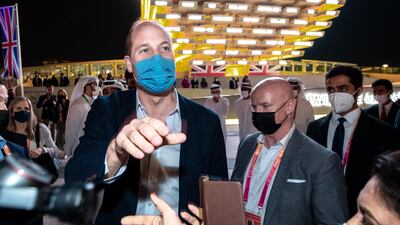
Prince William greets Expo visitors outside the UK Pavilion. Victor Besa / The National -
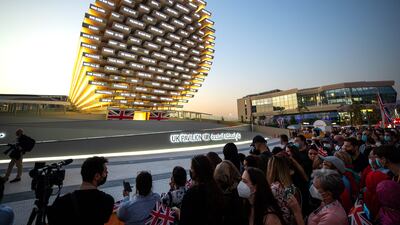
The UK Pavilion at Expo 2020 Dubai. Victor Besa / The National -
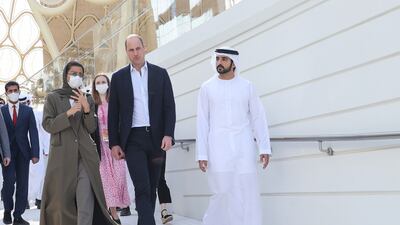
Sheikh Hamdan bin Mohammed, right, and Noura Al Kaabi, Minister of Culture and Youth, accompany Prince William on the tour. Getty -
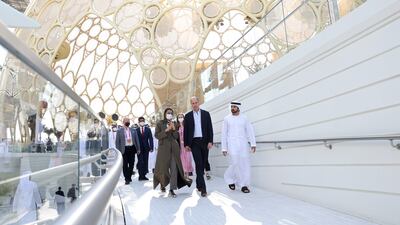
Sheikh Hamdan bin Mohammed, right, and Noura Al Kaabi, Minister of Culture and Youth, accompany Prince William on the tour. Getty -

Sheikh Hamdan bin Mohammed and Prince William chat inside the UAE pavilion. Getty -

Prince William watches a display inside the UAE Pavilion, accompanied by Sheikh Hamdan bin Mohammed and Noura Al Kaabi. Getty -
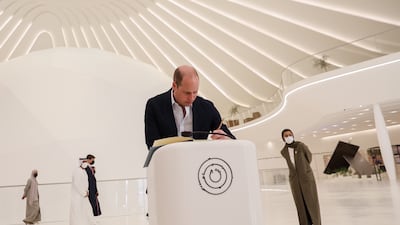
The Duke of Cambridge signs the pavilion guestbook. Getty -

Prince William speaking in the DP World Pavilion, EXPO 2020 Dubai. Victor Besa / The National -

Prince William speaking in the DP World Pavilion, EXPO 2020 Dubai. Victor Besa / The National -
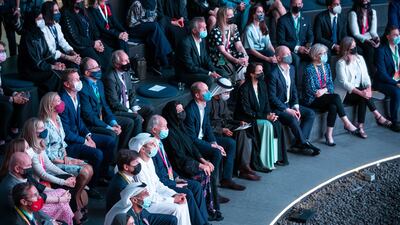
Prince William speaking in the DP World Pavilion, EXPO 2020 Dubai. Victor Besa / The National -
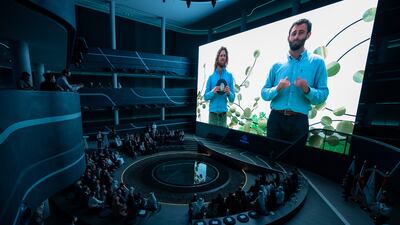
Prince William speaking in the DP World Pavilion, EXPO 2020 Dubai. Victor Besa / The National -
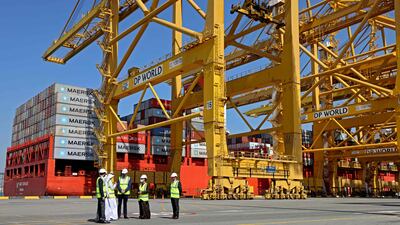
Prince William, centre, visits Jebel Ali Port in Dubai. AFP -
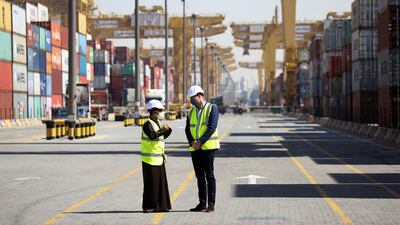
Sultan Ahmed bin Sulayem, chairman and chief executive of DP World, speaks to the prince about work to tackle the illegal wildlife trade. Getty -
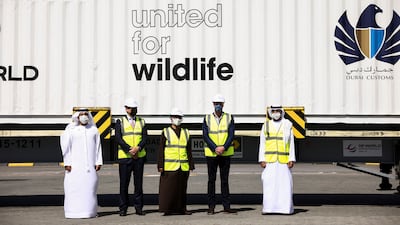
The duke’s visit to the port is part of a busy tour of the UAE. Getty -

Prince William's visit will build on the strong bond between the UK and the UAE. Getty -
The duke travelled from Abu Dhabi to Dubai to visit one of the world’s busiest ports. John Dennehy / The National -
Prince William sees how goods are monitored in and out of the port. John Dennehy / The National -
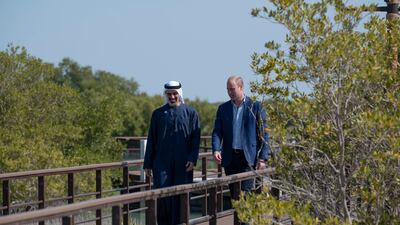
Sheikh Khaled bin Mohamed, member of Abu Dhabi Executive Council and chairman of Abu Dhabi Executive Office, visits Jubail Mangrove Park with the prince. Photo: Abu Dhabi Media Office -
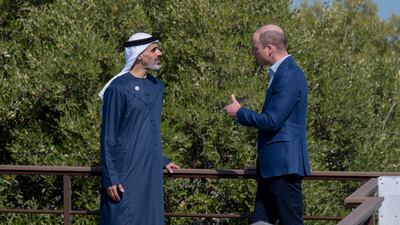
Sheikh Khaled bin Mohamed and Prince William at the mangrove park in Abu Dhabi. Photo: Abu Dhabi Media Office -
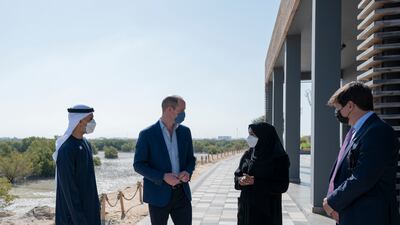
Sheikh Khaled bin Mohamed with Prince William. Photo: Abu Dhabi Media Office -
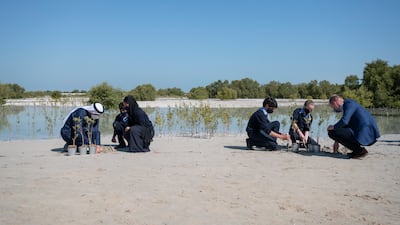
Sheikh Khaled bin Mohamed with Prince William and pupils at Jubail Mangrove Park. Photo: Abu Dhabi Media Office -
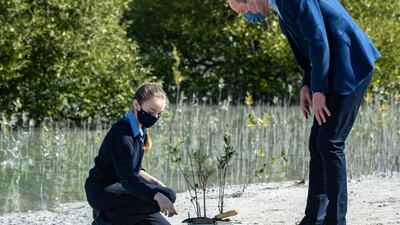
The prince and companies in the UAE are working together to protect flora and fauna. Victor Besa / The National -
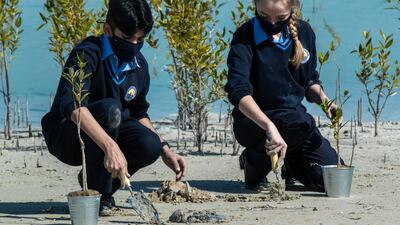
Children tend to seedlings after meeting Prince William. Victor Besa / The National -

The seedlings were planted at Jubail Mangrove Park in Abu Dhabi. Victor Besa / The National -
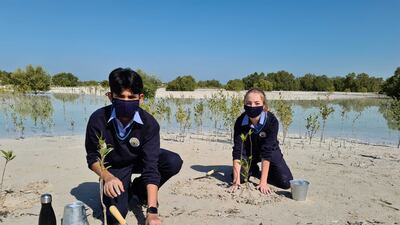
Lilly-Rose Mayall and Amaan Haider of the British School Al Khubairat plant mangrove seedlings. Victor Besa / The National -
The view from Prince William's plane as he arrives in Dubai. Photo: Kensington Royal -
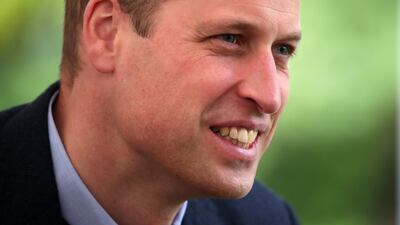
Prince William during a visit to Edinburgh, Scotland, last year. The Duke of Cambridge is visiting the UAE for his first official trip to the Emirates. Getty -
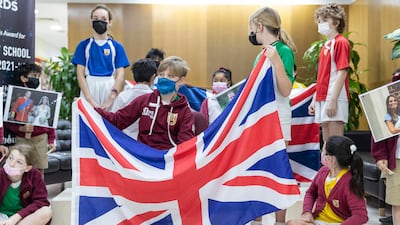
Pupils at Victory Heights Primary school thought of some burning questions for Prince William before his visit to Dubai. Antonie Robertson / The National -

Prince William visited Expo 2020 Dubai. Photo: Expo 2020 Dubai


Key project to address global challenges
The Abu Dhabi eco drive will provide a platform for innovation in mangrove research and support efforts to combat climate change.
A state-of-the-art mangrove nursery will also be established to act as a centre of research and learning.
The scheme aims to enable mangrove recovery to address the climate crisis and safeguard precious biodiversity.
The partners will develop a joint programme of research support on the assessment of blue carbon storage in different regional ecosystems and help to develop standardised assessment methods across habitats, such as mangroves and reefs, that allow for the comparison of data sets.
Under the project, cutting-edge genetic and planting methods will be used to breed resilient mangrove strains.

The Zoological Society of London will field test different approaches with the aim of bolstering mangroves for future generations.
The programme will also develop outreach, training and advocacy for mangrove restoration both locally and internationally.
Jubail Mangrove Park opened in January 2020 to help protect biodiversity, raise awareness of the emirate’s rich mangrove ecosystem, and showcase its natural heritage.
The sprawling beauty spot is home to a variety of bird, land, and marine wildlife, and features two kilometres of boardwalk, where visitors can learn about the important ecological function of mangrove habitats in protecting and supporting biodiversity.
Mangroves are woody plants that inhabit the intertidal zones of tropical and subtropical coasts all around the world.
They are highly recognisable from their visible root systems which can give them the strange impression of being planted upside-down.
This unique appearance is the result of adaptations developed to survive in harsh environments, including high temperatures, high salinity and intense UV exposure.
Mangroves are estimated to cover more than 150 square kilometres of the UAE's coastline, acting as a “green lung” for big cities such as Abu Dhabi and Dubai, while also providing habit for wildlife and recreation grounds for humans.
Mangroves in the UAE — in pictures
-
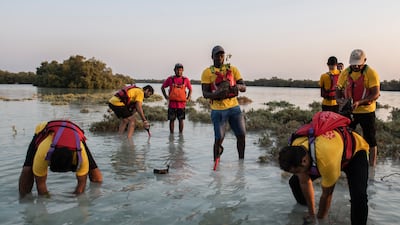
People plant mangroves during an event organised by Companies for Good on Jubail Island, Abu Dhabi. All photos: Vidhyaa Chandramohan -
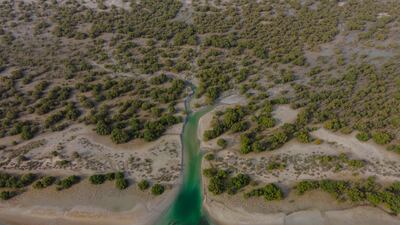
To fight climate change, the UAE is carrying out projects such as reducing emissions and planting mangroves. -
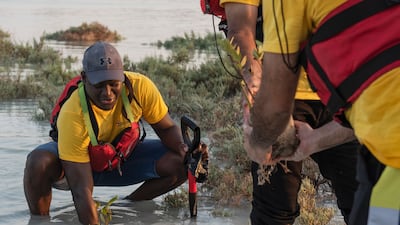
Mangroves, trees that survive in salty water, play an important part in the ecosystem. -
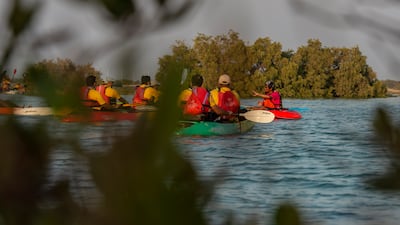
By 2030, the UAE intends to plant 100 million mangroves. -
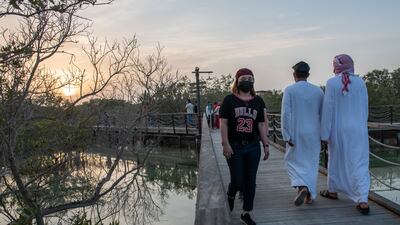
Visitors at Jubail Mangrove Park. Schools and businesses are planting saplings as part of the UAE's campaign. -
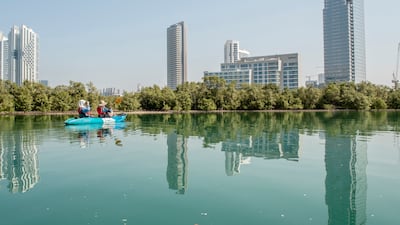
Volunteers during a mangrove clean-up organised by the World Wildlife Fund and Seahawk Abu Dhabi. -
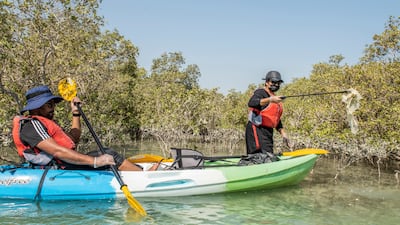
Young mangroves can be damaged by plastic and other waste dumped into the sea. -
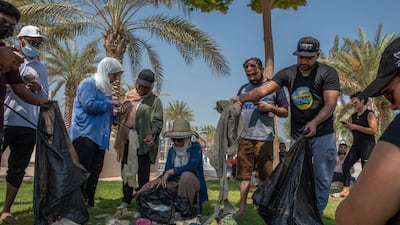
Volunteers sort rubbish gathered during a clean-up of mangroves in Abu Dhabi. -

After collecting debris from the mangroves, volunteers use an app to track their progress. -
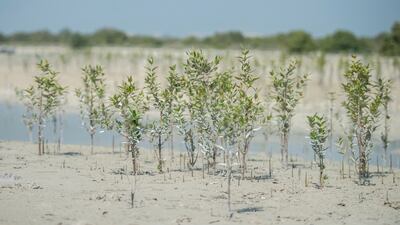
The grey mangrove is the species that grows extensively in UAE. -
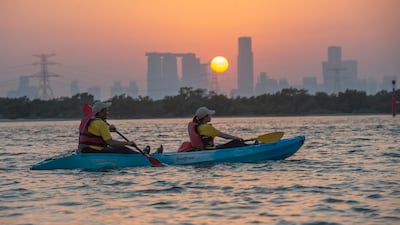
Visitors enjoy an evening paddle by the mangroves and a sunset view of Abu Dhabi.



