



Boarding schools in the UAE have grown in popularity as parents in the Middle East look for residential school options closer to home, following the pandemic.
Head teachers said parents had traditionally chosen boarding schools in Europe but were now opting for options in the UAE, as they had seen enquiries boom in the past year.
The UAE has very few boarding schools and these are a pricey option — fees range from Dh141,000 ($38,000) to Dh239,700.
head teacher at Repton Dubai
But parents are willing to spend a small fortune to ensure their children learn life skills early on and can access support for university applications.
Pupils are exposed to various cultures and are offered a wide range of extra-curricular activities.
Sharp rise in enrolments after Covid-19
Dubai options for boarding schools include the Swiss International Scientific School in Dubai and Repton Dubai.
Ruth Burke, head teacher at SISD in Dubai said the boarding school option had launched in 2018 and enquiries have grown since the pandemic.
“We launched boarding just before covid, but it's really taken off in the last 12 months with a lot of queries coming in from around the world,” said Ms Burke.
“In terms of a sector, it's growing … we have certainly seen that during covid, families were choosing to have their children in boarding in the Middle East rather than in Europe or US.
“Families felt Europe was a long way away when there were travel restrictions.”
SISD has 70 pupils at its boarding school, half of whom are weekly boarders, meaning they go home for the weekend, while the other half live at the school throughout term-time.
Ms Burke said she expected the number of boarders to grow significantly in September.
Parents who live in other parts of the Middle East often pick a boarding school location where they can fly in and meet their children at the weekend.
She said many parents choose Dubai as it had been ranked as one of the world's safest cities, had a wide range of activities, and is a travel hub.
“It's no longer necessary to go to Europe for boarding when for our families here in the Middle East, it's right on their doorstep,” said Ms Burke.
David Cook, head teacher at Repton Dubai, said the school had only a dozen boarders in 2007 but now had between 60 and 80 pupils each year.
He said that while the numbers were still fairly modest, but the school had seen a lot of interest in the last couple of years, partly due to fears about lockdowns and children being at schools far from home.
“There are still plenty of families who do look at boarding conventionally in the West — in America or Britain — but we do know that our boarding numbers have seen a steady increase,” said Mr Cook.
“They're often families who also are interested in flexible boarding. So, for instance, they might be travelling during the week, but home at the weekend.”
Schools acquire visas for pupils whose parents are not resident in the UAE.
Repton School Dubai celebrates 15th anniversary - in pictures
-
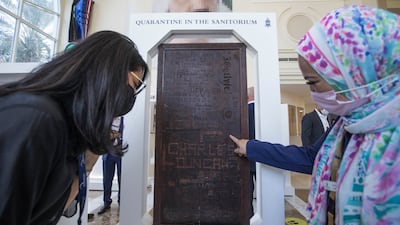
Memorabilia on display at Repton Dubai, which will soon turn 15. The campus is one of two UAE branches of one of England’s oldest schools. Ruel Pableo / The National -
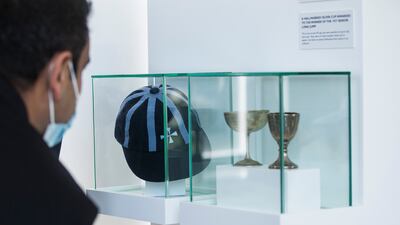
Repton School was founded in 1557 in Derbyshire village. Artefacts from hundreds of years ago are included in the exhibition. Ruel Pableo / The National -
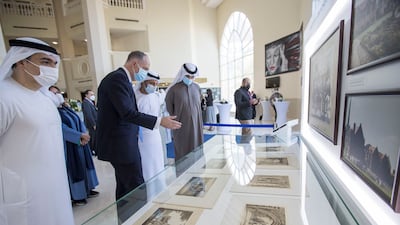
Dr Abdulla Al Karam, director general of the Knowledge and Human Development Authority, which regulates private schools in Dubai, looks at the exhibits. Mark Semmence, headmaster of Repton School in England, talks about its history. Ruel Pableo / The National -

Guests ask questions at the exhibition. Ruel Pableo / The National -
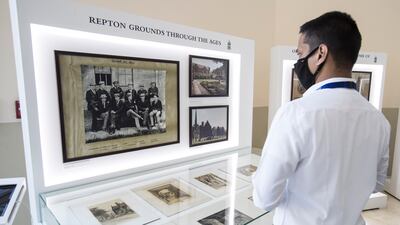
Old photographs are on show. Ruel Pableo / The National -

The Dubai campus is in Nad Al Sheba. Ruel Pableo / The National -
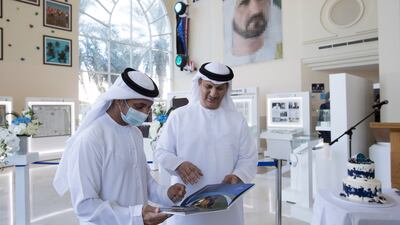
Dr Al Karam, left, and Khaled Almheiri, chairman of the Repton family of schools in the UAE, look at an old yearbook. Ruel Pableo / The National -
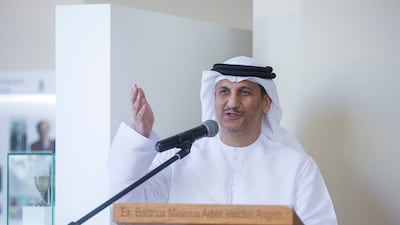
Dr Al Karam delivers a speech to mark the milestone. Ruel Pableo / The National -
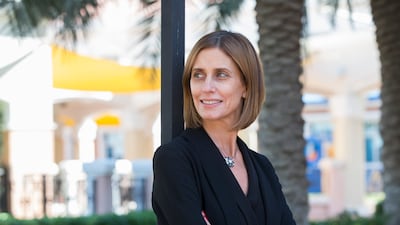
Hanadi Saeed, head of Arabic at Repton Dubai. Ruel Pableo / The National -
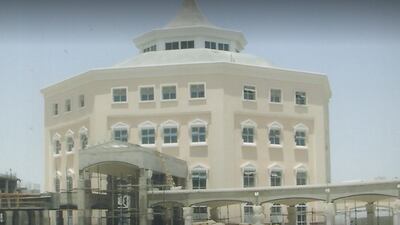
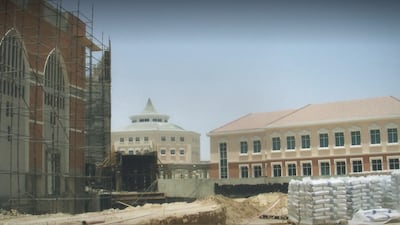
Repton Dubai was built in 2007. Photo: Repton Dubai -
The exhibition will be at Repton Dubai for five to six weeks, after which it will travel to Repton Abu Dhabi. Photo: Repton Dubai -
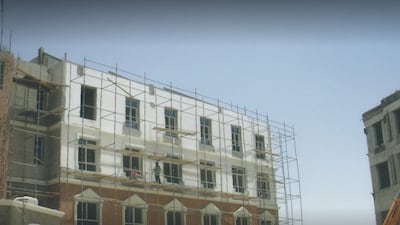
Repton Dubai during its construction phase. Photo: Repton Dubai -
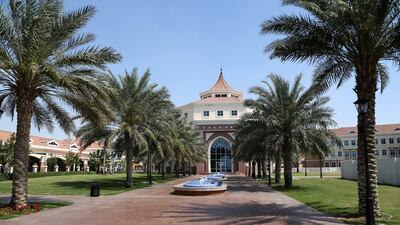
Repton School in Dubai is an independent day and boarding school in Nad Al Sheba. Photo: Repton Dubai -
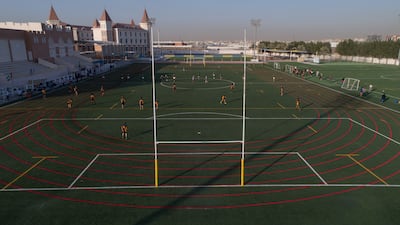
It has classes from preschool to Year 13. Photo: Repton Dubai -
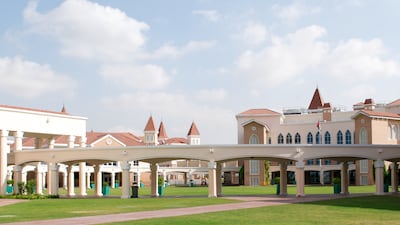
Children from more than 80 nationalities study at the school. Photo: Repton Dubai -

The school says its former pupils have joined Oxford, Columbia University, Berkeley, Cambridge, Stanford, St Andrews, and other reputed institutions. Photo: Repton Dubai


The cost of boarding
Boarding schools are never inexpensive. Mainland European boarding schools cost between Dh73,000 to Dh490,000 per year.
In the UK, the average annual fee for independent schools now sits at Dh67,000 for day pupils and Dh159,000 for boarders, the Independent School Council’s latest annual census found.
Full boarding fees at SISD start from Dh224,500 for Grade six pupils and go up to Dh239,700 for Grade 12 pupils. Weekly boarding at the school costs between Dh156,355 in Grade six to Dh170,295 in grade 12.
At Repton Dubai, full boarding costs Dh66,000 per year while weekly boarding fees are Dh60,500 annually. School fees which are paid in addition to this range from Dh75,000 in year seven to Dh95,000 in year 13.
Ms Burke said boarding school fees in the Emirates were in line with premium institutions across the world.
She said SISD had world-class facilities, such as a 50-metre swimming pool and a theatre. Pupils had access to pianos, a fitness room, gymnasiums, and sports coaches while sailing was available at their doorstep, she said.
Mr Cook said their fees were lower than boarding at some of the UK's boarding schools. He said they were able to control costs due to economies of scale.

Support with university applications
Pupils at boarding schools have access to qualified teachers available every evening to support them.
Academic tutors are around to help pupils with time management and in supporting them with writing personal statements for university applications.
“So that the children will be in a position to access the best universities in the world, parents are prepared to pay that price for that level of expertise and care,” said Ms Burke.
She said pupils learnt early on how to manage their time, their day and their workload, and developed a level of international-mindedness when living with other children from across the world.
Mr Cook explained that there wasn't a built-in advantage for full-time boarders.
“But as pupils are on-site seven days a week and on-site in the evenings, we can do more specialist support for them,” he said.
What’s a day at a boarding school in the UAE like?
Fatima Uba Sani, 17, from Nigeria, moved to Dubai four years ago to study at Repton Dubai, leaving her family back home.
The experience of living at a boarding school afforded her the opportunity to interact with people from across the world and prepare her for university life, she said.
“There are a lot of advantages at boarding school like the independence. We wash our clothes and are responsible for our own time management. It makes the transition to university much easier,” said Fatima.
“Also, I have meet people from so many countries. I'm from Nigeria, we have people from Russia, India, Japan etc, so you get that exposure when you learn about other people's culture.”
In September, Fatima hopes to head to the UK to study medicine.
“The mindfulness sessions have been really important for me, and we never talk about anything like that in Nigeria,” she said.
Fatima said her day usually starts at 6.30am on a weekday.
Breakfast is at 7am followed by school until 3pm. Pupils do extra-curricular activities between 3pm and 4pm and have dinner at 5.30pm.
This is followed by prep time (homework) from 6.30pm to 7.30pm. After that children engage in activities like choir or football until 9pm.
At the weekend, pupils wake up at around 10am and have brunch at 11am. Pupils then engage in different activities like swimming, going to the beach or doing paddleboarding.
10 UAE schools listed in the world's top 100 - in pictures
-

The British School Al Khubairat has long been considered one of the best in the country and its story began more than 50 years ago. Victor Besa / The National -

Cranleigh has more than 150-year history in England and its Abu Dhabi site celebrates the many cultures in the country. Reem Mohammed / The National -

Pupils from Brighton College Abu Dhabi have gone on to study at the University of Oxford, Imperial College London, St Andrews, and Warwick University. Chris Whiteoak / The National -
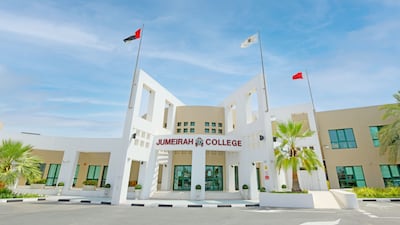
Pupils at Jumeirah College have landed offers from prestigious universities, including Imperial College London, London School of Economics, the University of Oxford and University of Melbourne. Photo: Jumeirah College -
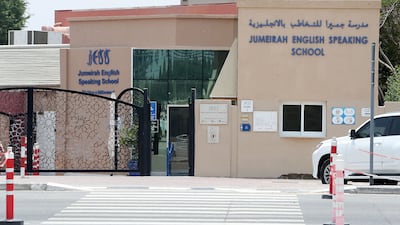
Jumeirah English Speaking School follows the UK curriculum and is one of the oldest schools in the emirate. The school has two branches — one in Al Safa 1 and the other in Arabian Ranches. Pawan Singh / The National -
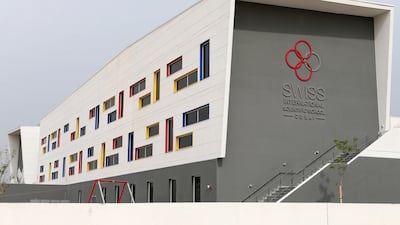
The Swiss International Scientific School in Dubai is a bilingual international baccalaureate school that opened in 2015. Pawan Singh / The National -
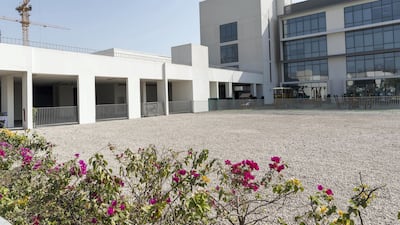
North London Collegiate School is one of Dubai's most expensive schools. Antonie Robertson / The National -
The Repton School had an outstanding rating on DSIB inspection reports for six consecutive years, from 2014 up until 2020. Photo: Repton Dubai -
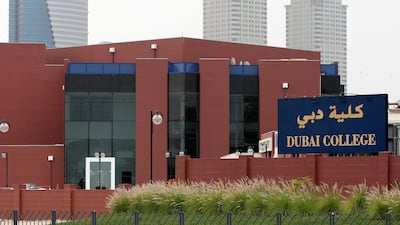
Dubai College is one of the oldest in the city and is often touted as one of the best in the emirate. Pawan Singh / The National -
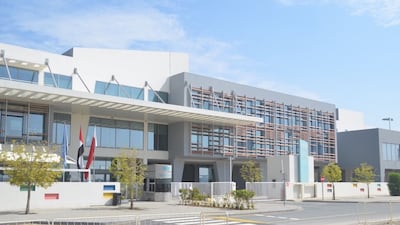
As part of Nord Anglia Education's family, pupils have access to collaborations with MIT, The Juilliard School and Unicef. Photo: Nord Anglia International School Dubai



