

An Emirati employer could be liable for a fine of up to Dh4.3 million for dishonestly hiring 43 family members to work at their company.
The Ministry of Human Resources and Emiratisation (MoHRE) is taking action against the person for "faking Emiratisation" numbers in order to hit government set targets.
While it is not against the rules to hire family members, the ministry will take action against anyone employing relatives for fake positions, or roles with no real work, in order to hit quotas.
Emiratis who take on private sector jobs are also entitled to a salary top-up of up to Dh7,000 per month.
"The support and benefits are aimed at achieving real Emiratisation rates, and therefore they should not accept any fake jobs that make them partners in the violation of the relevant legislation and laws, therefore, depriving them from the privileges of the Nafis program,” MoHRE said in an emailed statement.
"Violation will lead to penalties including suspension of support and refund of disbursed support as part of the initiative."
The Nafis scheme was set up to support the government's push to ensure citizens make up a tenth of the private sector in the next four years.
Trying to circumvent the rules will result in a Dh100,000 fine per falsely hired Emirati if proven by the ministry.
The Ministry then refers the offender to the Public Prosecution for legal action.
Inspections are carried out frequently to catch employers dishonestly hiring Emiratis for non existent jobs.
Countdown to January 1
-
Sheikh Mansour bin Zayed and Sheikh Abdullah bin Zayed chair the National Competitiveness Council. New figures show 50,000 Emiratis now work in the UAE's private sector - a rise of more than 28,000 in one year. Photo: UAE Government Media Office -
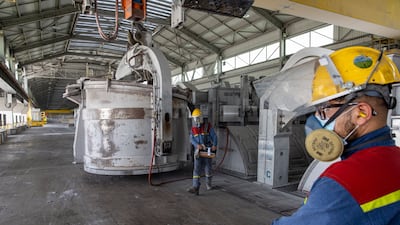
As of January 2023, companies in the UAE must ensure that 2 per cent of their workforce is Emirati. This will rise by 1 per cent every six months until it is 10 per cent. Freezone companies are exempt. Christopher Pike / Bloomberg -

Semi-government owned companies such as Strata, which makes aircraft parts, are major employers of Emiratis. The government wants more privately-owned companies to hire Emiratis. Photo: Mubadala -
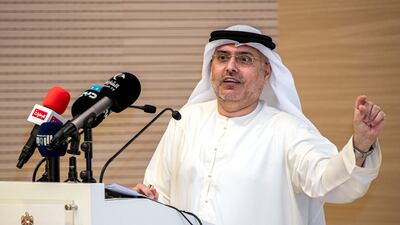
Dr Abdulrahman Al Awar, Minister of Human Resources and Emiratisation, said a greater mix of Emiratis and foreign talent will make the country more competitive. Victor Besa / The National -
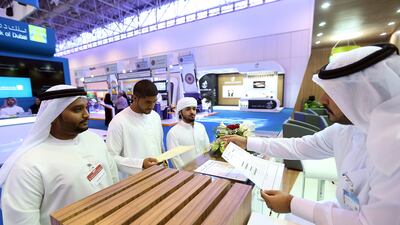
Young Emiratis are being urged to look to the private sector for opportunities and away from traditional jobs in government. Satish Kumar / The National


By January 1, 2023, every privately owned business with more than 50 employees must ensure that 2 per cent of its workforce is Emirati.
That will rise by 2 per cent every year. By 2026, the government expects 10 per cent of the average workforce to be Emirati.
Companies registered in free zones, such as Dubai Media City and the Dubai International Financial Centre, are exempt from the quota but are encouraged to hire UAE citizens.
December 31 is the last day for companies to hit the initial 2 per cent quota.
The Ministry provides various channels that allow employees, employers, and community members to report violations to ensure enforcement of the law. Violations can be reported through the call centre on 600590000, or through the Ministry’s smart app or social media pages.

