


A dedicated economic zone set up to encourage further growth in the UAE's space sector has attracted 14 companies since it was launched last year, an official said.
The space start-ups provide crucial services to governments and other companies, including tracking wildlife through satellite data and helping to tackle security challenges for data centres.
The UAE Space Agency has placed a strong focus on developing a private sector so the country’s space activities contribute to the national economy.
“We have 14 companies and 10 of them are owned by Emirati nationals,” said Ahmed Al Drei, space policy and regulation specialist at the UAE Space Agency, on the opening day of the Dubai Airshow on Monday.
“As part of these companies, we have different levels, including upstream, which is for launch services and manufacturing of satellites.
“There is also midstream, which is receiving data, and downstream for analysing spatial data and using it for urban planning, climate change or environmental causes.”

Madari Space is one of the Emirati-owned companies that has set up operations in the economic zone in Masdar City.
Shareef Al Romaithi set up the company in March with the goal of launching data centres into space to help mitigate the amount of carbon emissions produced on Earth.
“There are thousands of data centres across the globe and they consume a lot of energy for cooling purposes,” said Mr Romaithi, who is also an Etihad pilot.
“This emits CO2 and greenhouse gases that exceed [those of] the aviation and shipping industries.
“By developing data centres in space, we can utilise unlimited power from the Sun to run the centres in a sustainable approach, while providing secure platforms for governments to save critical data.”
He said his company was at an early stage of developing data modules and are searching for launch providers to blast their final product into space.
Marshall Intech, which uses its own satellite to track wildlife, is another company operating in the economic zone.
"We have falconry and wildlife tracking," said manager Mohammed Hassanein.
"And we also help track the location of army pilots that have to land with parachutes."
Sheikh Mohammed bin Rashid, Vice President and Ruler of Dubai, had congratulated the team of Emiratis for launching the UAE's first satellite that tracks wildlife.
The satellite, called Ghalib, was launched in 2021 and helps to study bird and animal migration patterns in remote areas.
The UAE Space Agency hopes to launch more economic zones to help attract companies.
These organisations would eventually be competing for government and company contracts, so that the national economy benefits from a local private space sector.
Space agencies in different parts of the world have been trying to establish a private sector to boost their number of missions.
Nasa, for example, uses rockets from SpaceX to launch its astronauts into space and will soon also use Boeing's Starliner capsule.
UAE in space - in pictures
-

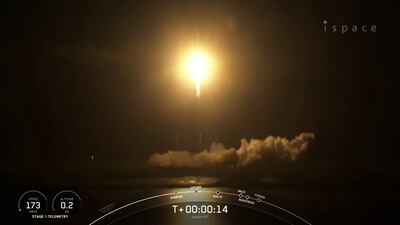
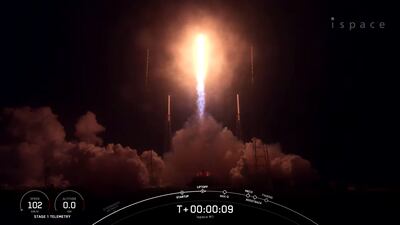
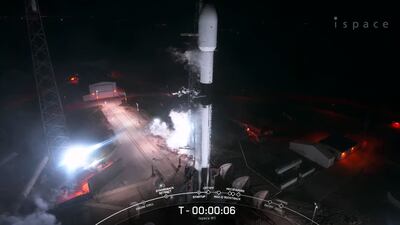
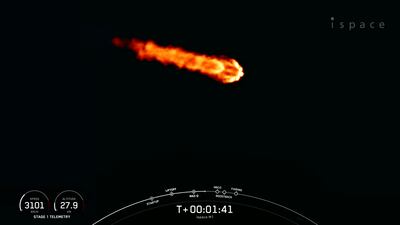
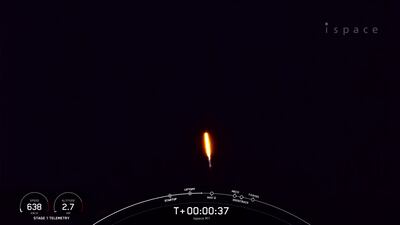
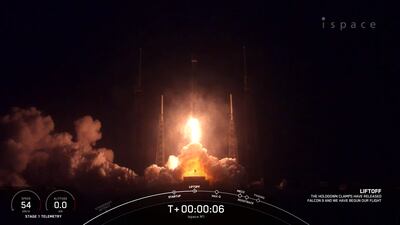
The live-streamed launch of the UAE’s Rashid rover in December 2022. -
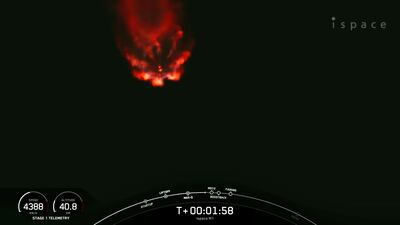
The Hakuto-R Mission 1 lander carrying the rover is expected to land on the Moon at the end of April. -
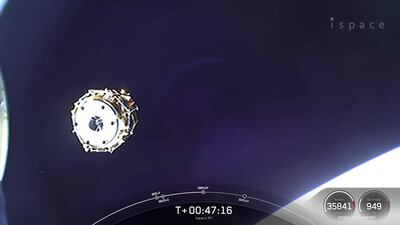
The lander is expected to attempt a lunar orbit insertion towards the end of March. -
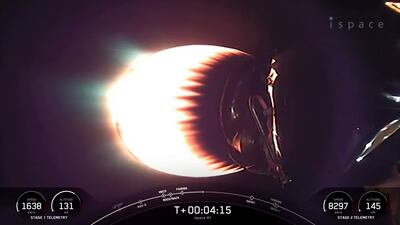
The spacecraft has travelled about 1.37 million km since being launched. -
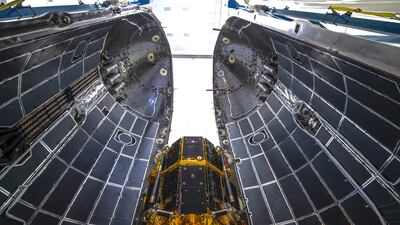
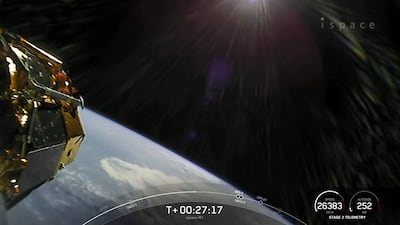
The lander is the first privately funded spacecraft to travel that far. Photo: ispace -
The Rashid rover is the first mission under the UAE's long-term Moon exploration programme. -
Landing on the Moon is challenging, with more than a third of lunar landing missions failing. -
The Moon has no atmosphere, forcing landers to perform complex manoeuvres to achieve a soft landing. -
Only the US, former Soviet Union and China have achieved a soft landing on the Moon. -
The 10-kilogram exploration rover will study the geography of the lunar surface. -
The team also hope the rover can survive a lunar night, when temperatures plunge to minus 183°C. -
The Hakuto-R Mission 1 lander is taking a longer route to save on fuel and reduce costs. -
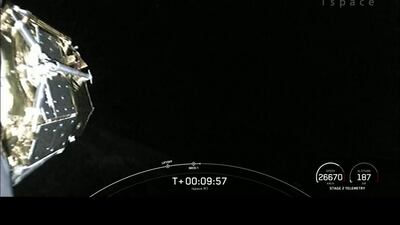
The lander in space after detaching from SpaceX's rocket. Photo: SpaceX -

A SpaceX engine takes the lander to a lunar transfer orbit after launch. Photo: SpaceX -
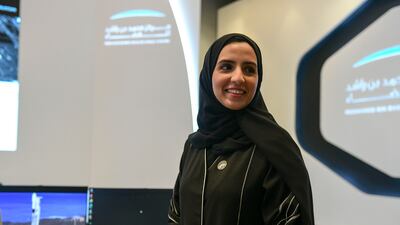
Reem AlMehisni, rover thermal engineering chief at the Mohammed bin Rashid Space Centre in Dubai. Khushnum Bhandari / The National -
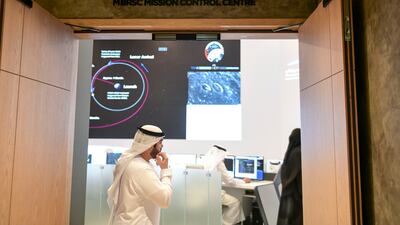
Officials prepare for the launch at the Mohammed bin Rashid Space Centre. Khushnum Bhandari / The National -
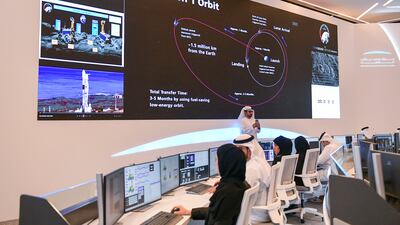
The control room of the space centre. Khushnum Bhandari / The National -
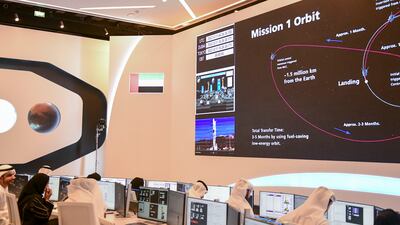
Flight control teams in the Mission Control Centre. Khushnum Bhandari / The National -
The final prototype of the Rashid rover. Photo: MBRSC -
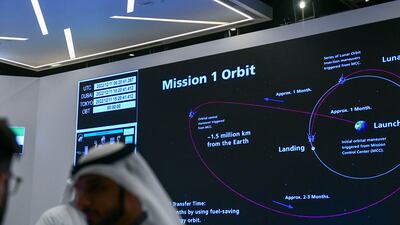
Mission Control Centre staff at the Mohammed bin Rashid Space Centre. Khushnum Bhandari / The National -
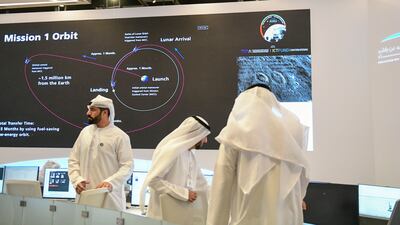
The Mission Control Centre. Khushnum Bhandari / The National -
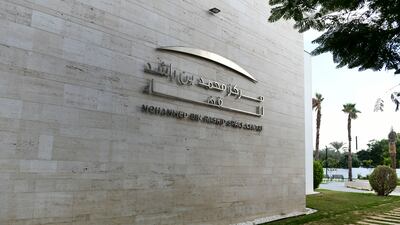
The exterior of the Mohammed bin Rashid Space Centre. Khushnum Bhandari / The National -
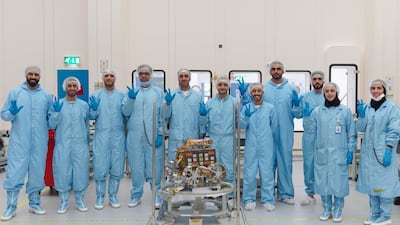
Emirati engineers behind the UAE's lunar mission pose for picture with the Rashid rover. Photo: MBRSC -
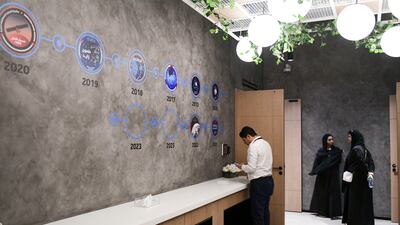
The interior of the Mohammed bin Rashid Space Centre. Khushnum Bhandari / The National



