

A man has tested positive for the Mers virus in the UAE, the World Health Organisation said on Monday.
The global health body said the man, 28, an expatriate living in Al Ain, was admitted to hospital on June 8.
It said 108 contacts were identified and monitored for 14 days from the last date of exposure to the patient.
No further cases have been detected.
Figures released last year showed there were 19 cases of Middle East Respiratory Syndrome in 2021, 17 of them in Saudi Arabia and two in the UAE.
Eight of the cases were fatal.
Numbers have fallen dramatically since their peak in 2015, when there were 492 laboratory-confirmed cases of the disease.
The UAE confirmed its first Mers case in July 2013. There have been 94 further cases since, including the latest infection, with 12 deaths.
What is Mers?
-

While the world’s attention has been focused on the coronavirus in recent years, a related pathogen -- the Middle East Respiratory Syndrome (MERS) -- has been continuing to circulate and cause deaths. Reuters -
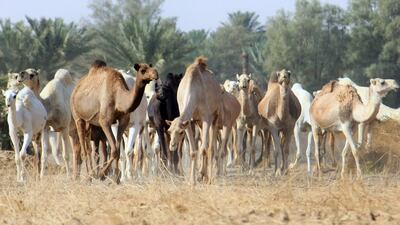
Since the disease emerged a decade ago, there have been 2,605 confirmed cases, about 84 per cent of them in Saudi Arabia. AFP -
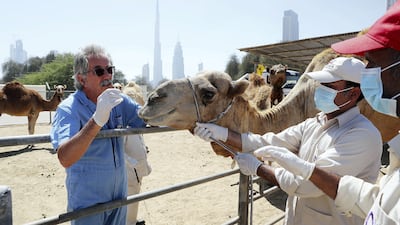
Ulrich Wernery, scientific director of the Central Veterinary Research Laboratory in Dubai, takes samples from a camel to assist with a study of Mers. Pawan Singh / The National -

Passengers walk past a thermal scanner at Manila International Airport in the Philippines. The country is one of 18 that have reported cases of the MERS coronavirus. AP -
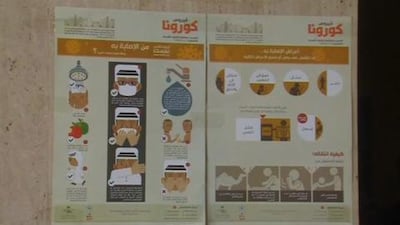
Camel owners do not want to vaccinate their herd because the animals themselves do not become ill. -

Saudi Arabia has urged its citizens and foreign workers to wear masks and gloves when dealing with camels. AFP -

Better hygiene and other virus control measures have helped to reduce the number of people infected with the virus from camels. Pawan Singh / The National


Mers-CoV, a coronavirus first identified in 2012, is much more deadly to infected people than Sars-CoV2 – the strain of coronavirus that causes Covid-19 – but is much less easily transmitted.
Since the disease was detected a decade ago, there have been 2,605 confirmed cases, about 84 per cent of which were in Saudi Arabia. The death toll stands at 936.
Camels continue to act as a “reservoir” for the disease and to transmit the virus to people, although some cases are still recorded in humans who have not had contact with the animals.
Person-to-person spread happens rarely and when it does occur, transmission is usually in a healthcare setting or between people in the same household.
A large proportion of Mers cases are in people who work with camels and have picked up the virus from an infected animal.
The WHO said no vaccine or specific treatment is available, although several inoculations and treatments to tackle the virus are in development.
The patient had visited a private healthcare centre several times between June 3 and 7, complaining of vomiting, and pain when passing urine, the WHO said.
"On 8 June, the case presented to a government hospital with vomiting, and gastrointestinal symptoms including diarrhoea, and was given an initial diagnosis of acute pancreatitis, acute kidney injury, and sepsis," the WHO said.
The man was placed in an intensive care unit in a critical condition on June 13.
A swab was collected on June 21, which returned a positive reading for the virus two days later.
"The case has no known co-morbidities, no history of contact with Mers-CoV human cases, and no recent travel outside the UAE," the WHO said.
"The patient has no known history of direct contact with animals including dromedary camels, nor consumption of their raw products."
Public health response
The 108 contacts screened for Mers were all healthcare workers and returned negative results.
Abu Dhabi Public Health Centre has increased monitoring for the virus to try to identify potential cases and has sought to raise awareness by hosting workshops and issuing notices to relevant bodies.
The WHO underlined the need for health authorities to be vilgilant and called for strong surveillance of possible cases to be carried out by all of its members.
"Given that this latest case presents with severe disease but has no comorbidities and no exposure history to camels, camel raw products or Mers-CoV human cases, it will be important to sequence the virus and conduct genomic analysis to screen for any unusual patterns," the WHO said.
It advised anyone visiting farms, markets, barns or other places where there are camels to follow general hygiene measures.
They include: regular hand washing after touching animals; avoiding touching eyes, nose or mouth with hands; and avoiding contact with sick animals.

