


Thousands of Emirati pupils and students will be placed in hands-on apprenticeships to prepare them for private sector work, the UAE Minister of Human Resources and Emiratisation said on Wednesday.
In addition to growing the number of Emiratis in a number of critical sectors, Dr Abdulrahman Al Awar said getting Emirati teachers into private schools was the next major focus of the government's Emiratisation drive.
Emirati pupils in years 9, 10 and 11, as well as university students, will be offered apprenticeships to get them ready for the world of work.
Minister of Human Resources and Emiratisation
“We've set a new apprenticeship and training plan for 3,500 Emirati students in years 9, 10 and 11, and university students to change their mindset about working in the private sector,” Dr Al Awar said in a media briefing in Dubai.
“The students will have vocational training. Our aim is to get them ready and prepared for the world of work.”
Dr Al Awar said that there are 14 key sectors for more Emiratis to work in, with a particular focus on getting Emirati teachers into private schools, after a growing need to support the education sector.
“We monitor the job market in the UAE to know which sector to support with Emiratisation,” he said.
“We have a programme now with the Ministry of Education to train Emirati teachers to support private schools.”
Although most companies must now hit Emiratisation quotas – by 2026, the private sector workforce must be 10 per cent Emirati – the minister said the market should soon be at the stage where talented citizens are natural hires for many companies.
“With the Emiratisation policies, the Nafis programme and qualifying more Emiratis in different sectors, the scheme will make it easier for companies not to have to think twice about recruiting Emirati workers in the future,” Dr Awar said.
The plan has already proven successful in the healthcare sector, where there has been an increase in the amount of skilled Emiratis working as doctors, lab technicians and nurses, he said.
“We have a batch of 1,417 Emirati graduates from different universities to enrol in the healthcare sector,” he said.
“The second batch will start from September because our focus is also having more Emiratis working in this field.”
About 80,000 Emiratis are now working in the private sector – an increase of 30,000 in the past six months – as the campaign to get local talent into private businesses continues.
On Tuesday, the ministry announced that businesses with 20 to 49 employees would now be required to meet a quota for the first time, hiring at least one UAE citizen in 2024 and another by 2025.
The requirement applies to privately owned companies across 14 sectors including real estate, education, construction and health care. Previously, only companies with 50 or more employees were required to meet targets on hiring UAE citizens.
____________________________________
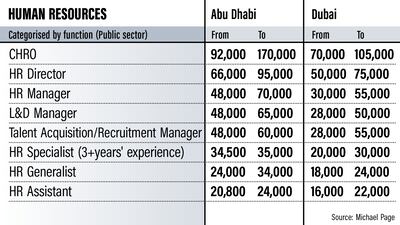
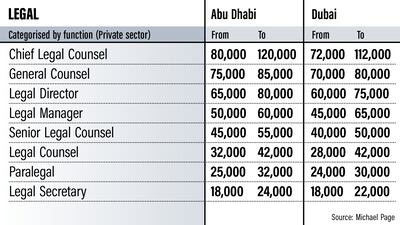
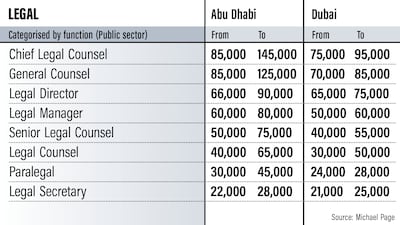
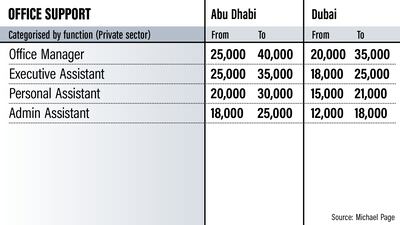
Emirati salary guide 2023
-
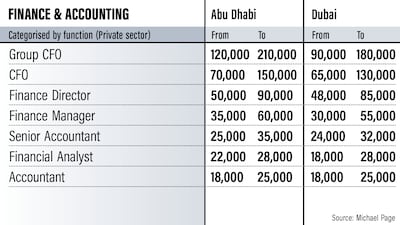
Emiratisation salary guide 2022 -
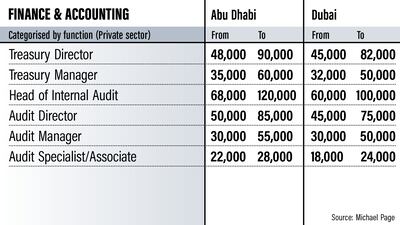
Emiratisation salary guide 2022 -
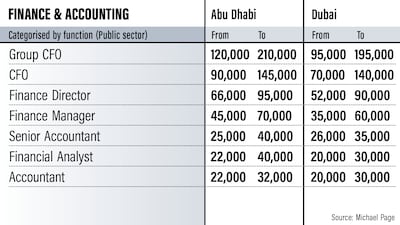
Emiratisation salary guide 2022 -
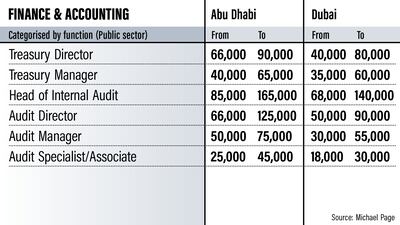
Emiratisation salary guide 2022 -
Emiratisation salary guide 2022 -
Emiratisation salary guide 2022 -
Emiratisation salary guide 2022 -
Emiratisation salary guide 2022 -
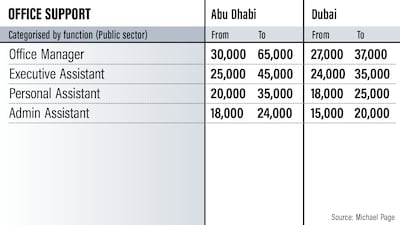
Emiratisation salary guide 2022 -
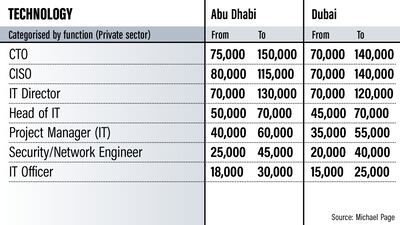
Emiratisation salary guide 2022 -

Emiratisation salary guide 2022 -
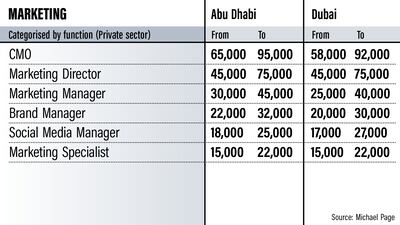
Emiratisation salary guide 2022 -
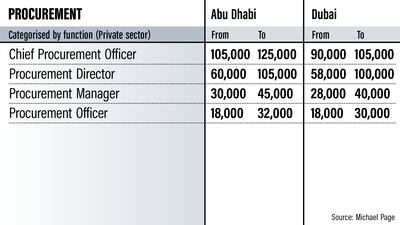
Emiratisation salary guide 2022 -
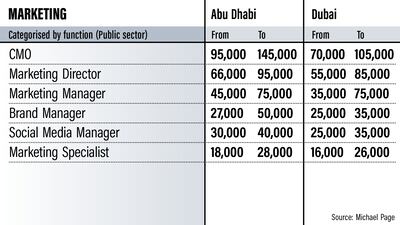
Emiratisation salary guide 2022 -
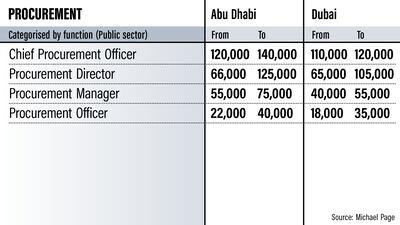
Emiratisation salary guide 2022


____________________________________
“The new policy will provide about 12,000 new jobs for Emiratis in this sector. We have 79,000 Emiratis working in the private sector as per the latest stats. It is a historic number in the UAE,” Dr Al Awar said.
The ministry made a list of 12,000 companies with 20 to 49 employees and they will be notified about the need to recruit Emiratis.
“They [companies] will have the whole year to be prepared,” Dr Al Awar said.
With hundreds of thousands of companies in the UAE, the new policy will pick the companies based on certain criteria, the ministry said.
“The company should have a specific percentage of skilled workers at occupational levels between one to five. Companies with previous history of recruiting Emiratis and have a noticeable growth in their business will be part of the policy,” Dr Al Awar added.
However, the minister did not specify the percentage of skilled workers for those companies.
Companies with 20 to 49 employees who fail to employ at least one Emirati in 2024 will face a fine of Dh96,000 ($26,000).
That fine will increase to Dh108,000 ($30,000) for businesses that have not employed two Emiratis by 2025.
Dr Al Awar praised the Emiratisation scheme results for increasing from 29,810 Emiratis in 2021 to nearly 80,000 as of July 7.
“The new Emiratisation policies with support from our wise leadership made the drive going forward. We have more than 17,000 companies that have hired Emiratis,” he said.
“We want the Emirati worker to be a vital element in the sector.”
Last Friday was the deadline for private sector companies with 50 or more employees to ensure that 3 per cent of their workforce was made up of Emiratis.
Dr Al Awar said that 85 per cent of private sector companies with 50 or more employees are following the Emiratisation drive.
However, he added that if an Emirati employee resigns or is terminated from a private sector company, then the company will have a two-month grace period to recruit another Emirati worker.
He warned that companies that evade Emiratisation targets will be fined Dh100,000 and that fine will double to Dh200,000 if the breaches are repeated.
“If the company evades Emiratisation targets for a third time, then the fine will be increased to Dh300,000,” he said.
“We have had instances of some companies manipulating Emiratisation, but we have inspectors and systems to expose such companies.”
Emiratisation targets 2023 – in pictures
-
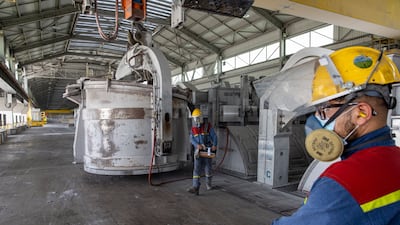
By January 1, companies in the UAE with 50 employees or more must ensure that 3 per cent of their workforce is Emirati. Emirates Global Aluminium's (pictured) Emiratisation rate exceeds 42 per cent. Bloomberg -

Private companies with 20 to 49 employees must hire at least one UAE citizen by 2024 and another by 2025. Silvia Razgova / The National -

Semi-government owned companies such as Strata, which makes aircraft parts, are major employers of Emiratis. The government wants more private companies to hire Emiratis. Photo: Mubadala -
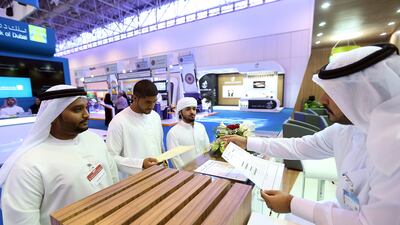
Young Emiratis are being encouraged to look to the private sector, instead of the government, for opportunities. Satish Kumar / The National -
Sheikh Mansour bin Zayed, Vice President, Deputy Prime Minister and Minister of the Presidential Court, and Sheikh Abdullah bin Zayed, Minister of Foreign Affairs, chair the National Competitiveness Council. Photo: UAE Government Media Office -
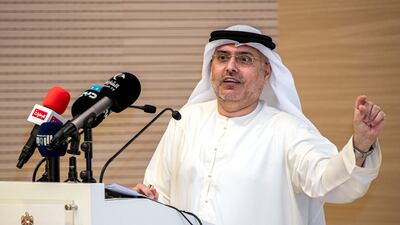
Abdulrahman Al Awar, Minister of Human Resources and Emiratisation, said a greater mix of Emiratis and foreign talent will make the country more competitive. Victor Besa / The National



