


The UAE and Saudi Arabia mediated the release of American basketball star Brittney Griner from Russia through a prisoner swap, the two nations said in a statement on Thursday.
Griner, who Washington claimed had been wrongfully detained in Russia over alleged drug offences, was released on Thursday and was heading back home via the UAE, US President Joe Biden said.
“The UAE and Saudi foreign ministries declare the success of Emirati and Saudi mediation led by UAE President Mohamed bin Zayed and Saudi Crown Prince Mohammed bin Salman to release and swap two prisoners between the US and Russia,” a joint statement read.
“The UAE received on December 8, 2022, American citizen Brittney Griner on a private plane coming from Moscow after she was released by Russian authorities, coincidently with the arrival of Russian citizen Viktor Bout on a private plane from Washington after he was released by US authorities, in the attendance of officials from the UAE and Saudi Arabia.
“The success of the mediation efforts was a reflection of the mutual and solid friendship between their two countries and the United States of America and the Russian Federation.”
The mediation also “highlighted the important role played by the leaderships of the two brotherly countries in promoting dialogue between all parties”.
After speaking with Griner earlier in the day, Mr Biden said “she is safe” and added that she would be back in the US within 24 hours.
The president thanked his administration and the UAE for enabling Griner's release.
US Secretary of State Antony Blinken also praised the move. He spoke of his “deep appreciation” for the UAE's role in Griner's release and said he was in contact with her family.
Russia's Foreign Ministry said Griner had been traded for Viktor Bout, a convicted arms dealer being held in the US.
-
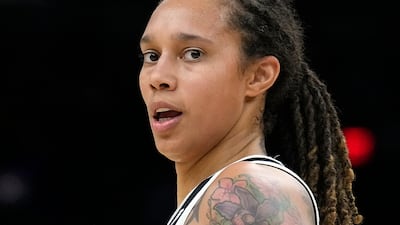
Phoenix Mercury centre Brittney Griner during the first half of Game 2 of the WNBA Finals against the Chicago Sky. AP -
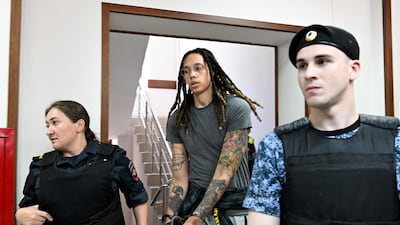
Griner, a two-time Olympic gold medallist and WNBA champion, was detained at Moscow airport in February on charges of carrying in her luggage vape cartridges with cannabis oil. AFP -

Griner leaving a courtroom after a hearing in May. The Phoenix Mercury star, considered in some polls to be the US’s most gifted female athlete, could face 10 years in prison if convicted on charges of large-scale transportation of drugs. AP -
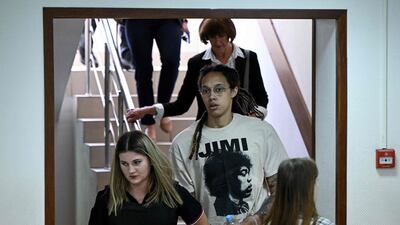
Griner asked US President Joe Biden to free her from a Russian prison in a handwritten letter on July 4, 2022, portions of which were made public by her family. AFP -

Grineris escorted before a court hearing in Khimki outside Moscow, Russia on July 1, 2022. Reuters -
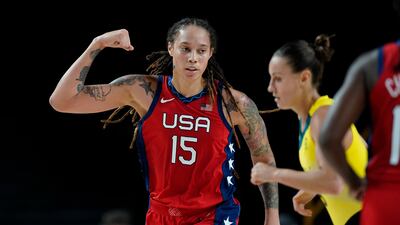
The US stepped up its push in March for consular access to Griner, who is detained in Russia on allegations of drug smuggling. AP -
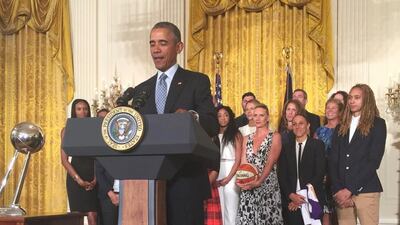
Griner at the White House alongside teammates. Photo: US National Archives -
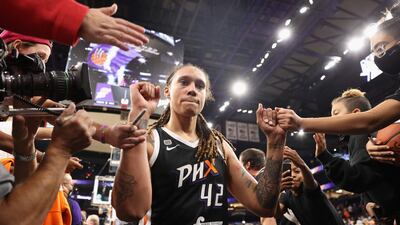
Brittney Griner of the Phoenix Mercury celebrates with fans. Getty Images North America / AFP -
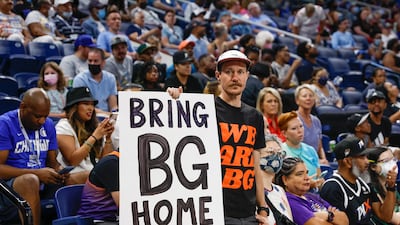
A man holds a sign for Brittney Griner Home during the first half of the WNBA game between the Chicago Sky and Phoenix Mercury at Wintrust Arena in Chicago, Illinois. EPA -
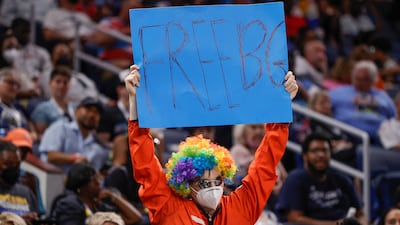
Griner, a player of the WNBA's Phoenix Mercury team was arrested in February at Moscow's Sheremetyevo Airport after some hash oil was detected and found in her luggage, for which she now could face a prison sentence of up to ten years. EPA -
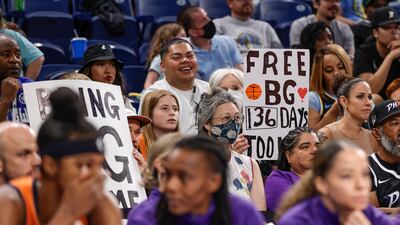
Fans hold signs Griner during the first half of the WNBA game between the Chicago Sky and Phoenix Mercury at Wintrust Arena in Chicago, Illinois. EPA -

A sign for Griner is displayed during a game between Portland Thorns FC and Angel City FC at Banc of California Stadium in Los Angeles, California. Getty Images / AFP -
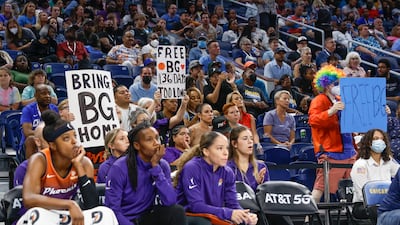
The Khimki City Court reportedly had extended Greiner's detention for the duration of her trial on charges of drug smuggling that started on 01 July. EPA -

Griner gestures during a game against Australia at Saitama Super Arena in their Tokyo 2020 Olympic women's basketball quarterfinal game in Saitama, Japan August 4, 2021. Reuters -
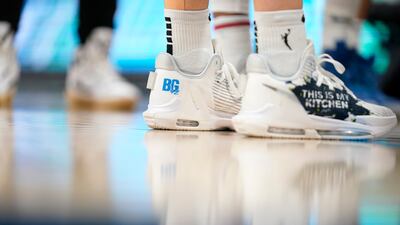
Dallas Wings' Marina Mabrey wears shoes that have a "BG" logo on them, a reference to Brittney Griner, during the second half of the team's WNBA basketball game against the Indiana Fever, Thursday, June 23, 2022, in Arlington, Texas. AP -

"We Are BG 42" is displayed on the exterior of Footprint Center before the WNBA game between the Phoenix Mercury and the Minnesota Lynx on June 21, 2022 in Phoenix, Arizona. Getty Images / AFP -
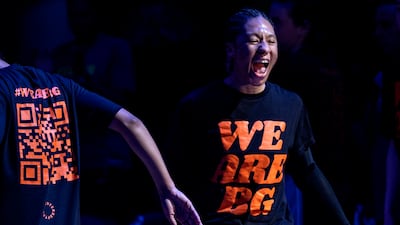
Minnesota Lynx's Aerial Powers wears a shirt in support of Griner during introductions for the team's WNBA basketball game against the Seattle Storm. Star Tribune / AP -
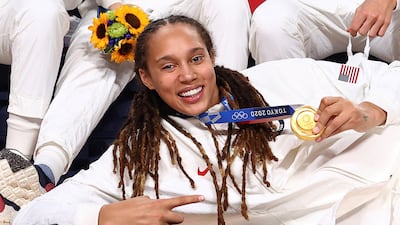
Griner poses with her gold medal in Women's Basketball at the Tokyo 2020 Summer Olympics at the Saitama Super Arena in Saitama, Japan, August 8, 2021. Reuters -

Brittney Griner with teammates Diana Taurasi and Skylar Diggins posing for pictures with their gold medals on the podium during the medal ceremony for the women's basketball competition of the Tokyo 2020 Olympic Games. AFP


The US team was unable to secure the release of a second US citizen from Russia.
Paul Whelan has been held in Russia since 2018 and is serving a 16-year sentence after being convicted of espionage.
“This was not a choice of which American. The choice was one or none,” said Mr Blinken.
Whelan's brother said on Thursday that his family supports the deal that brought back Griner.
“I think President Biden made the right decision,” David Whelan told MSNBC. “His job is to protect all Americans. It would've been wrong for him to leave behind an American when he had the ability to bring them home.”


