



The Museum of the Future in Dubai is a “time machine” that shows visitors what life could be like in the year 2071.
From futuristic jobs faraway on a space station to how ecosystems can be saved 49 years from now — the experience is entertaining as well as educational.
The two-hour experience is meant to be thought-provoking and leaves visitors wondering steps that can be taken now to create a better future.
The museum uses technology to represent art in the most remarkable ways, including screens with impressive graphics of a rocket launch and a DNA library that features more than 4,500 species.
An avatar called Aya guides visitors throughout their journey.
On Wednesday, a day after its official opening, The National went on a media tour of the museum. Here are five of the most interesting displays:

Launching to a space station
If you want to be an astronaut for a day, this is the experience for you.
It involves boarding a spacecraft called Hope, named after the UAE’s Mars orbiter, and launching to the OSS Hope space station 600 kilometres above Earth.
Visitors are taken inside a room with metal walls, designed to look like a spacecraft, with screens all around that act as windows to show the stunning views during lift-off.
Aerial views of Dubai’s coastline, including The Palm Jumeirah, are visible, and then the delicate atmosphere of the planet, as the spacecraft enters space.
It is a four-minute experience that also shows the spacecraft docking with the OSS Hope space station.
Then, you enter the space station, where you learn about futuristic jobs astronauts can have in future, such as Mars colony ambassador to Earth.

See the Amazon
The next part of the experience is the "heal institute", where you learn about nature.
A large screen shows the DNA of the Amazon, with footage actually filmed in the rainforest.
“At Heal, we are working to repair the Earth’s natural ecosystems, with the help of artificial intelligence and biodesign,” Aya says, as visitors enter the exhibition.
“The Amazon is amazing. The forest generates half of its own rainfall by recycling water through trees.
“Sadly, in some parts of the Amazon, years of deforestation have broken this cycle, changing huge parts of this ancient forest to dry savannah.”
DNA library
Another part of the Heal Institute is the DNA library, which has more than 2,400 models of species on display inside glass cases.
The colourful exhibition is meant to help visitors learn about different kinds of mammals, angiosperms, annelids and molluscs.
It is partially immersive, as visitors can “collect” a few species in a device given to them at the start and use it in the next exhibition to see how it could heal the ecosystem.
Heal the ecosystem
This is the Heal Observatory, where some species are grown in a nursery.
Visitors can release these species into the outdoors, including the ones collected in their device from the DNA library, to see how they behave and if the ecosystem heals.
It is an educational exhibition that would benefit researchers, as well as students and teachers.
Once the species are released, a large screen shows the progress being made in that ecosystem.
Futuristic spa
Al Waha is a futuristic spa, where visitors experience restorative effects of movement and meditation.
Visitors are welcomed with a vapour hand sanitiser that is blowing out of a structure that looks like a futuristic water fountain.
There is also a digital floor with a special carpet that gives the illusion of walking on a beach.
Sheikh Mohammed bin Rashid visits Museum of the Future - in pictures
-
Sheikh Mohammed bin Rashid inaugurated Dubai's Museum of the Future on Tuesday night. Photos: Dubai Media Office -
The Ruler of Dubai shared new pictures showing the interior of the museum. -
Sheikh Mohammed visits 'Vault of Life' at the museum. -
Sheikh Mohammed was accompanied by Sheikh Ahmed, Sheikh Hamdan, Sheikh Maktoum and Sheikh Mansoor. -
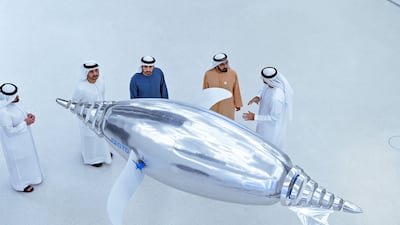
Sheikh Mohammed on a tour of the museum. -
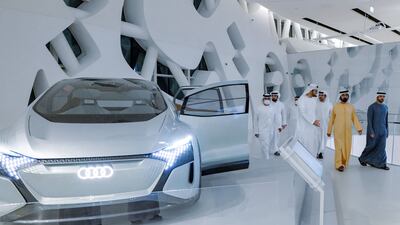
The Ruler of Dubai called the museum a message of hope. -

Sheikh Mohammed was accompanied by his sons during the tour of the museum -

The beauty of the museum inside equals its beauty outside, Sheikh Mohammed said. -
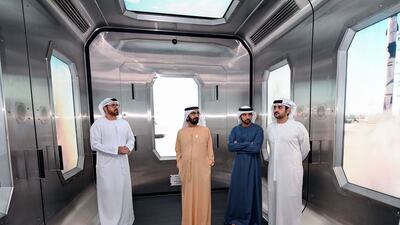
Sheikh Mohammed said his support for the museum was a long-term commitment. -
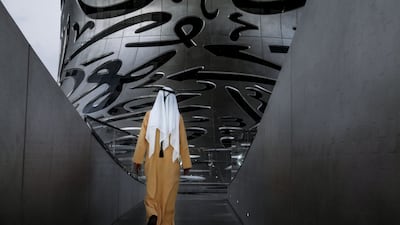
Sheikh Mohammed toured the museum 'to explore the experiences it will provide to visitors'. -

It was listed as one of the 14 most beautiful museums in the world by 'National Geographic'. -
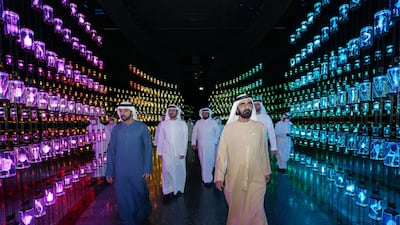
The museum takes visitors on a journey to the year 2071. -
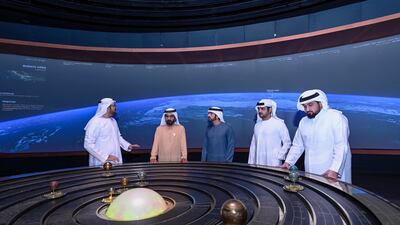
One of the outer space-themed exhibitions is called 'New Moon'. -

Sheikh Mohammed with his sons, dignitaries and museum officials.



