
A determined Abu Dhabi schoolboy with cerebral palsy has told of his joy at walking for the first time.
Mohammed Amir, 8, is taking his first tentative steps on a remarkable journey after being wheelchair-bound for much of his life.
The youngster, from Sudan, is no stranger to overcoming challenges having being born two months premature, weighing only 900 grams.
He was diagnosed with cerebral palsy, a group of disorders that affect a person’s muscle tone and their ability to move and maintain balance and posture, aged one.
The life-long condition is caused by abnormal brain development or damage to the developing brain, which often occurs before a child is born.
Its symptoms can vary, with some being left unable to walk and others with intellectual disabilities.
“It was a shock to be told that your baby has cerebral palsy,” said his mother Amira Mukhtar, 48.
Mohammed suffers from weakness and spasticity to the legs and severe weakness to his upper limbs.
-
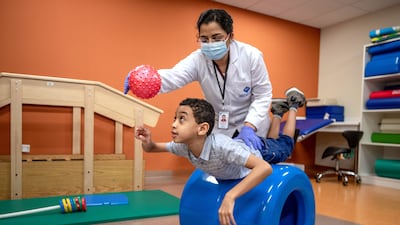
Physiotherapist Blessy Koshy does some muscle strengthening exercises with Mohammed Amir, 8, who has cerebral palsy. All photos: Victor Besa / The National. -
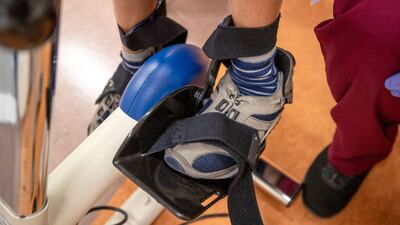
Cerebral palsy is the most common motor disability in childhood. -
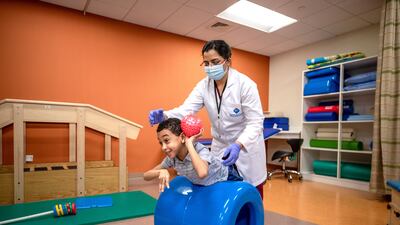
Children with cerebral palsy require a great deal of support. -
Ms Koshy does some muscle strengthening exercises with Mohammed. -

Mohammed can now walk unaided. -
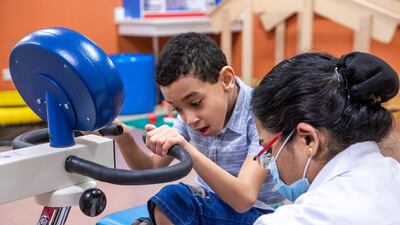
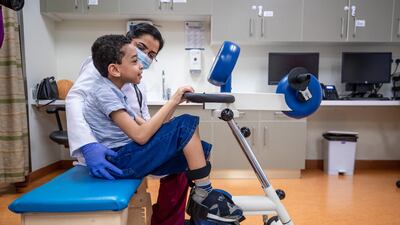
Ms Koshy helps Mohammed to strengthen his leg muscles. -
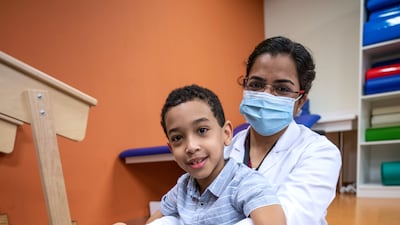
Cerebral palsy is thought to be more prevalent among boys than girls. -
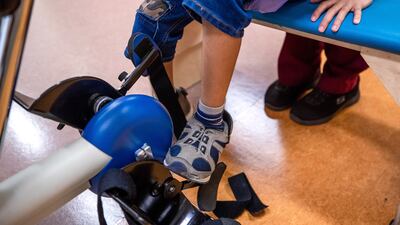
Mohammed has worked hard to get to where he is today on his mobility journey. -

Mohammed with Ms Koshy and his mother Amira Mukhtar, right, at Al Mushrif Children's Specialty Centre in Abu Dhabi. -
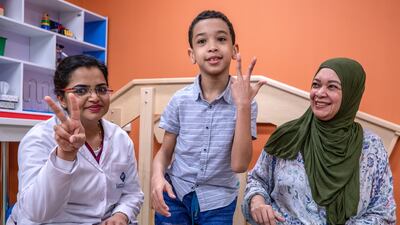
Mohammed and Ms Koshy give the three finger hand salute, coined by Sheikh Mohammed bin Rashid, Vice President and Ruler of Dubai, symbolising win, victory, and love. -
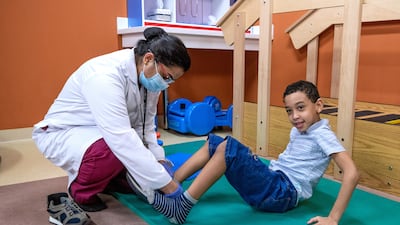
Mohammed works on his exercises. -
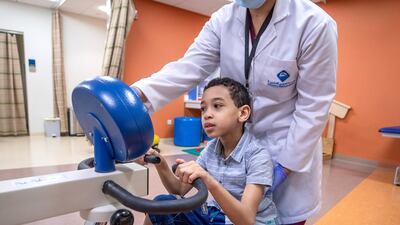
Cerebral palsy can cause muscles to become stiff, meaning movement is awkward. -
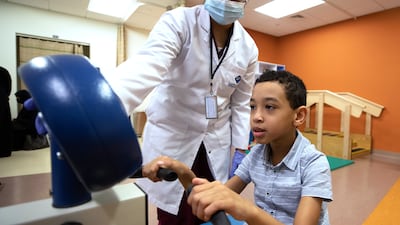
Only about 50 per cent of children with cerebral palsy can walk independently. -
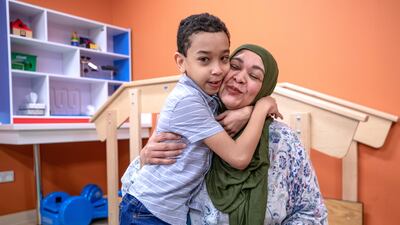
Mohammed is all smiles as he stands with his mother. -
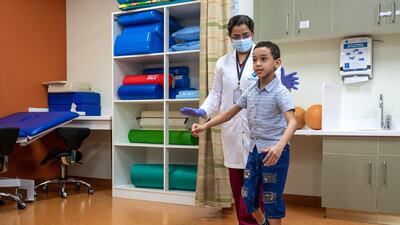
Mohammed cautiously takes his first steps. -
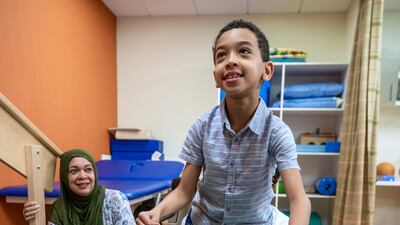
Mohammed can now walk for short distances unaided. -
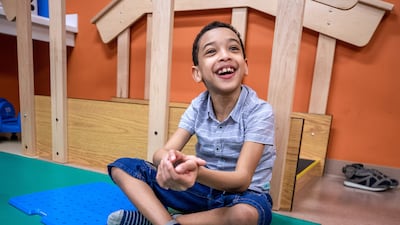
Mohammed gives a big smile after walking unaided. -

Mohammed's confidence has grown since he has been able to walk. -
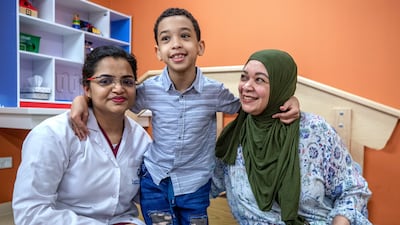
Mohammed poses with Ms Koshy and his mother, Amira Mukhtar.


'He is a survivor'
As a baby he barely moved, did not crawl and couldn't sit up.
His family did all they could to get Mohammed on his feet in the years since, including regular Botox injections to ease his mobility issues.
But it was only after he embarked on intense physiotherapy about a year ago at Seha's Al Mushrif Children’s Specialty Centre in Abu Dhabi that he could begin to dream of walking at last, a daily act taking for granted by so many.
Countless hours of hard work had a rich reward as he successfully walked independently late last year.
“I can’t describe to you how it feels to see him take his first steps," said Ms Mukhtar.
"I always had hope and strong faith but seeing it happen in front of you – I can’t tell you how happy that makes me feel.
“He is a survivor. I knew in my heart that he could do it.”
At school, Mohammed felt left out. Unable to fully join in as his friends played.
Cherished moment for Mohammed
“I was sad that I can’t play PE with my friends at school. Now I feel like a million,” he said, with his thumb up and a wide grin on his face.
“This is the best thing.”
While he still must take it on step at a time - enthusiastic Mohammed is eager to walk all over the world.
Blessy Koshy, the physiotherapist who played a crucial role in supporting Mohammed, said his achievements highlighted the importance of seeking treatment.
“It is important for parents to bring their children early on to begin physiotherapy,” she said.
“Physiotherapy is not a massage. These are treatments with proper assessment to design specified exercises according to the condition of the the child to make the child independent in the community."
Mohammed is in grade three and has taken time off school to focus on his treatment.
But now he can work towards a return to the classroom with his friends.
“The aim is to get him back to school without a shadow teacher or the need of any assistance,” said Ms Koshy.

