



Latest: Middle East megaprojects to usher in new era of public transport
The Dutch eco-traveller who travelled to Dubai from Amsterdam on public transport said there is an emerging trend of people seeking alternatives to planes for travel.
Wiebe Wakker, 35, who delivered a speech at the International Association of Public Transport regional congress in Dubai on Sunday, travelled to the UAE by rail, bus, and car to highlight sustainability issues.
Mr Wakker used the platform to urge more people to consider alternatives to travelling by plane.
"People want to ditch the plane as more are becoming interested in taking trains and other forms of public transport," Mr Wakker said.
“If you travel by plane it changes your day; if you travel by train it changes your life.
“It’s important to live a life with a low-carbon footprint.”
He praised Etihad Rail’s passenger train project that will transport passengers across the Emirates, and eventually connect with other countries in the region.
“It’s great news for everyone as it will connect people in countries all across the GCC,” said Mr Wakker.
“It will also reduce the need for people to use cars, which is, in turn, good news for sustainability.”

The Dutchman made headlines in 2019 when he completed a 100,000-kilometre journey from his home country to New Zealand, making the entire three-year trip in his electric car.
He was originally invited to speak at the Dutch pavilion at Expo 2020 Dubai on the back of his globetrotting exploits and decided to make a similar eco-journey from the Netherlands to the Emirates.
The event at Expo was cancelled at the last minute due to the rise in Covid-19 cases brought about by the Omicron variant, but he did get to speak at the World Future Energy Summit, as part of Abu Dhabi Sustainability Week.
“It didn’t make sense to take a plane to travel halfway around the world to talk about the value of sustainable travel,” he said.
“I couldn’t take my car again because it’s now a museum piece after the first journey.
“The only logical option was to take the train.”
However, his plan to complete the journey using public ground transport alone was hit by problems at the Iranian border, which was closed at the time to all but cargo transport.
Mr Wakker was forced to rethink his plan and took a flight from Erbil to Amman instead.
He completed his journey to Abu Dhabi by taking a 856-km bus journey from Amman to Hail, following by a train from Hail to Riyadh. The final leg was a 906-km bus trip to the UAE capital.
Despite the flight, his carbon dioxide footprint was 60 per cent less than travelling direct from Amsterdam to Dubai.
He said the decision to travel mostly by land was one of the best he has ever made.
“I wasn’t sure because I thought it might be boring sitting on a train for days on end,” he said.
“I was wrong because it was an amazing experience to see the changes in the scenery.
“I went from travelling through big cities in the Netherlands and Germany to going through snow in Austria and then being in the desert. It was surreal to do all that in one journey — it never would have happened if I just took a plane.”
Mr Wakker was grateful to be able to address the audience at the conference, especially because of the challenges he had faced along the way.
“I was really sad when I got the call the event at Expo was cancelled because that’s why I was travelling,” he said.
“I was delighted that my story had been noticed by the organisers of the transport congress who invited me to speak at the event today.”
Etihad Rail builds Abu Dhabi-Dubai track: in pictures
-
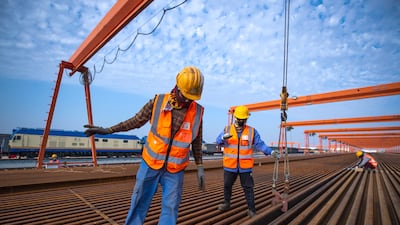
Railroad workers preparing tracks at a depot in January 2022. There has been rapid progress on a new line that will eventually carry passengers. All photos: Victor Besa / The National -
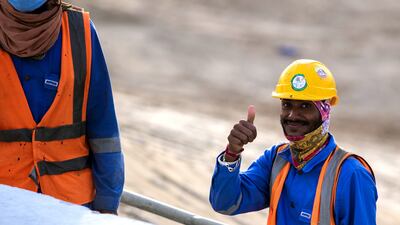
The new Etihad Rail line will connect 11 cities and areas across the UAE from Al Sila in the west to Fujairah in the north. -

Work on the railway at Saih Shuaib. -
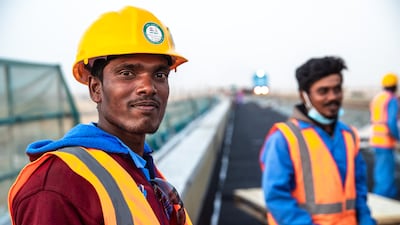
Etihad Rail workers on a railroad overpass along the E77 and E611 highway junction in Dubai. -
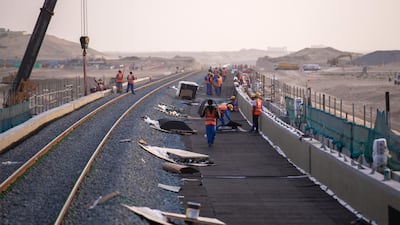
The overpass view along the E77 and E611 highway junction. -
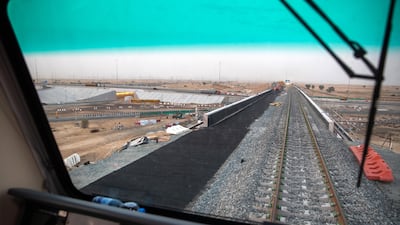
Etihad Rail says stations will celebrate the joy of travelling and designs will speak to regional traditions. -
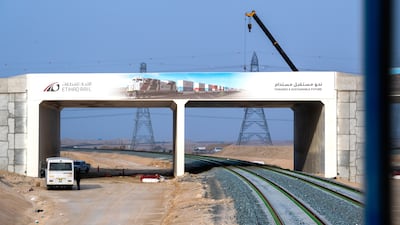
Some of the new stations will be built in the cities but the locations have not been yet announced. -
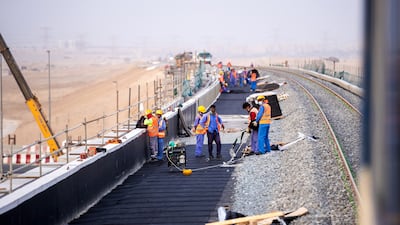
The Abu Dhabi to Dubai line is central to the project. -
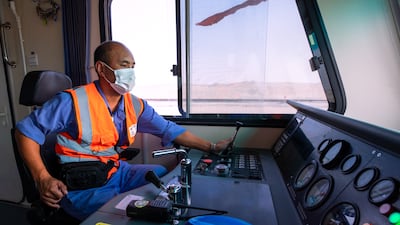
The train driver takes the diesel inspection line down the tracks. -
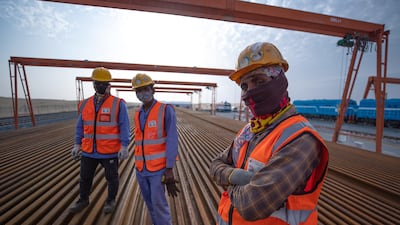
The Abu Dhabi to Dubai section of the track runs parallel to the Emirates Road (E611) motorway. -
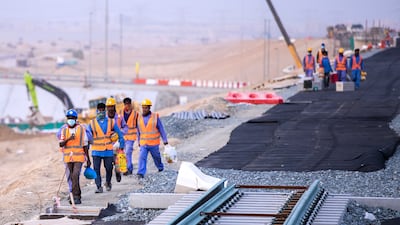
Newly laid tracks at the Dubai South area. -
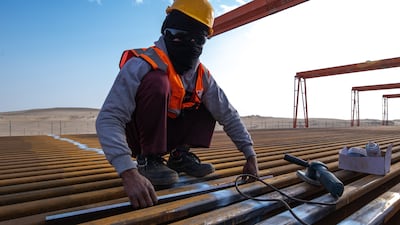
Railroad workers preparing tracks. -
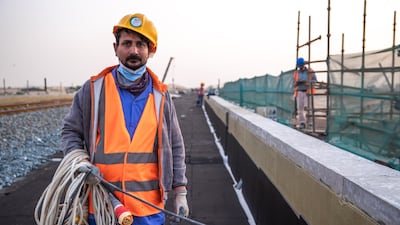
An Etihad Rail worker on the Abu Dhabi to Dubai line. -
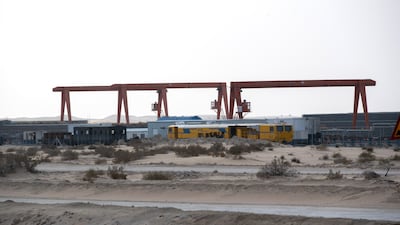
An Etihad Rail depot at Saih Shuaib. -
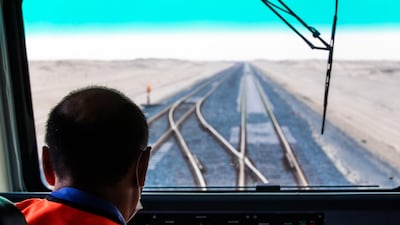
Passengers will also be able to use park and rides. -
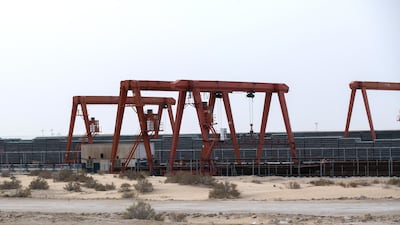
Passengers can expect travel time of 50 minutes between Abu Dhabi and Dubai and about 100 minutes from Abu Dhabi to Fujairah. -
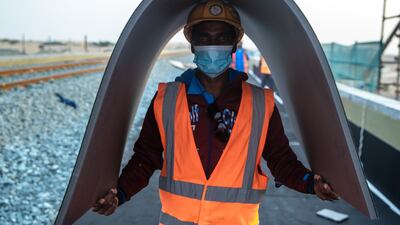
Construction of the UAE-wide network is advancing rapidly with close to 70 per cent of the twin-track route complete. -
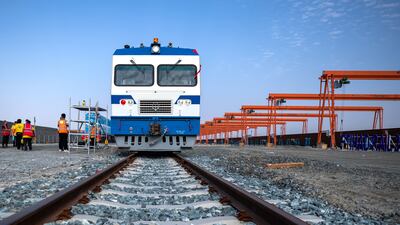
The addition of the passenger rail service marked an important moment for Etihad Rail since its establishment in 2009. -
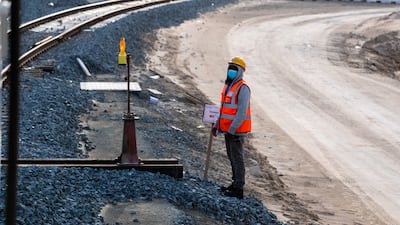
The rail track snakes through the desert. -

An Etihad Rail employee on the inspection line. -
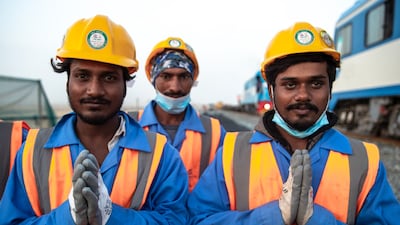
Three Etihad Rail workers take a rest, with the inspection train on right. -
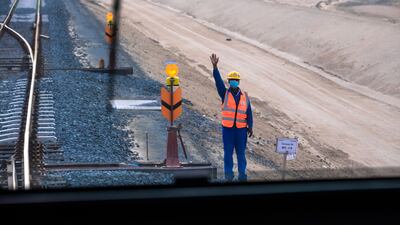
Stage two of the project joins Ghuweifat on the border with Saudi Arabia to Fujairah on the east coast in a line running for about 1,200km. -
The passenger service is expected to carry more than 36 million passengers annually by the end of the decade.



