


A new year and yet another sky-busting tower in Dubai.
This time it's Uptown Tower, which is sandwiched between the southern end of Jumeirah Lakes Towers and the Jumeirah Park community.
The skyscraper reached 329 metres last week when the concrete was poured for the roof of the 79th level. It will eventually reach 340m when a steel crown is placed on top.
The Uptown Dubai District is set to offer 10 million square feet of residential and business space, with 200 shops and restaurants.
But where does Uptown Tower rank in terms of the world's tallest buildings?
Of course, it is some way below the 828m Burj Khalifa, and doesn't even make Dubai's top 10, but, as anyone who has stood near it will affirm, it's still huge.
And, to answer the question, it will be the world's 80th tallest building, according to data from Emporis, unless one of the 13 soon-to-be-finished buildings is higher.
World's tallest towers
-
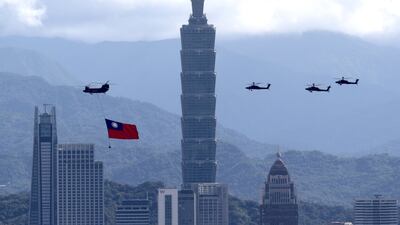
10th - Taipei 101, Taipei, Taiwan, 509 metres. EPA -
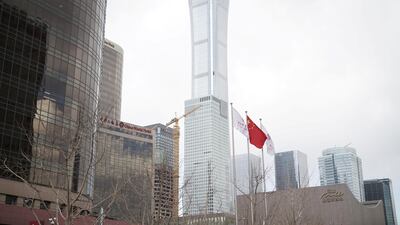
9th - Citic Tower, Beijing, China, 528m. Bloomberg via Getty Images -

8th - CTF Finance Centre, Tianjin, China, 530m. Getty Images -
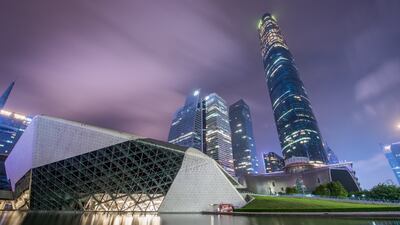
7th - CTF Finance Centre, Guangzhou, China, 530m. Getty Images -

6th - One World Trade Centre, New York City, 541m. Getty Images / AFP -

5th - Lotte World Tower, Seoul, South Korea, 554m. AFP -

4th - Ping An International Finance Centre, Shenzhen, China, 599m. Bloomberg -
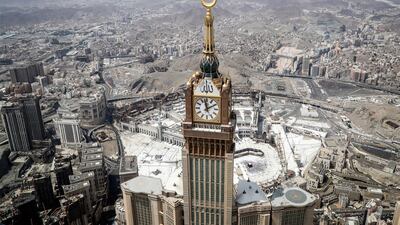
3rd - Makkah Royal Clock Tower, Saudi Arabia, 601m. EPA -

2nd - Shanghai Tower, Shanghai, China, 632m. Reuters -
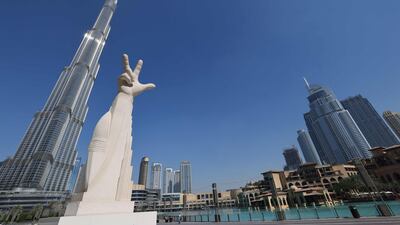
1st - Burj Khalifa, 828m. AFP


Where does Uptown Tower rank among the UAE's tallest buildings?
Quite highly, but it doesn't make the top 10. Dubai has almost 20 per cent of the world’s tallest completed buildings, according to The Skyscraper Centre of the Council on Tall Buildings and Urban Habitat.
But not all of the UAE's high rises are in Dubai, with Abu Dhabi having some of the tallest, as well.
Uptown Tower is the 14th tallest in the UAE, just behind Adnoc Tower on Abu Dhabi's Corniche (342m); The Torch in Dubai Marina (352m), Emirates Tower 1 (354m) and the JW Marriott Marquis (355m).
You can see the tallest in the Middle East in the slideshow below:
-
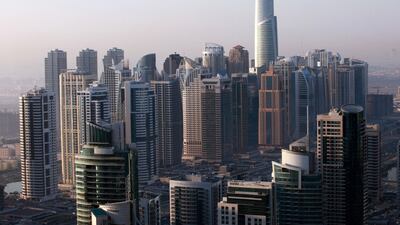
ALMAS TOWER, DUBAI, 360 metres: Part of Jumeirah Lakes Towers, Almas tower was briefly the tallest in Dubai when it was topped out in 2008. It is the headquarters of Dubai Multi Commodities Centre, with high security vaults and safe deposits to protect clients' assets. Gabriela Maj / Bloomberg -
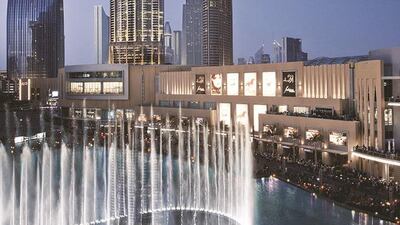
ADDRESS BOULEVARD, DUBAI, 370 metres: Opened in March 2017, Address Boulevard boasts sells itself as a "city lifestyle resort". Residents and guests do not need to step onto the balmy streets to access Dubai Mall, which is it connected to with an air conditioned bridge. Not to be confused with the 300 metre tall Address Downtown, which was built in a similar modernist Art Deco style and opened in 2008. Courtesy: Emaar Hospitality -
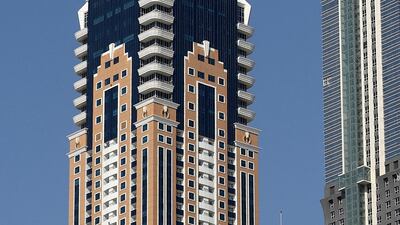
ELITE RESIDENCE, DUBAI, 380 metres: Opened in 2012, at an estimated cost of Dh1bn, the 91 floors have nearly 700 flats with views over Palm Jumeirah. It boasts a distinctive design and is recognisable on the marina skyline. Chris Whiteoak / The National -
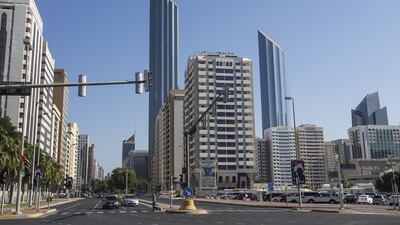
BURJ MOHAMMED BIN RASHID, ABU DHABI, 381 metres: Abu Dhabi makes it into the top 10, with a building named in honour of the Ruler of Dubai. Completed in 2013, the capital’s tallest building is part of the World Trade Centre which includes a mall and souq. Mona Al Marzooqi/ The National -

23 MARINA, DUBAI, 392 metres: Briefly the world’s tallest residential tower, 23 Marina opened in 2012. It includes 57 swimming and plunge pools, with 62 high speed lifts, including one for each of the 23 four bedroom duplexes, and boasts views over Media City's lake and amphitheatre. Chris Whiteoak / The National -
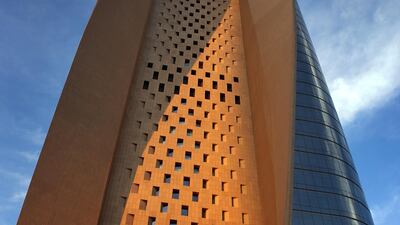
AL HAMRA TOWER, KUWAIT CITY, 412 metres: Kuwait’s tallest building is marked by its curved sculpted concrete exterior, which is also the world’s tallest of its type. It was completed in 2011 with offices, a shopping mall and a rooftop restaurant. AFP -

PRINCESS TOWER, DUBAI, 413 metres: The tallest residential building in the world until it was overtaken by 432 Park Avenue in Manhattan five years ago, Princess Tower was opened in 2012 with 763 residential units. There are 107 storeys, including six underground, with an observation deck on the 97th floor. Chris Whiteoak / The National -
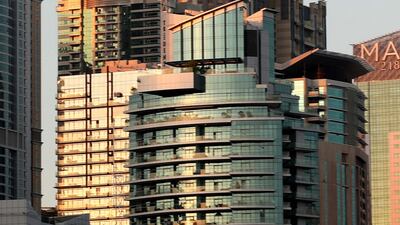
MARINA 101, DUBAI, 425 metres: The second tallest building in Dubai is also the 27th tallest in the world. Construction began in 2006 and, although it was completed in 2017, the building remains unfinished and unoccupied due to financing issues. Chris Whiteoak / The National -

MAKKAH ROYAL CLOCK TOWER, MAKKAH, 601 metres: Part of the Abraj Al Bayt complex, the tower over looks the Great Mosque of Makkah and the Kaaba and was completed in 2012. It includes the highest and tallest clock faces in the world – the minute hands alone are 23 metres long. AFP -

BURJ KHALIFA, DUBAI, 828 metres: The tallest building in the world when it was completed in 2010, Burj Khalifa actually took the title a year earlier when it surpassed Taiwan’s Taipei 101. It boasts several world records, including the building with the most floors (163), the world’s longest elevators at 504m, and the world's highest restaurant. It is so tall the sun sets three minutes later on the observation deck than on the ground. Tarek Fahmy / Reuters


What else is coming up on the horizon?
There are a few big projects in the pipeline in Dubai.
Construction of Ciel Tower in Dubai Marina is under way and will eventually reach 360m, according to developer The First Group.
It will have 1,209 luxury hotel suites and serviced residences spread over 82 levels, plus a glass observation deck with 360-degree views.
One Zabeel, meanwhile, is a pair of towers located next to Dubai's Trade Centre, connected by a 7,700-tonne bridge.
Tower A measures 304 metres and topped out in April 2021, while the 241m Tower B topped out earlier.
In Saudi Arabia, work on Jeddah Tower – slated to be the world's tallest once complete – is ongoing, although progress has been slow since construction started in 2011.
Meanwhile, in Downtown Kuala Lumpur, what will be the world's second-tallest skyscraper reached its final height in December.
Merdeka 118 is 678.9m, taller than the current second-tallest building, Shanghai Tower.
Designed by Australian firm Fender Katsalidis, Merdeka, 118 is scheduled to be completed later this year.

In Egypt, Africa’s tallest skyscraper has risen in the desert. The concrete, 385-metre Iconic Tower was completed in June last year and is set to open its doors in the first quarter of this year.


