• The high-resolution camera, called the eXploration imager instrument, aboard the Hope probe is allowing space enthusiasts to create stunning images of the planet. They are processing the raw monochromatic images to highlight Mars' geographical features. This image was enhanced by Andrea Luck and shows a cloudy day on the planet. The North Pole, Olympus Mons (largest planet in the solar system) and Tharsis Montes (a region home to three large shield volcanoes) is also visible. Photo: Hope Mars Mission / Andrea Luck
    The high-resolution camera, called the eXploration imager instrument, aboard the Hope probe is allowing space enthusiasts to create stunning images of the planet. They are processing the raw monochromatic images to highlight Mars' geographical features. This image was enhanced by Andrea Luck and shows a cloudy day on the planet. The North Pole, Olympus Mons (largest planet in the solar system) and Tharsis Montes (a region home to three large shield volcanoes) is also visible. Photo: Hope Mars Mission / Andrea Luck
  • This photo shows another cloudy day on Mars. Photo: Hope Mars Mission / Andrea Luck
    This photo shows another cloudy day on Mars. Photo: Hope Mars Mission / Andrea Luck
  • A stunning global view of Mars that shows the North Pole, captured on May 24, 2021. Hope Mars Mission / Jason Major
    A stunning global view of Mars that shows the North Pole, captured on May 24, 2021. Hope Mars Mission / Jason Major
  • Olympus Mons and the Tharsis Montes region is visible in this photo, captured sometime between May and August, 2021. Photo: Hope Mars Mission / Stuart Atkinson
    Olympus Mons and the Tharsis Montes region is visible in this photo, captured sometime between May and August, 2021. Photo: Hope Mars Mission / Stuart Atkinson
  • A global view of Mars. This image was captured sometime between May and August, 2021. Hope Mars Mission / Stuart Atkinson
    A global view of Mars. This image was captured sometime between May and August, 2021. Hope Mars Mission / Stuart Atkinson
  • An image of Mars taken by the UAE's Hope probe and edited by Twitter user @SzabBen004. Enthusiasts have been processing their own images of the red planet using high-resolution output from the Emirates Exploration Imager system. Photo: @SzabBen004
    An image of Mars taken by the UAE's Hope probe and edited by Twitter user @SzabBen004. Enthusiasts have been processing their own images of the red planet using high-resolution output from the Emirates Exploration Imager system. Photo: @SzabBen004
  • 'With a length of almost 4,000 kilometres, width of 200km at some points and depth of 7km, Valles Marineris is one of the largest and most impressive canyons of the Solar System.' Photo: @SzabBen004
    'With a length of almost 4,000 kilometres, width of 200km at some points and depth of 7km, Valles Marineris is one of the largest and most impressive canyons of the Solar System.' Photo: @SzabBen004
  • 'Here is a photograph of Mars I got by using raw image from the Hope Mars Mission, processing it into Photoshop and colourising it using AI. Amazed by the result! At this time, Hope probe was at 23,638km altitude from Mars.' Photo: @Vince_Ch
    'Here is a photograph of Mars I got by using raw image from the Hope Mars Mission, processing it into Photoshop and colourising it using AI. Amazed by the result! At this time, Hope probe was at 23,638km altitude from Mars.' Photo: @Vince_Ch
  • 'What a view of mountains on Mars! Captured by the UAE's @HopeMarsMission. Olympus Mons: largest and tallest mountain in the Solar System. Tharsis Montes: three large shield volcanoes in the Tharsis region.' Photo: @cosmicatri
    'What a view of mountains on Mars! Captured by the UAE's @HopeMarsMission. Olympus Mons: largest and tallest mountain in the Solar System. Tharsis Montes: three large shield volcanoes in the Tharsis region.' Photo: @cosmicatri
  • 'The UAE @HopeMarsMission released lots of raw data today. Here's an image of Mars I made processing some of that info.' Photo: @mars_stu
    'The UAE @HopeMarsMission released lots of raw data today. Here's an image of Mars I made processing some of that info.' Photo: @mars_stu
  • 'What a spectacular view of Mars captured by the UAE's @HopeMarsMission! Created this image from the data released today and HAD to share!' Photo: @cosmicatri
    'What a spectacular view of Mars captured by the UAE's @HopeMarsMission! Created this image from the data released today and HAD to share!' Photo: @cosmicatri
  • 'I took the orange haze from the black background.' Photo: @MurdockPhotosWx
    'I took the orange haze from the black background.' Photo: @MurdockPhotosWx
  • 'Some great shots in the @HopeMarsMission data drop - I put a few RGB composites together.' Photo: @doug_ellison
    'Some great shots in the @HopeMarsMission data drop - I put a few RGB composites together.' Photo: @doug_ellison
  • 'Gorgeous new crescent view of Mars - a perspective you can never get from Earth. Taken by @HopeMarsMission.' Photo: @SpaceGeck
    'Gorgeous new crescent view of Mars - a perspective you can never get from Earth. Taken by @HopeMarsMission.' Photo: @SpaceGeck
  • 'Mars from the Emirates Mars Mission at 24th February 2021. Emirates Mars Mission (EMM)/EXI/Daniel Machacek.' Photo: @DanielMachacek_
    'Mars from the Emirates Mars Mission at 24th February 2021. Emirates Mars Mission (EMM)/EXI/Daniel Machacek.' Photo: @DanielMachacek_
  • 'My first colour image of Mars made from the raw data released yesterday by the UAE Hope mission. Others have done/will do a lot better but I'm pleased with it :-) Hope Mars Mission/S Atkinson.' Photo: @mars_stu
    'My first colour image of Mars made from the raw data released yesterday by the UAE Hope mission. Others have done/will do a lot better but I'm pleased with it :-) Hope Mars Mission/S Atkinson.' Photo: @mars_stu
  • 'Oh Mars, now you've got to be kidding me! This is my catch of the Red Planet and its Olympus Mons (the highest mountain and Volcano in the Solar System btw) as seen by @HopeMarsMission.' Photo: @andrluck
    'Oh Mars, now you've got to be kidding me! This is my catch of the Red Planet and its Olympus Mons (the highest mountain and Volcano in the Solar System btw) as seen by @HopeMarsMission.' Photo: @andrluck
  • 'Emirates #Mars Mission مسبار الأمل 2021-04-22 Spacecraft altitude 38.480 km Exi f635 + f546 + f437 filters L2 data.' Photo: @landru79
    'Emirates #Mars Mission مسبار الأمل 2021-04-22 Spacecraft altitude 38.480 km Exi f635 + f546 + f437 filters L2 data.' Photo: @landru79
  • 'The UAE @HopeMarsMission released lots of raw data today. Here's an image of Mars I made processing some of that info. Hope Mars Mission/S Atkinson.' Photo: @mars_stu
    'The UAE @HopeMarsMission released lots of raw data today. Here's an image of Mars I made processing some of that info. Hope Mars Mission/S Atkinson.' Photo: @mars_stu
  • “The science data from @HopeMarsMission has just been released! I started playing with the photos taken on February 10. By playing on the gamma, we bring out cloud structures near the terminator. Noctilucent clouds?" Photo: @thomas_appere
    “The science data from @HopeMarsMission has just been released! I started playing with the photos taken on February 10. By playing on the gamma, we bring out cloud structures near the terminator. Noctilucent clouds?" Photo: @thomas_appere
  • 'The UAE @HopeMarsMission released lots of raw data today. Here's an image of Mars I made processing some of that info. Hope Mars Mission/S Atkinson.' Photo: @mars_stu
    'The UAE @HopeMarsMission released lots of raw data today. Here's an image of Mars I made processing some of that info. Hope Mars Mission/S Atkinson.' Photo: @mars_stu
  • 'Emirates Mars Mission مسبار الأمل 2021-03-16 Spacecraft altitude 1098.68 km Exi f635 + f546 + f437 filters L2 data.' Photo: @landru79
    'Emirates Mars Mission مسبار الأمل 2021-03-16 Spacecraft altitude 1098.68 km Exi f635 + f546 + f437 filters L2 data.' Photo: @landru79

Five remarkable images captured by Emirates Mars Mission Hope probe


Sarwat Nasir
  • English
  • Arabic

A UAE spacecraft that reached Mars's orbit last year has sent back thousands of images that show the stunning geographical features of the mysterious red planet.

From views of the elusive auroras that have puzzled scientists to enormous volcanoes visible from space, the Hope orbiter has recorded plenty of images since it arrived on February 9, 2021.

More than 100 gigabytes of scientific data captured by the spacecraft’s three instruments has already been released to the public, including readings on the planet’s atmospheric conditions.

It is the first successful interplanetary mission by an Arab country, paving the way for the Emirates to take on even more ambitious projects.

The National highlights some of the most remarkable images captured by the spacecraft.

First image by Hope

An image of Mars taken from the Hope probe. Photo: Emirates Mars Mission / EXI 2021

Less than a week after Hope reached Mars, it beamed back its first image of the planet.

It showed the Tharsis Montes region, an area that has three large shield volcanoes, in sharp detail.

The Olympus Mons, the largest volcano in the solar system, at sunrise was also visible.

Captured 24,700 kilometres above the surface of Mars, the North Pole of the planet can be seen in the upper left of the image.

Ice clouds are visible over the southern highlands and the Alba Mona Volcano.

Tectonic fissures

On March 15, the spacecraft captured an image of Cerberus Fossae, a series of fissures that formed when the crust was pulled apart in the region.

The fracture system stretches more than 1,000 kilometres across the Martian surface.

It is a tectonically and volcanically active region that experiences Marsquakes.

Hope probe sent back an image of the Cerberus Fossae, an area on the planet known for 'Marsquakes'. Photo: Hope Mars Mission

It is believed the fractures could be related to the nearby volcanic systems, such as Elysium and Tharsis.

Some experts have said these fractures may have been the source for catastrophic releases of groundwater, triggered by volcanic activity.

Hope captured the image when it was closest to Mars’s planetary surface.

Largest mountain in solar system

The spacecraft offered a detailed look at Olympus Mons a few weeks after reaching Mars.

Taken from 13,007km above the planet, the image shows the largest volcano in the solar system in stunning detail.

An image of the solar system's largest volcano, Olympus Mons, captured by the UAE Hope probe. Photo: Emirates Mars Mission

It was first shared by Sheikh Hamdan bin Mohammed, Crown Prince of Dubai, on his social media accounts.

“Olympus Mons … highest peak in our solar system. Almost three times the height of Mount Everest. Taken by Hope Probe at 13,000km above Mars surface,” he wrote.

The volcano is located in the Tharsis region of Mars and measures 642 kilometres in diameter.

Aurora on Mars

In April, Hope captured the discrete aurora on Mars – similar to the Northern Lights on Earth.

It was the first time such clear observations had been made. Scientific images were released at the time, along with an artist’s impression of what the aurora could look like on Mars.

Discrete aurora on Mars captured by UAE's Hope probe. Photo: Hope Mars Mission

The rare phenomenon occurs around Mars’s irregular crustal magnetic field and is created when energetic electrons in the upper atmosphere collide with gas molecules in the atmosphere.

This causes ionisation, dissociation of molecules and emission of photons – causing the 'dancing lights’.

There are two other types of aurora that have been documented before, the diffuse and the proton.

Bright hemisphere

Hope took photos of a fully illuminated hemisphere of Mars.

These were similar to observations carried out regularly by weather satellites around Earth.

Captured 20,260km above the planetary surface, the image was taken when it was late spring in its northern hemisphere.

A fully illuminated hemisphere of Mars. Photo: Hope Mars Mission

Mars’ northern and southern hemisphere are different from each other. The northern part has non-volcanic and flat lowlands, while the south hosts volcanoes that are scattered throughout on high land.

Inside the Dubai ground control that tracks UAE's Mars spacecraft - in pictures

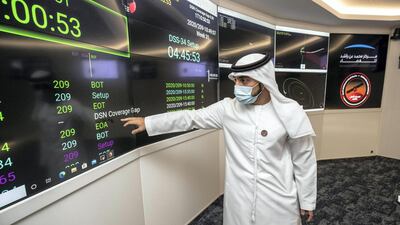
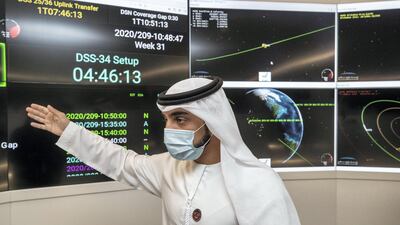
  • The operations control room at the Mohammed bin Rashid Space Centre, where Emirati personnel track and communicate with UAE's Mars Hope probe. Antonie Robertson / The National
    The operations control room at the Mohammed bin Rashid Space Centre, where Emirati personnel track and communicate with UAE's Mars Hope probe. Antonie Robertson / The National
  • Zakareyya Al Shamsi, the deputy manager of mission operations, explains how the team is constantly tracking the probe. Antonie Robertson / The National
    Zakareyya Al Shamsi, the deputy manager of mission operations, explains how the team is constantly tracking the probe. Antonie Robertson / The National
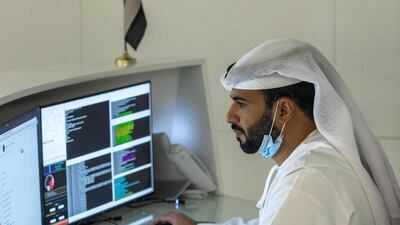
  • Mohammad Al Balooshi, flight controller, sends the 'go/no-go' instructions to the person responsible for issuing commands to the probe. Antonie Robertson / The National
    Mohammad Al Balooshi, flight controller, sends the 'go/no-go' instructions to the person responsible for issuing commands to the probe. Antonie Robertson / The National
  • Mr Al Shamsi explains how they track the UAE's Hope probe. Antonie Robertson / The National
    Mr Al Shamsi explains how they track the UAE's Hope probe. Antonie Robertson / The National
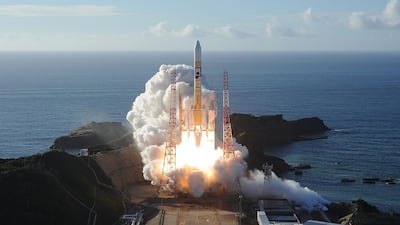
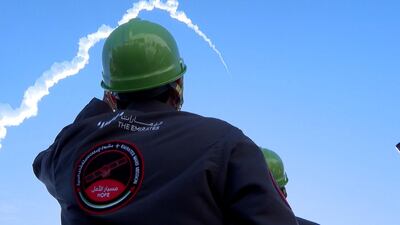
  • The UAE's Hope probe lifted off from Japan's Tanegashima Space Centre on July 20, 1.58am UAE time. AFP
    The UAE's Hope probe lifted off from Japan's Tanegashima Space Centre on July 20, 1.58am UAE time. AFP
  • The final version of the spacecraft has two solar panels that help power its systems. Photo: Emirates Mars Mission
    The final version of the spacecraft has two solar panels that help power its systems. Photo: Emirates Mars Mission
  • The UAE team watch the launch of the Mars Hope probe at the Tanegashima Space Centre.
    The UAE team watch the launch of the Mars Hope probe at the Tanegashima Space Centre.
  • Omran Sharaf is the project director for the Emirates' Hope space probe to Mars. AP
    Omran Sharaf is the project director for the Emirates' Hope space probe to Mars. AP
Biog

Mr Kandhari is legally authorised to conduct marriages in the gurdwara

He has officiated weddings of Sikhs and people of different faiths from Malaysia, Sri Lanka, Russia, the US and Canada

Father of two sons, grandfather of six

Plays golf once a week

Enjoys trying new holiday destinations with his wife and family

Walks for an hour every morning

Completed a Bachelor of Commerce degree in Loyola College, Chennai, India

2019 is a milestone because he completes 50 years in business


How to wear a kandura

Dos

  • Wear the right fabric for the right season and occasion 
  • Always ask for the dress code if you don’t know
  • Wear a white kandura, white ghutra / shemagh (headwear) and black shoes for work 
  • Wear 100 per cent cotton under the kandura as most fabrics are polyester

Don’ts 

  • Wear hamdania for work, always wear a ghutra and agal 
  • Buy a kandura only based on how it feels; ask questions about the fabric and understand what you are buying
THE APPRENTICE

Director: Ali Abbasi

Starring: Sebastian Stan, Maria Bakalova, Jeremy Strong

Rating: 3/5

Updated: February 09, 2022, 9:02 AM