Razan Al Mubarak has been appointed to one of the most prestigious global conservation bodies. The National

UAE's Razan Al Mubarak appointed to global conservation body


  • English
  • Arabic

An Emirati official has been appointed to lead the International Union for the Conservation of Nature – a major global environmental organisation.

Razan Al Mubarak was elected president on Wednesday at the IUCN World Conservation Congress in Marseille, France, after a two-year international election campaign.

The highly respected conservationist is managing director of the Mohamed bin Zayed Species Conservation Fund, and managing director of Environment Agency Abu Dhabi.

I am truly honoured to have been elected, especially in this critical moment when we need to elevate nature conservation to the forefront of the global sustainability agenda
Razan Al Mubarak

Ms Al Mubarak is only the second woman elected to lead the organisation in its 72-year history and is the first president from the Arab region since 1978.

“I am truly honoured to have been elected as the 15th president of the IUCN, especially in this critical moment when we need to elevate nature conservation to the forefront of the global sustainability agenda," Ms Al Mubarak said.

"I am grateful to the UAE leadership and its institutions for their support, trust, confidence, and their belief not only in me but in the importance of elevating the issue of nature conservation globally."

Sheikh Mohammed bin Rashid, Vice President and Ruler of Dubai, paid tribute to Ms Al Mubarak.

"I am very proud of Emirati conservationist, Razan Al Mubarak for being appointed head of International Union for the Conservation of Nature. We are very proud of our national cadres, our environmental achievements and the daughters of our nation," he said.

Razan Al Mubarak tagging an endangered green turtle for release off Bu Tinah Island in the UAE. Photo: MBZ Fund Relief Grants

She will succeed Zhang Zinsheng of China and serve a four-year term.

IUCN is a major global environmental organisation, with 1,400 members representing 150 countries. It has special status as a permanent observer member at the UN General Assembly.

It is best known publicly for maintaining the Red List of Threatened Species.

"I am truly honoured to pay homage to a conservation journey commenced by our forefathers and foremothers, led by our founder, the late Sheikh Zayed and institutionalised by so many organisations in the UAE which have continued to nurture and embrace this rich legacy of nature and its conservation," she said.

Youngest person to run an Abu Dhabi government agency

Ms Al Mubarak began her career in conservation in 2001 when she helped to establish Emirates Nature WWF, an NGO associated with the World Wildlife Fund.

At EN-WWF, she led initiatives to protect the UAE’s coral, conducted research leading to the establishment of the UAE’s first mountain national park, and created the framework to protect nesting and migrating sea turtles.

In 2010, Ms Al Mubarak became the youngest person to lead an Abu Dhabi government entity with her appointment as secretary general of the Environment Agency Abu Dhabi (EAD), where she serves on the board as managing director.

The EAD, where she leads a government agency of more than 1,000 employees, was instrumental in the successful reintroductions of the Arabian oryx in UAE and the scimitar-horned oryx in Chad.

Mohamed Al Bowardi, vice-chairman of EAD and deputy chairman of the MBZ Fund, said: "Thanks to her passionate, innovative, and decisive leadership, the MBZ Fund has become a global model, showing the world that small but focused interventions on the ground can make a big difference in saving species."

Dr Shaikha Al Dhaheri re-elected to IUCN

Meanwhile, Dr Shaikha Al Dhaheri, secretary-general of Environment Agency Abu Dhabi (EAD), has been re-elected Regional Councillor for West Asia of the International Union for the Conservation of Nature (IUCN) for a second term.

She was re-elected to the position at the World Conservation Congress which was in Marseilles and will be a member of the new Council of the Federation for the period from 2021-2024.

Dr Al Dhaheri was the only female candidate from the region running for re-election and was one of only six female candidates from the 28 elected global councillors.

The IUCN brings together the world’s most influential organisations and top experts to conserve nature and accelerate the transition to sustainable development.


Mohamed bin Zayed Species Conservation Fund at work - in pictures

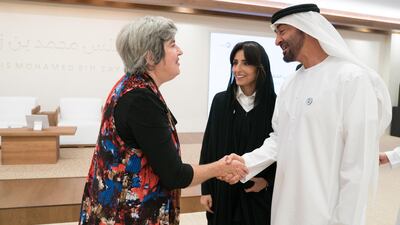
  • Sheikh Mohamed bin Zayed, Crown Prince of Abu Dhabi and Deputy Supreme Commander of the Armed Forces, with Marilyn Cornwell of the Tiaro and District Landcare Group, Queensland, Australia, and Razan Khalifa Al Mubarak, Managing Director of the Environment Agency - Abu Dhabi, and MBZ Fund, in May, 2018. Photo: MBZ Fund
    Sheikh Mohamed bin Zayed, Crown Prince of Abu Dhabi and Deputy Supreme Commander of the Armed Forces, with Marilyn Cornwell of the Tiaro and District Landcare Group, Queensland, Australia, and Razan Khalifa Al Mubarak, Managing Director of the Environment Agency - Abu Dhabi, and MBZ Fund, in May, 2018. Photo: MBZ Fund
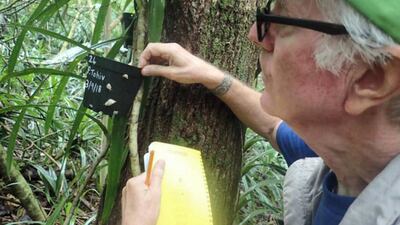
  • Dr Trevor Coote, conservation field biologist on the International Partulid Programme and recipient of MBZ Fund grants, releasing the critically endangered polynesian tree snail, or Partula, on the South Pacific island of Moorea. Photo: Trevor Coote.
    Dr Trevor Coote, conservation field biologist on the International Partulid Programme and recipient of MBZ Fund grants, releasing the critically endangered polynesian tree snail, or Partula, on the South Pacific island of Moorea. Photo: Trevor Coote.
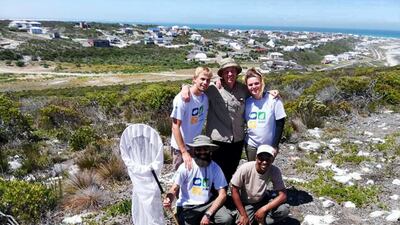
  • The Grootbos conservation team. The team works to conserve the critically endangered fynbos, while also focusing on the training and skills development of the surrounding communities in South Africa. Photo: MBZ Fund
    The Grootbos conservation team. The team works to conserve the critically endangered fynbos, while also focusing on the training and skills development of the surrounding communities in South Africa. Photo: MBZ Fund
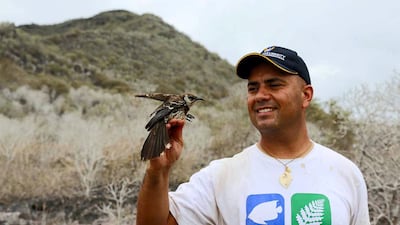
  • Dr Luis Ortiz Catedral, conservation biologist at Massey University in New Zealand, is also a recipient of MBZ grant. Photo: Joshue Ortiz-Catedral)
    Dr Luis Ortiz Catedral, conservation biologist at Massey University in New Zealand, is also a recipient of MBZ grant. Photo: Joshue Ortiz-Catedral)
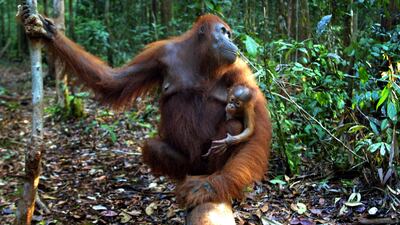
  • The Bornean orangutan. A grant from the MBZ Fund aids efforts to help their conservation. Photo: Mohamed bin Zayed Species Conservation Fund
    The Bornean orangutan. A grant from the MBZ Fund aids efforts to help their conservation. Photo: Mohamed bin Zayed Species Conservation Fund
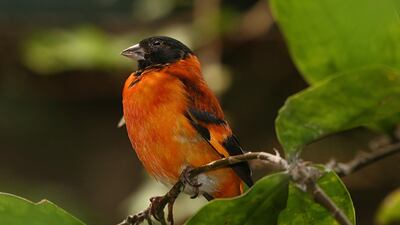
  • Red Siskin found in northern Colombia and Venezuela. Alamy
    Red Siskin found in northern Colombia and Venezuela. Alamy
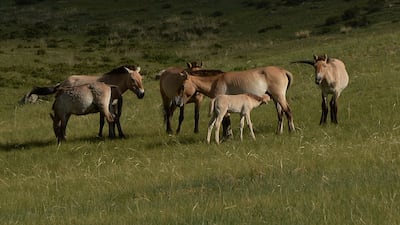
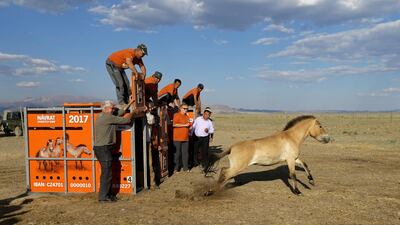
  • The Przewalski’s horse was practically extinct in the 1970s because of competition with livestock, hunting and intrusion into their habitat. AFP
    The Przewalski’s horse was practically extinct in the 1970s because of competition with livestock, hunting and intrusion into their habitat. AFP
  • Grants also go to help the Malabar water lily in India. Photo: Mohamed bin Zayed Species Conservation Fund
    Grants also go to help the Malabar water lily in India. Photo: Mohamed bin Zayed Species Conservation Fund
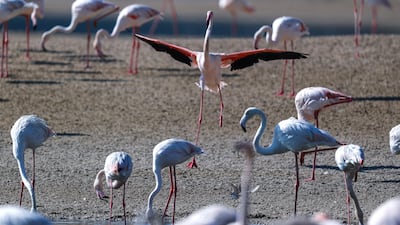
  • Flamingos at the Al Wathba Wetland Reserve in Abu Dhabi. Victor Besa / The National
    Flamingos at the Al Wathba Wetland Reserve in Abu Dhabi. Victor Besa / The National
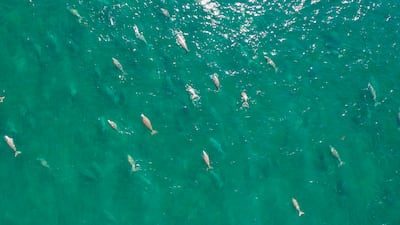
  • A herd of dugongs moving about the waters of the western region, Abu Dhabi. Photo: Abu Dhabi Marine Conservation Group
    A herd of dugongs moving about the waters of the western region, Abu Dhabi. Photo: Abu Dhabi Marine Conservation Group
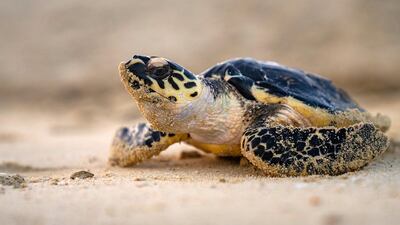
  • A turtle is released into the ocean by the The Environment Agency - Abu Dhabi. Photo: Abdullah Al Junaibi for the Ministry of Presidential Affairs
    A turtle is released into the ocean by the The Environment Agency - Abu Dhabi. Photo: Abdullah Al Junaibi for the Ministry of Presidential Affairs
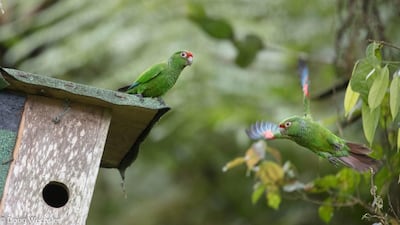
  • The rare and endangered El Oro parakeet in the Buenaventura Reserve, Ecuador. The MBZ Fund aids projects across the world to safeguard these species. Photo: Mohamed bin Zayed Species Conservation Fund
    The rare and endangered El Oro parakeet in the Buenaventura Reserve, Ecuador. The MBZ Fund aids projects across the world to safeguard these species. Photo: Mohamed bin Zayed Species Conservation Fund
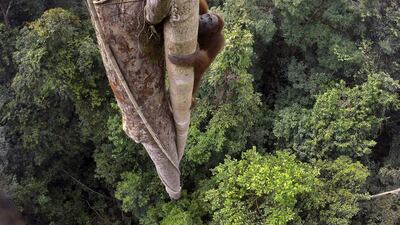
  • A Bornean orangutan in a tree in the Indonesian rainforest of Gunung Palung National Park, in West Kalimantan, Indonesia. AP
    A Bornean orangutan in a tree in the Indonesian rainforest of Gunung Palung National Park, in West Kalimantan, Indonesia. AP
  • A Przewalski's horse leaves its container after being released in Takhin Tal National Park, in south-west Mongolia. Reuters
    A Przewalski's horse leaves its container after being released in Takhin Tal National Park, in south-west Mongolia. Reuters


Key findings
  • Over a period of seven years, a team of scientists analysed dietary data from 50,000 North American adults.
  • Eating one or two meals a day was associated with a relative decrease in BMI, compared with three meals. Snacks count as a meal. Likewise, participants who ate more than three meals a day experienced an increase in BMI: the more meals a day, the greater the increase. 
  • People who ate breakfast experienced a relative decrease in their BMI compared with “breakfast-skippers”. 
  • Those who turned the eating day on its head to make breakfast the biggest meal of the day, did even better. 
  • But scrapping dinner altogether gave the best results. The study found that the BMI of subjects who had a long overnight fast (of 18 hours or more) decreased when compared even with those who had a medium overnight fast, of between 12 and 17 hours.
Roll%20of%20Honour%2C%20men%E2%80%99s%20domestic%20rugby%20season
%3Cp%3E%3Cstrong%3EWest%20Asia%20Premiership%3C%2Fstrong%3E%0D%3Cbr%3EChampions%3A%20Dubai%20Tigers%0D%3Cbr%3ERunners%20up%3A%20Bahrain%0D%3C%2Fp%3E%0A%3Cp%3E%3Cstrong%3EUAE%20Premiership%3C%2Fstrong%3E%0D%3Cbr%3EChampions%3A%20Jebel%20Ali%20Dragons%0D%3Cbr%3ERunners%20up%3A%20Dubai%20Hurricanes%0D%3C%2Fp%3E%0A%3Cp%3E%3Cstrong%3EUAE%20Division%201%3C%2Fstrong%3E%0D%3Cbr%3EChampions%3A%20Dubai%20Sharks%0D%3Cbr%3ERunners%20up%3A%20Abu%20Dhabi%20Harlequins%20II%0D%3C%2Fp%3E%0A%3Cp%3E%3Cstrong%3EUAE%20Division%202%3C%2Fstrong%3E%0D%3Cbr%3EChampions%3A%20Dubai%20Tigers%20III%0D%3Cbr%3ERunners%20up%3A%20Dubai%20Sharks%20II%0D%3C%2Fp%3E%0A%3Cp%3E%3Cstrong%3EDubai%20Sevens%3C%2Fstrong%3E%0D%3Cbr%3EChampions%3A%20Dubai%20Tigers%0D%3Cbr%3ERunners%20up%3A%20Dubai%20Hurricanes%3C%2Fp%3E%0A
Results

6.30pm: The Madjani Stakes (PA) Group 3 Dh175,000 (Dirt) 1,900m

Winner: Aatebat Al Khalediah, Fernando Jara (jockey), Ali Rashid Al Raihe (trainer).

7.05pm: Maiden (TB) Dh165,000 (D) 1,400m

Winner: Down On Da Bayou, Royston Ffrench, Salem bin Ghadayer.

7.40pm: Maiden (TB) Dh165,000 (D) 1,600m

Winner: Dubai Avenue, Fernando Jara, Ali Rashid Al Raihe.

8.15pm: Handicap (TB) Dh190,000 (D) 1,200m

Winner: My Catch, Pat Dobbs, Doug Watson.

8.50pm: Dubai Creek Mile (TB) Listed Dh265,000 (D) 1,600m

Winner: Secret Ambition, Tadhg O’Shea, Satish Seemar.

9.25pm: Handicap (TB) Dh190,000 (D) 1,600m

Winner: Golden Goal, Pat Dobbs, Doug Watson.

The years Ramadan fell in May

1987

1954

1921

1888

How to apply for a drone permit
  • Individuals must register on UAE Drone app or website using their UAE Pass
  • Add all their personal details, including name, nationality, passport number, Emiratis ID, email and phone number
  • Upload the training certificate from a centre accredited by the GCAA
  • Submit their request
What are the regulations?
  • Fly it within visual line of sight
  • Never over populated areas
  • Ensure maximum flying height of 400 feet (122 metres) above ground level is not crossed
  • Users must avoid flying over restricted areas listed on the UAE Drone app
  • Only fly the drone during the day, and never at night
  • Should have a live feed of the drone flight
  • Drones must weigh 5 kg or less

Mercer, the investment consulting arm of US services company Marsh & McLennan, expects its wealth division to at least double its assets under management (AUM) in the Middle East as wealth in the region continues to grow despite economic headwinds, a company official said.

Mercer Wealth, which globally has $160 billion in AUM, plans to boost its AUM in the region to $2-$3bn in the next 2-3 years from the present $1bn, said Yasir AbuShaban, a Dubai-based principal with Mercer Wealth.

Within the next two to three years, we are looking at reaching $2 to $3 billion as a conservative estimate and we do see an opportunity to do so,” said Mr AbuShaban.

Mercer does not directly make investments, but allocates clients’ money they have discretion to, to professional asset managers. They also provide advice to clients.

“We have buying power. We can negotiate on their (client’s) behalf with asset managers to provide them lower fees than they otherwise would have to get on their own,” he added.

Mercer Wealth’s clients include sovereign wealth funds, family offices, and insurance companies among others.

From its office in Dubai, Mercer also looks after Africa, India and Turkey, where they also see opportunity for growth.

Wealth creation in Middle East and Africa (MEA) grew 8.5 per cent to $8.1 trillion last year from $7.5tn in 2015, higher than last year’s global average of 6 per cent and the second-highest growth in a region after Asia-Pacific which grew 9.9 per cent, according to consultancy Boston Consulting Group (BCG). In the region, where wealth grew just 1.9 per cent in 2015 compared with 2014, a pickup in oil prices has helped in wealth generation.

BCG is forecasting MEA wealth will rise to $12tn by 2021, growing at an annual average of 8 per cent.

Drivers of wealth generation in the region will be split evenly between new wealth creation and growth of performance of existing assets, according to BCG.

Another general trend in the region is clients’ looking for a comprehensive approach to investing, according to Mr AbuShaban.

“Institutional investors or some of the families are seeing a slowdown in the available capital they have to invest and in that sense they are looking at optimizing the way they manage their portfolios and making sure they are not investing haphazardly and different parts of their investment are working together,” said Mr AbuShaban.

Some clients also have a higher appetite for risk, given the low interest-rate environment that does not provide enough yield for some institutional investors. These clients are keen to invest in illiquid assets, such as private equity and infrastructure.

“What we have seen is a desire for higher returns in what has been a low-return environment specifically in various fixed income or bonds,” he said.

“In this environment, we have seen a de facto increase in the risk that clients are taking in things like illiquid investments, private equity investments, infrastructure and private debt, those kind of investments were higher illiquidity results in incrementally higher returns.”

The Abu Dhabi Investment Authority, one of the largest sovereign wealth funds, said in its 2016 report that has gradually increased its exposure in direct private equity and private credit transactions, mainly in Asian markets and especially in China and India. The authority’s private equity department focused on structured equities owing to “their defensive characteristics.”

Updated: September 09, 2021, 6:36 AM