


The coronavirus has extended its unwelcome influence to some unlikely locations, including the stirring, windswept steppe of Mongolia.
There, an organisation that conserves what is described as the world’s last truly wild horse has suffered the collapse of its main revenue source – tourism – because of the pandemic.
In 2019, more than than 18,000 foreign tourists visited the Hustai National Park to the west of the Mongolian capital, Ulaanbaatar. Last year, 280 arrived.
Help is at hand in the form of a $13,000 (Dh47,742) grant from Abu Dhabi's Mohamed bin Zayed Species Conservation Fund in its latest round of awards last month.
The Hustai National Park Trust, which manages the park’s conservation work, is one of dozens of organisations to have received a coronavirus-related grant from the fund.
“We can cover at least three months’ salary, some of the expenditure for petrol and buy a new motorcycle for one of our rangers,” said Dashpurev Tserendeleg, the trust’s director.
The Przewalski's horse was close to extinction in the 1970s because of competition with livestock, hunting and intrusion into their habitat.
But the park now hosts 400 individuals and Mongolia more than 500 - the most anywhere in the world.
Entrance fees, accommodation charges and other tourism income accounts for more than four-fifths of the revenue of the self-financing trust, so lockdowns hit its finances hard.
A survey by the Mohamed bin Zayed fund indicated that many other conservation organisations have been similarly affected.

Last year, the fund contacted more than 300 grant recipients and found that more than two-thirds had been hit by the pandemic, with 57 per cent enduring financial difficulties and more than one-fifth planning to cut jobs.
As well as losing tourism revenue, grants from governments or zoos that support field conservation dried up, the fund says. Income has fallen when it was needed most.
Nicolas Heard, the fund’s head of fund management, said it was extremely important that there was Covid-related support.
“Threats, particularly poaching, bushmeat hunting and resource use have increased at a time when patrolling and monitoring was reduced,” Mr Heard said.
“The short-to-medium term threat to global wildlife is significant.”
The fund has now made two rounds of Covid relief grants to help groups conserving everything from frogs to iguanas to fish. The first round was awarded in December.
Other Covid-related grants awarded last month will help, for example, to conserve red colobus monkeys in Kibale National Park, Uganda; the Bornean orangutan in Indonesian Borneo; the Malabar waterlily in India, and the El Oro parakeet in Ecuador.
Since it was launched in 2009 with an initial endowment of $25 million (Dh91.82m), the fund has made 2,152 grants to conserve 1,402 species or subspecies. The maximum grant is typically $25,000.

At the Hustai National Park Trust, some tourism-related staff took 20 per cent salary cuts, and there have been financial reserves to draw on, but the organisation faces continued pressures, with visitor numbers highly unlikely to return to pre-pandemic levels this year.
The numbers of domestic and foreign tourists coming to the park, building healthily every year over the past decade, fell from 31,189 to 7,291.
The horses – named after Russian explorer Col Nikolai Przewalski – have a large head, thick neck with a distinctive mane. They have never been domesticated.
It is seen as crucial that rangers should continue their work as normal because they are helping numbers of Przewalski’s horse, reintroduced to the area in 1992, to keep growing.
There are now more than 400 in the park, up from less than 100 during the 1990s.
Mongolia hosts two other populations of the species, which are now also present in China, Russia, Kazakhstan and Hungary.
-

Przewalski’s horse harem in mountain steppe of Hustai National Park, Mongolia with just born foal. -

Just born foal with mother and sibling. -

Przewalski’s horse-most Endangered species of Wild horse in the World, Red Deer-most Endangered species of Ungulate in Mongolia, both protected and happily grazing together in mountain steppe of Hustai National Park, Trust Mongolia. -

Rangers are in Winter. For the Mongolian long lasting cold winter ranging from minus 20 to 40 celsus Rangers of the Hustai National Park Trust riding horse for daily activity. -

Mongolia is a vast and seasonal country. Since mid of Marsh until mid of October, Rangers of the Hustai National Park uses motorcycle every day. At the photo, Rangers just captured 12 Mongolian Gazelles for Satellite Collaring. -

Rangers and Biologists of the Hustai National Park just captured Mongolian Gazelles for Satellite collaring. This is one the very important research for determining home range and movement corridor of Mongolian Gazelles.


In the park, the animals face competition for forage by grazing cattle and domestic horses, which also create a risk of interbreeding.
Also, in the spring people come into the park to collect red deer antlers that can be sold, an illegal activity that increases the risk that campfires may start fires that devastate forest or steppe areas.
During the peak foaling months of May and June, rangers check on the horses every morning and evening, which should increase the number of young that survive.
Rangers also move livestock out of the park and collect data that should be useful for conservation work. As a result of the efforts of the park and others in Mongolia, the International Union for Conservation of Nature changed its listing from "extinct in the wild" to "critically endangered" in 2008 and then to "endangered" in 2011.
“The main outcome of this grant is that we can continue our daily protection and research activities for a certain period without financial problems,” Mr Tserendeleg said.
“It means there will be no delays and [interruptions to] our continued effort to save Przewalski’s horse. Continuing our activity is very important for this endangered species.”
Looking to the long term, Mr Heard said the pandemic had highlighted the extent to which hands-on conservation in poorer nations that are rich in biodiversity is dependent on foreign support.
“Funding models based on international travel may not be as feasible as previously thought, and [there is] the potential to lose conservation capacity that has not even had a chance to start,” he said.
As an example, he suggested that young people interested in conservation may not be able to find funding and end up in non-conservation jobs.
Meanwhile, Mr Tserendeleg is now looking ahead to a time when greater numbers of tourists can return and the trust’s finances can regain a stable footing.
“At the moment we only hope,” he said. “At the moment, the government is saying on June 1 we open our borders … We’re ready to receive the tourists. Hopefully, it will be much better than last year.”
How the UAE protects the environment - in pictures
-
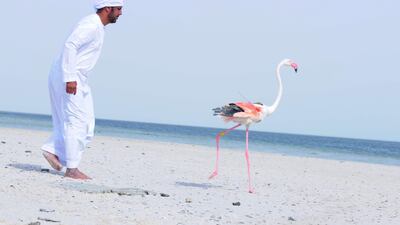
The UAE is known for protecting the environment. Here Environment Agency Abu Dhabi staff release a tagged flamingo as part of Abu Dhabi Birdathon initiative. Courtesy Environment Agency Abu Dhabi -

Umbrella Thorn Acacia trees are among the UAE's rich flora. Silvia Razgova / The National -
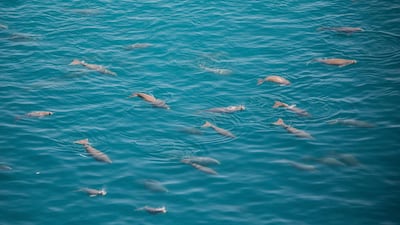
Abu Dhabi has the second-largest dugong population in the world. Environment Agency Abu Dhabi -
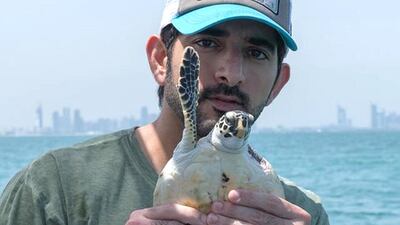
Love of nature is part of life here. Sheikh Hamdan bin Mohammed, Crown Prince of Dubai, with a sea turtles he helped release into the wild. Instagram/ @faz3 -
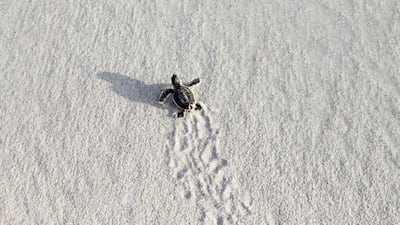
Abu Dhabi's environment agency is working to protect Hawksbill and Green turtles which live in the emirate's waters. Courtesy TDIC -
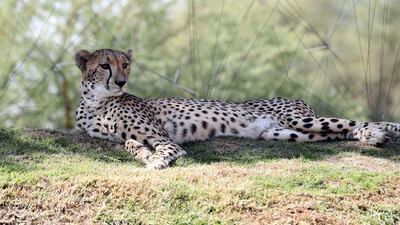
A cheetah at Al Ain Zoo, Al Ain. The zoo was founded by the Late President, Sheikh Zayed. Chris Whiteoak / The National -
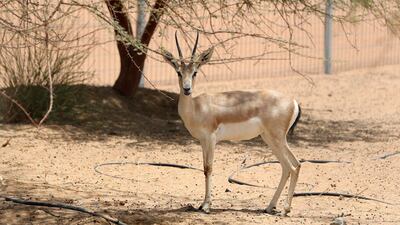
An Arabian sand gazelle at the Mleiha Archaeological Centre in Sharjah. Chris Whiteoak / The National -

The UAE is also embracing clean energy. This computer-generated image shows what phase four of Dubai's Mohammed Bin Rashid Solar Park, currently under construction in Dubai. Image courtesy of Acwa Power -

Nuclear energy is also important. The first reactor at Barakah nuclear plant reached 100 per cent power in December 2020. -

Abu Dhabi's new Midfield Terminal has won a coveted three-pearl rating under Abu Dhabi's Estidama, Arabic for sustainability, system. Courtesy KPF -
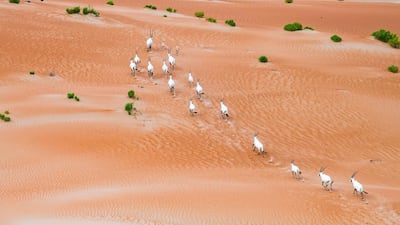
A breeding programme run by Environment Agency Abu Dhabi helped bring Arabian Oryx back from the brink of extinction. Courtesy: EAD



