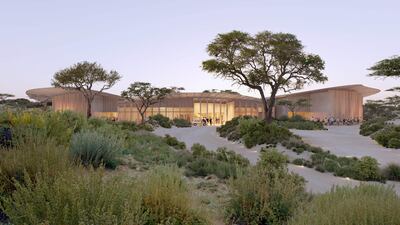
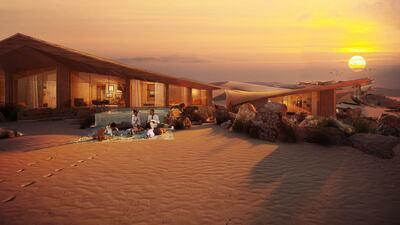
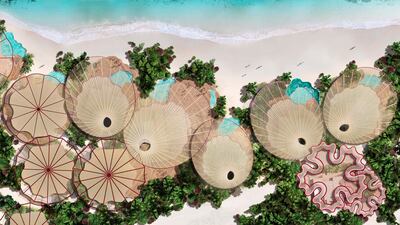
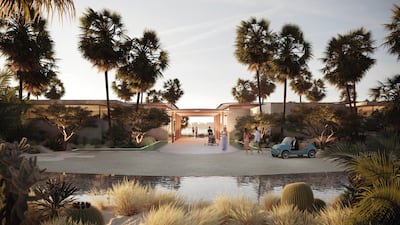
Saudi Arabia is the world's fastest growing tourism destination and there is a lot more to come said Fahd Hamidaddin, chief executive of Saudi Tourism Authority. Photo: Saudi Tourism

'Tourism is the new oil': How Saudi Arabia is targeting an influx of travellers


Hayley Skirka
  • English
  • Arabic

In September 2019, Saudi Arabia opened its doors to wide-scale tourism for the first time.

Launching its first tourist visa, the kingdom began welcoming visitors from 49 countries around the globe and it wasn't long before travellers were flocking there to explore its ancient history and discover more about a destination that had been sealed off for decades.

But the first chapter of this story was short-lived as the Covid-19 pandemic hit six months later, halting most international travel.

Despite that, tourism within the country thrived and Saudi Arabia now claims the title of the world’s fastest growing tourism destination, according to data from the UN World Tourism Organisation.

Jazan in Saudi Arabia. The Covid-19 pandemic forced domestic travellers to explore what was right on their doorstep. Photo: Shutterstock / Ajmal Thaha

Fahd Hamidaddin, chief executive of the Saudi Tourism Authority, told The National at Arabian Travel Market in Dubai: “During the pandemic, even the wealthiest — the yacht and private jet owners — had no option but to fly within Saudi. So they discovered the country by force, and now they're continuing to discover it by choice.”

And with pandemic restrictions now a thing of the past, Saudi Arabia is gearing up for its next chapter.

42,000 new hotel rooms in the pipeline

In 2022, more than 93.5 million tourists visited Saudi Arabia, 77 million of whom were domestic travellers and 16.5 million were international tourists.

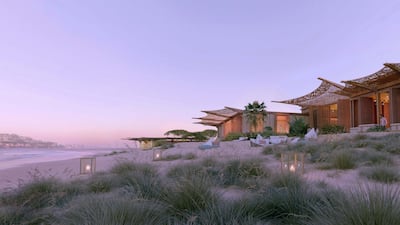
Nujuma, a Ritz-Carlton Resort, is one of several new luxury hotels opening in Saudi Arabia this year. Photo: Red Sea Global

The country has committed $550 billion to tourism development across the kingdom by 2030, the largest global investment in tourism by far. And there are 42,000 new hotel rooms in the pipeline, easily the most in the GCC region, says Hamidaddin.

This initial success has led the country’s leaders to reassess the original 100 million visitor target it set as part of the Saudi Vision 2030 programme and new targets are currently being agreed upon.

Despite the rapid development, there’s still a shortage of facilities to satisfy travel demand. “The main challenges today are a shortage of airlifts, accommodation and experiences,” says Hamidaddin.

Saudi Arabia’s home-grown version of Airbnb

One company aiming to help fill that gap is Gathern, currently the country’s best performing tourism company says the Saudi Tourism chief executive.

“Gathern is the alternative Airbnb, the Saudi version. It’s a home-sharing platform that started with a few hundred listings and I think today it has exceeded 20,000 across the country,” says Hamidaddin.

Listings include all types of accommodation from villas, farms and caravans to yachts and rustic chalets. There is also a wide variety of room rates on offer, catering towards different budgets — something that seems to be missing from many of the country’s tourism megaprojects.

From Banyan Tree AlUla to Six Senses Southern Dunes (launching as the first resort at The Red Sea destination in the coming months) or the Four Seasons heading to Neom’s Sinadalah Island, luxury accommodation seems to be the focus. However, it is a trend that the country's tourism authority are aware of.

Six Senses Southern Dunes will be the first resort to open at Saudi Arabia's The Red Sea destination later this year. Photo: Foster+Partners

“It’s important that we cater for all travellers, by social income class and by travel purpose. People that travel for wellness are very different than those that travel for adventure, culture and events. And so we need to make sure that our offering is looked at holistically,” says Hamidaddin.

In Riyadh — home to the towering Kingdom Centre and historic Masmak fort — there are plenty of hotel options to choose from, ranging from budget stays to luxury boutique hotels. But even here, there’s work to be done.

“Riyadh has so many hotels, many of which are on highways. But when I think of Dubai, the best performing hotels are not the ones on Sheikh Zayed Road, people don’t want to stay on a highway. I think what we want is to ensure that travellers can come and find a place to stay, and things to do that are connected and accessible,” says Hamidaddin.

Changing perceptions of a kingdom

'I think the people are the most telling about what this country is,' said Hamidaddin. Photo: Saudi Tourism

Hamidaddin accepts there are other challenges facing Saudi Arabia’s tourism industry, including how the country is still perceived by some internationally.

“In every industry, in any market, when a new brand comes in, there are the early adopters, the followers, the laggers and there are the sceptics that will never try that brand, that will say it’s not for me, and that’s fine.”

Fahd Hamidaddin, chief executive of the Saudi Tourism Authority. Reuters / Abdel Hadi Ramahi

“The best way to address the perception of Saudi Arabia is by having travellers come see it for themselves. And that has served us the best.

“The early adopters have been blown away, not just by the offering of the place, but mostly by the people. And I think the people are the most telling about what this country is, and how different from the perceptions and preconceptions that people had.”

Tourism is Saudi Arabia's new oil

Over the coming years, Saudi Arabia will aim to entice travellers with several new destinations and developments.

In Diriyah, the 300-year-old city and birthplace of Saudi Arabia, ancient Unesco-protected sites have reopened to visitors with plans for a boulevard consisting of an opera house, fashion houses, art galleries, cafes and more.

Argentina's Lionel Messi and his wife Antonela Roccuzzo visit Diriyah, the birthplace of Saudi Arabia. Photo: Saudi Tourism Authority / AFP

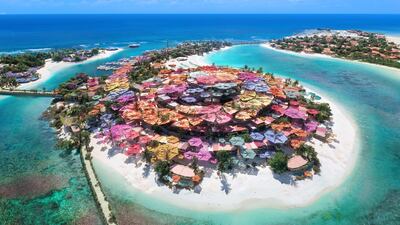
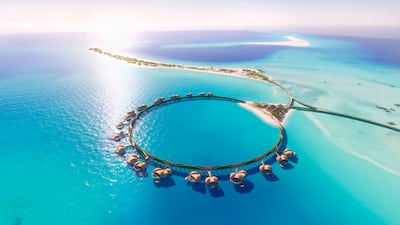
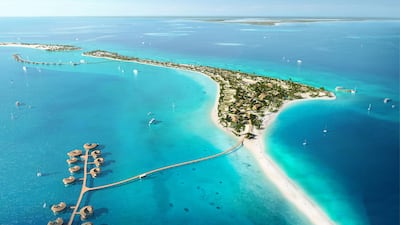
On the Red Sea coast, the site of some ambitious luxury tourism projects, a new airport and the first three hotels in a pipeline of 50 will open this year, offering travellers access to a cluster of unexplored islands and inland sites.

In futuristic Neom, Sindalah Island will open early next year with the launch of three properties from Marriott, including the first Autograph Collection Hotels property in the kingdom.

In the 1920s the world came to Saudi for oil, but in the 2020s, we're expecting the people of the world to come for tourism.
Fahd Hamidaddin

In 2026, Trojena at Neom will open in the kingdom's highest mountain range. This snow-capped mountain will be the first major outdoor skiing destination in the GCC, and host the2029 Asian Winter Games. It will also offer glamping and nature-laden stays at Collective Trojena, the region's first eco-glamp site.

A slew of events, such as electronic dance music festival MDLBeast Soundstorm, the F1 Saudi Arabian Grand Prix, Riyadh Season and AlUla Skies hot-air balloon festival are also on the calendar.

MDLBEAST Soundstorm 2022 in Riyadh is one of several events on the tourism calendar. Photo: MDLBEAST Soundstorm

Each of these developments and events are part of Saudi Arabia's mission to diversify away from oil, something that simply cannot be done without tourism.

“The WTTC [the World Travel and Tourism Council] said one of every five new jobs came from tourism in the last decade, and one of every four new jobs will come from the industry in the coming five to 10 years. While other industries lose jobs to robots, these human-led sectors continue to provide and tourism sits at the forefront for us,” says Hamidaddin.

“What we're doing, we are doing for our people, for our economy, and the world is going to reward us. In the 1920s the world came to Saudi for oil, but in the 2020s, we're expecting the people of the world to come for tourism. And that's why we say that tourism is the new oil.”

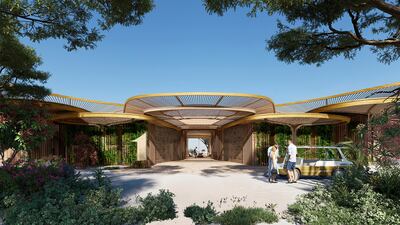
  • Grand Hyatt The Red Sea is part of phase one of the mega-tourism project in Saudi Arabia. All photos: The Red Sea Development Company
    Grand Hyatt The Red Sea is part of phase one of the mega-tourism project in Saudi Arabia. All photos: The Red Sea Development Company
  • SLS Red Sea will welcome guests to Shaura Island in early 2023.
    SLS Red Sea will welcome guests to Shaura Island in early 2023.
  • Nujuma, a Ritz-Carlton Reserve, is scheduled to open in 2023. Photo: Marriott International
    Nujuma, a Ritz-Carlton Reserve, is scheduled to open in 2023. Photo: Marriott International
  • The St Regis Red Sea Resort will be located on a private island and offer travellers a Maldivian-style experience.
    The St Regis Red Sea Resort will be located on a private island and offer travellers a Maldivian-style experience.
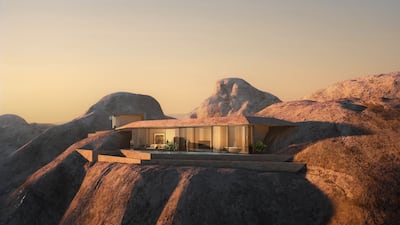
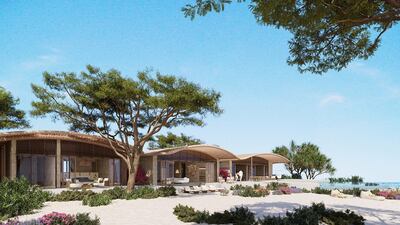
  • Eco-friendly mountain resort Desert Rock was the first hotel to be announced for Saudi Arabia's Red Sea Project.
    Eco-friendly mountain resort Desert Rock was the first hotel to be announced for Saudi Arabia's Red Sea Project.
  • The Red Sea Edition on the island of Shaura will be designed to reflect the best of the location's cultural and social environment.
    The Red Sea Edition on the island of Shaura will be designed to reflect the best of the location's cultural and social environment.
  • Six Senses Southern Dunes will be one of the first hotels to open at the destination.
    Six Senses Southern Dunes will be one of the first hotels to open at the destination.
  • The first Raffles resort in the kingdom, Raffles Red Sea, promises a nature-focused stay.
    The first Raffles resort in the kingdom, Raffles Red Sea, promises a nature-focused stay.
  • The InterContinental Resort Red Sea will have sea-facing rooms and direct beach access.
    The InterContinental Resort Red Sea will have sea-facing rooms and direct beach access.
  • Jumeirah's hotel at the Red Sea will have open-plan suites with views of the pristine shorelines.
    Jumeirah's hotel at the Red Sea will have open-plan suites with views of the pristine shorelines.
  • Fairmont Red Sea is a luxury family-friendly hotel with a focus on wellness and nature.
    Fairmont Red Sea is a luxury family-friendly hotel with a focus on wellness and nature.
  • Hyatt-owned Miraval The Red Sea will be home to the region's largest spa. Photo: Hyatt
    Hyatt-owned Miraval The Red Sea will be home to the region's largest spa. Photo: Hyatt
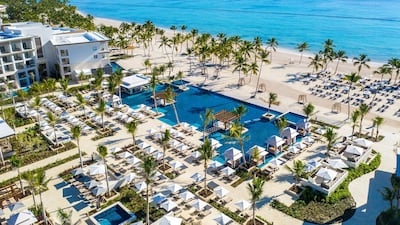
  • Playa Hotels & Resorts has also announced it will open a luxury all-inclusive property on Saudi Arabia's Red Sea. Photo: Playa Hotels & Resorts / Facebook
    Playa Hotels & Resorts has also announced it will open a luxury all-inclusive property on Saudi Arabia's Red Sea. Photo: Playa Hotels & Resorts / Facebook
Yemen's Bahais and the charges they often face

The Baha'i faith was made known in Yemen in the 19th century, first introduced by an Iranian man named Ali Muhammad Al Shirazi, considered the Herald of the Baha'i faith in 1844.

The Baha'i faith has had a growing number of followers in recent years despite persecution in Yemen and Iran. 

Today, some 2,000 Baha'is reside in Yemen, according to Insaf. 

"The 24 defendants represented by the House of Justice, which has intelligence outfits from the uS and the UK working to carry out an espionage scheme in Yemen under the guise of religion.. aimed to impant and found the Bahai sect on Yemeni soil by bringing foreign Bahais from abroad and homing them in Yemen," the charge sheet said. 

Baha'Ullah, the founder of the Bahai faith, was exiled by the Ottoman Empire in 1868 from Iran to what is now Israel. Now, the Bahai faith's highest governing body, known as the Universal House of Justice, is based in the Israeli city of Haifa, which the Bahais turn towards during prayer. 

The Houthis cite this as collective "evidence" of Bahai "links" to Israel - which the Houthis consider their enemy. 


About Proto21

Date started: May 2018
Founder: Pir Arkam
Based: Dubai
Sector: Additive manufacturing (aka, 3D printing)
Staff: 18
Funding: Invested, supported and partnered by Joseph Group

Company%C2%A0profile
%3Cp%3E%3Cstrong%3ECompany%20name%3A%20%3C%2Fstrong%3EOutsized%0D%3Cbr%3E%3Cstrong%3EStarted%3A%20%3C%2Fstrong%3E2016%0D%3Cbr%3E%3Cstrong%3EFounders%3A%20%3C%2Fstrong%3EAzeem%20Zainulbhai%2C%20Niclas%20Thelander%2C%20Anurag%20Bhalla%20and%20Johann%20van%20Niekerk%20%0D%3Cbr%3E%3Cstrong%3EBased%3A%20%3C%2Fstrong%3EIndia%2C%20South%20Africa%2C%20South-East%20Asia%2C%20Mena%0D%3Cbr%3E%3Cstrong%3ESector%3A%3C%2Fstrong%3E%20Recruitment%0D%3Cbr%3E%3Cstrong%3EInvestment%20raised%3A%3C%2Fstrong%3E%20%241%20million%0D%3Cbr%3E%3Cstrong%3ECurrent%20staff%20count%3A%3C%2Fstrong%3E%2040%0D%3Cbr%3E%3Cstrong%3EInvestors%3A%20%3C%2Fstrong%3ESeed%20and%20angel%20investors%0D%3Cbr%3E%3C%2Fp%3E%0A
AUSTRALIA%20SQUAD
%3Cp%3EPat%20Cummins%20(capt)%2C%20Scott%20Boland%2C%20Alex%20Carey%2C%20Cameron%20Green%2C%20Marcus%20Harris%2C%20Josh%20Hazlewood%2C%20Travis%20Head%2C%20Josh%20Inglis%2C%20Usman%20Khawaja%2C%20Marnus%20Labuschagne%2C%20Nathan%20Lyon%2C%20Mitchell%20Marsh%2C%20Todd%20Murphy%2C%20Matthew%20Renshaw%2C%20Steve%20Smith%2C%20Mitchell%20Starc%2C%20David%20Warner%3C%2Fp%3E%0A
Jetour T1 specs

Engine: 2-litre turbocharged

Power: 254hp

Torque: 390Nm

Price: From Dh126,000

Available: Now

%3Cp%3E%3Ca%20href%3D%22https%3A%2F%2Fwww.thenationalnews.com%2Fbusiness%2Feconomy%2Fislamic-economy-consumer-spending-to-increase-45-to-3-2tn-by-2024-1.936583%22%20target%3D%22_self%22%3EGlobal%20Islamic%20economy%20to%20grow%203.1%25%20to%20touch%20%242.4%20trillion%20by%202024%3C%2Fa%3E%26nbsp%3B%3C%2Fp%3E%0A%3Cp%3E%3Ca%20href%3D%22https%3A%2F%2Fwww.thenationalnews.com%2Fbusiness%2Feconomy%2Fuk-economy-plunges-into-worst-ever-recession-after-record-20-4-contraction-1.1062560%22%20target%3D%22_self%22%3EUK%20economy%20plunges%20into%20worst-ever%20recession%20after%20record%2020.4%25%20contraction%3C%2Fa%3E%3C%2Fp%3E%0A%3Cp%3E%3Ca%20href%3D%22https%3A%2F%2Fwww.thenationalnews.com%2Fbusiness%2Feconomy%2Fislamic-economy-consumer-spending-to-increase-45-to-3-2tn-by-2024-1.936583%22%20target%3D%22_self%22%3EIslamic%20economy%20consumer%20spending%20to%20increase%2045%25%20to%20%243.2tn%20by%202024%3C%2Fa%3E%3C%2Fp%3E%0A

Mercer, the investment consulting arm of US services company Marsh & McLennan, expects its wealth division to at least double its assets under management (AUM) in the Middle East as wealth in the region continues to grow despite economic headwinds, a company official said.

Mercer Wealth, which globally has $160 billion in AUM, plans to boost its AUM in the region to $2-$3bn in the next 2-3 years from the present $1bn, said Yasir AbuShaban, a Dubai-based principal with Mercer Wealth.

Within the next two to three years, we are looking at reaching $2 to $3 billion as a conservative estimate and we do see an opportunity to do so,” said Mr AbuShaban.

Mercer does not directly make investments, but allocates clients’ money they have discretion to, to professional asset managers. They also provide advice to clients.

“We have buying power. We can negotiate on their (client’s) behalf with asset managers to provide them lower fees than they otherwise would have to get on their own,” he added.

Mercer Wealth’s clients include sovereign wealth funds, family offices, and insurance companies among others.

From its office in Dubai, Mercer also looks after Africa, India and Turkey, where they also see opportunity for growth.

Wealth creation in Middle East and Africa (MEA) grew 8.5 per cent to $8.1 trillion last year from $7.5tn in 2015, higher than last year’s global average of 6 per cent and the second-highest growth in a region after Asia-Pacific which grew 9.9 per cent, according to consultancy Boston Consulting Group (BCG). In the region, where wealth grew just 1.9 per cent in 2015 compared with 2014, a pickup in oil prices has helped in wealth generation.

BCG is forecasting MEA wealth will rise to $12tn by 2021, growing at an annual average of 8 per cent.

Drivers of wealth generation in the region will be split evenly between new wealth creation and growth of performance of existing assets, according to BCG.

Another general trend in the region is clients’ looking for a comprehensive approach to investing, according to Mr AbuShaban.

“Institutional investors or some of the families are seeing a slowdown in the available capital they have to invest and in that sense they are looking at optimizing the way they manage their portfolios and making sure they are not investing haphazardly and different parts of their investment are working together,” said Mr AbuShaban.

Some clients also have a higher appetite for risk, given the low interest-rate environment that does not provide enough yield for some institutional investors. These clients are keen to invest in illiquid assets, such as private equity and infrastructure.

“What we have seen is a desire for higher returns in what has been a low-return environment specifically in various fixed income or bonds,” he said.

“In this environment, we have seen a de facto increase in the risk that clients are taking in things like illiquid investments, private equity investments, infrastructure and private debt, those kind of investments were higher illiquidity results in incrementally higher returns.”

The Abu Dhabi Investment Authority, one of the largest sovereign wealth funds, said in its 2016 report that has gradually increased its exposure in direct private equity and private credit transactions, mainly in Asian markets and especially in China and India. The authority’s private equity department focused on structured equities owing to “their defensive characteristics.”

ACL Elite (West) - fixtures

Monday, Sept 30

Al Sadd v Esteghlal (8pm)
Persepolis v Pakhtakor (8pm)
Al Wasl v Al Ahli (8pm)
Al Nassr v Al Rayyan (10pm)

Tuesday, Oct 1
Al Hilal v Al Shorta (10pm)
Al Gharafa v Al Ain (10pm)

Updated: May 12, 2023, 6:01 PM