


Saudi Arabia is opening its doors to widescale tourism for the first time.
The kingdom is set to announce details of a new visa regime at a gala event at the Unesco-listed Ad-Diriyah in Riyadh on Friday night. Specific details about the visas have so far been scarce, but it is expected that tourists could be eligible to enter the kingdom from this month.
It is understood the new e-visa or visa on arrival services will be extended to 49 countries, including the UK, US, Canada and Australia.
Spokespeople for the Saudi Commission for Tourism and National Heritage have also teased a second big reveal on Friday, saying there would be an announcement of a "significant commitment of private sector investment".

Ahmad Al-Khateeb, chairman of the Saudi Commission for Tourism and National Heritage, said of the impending announcement: “Opening Saudi Arabia to international tourists is a historic moment for our country. Generous hospitality is at the heart of Arabian culture and we look forward to showing our guests a very warm welcome."
He said tourists would be "surprised and delighted by the treasures we have to share", which include five Unesco World Heritage Sites, breathtaking natural beauty and a vibrant local culture.
"To visitors we say: be among the first to discover and explore the treasures of Arabia. To investors we say: become part of the fastest growing tourism sector on Earth.”
Saudi Arabia first unveiled its plans to welcome tourists to the kingdom in December 2017, but in the years since, there had been little news – until recently.
Last week, a slick new tourism campaign for the kingdom was launched, with a stunning video making the rounds on social media.
Previously, most visitors to Saudi Arabia were Muslims visiting to perform the annual Hajj pilgrimage, or those on business trips. Tourist visas were only issued on an intermittent basis, and only for select group tours. It was particularly difficult for single women to visit the kingdom.
Opening Saudi to tourism is a key milestone in the implementation of Crown Prince Mohammed bin Salman's Vision 2030, which seeks to diversify the country’s economy and reduce its dependence on oil. Saudi Arabia expects to increase international and domestic visits to 100 million per year by 2030, attracting significant foreign and domestic investment, and creating one million jobs.
By 2030, the aim is for tourism to contribute up to 10 per cent towards the Saudi GDP, compared to 3 per cent today.

Billions of dollars are currently being spent to improve infrastructure and develop heritage, cultural and entertainment sites. Saudi’s airport capacity is expected to increase by 150 million passengers per year, and an additional 500,000 hotel key cards will be needed across the country over the coming decade.
The country is set to put its diverse landscapes on show in the coming months as it opens up to the world: the green mountains of Asir, the crystal waters of the Red Sea, the snow-covered winter plains of Tabuk and the shifting sands of the Empty Quarter are expected to be important tourist draws.
A number of new tourist destinations are currently under construction, too, including the futuristic city of Neom, the Qiddiya entertainment city near Riyadh and a range of luxury destinations by the Red Sea.
Ahead of the tourist visa launch, check out our pick of the top 10 sites to see in Saudi Arabia below:
-
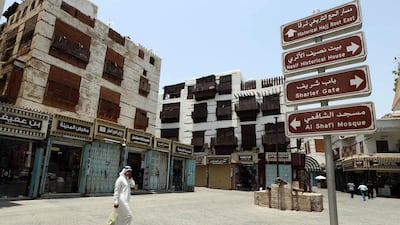
JEDDAH: UNESCO's World Heritage Committee inscribed the old city of Jeddah and the Gate of Makkah on the World Heritage List in 2014. Pictured: windows covered with wooden screens known as "mashrabaiya" adorn traditional buildings in the old city of Jeddah. AFP Photo. -
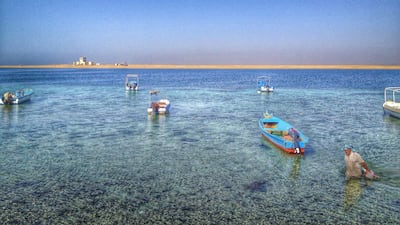
YANBU: A popular jumping-off point for diving in the Red Sea, and famed for its white, sandy beaches, Yanbu's star is on the rise. While it's also known for its refineries and petrochemical plants - the city boasts plenty of private beaches, and resorts geared towards families. John Fraser / Stockimo. -
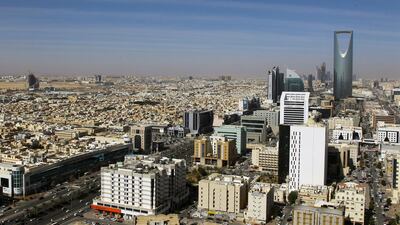
RIYADH: The capital and most populous city of Saudi Arabia is primarily considered a business destination. But, financial hub or not, the 6 million-strong city boasts some impressive skyscrapers - including the 302m-high Kingdom Centre, with a sky bridge connecting 2 towers, and the 267m-high Al Faisaliah Centre, with a glass-globe summit. The historic Deira suburb, and the Masmak Fort, is worth a wander around too. Faisal Al Nasser / Reuters. -

TABUK: Steeped in ancient history, Tabuk is an agricultural-rich area on the Red Sea. It's known for a wealth of aspects, most notably it's diving, the Tabuk Castle which dates back to 1559, and the Hisma mountain range. Getty Images -
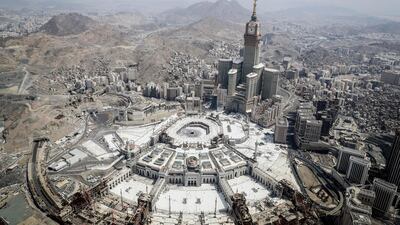
MAKKAH: Located in western Saudi Arabia, this is considered the holiest site in Islam. Non-Muslims are strictly forbidden to enter the city. A pilgrimage to Makkah, known as the Hajj, is one of the Five Pillars of Islam, and is compulsory for all Muslims who are able. Each year, over three million Muslims visit the city during the month of Dhu'l-Hijjah. The Great Mosque of Makkah (pictured) is considered the holiest site in the city, and in Islam. The Kaaba, which it is built around, is a building said to have been built by Prophet Abraham himself and his son, Prophet Ishmael. Mast Irham / EPA. -

MADINA: Considered the second holiest city in Islam after Makkah, this is said to be where the prophet Mohammed was buried. Pictured: the burial place is at the city's heart, at al-Masjid an-Nabawi (the Prophet's Mosque). Getty Images -
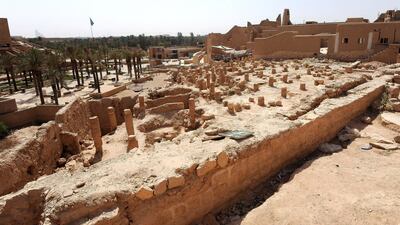
DIR'IYAH: Another UNESCO site, this was once the home of the Saudi royal family, and served as the capital of the emirate of the same name from 1744 to 1818, under the first Saudi dynasty. The At-Turaif district in ad-Dir'iyah on the outskirts of Riyadh, is part of a major development project shepherded by Saudi King Salman. The heart of the 750 million riyal ($200 million/179 million euro) project is the restoration of At-Turaif, but it also includes the creation of the adjacent Abdul Wahhab Foundation which is designed to is designed to honour Sheikh Mohammed bin Abdul Wahhab, the 18th-century fundamentalist preacher who co-founded the Saudi state. Fayez Nureldine / AFP Photo. -
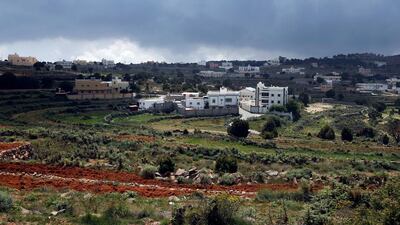
ABHA: This mountainous area is known for its national parks, forests and mud-built castles and buildings. Its mild climate, and lush, green countryside make it a popular destination for domestic travellers throughout the year. Faisal Al Nasser / Reuters. -
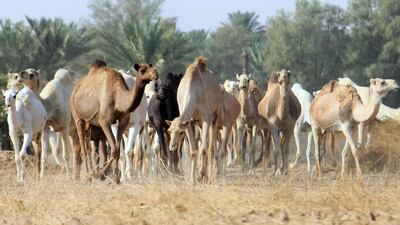
QASSIM: The Qassim region, 350 kms north of Riyadh is supposedly the richest region per capita in Saudi Arabia. Primarily a desert climate, its dotted with archaeological sites and is well-known for its traditional textiles. It's sliced through the middle by the Wadi Al Rummah, the longest valley in the Arabian peninsula, stretching for about 600 km from Madina to the Thuayrat Dunes. Hassan Ammar / AFP Photo.



