


The Olympics have been cancelled three times in the past – each on account of World Wars – and Tokyo was one of those affected.
Across the movement’s history, though, the Games have been remarkably durable, often carrying on despite conflict, terrorism, and Cold War boycotts.
Those that were cancelled …
1916, Berlin
Berlin was selected in 1912 to host the Games four years later.
The Deutsche Stadion was completed within 200 days, but never used for the purpose it was created for, because of war.
After the outbreak of World War I in Europe in 1914, planning did still went ahead.
Germany was resistant to the idea of it being moved to a neutral country, with a number of cities in the United States making themselves available to be an alternative venue.
When it became clear the war would not end in time, the Games were cancelled. In 1915, the arena was temporarily used as a military hospital.
1940, Tokyo/Helsinki
The coronavirus pandemic is not the first problem faced by a Tokyo Olympics.
In 1940, it was set to be the first non-Western city to host an Olympics, having won the bid in 1932 ahead of Barcelona, Rome and Helsinki.
Announcing their forfeiture in July 1938, an official said: “When peace reigns again in the Far East, we can then invite the Games to Tokyo and take that opportunity to prove to the people of the world the true Japanese spirit.”
Helsinki, which was runner up in the first vote, was awarded the rescheduled event, only for that to be cancelled anyway following the outbreak of World War II in 1939.
_________________
Tokyo braces for postponement
-

The Olympic Flame burns during a ceremony in Fukushima City, Japan, on Tuesday, March 24. AP -
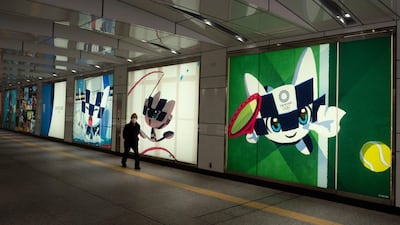
A man walks past large displays promoting the Tokyo 2020 Olympics in Tokyo on Monday. AP -
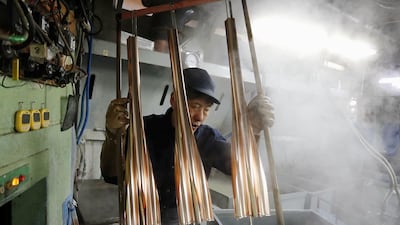
The torches for the 2020 Tokyo Olympics are manufactured at a factory in Tokyo. Kyodo / Reuters -
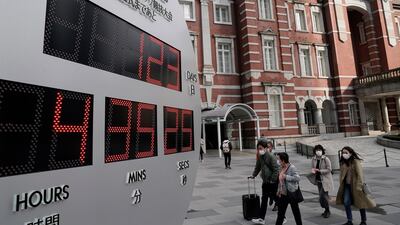
Pedestrians wearing masks walk past a countdown clock displaying the time until the opening of the Tokyo Olympic Games outside Tokyo railway station. Japanese Prime Minister Shinzo Abe said postponement of Games is a genuine possibility. EPA -
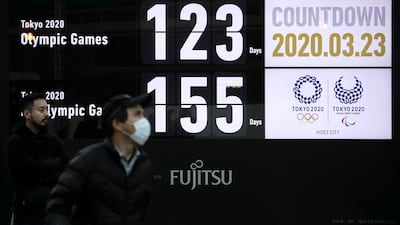
A man walks near a countdown display for the Tokyo 2020 Olympics and Paralympics in Tokyo on Monday. AP -
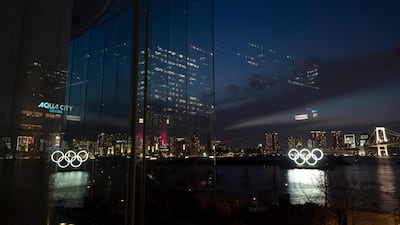
The Olympic rings are reflected in the glass wall of a wedding chapel in the Odaiba section of Tokyo. AP -
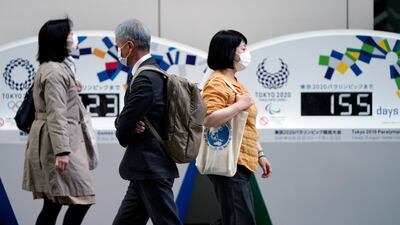
Pedestrians walk past a Tokyo Olympics countdown clock in Tokyo. EPA -
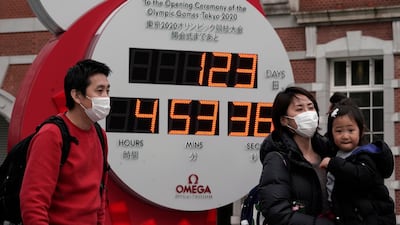
A family takes a photograph in front of a countdown clock in Tokyo. EPA -
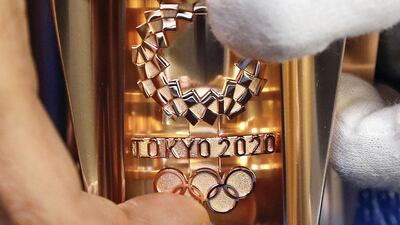
The torch for the 2020 Tokyo Olympics is manufactured at a factory in Tokyo. Kyodo / via Reuters -
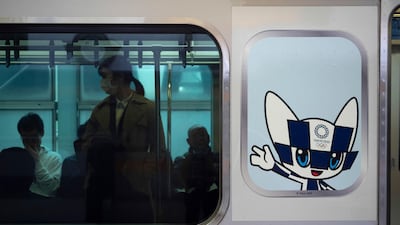
Commuters in a train carrying a poster showing the Tokyo 2020 Olympics mascot, Miraitowa, in Tokyo. AP -
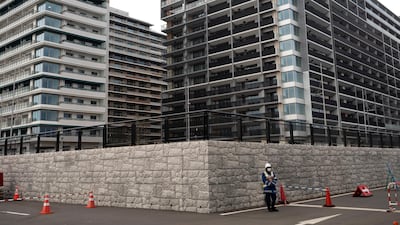
A guard stands in front of apartment buildings at the athletes' village for the Tokyo 2020 Olympics in Tokyo on Monday. AP -
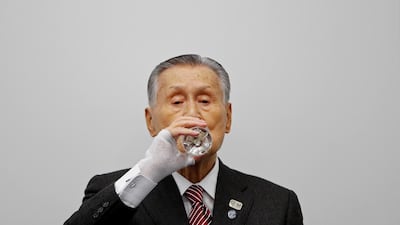
Yoshiro Mori, President of the Tokyo 2020 Olympic Games Organising Committee, during a news conference on Monday. Reuters -
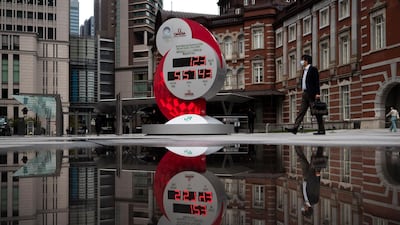
A countdown clock for the Tokyo 2020 Olympics outside Tokyo Station. AP


_________________
1944, London
This was the closest there has been to a postponed Games to date.
London was due to host the 1944 event, marking the International Olympic committee’s 50th anniversary, before it became clear it would be impossible because of war.
Instead, the English capital held the next Olympics – the first after the resumption of peace – in 1948. That Games was awarded without a ballot.
… And those that weren’t, despite the challenges
1972, Munich
Germany’s second Olympics, after 1936 in Berlin, was supposed to be the “Games of Peace and Joy” but it became the opposite.
The Games were indelibly marked by the massacre of 11 Israeli athletes and coaches, plus a police officer, by Black September terrorists.
The sports events were suspended for a period of 20 hours because of the attack, only to subsequently proceed.
Avery Brundage, the IOC president, ordered the resumption, saying: “The Games must continue at all costs.”
1980, Moscow
The Games went ahead in 1980 with the smallest number of participating nations – 80 – since 1956.
Led by the United States, more than 60 countries boycotted the event in protest at the Soviet-Afghan War.
US president Jimmy Carter issued an ultimatum in January, seven months ahead of the start of competition, saying America would boycott if Soviet troops were not withdrawn from Afghanistan.
Many of the absent countries competed in the Liberty Bell Classic in Philadelphia instead, while in Moscow, USSR and East Germany won 127 of the 204 available gold medals.
1984, Los Angeles
Los Angeles has hosted the Olympics twice – and will become the third city, after London and Paris, to stage it for a third time, in 2028.
The 1984 version set a new standard for both commercial value and number of participants. The venues were built at low-costs, while private corporate investment also helped bring about a profit of over $250 million (Dh918m).
More countries participated than ever before, too, despite the fact 12 Eastern Bloc countries stayed away in response to the boycott of Moscow four years earlier, while Iran and Libya also opted out.

