



Sunrisers Hyderabad's young pacer Umran Malik continues to make waves in the Indian Premier League.
He made a few heads turn on debut against Kolkata Knight Riders when he bowled the fastest deliver by an Indian, clocked at 151.03 kph (93.8mph) in Dubai, in this edition of the IPL.
The 21-year-old pacer, who hails from Jammu and Kashmir, then raised the bar further on Wednesday during the match against Royal Challengers Bangalore in Abu Dhabi.
The right-arm pacer cranked up the speed in his second over, topping 150kph and maxing out at 152.95 kph (95mph). That is not only the quickest delivery in IPL 2021, it is also one of the quickest deliveries bowled by an Indian in history.
In fact, in his second over on Wednesday, Malik bowled three of the five fastest deliveries of IPL 2021.
And while he ended up on the losing side in the previous match, Malik got to celebrate his latest feat with the winning team. After Hyderabad posted 141-7 batting first, they restricted Bangalore to 137-6 to prevail by four runs. Malik finished with respectable figures of 1-21 from his four overs.
Following the match, Bangalore and India captain Virat Kohli admitted Malik's pace was impressive and that it was important to look after him.
"It's good to see a guy bowling at 150 clicks. It's important to understand the progress of individuals from here, how to look after yourself. We have got to maximise the potential of our fast bowling stocks," Kohli said.
Fastest deliveries bowled in history
-

Shoaib Akhtar (161.3kph / 100.2mph): The Rawalpindi Express is the fastest bowler the world has seen. The Pakistan quick made it official during the 2003 World Cup in South Africa against England, where he clocked 161.3kph while bowling to Nick Knight. He had already breached the 100mph mark at home against New Zealand the previous year but the speed guns used then were not approved by the governing body. PA / AFP -
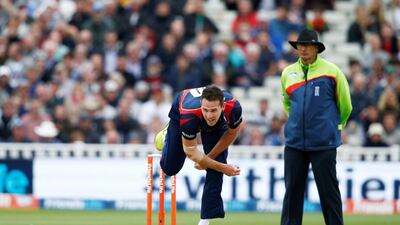
Shaun Tait (161.1kph / 100.1mph): The 'Wild Thing' bowled a thunderbolt at 161.1 kph during an ODI against England at Lord’s in 2010. A few months earlier, the Aussie had bowled one just below the 100mph mark against Pakistan during a T20 in Melbourne. However, Tait struggled to sustain his pace in ODI cricket, let alone Tests. Action Images -
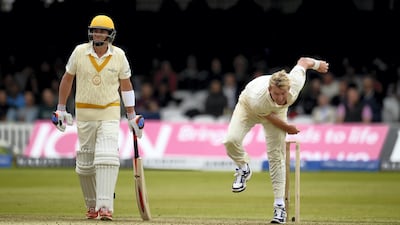
Brett Lee (161.1kph / 100.1mph): Just like Akhtar, the Australian is considered as one of the very few genuine fast bowlers of modern times who sustained their pace in white and red-ball cricket. Lee hit his absolute peak against the Kiwis in Napier, where he crossed the 100mph barrier against batsman Craig Cumming who struggled to put bat to ball. Reuters -
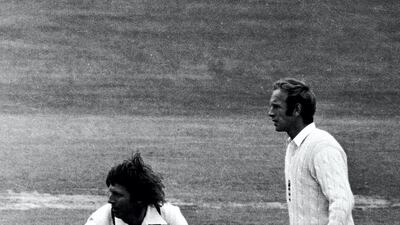
Jeff Thomson (160.6kph / 99.8mph): The Australian is seen by many as the benchmark of genuine pace bowling. ‘Thommo’ had a very simple approach to bowling: “I just shuffle in … and go WHANG.” That ‘whang’ was once clocked at 160.6kph during a study in Perth in 1976. Thomson maintains if he had been timed using modern speed guns and parameters, the radar would have read 180kph. Action Images -

Mitchell Starc (160.4kph / 99.6mph): The left-arm quick is one of the very few bowlers who can swing the ball even at 95mph. Starc registered his fastest delivery during a Test against the Kiwis on a dead surface in Perth. The full length delivery was defended by batsman Ross Taylor, which was a bit of an anti-climax. The batsman was dropped next ball, by the way. Reuters -
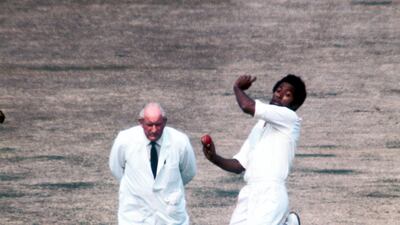
Andy Roberts (159.5kph / 99.1mph): The Windies quick was seen as the more dangerous among the Caribbean quartet of fast bowlers as unlike Michael Holding and Malcolm Marshall, he was deceptively fast and changed his pace up to surprise batsmen. His fastest ball bowled was against Australia in 1975 in what was then a haven for pacers – Perth. Getty Images -
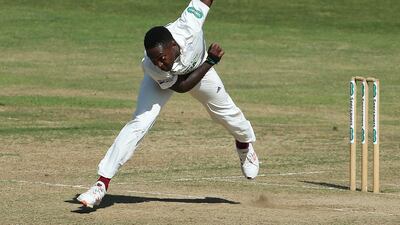
Fidel Edwards (157.7 kph / 97.9mph): Not many talk of the diminutive West Indies pacers when discussing genuine pacers but he was right up there. The right-arm quick was famously selected to play Test cricket as an 18-year-old after bowling just four balls to Brian Lara during a net session. In 2003 against South Africa at the Wanderers, Edwards hurled his fastest ever delivery at a shade under 98mph. PA -
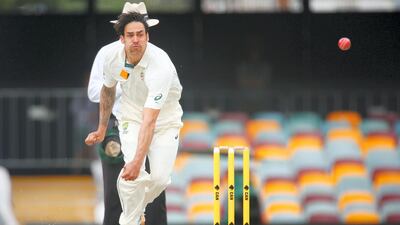
Mitchell Johnson (156.8kph / 97.4mph): Another Aussies on this list. You never knew which Mitch would turn up for any game. But when he was switched on, he was one of the scariest bowlers to face. Labelled by Dennis Lillee as a ‘once in a generation bowler’, Johnson’s fastest recorded delivery came, unsurprisingly, against the Englishmen at the MCG. Reuters -

Mohammad Sami (156.4kph / 97.1mph): The right-arm pacer was at one point as fast as Shoaib Akhtar but inconsistent performances meant he was quickly forgotten once he lost his place in the team. His quickest recorded delivery was against Zimbabwe in Sharjah in 2003. AFP -

Dale Steyn (156.2kph / 97mph): An all-time great bowler, Steyn had more pace than he knew how to handle at the start of his career. Spent the best part of a decade terrorising batsmen with late swing and pace, which was once clocked at 156.2kph while playing for Royal Challengers Bangalore against Kolkata Knight Riders in the IPL in 2010. Remained surprisingly fit during the peak of his career. Reuters



