
The future of Mohamed Salah is one of the more intriguing subplots as Liverpool’s bleak season draws to an end.
The Premier League title defence fizzled out in the new year. An uphill battle for the top four and Champions League qualification is all that remains in this underwhelming campaign. Everyone at Anfield has begun to look beyond May to imagine what comes next.
Salah is Liverpool’s most marketable asset. He is acutely aware that, because he turns 29 in June, he probably has just one big move left in his career.
The Egyptian has given two teasing interviews to the Spanish press in the past five months talking about the possibility of moving to La Liga, the most recent of which was conducted in the March international break. Goalscorers like Salah do not come on to the market very often. He should be a man in demand.
There are complications. The pandemic is likely to depress transfer fees in the summer. “We are going to see clubs reporting £100 million-plus losses because of Covid,” said David Bick, the chairman of Square 1 Consulting and a financial specialist who has been involved in a number of football takeovers. “Even the biggest clubs are feeling the pain.”
Manchester City posted losses of £126m ($173m) for 2019-20 last week. The teams who are able to afford Salah’s fee and wages may think again when they look at the bottom line.
There are other options for potential buyers. Three strikers are higher on the wish lists of the wealthiest clubs. Erling Braut Haaland is the prime target for this summer. The Borussia Dortmund forward is 20 and represents better long-term value.
Kylian Mbappe is also more desirable. The 22-year-old Frenchman is a likelier recruit for Real Madrid and Barcelona should he choose to leave Paris Saint-Germain.
Harry Kane also ranks above Salah in the view of potential buyers. The Tottenham Hotspur captain is a year younger and has a more impressive all-round game than the Liverpool man.
Liverpool 2 Aston Villa 1: player ratings
-
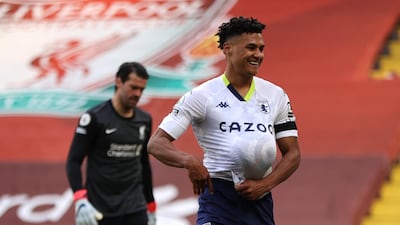
LIVERPOOL RATINGS: Alisson Becker - 6: The Brazilian should have done much better for Villa’s goal. He was safe enough otherwise and his distribution was good. PA -
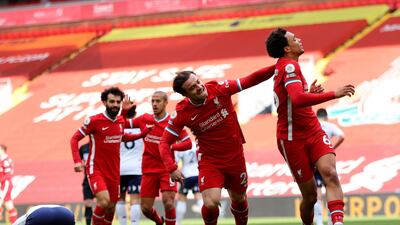
Trent Alexander-Arnold - 8: The 22-year-old was excellent on the ball and went close with a free kick before popping up for the crucial winning goal. He had some tough moments defensively but rose to the challenge. EPA -
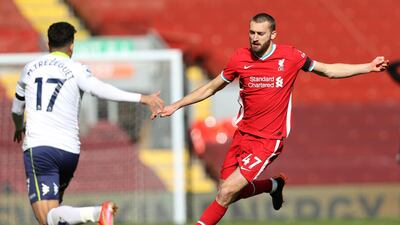
Nathaniel Phillips - 5: The centre back’s lack of pace was exposed by Watkins but he held his own in the tackle. He is a reassuring presence in the air but not so much on the ground. AP -
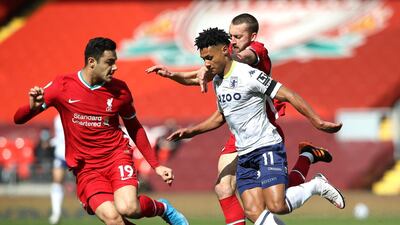
Ozan Kabak - 4: The Turk looked nervous from the first minute and gave the ball away before the Villa goal. He never regained authority. He was replaced by Shaqiri with a minute to go. AP -
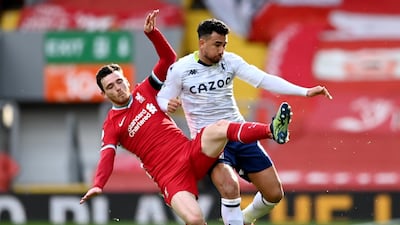
Andrew Robertson - 7: The Scot has suffered a dip in form recently but he was close to his best against Villa. His shot led to the equaliser and his driving runs were effective again and again. Reuters -
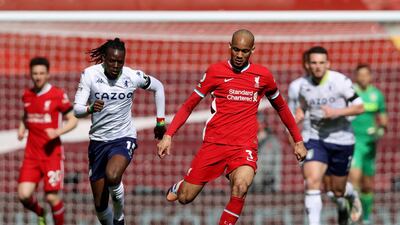
Fabinho - 7: The Brazilian set the tone for the midfield, sparking attacks from deep and cutting out any threat. He produced a composed and clever display. PA -
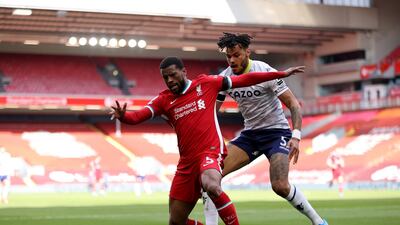
Georginio Wijnaldum - 5: The Dutchman was wasteful in possession and lacked his usual vigour. His touch was too heavy when he could have freed Salah in the area. Taken off for Thiago with 20 minutes left. Reuters -
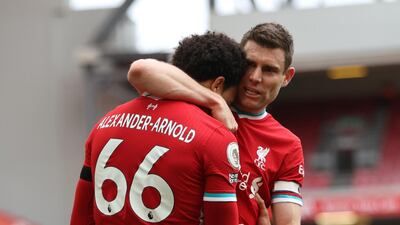
James Milner - 6: The 35-year-old no longer has the strongest engine but his experience and workrate were impressive. He provided leadership and was a calming presence. PA -
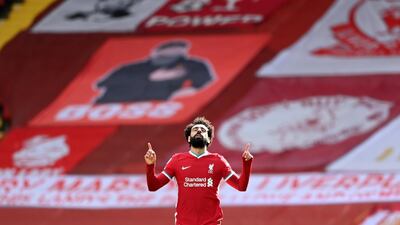
Mohamed Salah - 7: The Egyptian seemed a bit unnerved after missing an early chance but he regained his composure to score the equaliser. He again showed off his knack of being in the right place at the critical moment. Reuters -
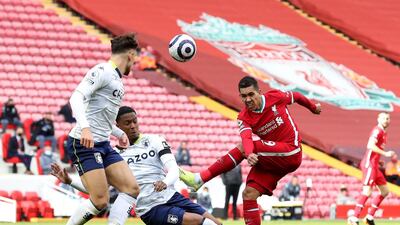
Roberto Firmino - 7: The Brazilian was lively and his movement worried the defence. He was unfortunate to have a goal disallowed for offside earlier in the move. He made way for Mane with 15 minutes left. Reuters -
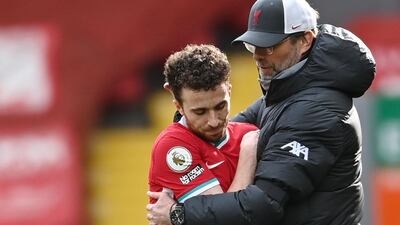
Diogo Jota - 6: The Portuguese was a threat throughout but should have hit the target with a header from a corner. He was not as clinical as usual. Reuters -
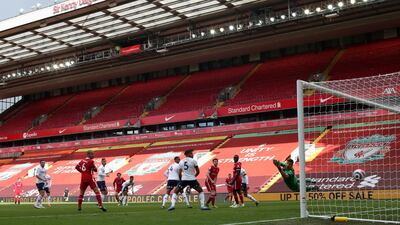
SUBS: Thiago Alcantara - 7: The 29-year-old replaced Wijnaldum with 20 minutes left and made the most of his time on the pitch. His passing was precise and he forced a great save from Martinez just seconds before the winning goal. PA -
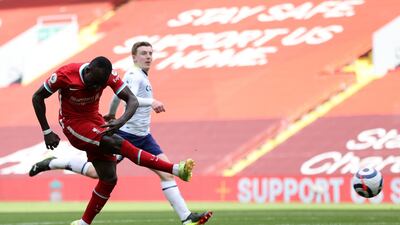
Sadio Mane - 4: The Senegalese joined the action with 15 minutes to go in place of Firmino but never got to the pace of the game. He was loose with possession as his team tried to turn up the pressure. PA -
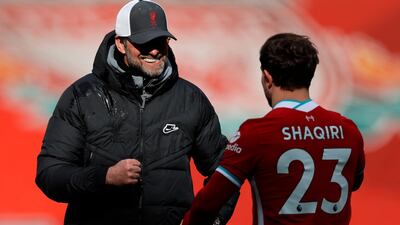
Xherdan Shaqiri - 6: It looked like another fruitless cameo for the Swiss when he replaced Kabak with a minute to go but he managed to influence the game by playing a part in the lead-up to the winning goal. EPA -
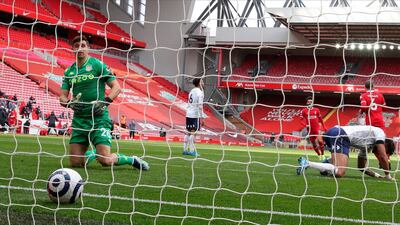
ASTON VILLA RATINGS: Emiliano Martinez - 6: The Argentinian made a spectacular save from Thiago just seconds before Alexander-Arnold scored the winner. He might feel he could have palmed Robertson’s shot into a less dangerous area on the equaliser. EPA -
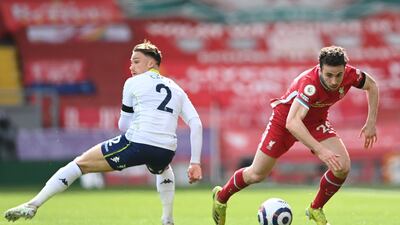
Matty Cash - 5: The 23-year-old showed plenty of enterprise but had a tendency to get dragged out of position. He was relieved to see Firmino’s goal ruled out for offside after failing to cut out the diagonal pass in the build-up. Getty -

Ezri Konsa - 6: The 23-year-old was solid and produced a number of blocks and challenges to stop Liverpool attacks. He could have scored, too, but sent a free header directly at Alisson. Getty -
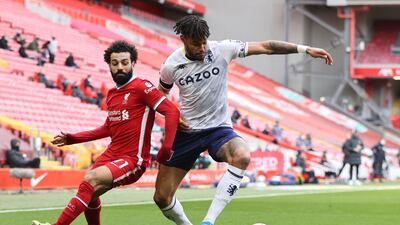
Tyrone Mings - 5: The centre back was lucky to get away with letting the ball slip under his boot and he can be a liability when he tries to kick with his weaker right foot. He is a battler, though, and proved it with a number of clearances. AP -
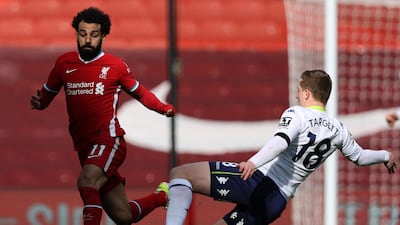
Matt Targett - 6: The left back acquitted himself well against Salah. His set-piece delivery that created a chance for Konsa was excellent and he looked a threat going forward. AFP -
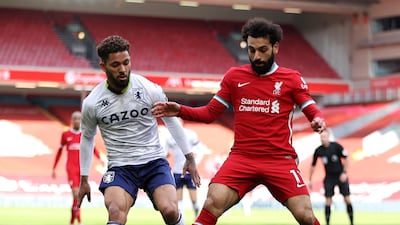
Douglas Luiz - 4: The Brazilian was pushed into a more upfield role than usual and had little influence on the game. He allowed his compatriot Fabinho too much time and space in the midfield. Getty -
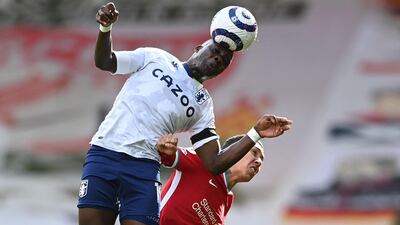
Marvelous Nakamba - 7: The Zimbabwean shielded the defence effectively and nicked the ball from Firmino just as the striker looked set to shoot. He was good in possession, too. Surprisingly replaced by Barkley with 24 minutes left. AFP -
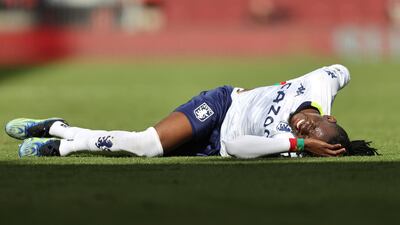
Bertrand Traore - 4: The winger was peripheral and disappointing. He gave the ball away much too often, especially when attempting crossfield passes. Substituted with 22 minutes remaining when El Ghazil came on. AP -
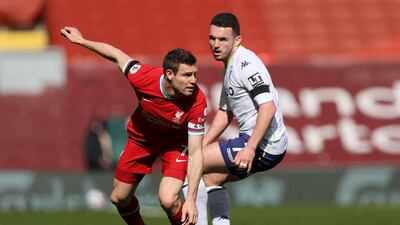
John McGinn - 6: The Scot provided a delicate pass to Watkins for the goal and his muscular presence worried Liverpool. He dropped deeper when Barkley came on and stopped having an impact on the game. Getty -

Trezeguet - 6: The Egyptian went close to restoring Villa’s lead in the second half when he hit the inside of the post. He worked hard until limping off in the 82nd minute to be replaced by Ramsey. AP -
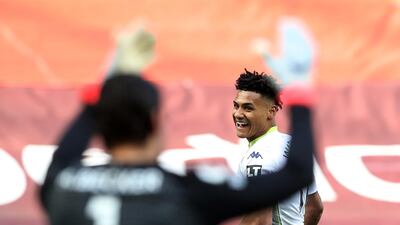
Ollie Watkins - 7: The striker was a real handful. He took his goal well, pressed hard and won the ball in the air. With proper supply and support he might have had much more success. Reuters -
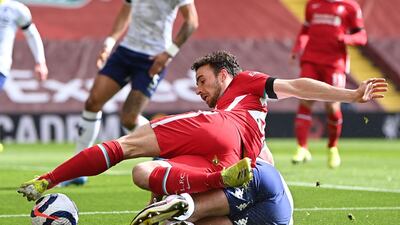
Ross Barkley - 4: The midfielder replaced Nakamba in the 66th minute and had chances to stamp his authority on the match. He shot tamely at Alisson and dithered on the edge of the box and allowed another opportunity to disappear. AFP -
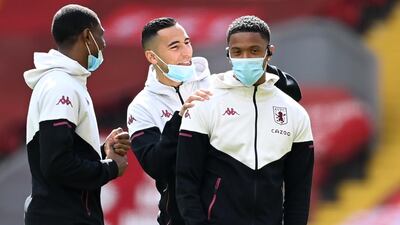
Anwar El Ghazi - 4: The Dutchman came on for Traore and was as disappointing as the man he replaced. He did very little in his 22 minutes on the pitch. Reuters -
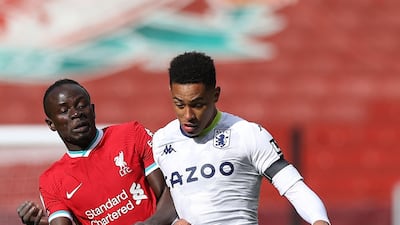
Jacob Ramsey - 5: The 19-year-old was sent on when Trezeguet was injured with eight minutes left. He attempted to be positive but might have done more to put Alexander-Arnold under pressure before the winning goal. AFP


The pool of big spenders is small. Real and Barca are both contending with fiscal problems. The Manchester clubs, City and United, could pull off a deal. PSG have money to burn but already have Mbappe. Chelsea might get involved but they spent more than £200m last summer and are well stocked with young talent up front. Salah’s options are very limited.
At the Anfield end, the club would consider a sale. Fenway Sports Group (FSG), the owners, have cashed in on their stars in the past when rebuilding was necessary. They hope on Merseyside that the return of Virgil van Dijk, Joe Gomez and Jordan Henderson will solve the team’s problems and bring back the title-winning form. It may not be that simple.
Opponents have come to terms with Jurgen Klopp’s tactics. Sadio Mane and Roberto Firmino no longer have lost the spark they displayed for the past two years. The side might need a serious overhaul.
RedBird Capital Partners acquired a £533m, 10 per cent stake in FSG last month but that money is invested across the owners’ portfolio. It will plug financial holes for the Boston Red Sox as well as Liverpool.
Anfield will be able to operate relatively normally during the summer, with resources available for the right players, but there will be no break from the policy of the club financing itself.
In the past, sales have paid for rebuilding. Luis Suarez and Philippe Coutinho were offloaded to Barcelona for big fees. A similar blockbuster deal for Salah would be considered.
Liverpool will only sell at the right price, though. They would expect upwards of £150m. Salah has two years left on his contract and now would be the ideal time to maximise his value in normal years. Covid-19 has made this year very different.
From Liverpool’s point of view, keeping Salah would not be the worst thing that could happen. He is joint leading goalscorer in the Premier League with Kane, having notched 19 times in the league this season, and has a remarkable record during his time at Anfield.
The Champions League quarter-final tie against Real was seen by many as an audition for the Egyptian. He scored in the 3-1 defeat in the first leg but missed a golden chance to bring Liverpool back into the tie early in the 0-0 draw at Anfield on Wednesday. That performance did him no favours.
Salah may not have the sort of personality that suits the Bernabeu. He has a great sense of his own status but it takes a certain type of character to thrive in the pressure cooker of Madrid. Eden Hazard has not risen to the challenge. Salah has more in common with the Belgian than, say, Cristiano Ronaldo, who took on the role of talisman with aplomb.
Circumstances could mean that Salah remains at Anfield next season. He would like to leave, Liverpool would likely sell but it may not be the worst thing for both parties if he stays put.

