

The 2026 Fifa World Cup is going to be quite different. In fact, it is set to be the complete opposite of the previous finals in Qatar.
The 2022 World Cup turned out to be one of the most well organised and travel friendly finals in history. Qatar’s smaller size, compared to even neighbouring Gulf nations, and convenient access to all venues made it a highly accessible tournament for fans from across the globe.
The 2022 showpiece was described as one of the best by Fifa as Qatar welcomed more than 1.4 million visitors. The biggest advantage the tournament had was that fans could attend more than one game in a single day, with all venues within a 75-kilometre radius. A robust public transportation system also set the bar high for subsequent tournaments.

The next Fifa World Cup will be different. Set across the vast expanse of North America – the US, Canada and Mexico – the 2026 finals will be one of the biggest, and not just due to the vast distances involved across various time zones.
It will be the biggest World Cup in terms of teams – 48 – which brings with it a new set of problems.
The United States is currently putting up more barriers for visitors to the country. It started with President Donald Trump banning visitors from 19 countries – either completely or partially – last year.
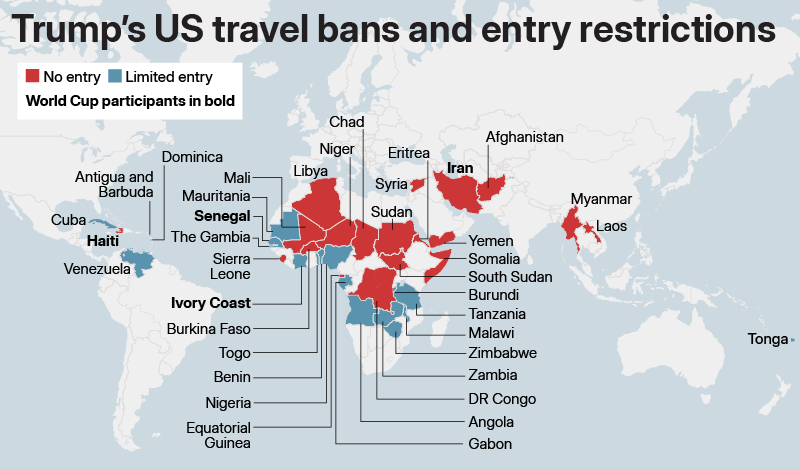
Since then, the list has only grown. Regular visa applicants from various countries have also been complaining of exceptional delays. All of which will have an impact on the 2026 World Cup, a majority of which takes place in the US.
In December, President Trump added more nations to the list – and they include nations that have qualified for the World Cup, creating an inconvenient and embarrassing situation for organisers.
The tally of full and partial bans now stands at 39 countries. There are a total of 195 recognised countries and members, according to the United Nations, which means 20 per cent of all countries on the planet face travel restrictions to the US. Football's governing body lists 211 men's international teams and territories in its Fifa performance rankings.
This month, the US also paused immigrant visa processing for 75 countries.
Which nations are on US travel ban list?
Full ban
Afghanistan, Burma, Chad, Republic of the Congo, Equatorial Guinea, Eritrea, Haiti, Iran, Libya, Somalia, Sudan, Yemen, Burkina Faso, Laos, Mali, Niger, Sierra Leone, South Sudan, Syria
Limited entry
Burundi, Cuba, Togo, Venezuela, Angola, Antigua and Barbuda, Benin, Ivory Coast, Dominica, Gabon, Gambia, Malawi, Mauritania, Nigeria, Senegal, Tanzania, Tonga, Zambia, Zimbabwe
Which 2026 World Cup participants are affected by travel restrictions?
Iran and Haiti find themselves in the group of countries with the toughest travel restrictions. According to the US government, citizens of these countries are barred from travelling, apart from “categorical exceptions and case-by-case waivers”.
Iran's national team are in Group G along with Belgium, Egypt and New Zealand. Haiti are in Group C with Brazil, Morocco and Scotland.
Those waivers extend to participating teams at the 2026 World Cup, which includes team members, support staff, entourage and immediate relatives. However, the restriction extends to everyone falling outside that category, including the average fan.
Ivory Coast and Senegal also find themselves on the restricted list owing to visa overstay instances, although their citizens face limited restrictions compared to countries facing a full ban.
Ivory Coast are in Group E with Germany, Ecuador and Curacao. Senegal are in Group I with France and Norway, plus one more team yet to be decided.
Which means four out of the 48 participating countries at the 2026 World Cup will most likely be unable to send their fans to the US, even if they wanted to. The new restrictions took effect from January 1, 2026.
In addition, 12 World Cup-qualified countries – Algeria, Brazil, Cape Verde, Colombia, Egypt, Ghana, Guatemala, Jordan, Morocco, Tunisia, Uruguay and Uzbekistan – have been hit with an indefinite ban on immigrant visa processing.
The 2026 World Cup will provide a glimpse of what to expect at another global sporting event – the 2028 LA Olympics. With athletes from all countries in the world, including their fans, expected to attend, the impact of travel restrictions could be much stronger two years from now.

