


Chancel Mbemba entered the must-win game furtively. There were 91 minutes on the clock. His teammate, the Democratic Republic of Congo’s Brian Cipenga, had just tested Andre Onana with a speculative, angled effort which the Cameroon goalkeeper tipped over the bar.
Here was a last-gasp opportunity, a corner at 0-0. Mbemba, the Congo captain, put himself at the back of the queue to meet it. And meet it he did, Cipenga aiming beyond the far post and Mbemba arriving with stunning authority to score.
Mbemba had cleared the first hurdle of a marathon series of playoffs that, if DR Congo can again show the same nerve, the same poise under pressure, might yet take the vast, long-suffering central African nation to their first World Cup finals for more than half a century.
Step one was Cameroon, Africa’s most regular attendees at football’s greatest show, being eliminated 1-0 thanks to Mbemba in stoppage time.
Step two: Nigeria, the heavyweights of the sub-Saharan region, beaten on penalties in the final of the African play-offs.
That was tight, too, Mbemba entering his next must-win game with the tiebreaker penalty shoot-out into its sudden death phase, plastic bottles being hurled from the grandstand behind the goal in Rabat and the Nigeria coach, Eric Chelle, preparing to tell reporters wild stories about sorcery being used against his men. Mbemba stepped up and converted to prolong the Congolese adventure.
Their journey now stretches into March, where a final phase now branded by Fifa as the Play-Off Tournament, a stage heartbreakingly denied to the UAE on Tuesday, will put a diverse collection of candidates, from Africa, West Asia, Oceania, South America and the Caribbean on the threshold of the biggest World Cup ever, and allow unsung players to glimpse a scarcely imaginable career highlight – including Mbemba.
Last November he was not playing any club football, frozen out of first-team consideration at his then club Olympique Marseille and in a dispute with his employer that would lead him to seek legal action against the French club.
Iraq 2-1 UAE – in pictures
-
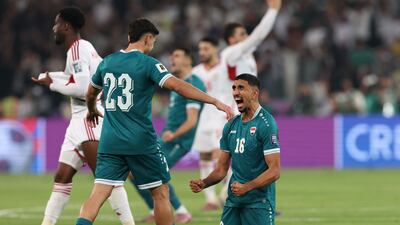
Iraq players celebrate after their World Cup play-off victory over the UAE at Basra International Stadium on November 18, 2025. Reuters -

Ecstastic Iraq players celebrate their 2-1 win on the night over the UAE and a 3-2 aggregate win. Reuters -
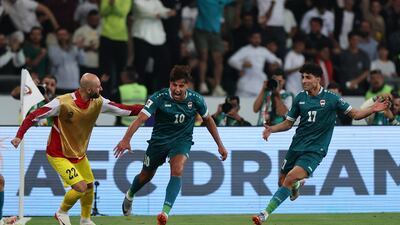
Mohannad Ali celebrates scoring Iraq's first goal. Reuters -

UAE attacker Caio Lucas makes it 1-0 in Basra. Reuters -
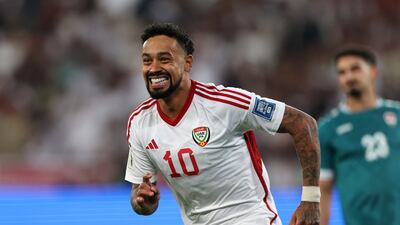
Caio Lucas celebrates scoring for UAE. Reuters -

UAE's Kouame Autonne wins a header. Reuters -
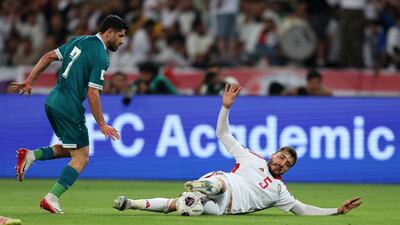
UAE's Alaeddine Zouhir slides in the win the ball from Sherko Kareem of Iraq. Reuters -
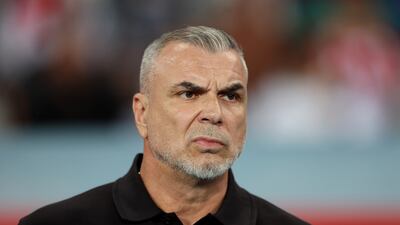
UAE coach Cosmin Olaroiu. Reuters -
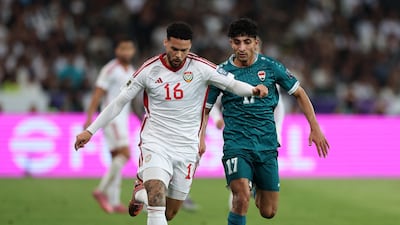
UAE's Marcus Meloni under pressure from Ali Jasim of Iraq. Reuters -

Iraq coach Graham Arnold before the game. Reuters -
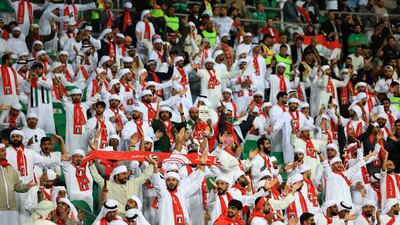
UAE fans at Basra International Stadium. Reuters -
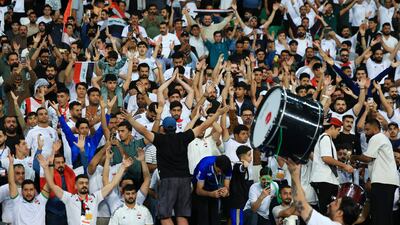
Iraq fans in the stands at Basra International Stadium. Reuters -
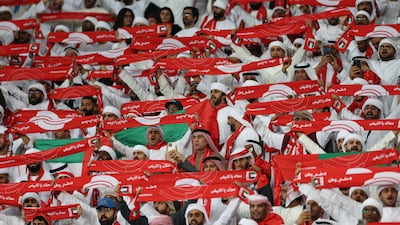
UAE fans at Basra International Stadium. Reuters -

fans ahead of the match in Basra. Aymen Al Ameri / The National -

Fans ahead of the game in Basra. Aymen Al Ameri / The National


Mbemba played no club football at all last season. But his national team coach Sebastian Desabre kept faith with the 31-year-old, a defender of vast experience spread across the English Premier League with Newcastle United, the Uefa Champions League over many years with Porto, Marseille and now Lille.
Unused by his club, he still ploughed on towards reaching 100 caps and helping DR Congo into next month’s African Cup of Nations and to their ambition of a historic, long-awaited World Cup return. It’s been so long since DRC were at finals that the country was still known as Zaire the last time.
And Desabre needed all Mbemba’s know-how and his coolness in the heat of the African play-offs against Cameroon and Nigeria, in part to balance and guide the fresher faces the coach would gamble on in the closing stages of each match.
Cipenga was winning only his second cap when he came on to decisive effect against Cameroon. Timothy Fayulu won his second cap when, startlingly, he was asked to replace first-choice goalkeeper Lionel Mpasi after 120 minutes, with the score at 1-1, specifically for the shoot-out against Nigeria.
Mpasi himself had been party to the bold decision. “At half-time of extra-time, I asked the coach to keep one substitution spare,” revealed Mpasi. “Because I just had a feeling Tim was up for the penalties.” His instinct was sound. Fayulu saved two Nigerian spot-kicks, enough to give Mbemba the chance to win the contest.
In the unfolding drama of the play-offs, other unlikely heroes would emerge. Like Ali Al Hamadi, whose goal in Abu Dhabi would be the basis for Iraq’s cliffhanger victory over UAE and came off the back of a mere four minutes of third-tier English league football for Luton Town in the last two and half months.
There was also a dispiriting period of injury and hurried searching for a new club, as he outlined in a candid interview with The National ahead of the Asian play-off.
Or like his compatriot Amir Al Ammari, who tends to spread his own match-winning contributions thinly in international football. He had registered just five goal-contributions in 46 caps until Tuesday.
But within barely 40 second-half minutes in Basra, he had an assist and a 117th minute goal from the penalty spot to steer Iraq from 1-0 down to within one match of the World Cup finals.
DR Congo and Iraq, by dint of their Fifa rankings, now go directly into the two ‘finals’ of the play-off tournament, to be staged in Mexico in four months time, as the top two seeds among a group of six teams that include a pair of potential World Cup novices.
Suriname – population 650,000 – are one, joined in the Caribbean subset of play-off candidates by Jamaica, whose sole previous World Cup appearance dates back to 1998.
Jamaica’s manager, Steve McClaren, was once in charge of England, and in that job suffered the rare ignominy of failing to qualify for a major tournament, Euro 2008. This time, McClaren quit as Jamaica coach after his team were held to a goalless draw by Curacao and failed to directly qualify for the 2026 World Cup.
Suriname’s manager is Stanley Menzo, who in his playing days had been earmarked to be the Netherlands’ number one goalkeeper in the lead-up to the 1994 World Cup in the USA; he lost his place, even as a squad member, before that tournament began.
Bolivia, after finishing seventh in the South American group, will attempt to reach their first World Cup since 1994, while the rank outsiders in the play-offs, New Caledonia – an archipelago of barely quarter of a million citizens – aim to show that even the most improbable dreams can come true.

