

Manchester City gear up for Thursday’s showdown with Juventus intent on taking top spot and laying down a marker in a Fifa Club World Cup they believe is theirs to win.
With both sides already through to the last 16, this clash feels more strategic than celebratory. Finishing top of Group G could mean avoiding a familiar obstacle in Real Madrid – a detail neither side is likely to overlook.
City have approached the tournament as a reset, rotating heavily while maintaining intensity as they look to move past last season’s frustrations.
Juventus, meanwhile, have opted for stability, naming the same starting XI in both matches and riding strong form, with young forward Kenan Yildiz emerging as one of the standout performers of the competition.
-
Phil Foden celebrates with Omar Marmoush after scoring Manchester City's first goal in their 2-0 Fifa Club World Cup win over Wydad in Philadelphia, United States, on June 18, 2025. Reuters -
Jeremy Doku scores for Manchester City to make it 2-0 at Lincoln Financial Field. Getty Images -
Manchester City winger Jeremy Doku celebrates scoring in the 42nd minute. Reuters -
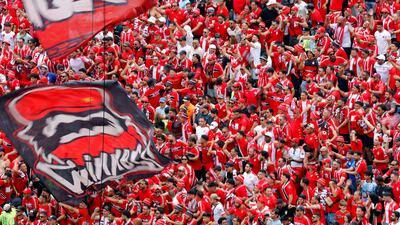
Wydad Casablanca fans in the stands at Lincoln Financial Field. Reuters -
Wydad Casablanca goalkeeper El Mehdi Benabid parries the ball out leading to Phil Foden scoring for City. Reuters -
Rodri, left, and Erling Haaland, centre, come on as second-half substitutes for Manchester City. Reuters -
Manchester City defender Vitor Reis and Wydad's Thembinkosi Lorch battle for the ball. AFP -

Wydad's Fahd Moufi heads the ball during the first half. Reuters -

City substitute Erling Haaland fires a shot over the bar. Reuters -
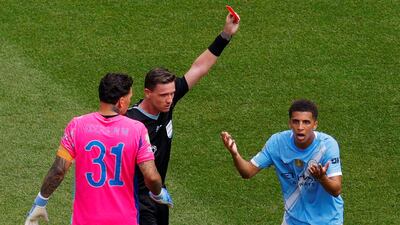
Manchester City's Rico Lewis is shown a straight red card by referee Ramon Abatti Abel. Reuters -
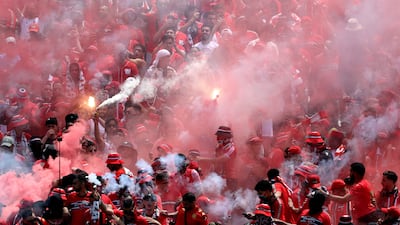
Wydad fans light flares inside the stadium that would end up forcing a stoppage in play. Getty Images -
Jeremy Doku volleys home Manchester City's second goal just before half-time. Reuters -

Manchester City manager Pep Guardiola talks to his players during the first half. Reuters


History
Manchester City arrive in strong form, unbeaten in 14 of their past 15 matches across competitions. But when it comes to Juventus, history has rarely been on their side.
The Bianconeri have held the upper hand, winning the past three encounters, including a commanding 2–0 triumph in the Uefa Champions League group stage last December.
After that particular match, Pep Guardiola was asked about City’s passive approach in the final third – a rare critique for a side known for its attacking precision. He acknowledged the lack of cutting edge around the box.
“You think players don’t want to score? There are opponents, there are defenders, and they did great. Congratulations to them,” he said.
Since then, City have responded emphatically. They now lead the Club World Cup in shots on target, a reflection not only of a tactical shift, but of the depth and variety in their attacking options.
City cannot afford to be complacent. Sitting second in the group, they need a win to overtake the Old Lady and secure top spot. Their frustration at not scoring a seventh goal against Al Ain – which would have given them the advantage – was clear.
Guardiola, ever the pragmatist, downplayed the implications. “Well, with one more goal, we’d have two options [draw or win]. Now we have just one. Maybe it’s better,” he said.
His players, though, told a different story. Their reaction to those final moments – jumping to their feet, gesturing with every near miss – revealed a deeper urgency. This is a tournament they want to win, and they know that avoiding a tougher path through the knockout rounds could make all the difference.
How the game will fare
Juventus know they must contain Erling Haaland, but they arrive full of confidence and are unbeaten in their last seven matches – five wins and two draws.
In this tournament, their success has been shaped not just by aggression but by a clinical edge that has seen them outperform their expected goals more than any other team. Where inefficiency once defined them under Thiago Motta, efficiency now fuels their momentum under Igor Tudor.
Tactically, this match presents a fascinating clash of approaches. City will aim to dominate possession, dictate territory, and patiently disrupt Juventus’ shape through overloads and fluid rotations.
With Rodri expected to play, City should regain control in midfield, giving players like Phil Foden and Bernardo Silva the freedom to operate between the lines and unlock spaces.
Juventus are team that presses high, recovers quickly, and strikes with vertical intent. But that reputation, while earned, tells only part of the story.
Their opening goal against Wydad Casablanca offered a glimpse of the tactical sophistication that has gone largely overlooked. The move unfolded over one minute and 32 seconds of possession, featuring 25 consecutive passes, 26 touches, and involvement from 10 players.
The goal is a reminder of what Juventus are capable of and perhaps deserve greater recognition for the depth and balance they are beginning to show under Tudor.
Defensively, however, they remain less convincing. Despite the calibre of opposition, the Bianconeri have conceded more shots than expected, exposing a vulnerability that could prove costly.
City will be keen to exploit any defensive lapses, confident in the knowledge that their own back line has been the more disciplined and resilient throughout the tournament; they are yet to concede a goal.
Key men
Guardiola has recently voiced his concerns about squad size, aware that some players might struggle to log enough minutes to keep morale high. It’s not just strength in depth – it’s an embarrassment of riches.
Nevertheless, the coach is determined to put the best foot forward for the final group clash. Rodri is likely to return to the starting line-up, and all eyes will be on the Ballon d’Or winner as he looks to regain rhythm on the big stage.
For Juventus, no player has caught the eye quite like Yildiz, a talent seemingly made for the big stage. One of the few highlights in an otherwise difficult campaign last season, he blends sharp finishing with a touch of creative flair. Averaging a goal every 49 minutes in this tournament, the Old Lady will be relying on him to guide them to victory.

